Celestion DITTON-44-MK-II: The Pinnacle of British Transmission Line Engineering
In the early 1980s, British loudspeaker design reached a golden era, marked by innovation, meticulous craftsmanship, and a relentless pursuit of sonic accuracy. Among the standout models of this period was the Celestion DITTON-44-MK-II, a high-performance passive loudspeaker that embodied the cutting edge of transmission line (TL) technology. Though less widely known than some of its contemporaries from Linn or Tannoy, the DITTON-44-MK-II earned a devoted following among audiophiles who prized its exceptional imaging, tonal neutrality, and deep, controlled bass response.
Born from Celestion’s collaboration with audio engineer John Wright and the influence of the legendary Radford amplification designs, the DITTON series was conceived as a no-compromise approach to speaker design. The "DITTON" name itself is derived from the Kent village where Celestion was based, grounding the brand’s identity in its British heritage. The MK-II revision, introduced in 1981, refined the original DITTON-44 with improved driver integration, enhanced cabinet damping, and updated crossover components—solidifying its reputation as one of the finest floor-standing speakers of its era.
Technical Specifications
The DITTON-44-MK-II is a three-way, bass-reflex augmented transmission line speaker, designed for both stereo and high-fidelity home listening environments. Its complex internal structure and carefully tuned acoustics set it apart from conventional ported or sealed enclosures.
| Specification | Detail |
| Model | DITTON-44-MK-II |
| Type | 3-way passive floor-standing speaker |
| Driver Complement | 1" soft-dome tweeter, 3" midrange, 10" bass |
| Crossover Frequency | 450 Hz (bass/mid), 3.5 kHz (mid/tweeter) |
| Impedance | 8Ω nominal (compatible with most amplifiers) |
| Sensitivity | 88 dB (2.83V/1m) |
| Frequency Response | 35 Hz – 22 kHz (±3 dB) |
| Cabinet Design | Transmission line with rear port tuning |
| Dimensions (H×W×D) | 104 cm × 28 cm × 40 cm (41" × 11" × 15.7") |
| Weight | 32 kg (70.5 lbs) per speaker |
| Recommended Amp Power | 25–200 watts |
| Finish Options | Rosewood, walnut, and black ash veneers |
The transmission line design features a long, damped internal pathway that absorbs and redirects rear wave energy, reducing time smear and resonance. This results in tighter bass and improved transient response compared to traditional bass-reflex designs. The 10" bass driver operates in a highly controlled environment, with the line tuned to reinforce output around 40 Hz, giving the speaker surprising low-end authority without the need for a subwoofer.
Sound Characteristics and Performance
The DITTON-44-MK-II is revered for its exceptional soundstage, pinpoint imaging, and natural tonal balance. Unlike many speakers of the era that leaned toward brightness or exaggerated bass, the DITTON-44-MK-II presents a remarkably neutral and transparent sonic signature.
The tweeter delivers smooth, detailed highs without harshness, making it ideal for extended listening sessions. The midrange driver, often a weak point in multi-way designs, is exceptionally well-integrated, rendering vocals and acoustic instruments with lifelike clarity. String textures, piano decay, and the subtle breath of a vocalist are rendered with uncanny realism.
Bass performance is where the transmission line design truly shines. Rather than the "one-note" boom of ported cabinets, the DITTON-44-MK-II produces tight, articulate low frequencies with excellent pitch definition. Kick drums have weight and impact, while double bass lines remain clear and rhythmic. The speaker’s ability to resolve low-level detail in complex passages—such as orchestral crescendos or jazz ensembles—sets it apart from many contemporaries.
When paired with high-quality valve amplifiers—particularly classic British brands like Leak, Quad, or Radford—the DITTON-44-MK-II reveals its full potential, offering a lush, dynamic presentation that balances warmth with precision.
Notable Features and Innovations
The DITTON-44-MK-II was not just another box with drivers—it represented a holistic engineering philosophy:
- Advanced Transmission Line Cabinet: The internal labyrinth is lined with progressively graded damping materials (wool, foam, and fiberglass), which absorb unwanted resonances while allowing controlled bass reinforcement.
- Point-Source Mid/Tweeter Array: The midrange and tweeter are mounted on a sloped baffle to improve time alignment, enhancing coherence and stereo imaging.
- High-Quality Crossover Network: Uses polypropylene capacitors and air-core inductors, minimizing signal loss and distortion.
- Rigid Multi-Laminate Cabinet: Constructed from high-density particleboard with internal bracing to reduce cabinet coloration.
- Removable Grilles with Acoustic Transparency: Designed not to interfere with high-frequency dispersion.
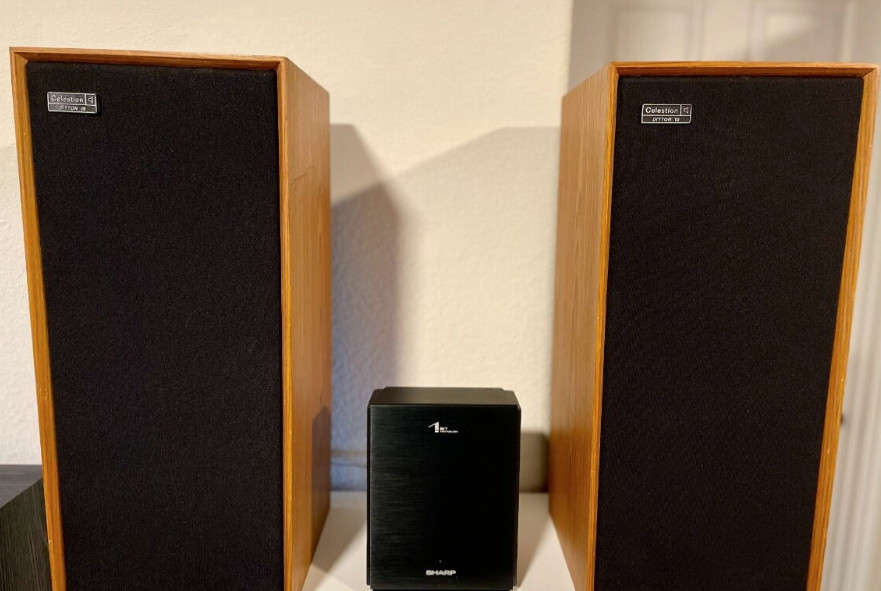
Celestion also paid close attention to aesthetic integration, offering the DITTON-44-MK-II in rich wood veneers that complemented period hi-fi furniture. The speaker’s tall, narrow profile made it visually unobtrusive despite its size, and its rear-vented design required careful placement away from walls to optimize bass response.
Common Issues and Maintenance
As with any vintage speaker, the DITTON-44-MK-II requires attention to aging components:
- Foam Surrounds: The original foam on the bass and midrange drivers may have perished over time, leading to distortion or rattling. Replacement with modern butyl rubber surrounds is a common and effective restoration.
- Crossover Components: Electrolytic capacitors in the crossover may dry out, altering tonal balance. Replacing them with modern equivalents can restore original performance.
- Cabinet Integrity: Check for loose joints or veneer lifting, especially on older walnut and rosewood finishes. Humidity fluctuations can affect vintage wood.
- Grille Fabric: Original grilles may be torn or discolored; replacements or re-covering are available from specialist audio restoration shops.
Finding original Celestion drivers can be challenging, but companies like Spendor, Harbeth, and Rega (which acquired some Celestion tooling) have compatible units or can assist in reconing. DIY enthusiasts often praise the DITTON-44-MK-II for its serviceability—its modular design allows for relatively straightforward repairs.
Current Market Value and Collectibility
While never as mass-market as B&W or Wharfedale, the DITTON-44-MK-II has developed a cult following. In excellent, restored condition, a pair typically sells for £800–£1,500 in the UK, with unrestored units available for less. Fully refurbished pairs with reconed drivers and updated crossovers often command premium prices among vintage audio collectors.
Its collectibility stems from several factors:
- Rarity: Fewer units were produced compared to mainstream brands.
- Engineering pedigree: The transmission line design is respected among speaker enthusiasts.
- Sonic excellence: It remains competitive with modern high-end speakers in critical listening environments.
The DITTON-44-MK-II is particularly sought after by fans of British audio heritage, transmission line designs, and those building period-correct 1980s hi-fi systems.
Conclusion and Legacy
The Celestion DITTON-44-MK-II stands as a testament to British audio engineering at its most ambitious. It combines scientific rigor with musical sensitivity, offering a listening experience that is both accurate and emotionally engaging. While Celestion eventually shifted focus toward professional audio and cinema speakers, the DITTON series remains a high watermark in their consumer legacy.
Today, the DITTON-44-MK-II is more than a vintage curiosity—it’s a serious listening tool for audiophiles who appreciate transparency, depth, and craftsmanship. Whether you're restoring a classic system or discovering it for the first time, the DITTON-44-MK-II delivers a timeless performance that continues to inspire. For those in the know, it’s not just a speaker—it’s a piece of audio history, finely tuned and beautifully realized.
eBay Listings


As an eBay Partner, we earn from qualifying purchases. This helps support our independent vintage technology research.
Related Models
- Celestion COUNTY (1978)
- Celestion SL12SI (1985)
- Celestion 5000 (1975)
- Celestion 7000 (1978)
- Celestion BC1 (1975)
- Akai AM-2850 (1975)
- Akai AP-206 (1975)
- Nakamichi BX-1 (1985)
- Acoustic Research research-ar-17 (1978)
- Acoustic Research AR-19 (1994)