Celestion DITTON-15XR: The Forgotten Pioneer of Active Studio Monitoring
In the early 1980s, British loudspeaker manufacturer Celestion—long celebrated for its guitar speaker drivers—ventured boldly into the realm of high-fidelity audio with the DITTON series. Among the most intriguing models in this line was the DITTON-15XR, a compact active studio monitor that combined cutting-edge time-aligned driver technology with integrated amplification. Though overshadowed by later giants like the Yamaha NS-10 and Tannoy Reveal series, the DITTON-15XR holds a quiet but significant place in audio history as one of the first commercially available active monitors aimed at professional and semi-professional studio environments.
Born from Celestion’s collaboration with audio engineer John Duncan, the DITTON series was designed to deliver accurate, uncolored sound reproduction—essential for critical listening and mixing. The DITTON-15XR, introduced in 1981, stood out as a rare active variant in a market dominated by passive designs. Its compact size, front-firing bass reflex port, and built-in bi-amplified electronics made it a forward-thinking solution during a transitional era in studio monitoring.
Technical Specifications
The DITTON-15XR was engineered with precision and purpose. Unlike its passive siblings, the 15XR featured internal amplification, eliminating the need for external power amps and reducing system complexity. Its two-way design used time-aligned drivers to ensure coherent phase response across frequencies—a hallmark of the DITTON series.
| Specification | Detail |
| Model | DITTON-15XR |
| Year Introduced | 1981 |
| Type | Active 2-way studio monitor |
| Driver Configuration | 1" soft-dome tweeter, 5.25" mid/bass |
| Crossover | 2.5kHz (active, time-aligned) |
| Amplification | Bi-amped (25W HF, 50W LF) |
| Frequency Response | 55 Hz – 20 kHz (±3 dB) |
| Impedance | Not applicable (active design) |
| Sensitivity | Not applicable (powered speaker) |
| Enclosure Type | Bass reflex, front-ported |
| Inputs | Balanced XLR and 1/4" TRS |
| Dimensions (H×W×D) | 300 × 180 × 240 mm (approx.) |
| Weight | 8.5 kg (18.7 lbs) per unit |
| Finish Options | Black vinyl wrap, woodgrain (rare) |
The time-aligned crossover design ensured that sound waves from both drivers reached the listener’s ear simultaneously, reducing phase distortion and improving stereo imaging. This was a significant innovation at the time, predating similar implementations in brands like KEF and Bowers & Wilkins.
Sound Characteristics and Performance
The DITTON-15XR delivered a remarkably neutral and transparent sound signature, making it well-suited for nearfield monitoring. Its 5.25" mid/bass driver provided tight, controlled low-end response down to 55 Hz—impressive for a speaker of its size—while the 1" soft-dome tweeter offered smooth, detailed highs without harshness.
Users often praise the 15XR for its exceptional midrange clarity, which made vocal tracking and instrument separation a breeze. The active design contributed to a tight, dynamic presentation, with the internal amplifiers precisely matched to the drivers for optimal transient response.
In practice, the 15XR excelled in small studios, project setups, and broadcast environments where space and accuracy were at a premium. While not as bass-heavy as larger monitors, its honest tonal balance helped engineers make reliable mixing decisions without the flattery of colored sound.
Notable Features and Innovations
The DITTON-15XR was packed with features that were ahead of its time:
- Integrated Bi-Amplification: Each driver had its own dedicated amplifier section (25W for the tweeter, 50W for the woofer), minimizing intermodulation distortion and improving control.
- Time-Aligned Crossover: The physical offset of the tweeter behind the woofer ensured acoustic alignment, improving off-axis response and stereo coherence.
- Professional Connectivity: Equipped with both XLR and 1/4" TRS inputs, the 15XR could integrate seamlessly into professional studio setups.
- Compact, Shielded Design: The magnetically shielded cabinet allowed safe placement near video monitors—important in early digital audio workstations and broadcast suites.
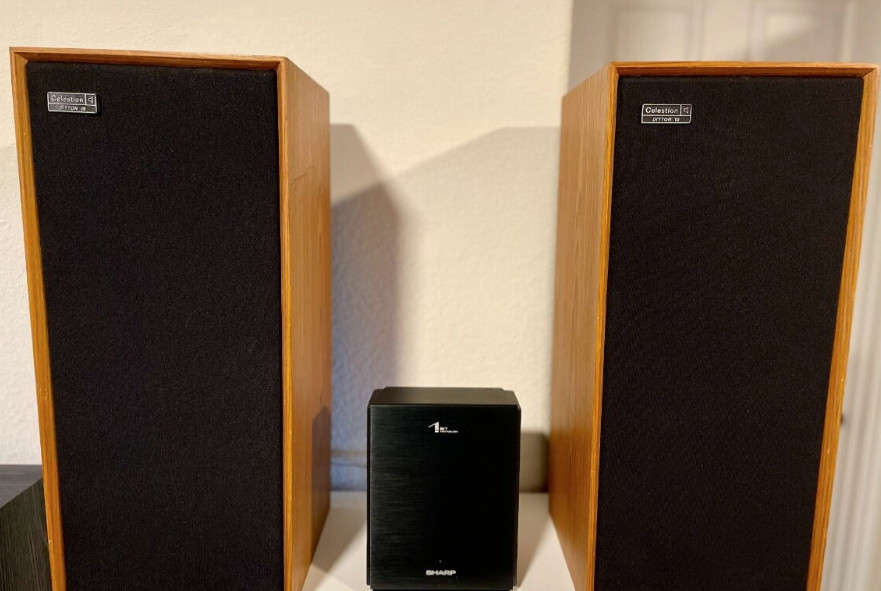
Celestion also paid close attention to cabinet construction, using dense particleboard with extensive internal bracing to minimize resonance. The front-firing port reduced boundary interference, allowing flexible placement on desks or stands.
Common Issues and Maintenance
As with any vintage active electronics, the DITTON-15XR is prone to age-related failures. The most common issues include:
- Capacitor Degradation: The internal power supply and amplifier circuits use electrolytic capacitors that dry out over time. Symptoms include hum, low output, or complete failure.
- Op-Amp Drift: The active crossover relies on operational amplifiers that may drift or fail, affecting tonal balance.
- Connector Wear: Frequent plugging/unplugging can loosen the XLR and TRS jacks, leading to intermittent signals.
- Driver Aging: Foam surrounds on the mid/bass driver can disintegrate after 30+ years, causing rattling or loss of bass.
Restoration is possible but requires technical skill. Replacing capacitors, refoaming drivers, and cleaning connectors can return a pair to like-new performance. However, original service manuals are rare, and replacement parts—especially the custom crossover board—are hard to source.
Enthusiasts recommend using the 15XR with a high-quality external preamp or audio interface to ensure clean signal input. Due to their age, they should be powered on gradually using a variac to avoid stressing old components.
Current Market Value and Collectibility
The DITTON-15XR remains a niche collectible. While not as sought-after as the passive DITTON 40 or 66, working pairs in good condition typically sell for $400–$700 on the vintage audio market. Units with original packaging, manuals, or woodgrain finishes command premiums.
Collectibility is driven by several factors:
- Historical significance as an early active monitor
- British audio heritage and Celestion’s reputation
- Unique time-aligned design
- Growing interest in vintage studio gear among home recordists
However, due to reliability concerns and limited power output, the 15XR is more of a “working vintage” piece than a daily driver. It appeals most to studio historians, modders, and analog enthusiasts who appreciate its engineering ingenuity.
Conclusion and Legacy
The Celestion DITTON-15XR may not have achieved the fame of its passive siblings or later active monitors like the Genelec 1032, but it was a bold and technically accomplished step into the future of studio monitoring. At a time when most engineers still relied on passive speakers and external amps, the 15XR offered an integrated, precision-tuned solution that anticipated modern active monitor trends by over a decade.
Today, the DITTON-15XR stands as a testament to Celestion’s brief but ambitious foray into high-end hi-fi and professional audio. It’s a speaker that rewards patience and care—both in restoration and listening. For those who seek authenticity, innovation, and a touch of British engineering charm, the DITTON-15XR remains a compelling and underrated gem in the world of vintage audio.
eBay Listings


As an eBay Partner, we earn from qualifying purchases. This helps support our independent vintage technology research.
Related Models
- Luxman L-530 (1975)
- Luxman R-404 (1975)
- Luxman RV-371 (1975)
- Luxman SQ-38U (1975)
- Luxman T-14 (1972)
- Luxman T-530 (1975)
- Luxman TX-101 (1975)
- Denon DRA-800 (1985)
- Denon PMA-350Z (1980)
- Denon POA-1500 (1979)