Celestion DITTON-15: The British Bookshelf Legend
The Celestion DITTON-15 stands as one of the most revered and technically innovative loudspeaker kits to emerge from the British hi-fi golden era of the late 1970s and early 1980s. Unlike mass-market consumer speakers of its time, the DITTON-15 was sold as a DIY kit—targeting audiophiles, electronics enthusiasts, and serious music lovers who valued precision engineering and acoustic performance over convenience. Despite its modest bookshelf footprint, the DITTON-15 earned a cult following for its time-aligned driver configuration, exceptional imaging, and transparent midrange—qualities that continue to attract attention in today’s vintage audio market.
Historical Context
Celestion, originally founded in the 1920s as a manufacturer of loudspeaker components, gained legendary status not only in the hi-fi world but also in the music industry—famously powering guitar amps used by rock legends. However, in the late 1970s, Celestion ventured into the high-fidelity speaker market with a new line of precision-engineered speaker kits under the DITTON series, named after the company’s factory location in Ditton, Kent.
The DITTON-15, introduced around 1980, was the smallest in the DITTON range (others included the DITTON 40 and 66), but it was by no means a compromise. It was designed as a serious two-way bookshelf monitor with a focus on time coherence and phase accuracy—concepts that were still relatively niche in consumer audio at the time. The kit format allowed Celestion to offer high-quality components at a competitive price, while also appealing to the burgeoning DIY audio community in the UK and Europe.
Technical Specifications
| Specification | Detail |
| Type | Passive two-way bookshelf speaker (kit) |
| Drivers | 1" textile dome tweeter, 6.5" polypropylene cone mid/bass |
| Crossover Frequency | 2.8 kHz (2nd order) |
| Crossover Design | Time-aligned, phase-correct network |
| Frequency Response | 65 Hz – 20 kHz (±3 dB) |
| Sensitivity | 87 dB (2.83V/1m) |
| Nominal Impedance | 8Ω (compatible with most amplifiers) |
| Recommended Amp Power | 25–100 watts |
| Enclosure Type | Ported (rear-firing bass reflex) |
| Dimensions (H×W×D) | 320 × 190 × 270 mm (12.6 × 7.5 × 10.6") |
| Weight | 8.5 kg (18.7 lbs) per speaker |
| Finish | Natural wood veneer (walnut or rosewood) |
| Availability | Sold as DIY kit (circa 1980–1985) |
Sound Characteristics and Performance
The DITTON-15’s sonic signature is best described as detailed, neutral, and exceptionally coherent. Its standout feature is the time-aligned driver array, where the tweeter is physically recessed behind the woofer to ensure that sound waves from both drivers reach the listener’s ears simultaneously. This design minimizes phase distortion and creates a remarkably stable and focused stereo image—something rarely achieved in speakers of this size and era.
The 1" soft dome tweeter delivers smooth, non-fatiguing highs with excellent extension. It avoids the harshness that plagued some metal dome tweeters of the period, making the DITTON-15 ideal for long listening sessions. The 6.5" polypropylene woofer provides tight, articulate bass with minimal coloration. While the low-end rolls off below 65 Hz, the bass that is present is well-controlled and integrates seamlessly with the midrange.
Midrange clarity is where the DITTON-15 truly shines. Vocals and acoustic instruments are rendered with startling realism and presence. The speaker’s phase accuracy contributes to a wide and deep soundstage, often sounding larger than its physical size would suggest. When properly positioned and paired with a quality amplifier, the DITTON-15 can deliver a listening experience that rivals much larger and more expensive systems.
Notable Features and Innovations
- Time-Aligned Crossover: One of the earliest consumer speakers to implement true time alignment, a feature typically found in high-end studio monitors.
- High-Quality Components: The kit included precision polypropylene capacitors, air-core inductors, and a carefully designed crossover board—unusual for a kit speaker at the time.
- Modular Design: The DITTON-15 was engineered for easy assembly, with clear instructions and pre-drilled baffles. The internal bracing and port design were optimized for low resonance.
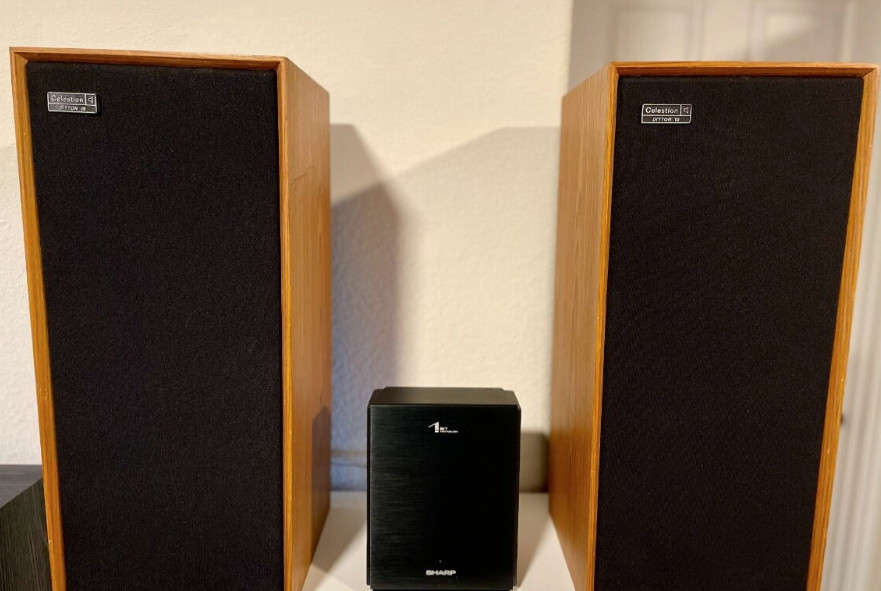
- Aesthetic Elegance: The natural wood veneer finish (typically walnut or rosewood) gave the speakers a refined, handcrafted look that complemented high-end audio systems.
The DITTON-15 was not just a speaker—it was a statement about the importance of engineering integrity in audio reproduction. Its design philosophy emphasized accuracy over hype, appealing to listeners who wanted to hear the music as it was recorded, not colored by the speaker.
Common Issues and Maintenance
As with any vintage audio equipment, the DITTON-15 requires some attention after decades of use. The most common issues include:
- Aged Crossover Components: While the original parts were high quality, capacitors can dry out over time, leading to a loss of high-frequency detail or imbalance between drivers. Replacing electrolytic and film capacitors with modern equivalents can restore performance.
- Tweeter Dome Fatigue: Some early soft domes may exhibit slight degradation, resulting in a dull or recessed high end. Replacement tweeters (such as modern equivalents from Vifa or Peerless) can be used, though purists prefer to refurbish the originals.
- Port Blockage: The rear-firing port can accumulate dust or debris, affecting bass response. A gentle cleaning with a soft brush is recommended.
- Cabinet Integrity: The wood veneer is durable, but older units may have scratches or edge damage. Refinishing is possible but should be done carefully to preserve value.
Because the DITTON-15 was a kit, some units may have been assembled with non-standard wiring or modifications. When purchasing used, it’s wise to inspect the internal wiring and crossover for signs of amateur repairs.
Current Market Value and Collectibility
Today, the Celestion DITTON-15 is a sought-after collector’s item, especially among vintage British hi-fi enthusiasts. Complete, well-maintained pairs typically sell for $400–$800 USD, depending on condition, originality, and finish. Fully restored units with upgraded crossovers or modern stands may command higher prices.
The DITTON-15’s value lies not just in nostalgia, but in its enduring performance. Unlike many vintage speakers that sound dated, the DITTON-15 still holds its own in modern systems—particularly with tube amplifiers or low-feedback solid-state designs that complement its natural tonality.
Its status as a kit speaker adds to its appeal; owning a DITTON-15 often means owning a piece of audio history that was assembled by hand, whether by the original purchaser or a skilled restorer.
Conclusion and Legacy
The Celestion DITTON-15 is more than a vintage speaker—it’s a milestone in British audio engineering. Its focus on time alignment, phase coherence, and high-quality materials set a benchmark for what a compact speaker could achieve. While Celestion eventually shifted focus away from the DITTON series, the legacy of these speakers lives on in the countless audiophiles who still seek them out.
For those who appreciate the marriage of technical innovation and musicality, the DITTON-15 remains a compelling choice. Whether you’re a DIY enthusiast, a collector, or simply a lover of honest sound reproduction, the DITTON-15 offers a rare combination of precision, charm, and historical significance.
In an age of mass-produced audio gear, the Celestion DITTON-15 reminds us that great sound begins with great design—and sometimes, a soldering iron.
eBay Listings



As an eBay Partner, we earn from qualifying purchases. This helps support our independent vintage technology research.
Related Models
- Celestion COUNTY (1978)
- Celestion SL12SI (1985)
- Celestion 5000 (1975)
- Celestion 7000 (1978)
- Celestion BC1 (1975)
- Akai AM-2850 (1975)
- Akai AP-206 (1975)
- Nakamichi BX-1 (1985)
- Acoustic Research research-ar-17 (1978)
- Acoustic Research AR-19 (1994)