Celestion DITTON-10: The British Pioneer of Time-Aligned Sound
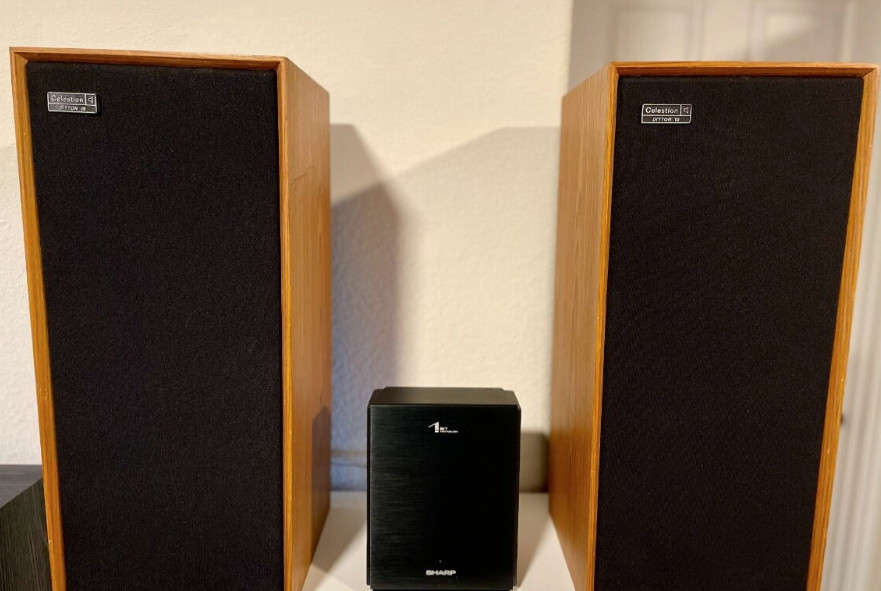
In the late 1970s, when hi-fi enthusiasts were still captivated by the warm glow of tube amplifiers and the mechanical precision of turntables, a quiet revolution was taking place in speaker design. Among the most innovative and forward-thinking loudspeakers to emerge from this era was the Celestion DITTON-10—a compact yet technically sophisticated bookshelf speaker that challenged conventional wisdom in audio engineering. Though not as widely known as some of its contemporaries, the DITTON-10 holds a revered place among vintage audio aficionados for its pioneering use of time-aligned driver technology and its uniquely transparent, three-dimensional sound.
Historical Context: Celestion’s Quest for Sonic Purity
Celestion, a British company with roots stretching back to the 1920s, was already well known for manufacturing high-quality drivers used in guitar and public address systems. By the 1970s, the company turned its attention to the burgeoning hi-fi market, aiming to bring studio-grade accuracy to the home listener. The DITTON series—launched in the late 1970s—was the result of extensive research into time coherence and phase alignment, spearheaded by engineer John Bird.
The DITTON-10, introduced in 1977, was the smallest in the DITTON lineup (which also included the DITTON 40, 66, and 77), but it embodied the same core philosophy: time-aligned drivers. This meant that the tweeter and mid/bass driver were physically offset in the cabinet so that their acoustic centers would lie on the same vertical plane, ensuring that sound waves from both drivers reached the listener’s ears simultaneously. This was a radical departure from conventional speaker design at the time and laid the groundwork for what would later become a standard in high-end loudspeaker engineering.
Technical Specifications
| Specification | Detail |
| Model | DITTON-10 |
| Manufacturer | Celestion Ltd., UK |
| Year Introduced | 1977 |
| Type | 2-way, bass-reflex, bookshelf speaker |
| Drivers | 1" soft-dome tweeter, 6.5" mid/bass |
| Crossover Frequency | 2.8 kHz |
| Crossover Design | 2nd order, time-aligned |
| Frequency Response | 55 Hz – 20 kHz (±3 dB) |
| Sensitivity | 87 dB (2.83V/1m) |
| Nominal Impedance | 8 ohms |
| Recommended Amp Power | 20–100 watts |
| Enclosure Type | Ported (rear-firing port) |
| Dimensions (H×W×D) | 340 × 200 × 270 mm (13.4 × 7.9 × 10.6") |
| Weight | 8.5 kg (18.7 lbs) per cabinet |
| Finish Options | Walnut, black, rosewood veneers |
The DITTON-10 employed a 6.5-inch polypropylene cone mid/bass driver paired with a 1-inch soft-dome tweeter, both custom-designed for Celestion. The crossover network was carefully engineered to preserve phase coherence, with the physical offset of the tweeter (mounted slightly behind the mid/bass driver) ensuring time alignment. The rear-ported cabinet was constructed from high-density particleboard with extensive internal bracing to minimize resonance.
Sound Characteristics and Performance
The sonic signature of the DITTON-10 is best described as transparent, precise, and remarkably spacious. Thanks to its time-aligned design, the speaker produces a stable, holographic soundstage that defies its compact size. Imaging is exceptionally accurate—individual instruments appear with pinpoint precision, and depth perception is uncanny for a bookshelf model.
Midrange clarity is a standout feature. Vocals are rendered with natural timbre and emotional immediacy, making the DITTON-10 a favorite for vocal jazz and acoustic recordings. The treble is smooth and extended without being harsh or fatiguing, a testament to the quality of the soft-dome tweeter and the effectiveness of the crossover design.
Bass response is tight and well-controlled, though not overly deep—owners should expect solid performance down to around 55 Hz. In small to medium-sized rooms, the DITTON-10 delivers a balanced, lifelike presentation that many larger speakers of the era struggled to match.
When paired with high-quality tube amplifiers—such as those from Quad, Leak, or Linn—the DITTON-10 reveals its full potential, offering a harmonious blend of warmth and precision.
Notable Features and Innovations
- Time-Aligned Driver Geometry: The most significant innovation, ensuring coherent wavefront arrival at the listening position.
- Phase-Optimized Crossover: Designed to maintain signal integrity across the frequency spectrum.
- Low-Resonance Cabinet: Heavily braced and damped to reduce coloration.
- Rear-Firing Port: Allows for flexible placement while enhancing bass efficiency.
- Handcrafted Veneer Finishes: High-quality wood finishes that reflect British cabinet-making traditions.
The DITTON-10 was not just a speaker—it was a statement of engineering intent. At a time when many manufacturers prioritized power handling or bass extension, Celestion focused on accuracy, coherence, and listener engagement. The result was a speaker that didn’t just play music, but revealed it.
Common Issues and Maintenance
Like all vintage audio gear, the DITTON-10 requires some care to maintain optimal performance:
- Aging Crossover Components: Capacitors and inductors in the crossover may degrade over time, leading to dull sound or imbalance. A professional recapping can restore original performance.
- Tweeter Dome Fatigue: Some early soft-dome tweeters may exhibit reduced high-frequency output. Replacement with modern equivalents (e.g., SEAS or Vifa) is possible but should preserve the time-alignment geometry.
- Cabinet Wear: Original veneers may show scratches or fading. Gentle cleaning and occasional waxing can preserve their luster.
- Port Blockage: The rear-firing port can accumulate dust. Regular inspection and cleaning are recommended.
Owners are advised to avoid placing the speakers too close to walls, as the rear port can cause bass boominess in confined spaces. Optimal placement is 2–3 feet from the rear wall, with a slight toe-in toward the listening position.
Current Market Value and Collectibility
The Celestion DITTON-10 is a cult classic among vintage speaker collectors. While not as ubiquitous as the LS3/5A, it commands strong respect in the UK and Europe, particularly among enthusiasts of British hi-fi heritage.
In today’s market (2024), a pair of DITTON-10s in good working condition with original grilles and finish typically sells for £400–£700, depending on condition and provenance. Fully restored pairs with upgraded crossovers or rare finishes can fetch upwards of £900. Original boxes and documentation further enhance value.
Their collectibility is driven by:
- Historical significance as early time-aligned speakers
- Limited production numbers
- Strong reputation among audiophiles for sonic transparency
- Growing interest in vintage British audio
Conclusion: A Legacy of Innovation
The Celestion DITTON-10 may not have achieved mass-market fame, but its influence on loudspeaker design is undeniable. As one of the first commercially available speakers to prioritize time coherence, it paved the way for modern high-end audio principles now taken for granted.
For the discerning listener, the DITTON-10 offers more than just nostalgia—it delivers a listening experience that remains compelling decades later. Its combination of technical ingenuity, refined British craftsmanship, and emotionally engaging sound ensures its place in the pantheon of vintage audio excellence.
If you’re lucky enough to encounter a well-maintained pair, don’t hesitate. The DITTON-10 isn’t just a speaker—it’s a window into the soul of music, engineered with precision and passion.
eBay Listings


As an eBay Partner, we earn from qualifying purchases. This helps support our independent vintage technology research.
Related Models
- Celestion COUNTY (1978)
- Celestion SL12SI (1985)
- Celestion 5000 (1975)
- Celestion 7000 (1978)
- Celestion BC1 (1975)
- Akai AM-2850 (1975)
- Akai AP-206 (1975)
- Nakamichi BX-1 (1985)
- Acoustic Research research-ar-17 (1978)
- Acoustic Research AR-19 (1994)