Carver PM-1200
Twenty-one pounds of amplifier rated at 450 watts per channel. That power-to-weight figure gets a sound company's attention on a load-in dock.
Overview
The Carver PM-1200 is a professional stereo power amplifier built for touring and live sound. The documentation calls it the "Magnetic Field Power Amplifier," after the patented Magnetic Field Power Supply technology Carver built it around. The manufacturer's pitch was a professional amp light and rugged enough for the road and for permanent installations.
A touring amp has two costs: how much power it delivers, and how hard it is to move. The PM-1200's headline numbers are 450 watts RMS per channel into 8 ohms, and 21 pounds on the scale. Studio Sound (August 1990, p.41) said the power-to-weight ratio was striking enough to make the amp practical for large-scale concert reinforcement. For a sound company loading a truck every night, that sentence is worth more than any spec sheet.
The weight is the figure that lands first. Twenty-one pounds is a two-rack-space amp you can carry in one hand, and 450 watts is not a small rating. Whether that figure was conservative under real-world conditions, the surviving documentation doesn't say. The period review is the only corroborated source for the number, and no independent lab measurement has turned up in the research.
At least in the documented record, the PM-1200 is not a hi-fi amplifier. It's a working tool. XLR and TRS inputs, a clipping eliminator, and main and sequencer power switches are the features that show up in the surviving listings. The amp was reviewed in Studio Sound in August 1990, and that review is the anchor for everything confirmed about it.
Key Features
Magnetic Field Power Supply
The PM-1200 carries Carver's "Magnetic Field Power Amplifier" designation, built around what the manufacturer describes as patented Magnetic Field Power Supply technology. Per Carver's own description, the point was professional-grade output from a lightweight, rugged chassis. The supply does the heavy lifting, so the amp doesn't need a transformer the size of a small suitcase. The available record doesn't document how the supply behaved under sustained load compared with the marketing claims. What is documented is the result on the scale: 21 pounds for a 450-watt-per-channel professional amp.
450 Watts Per Channel Into 8 Ohms
The rated output is 450 watts RMS per channel into 8 ohms, the figure reported by Studio Sound (August 1990, p.41). That made the PM-1200 a serious candidate for concert reinforcement, and it's the spec sound companies would have compared against the other amps in their racks. Some listings also give 600 watts per channel into 4 ohms, along with a bridged-mono rating of 1200 watts. The impedance for that bridged figure differs between sources, so treat the mono spec as approximate until a manual settles it.
Clipping Eliminator and Power Switching
Surviving listings call out a clipping eliminator and separate main and sequencer power switches. The clipping eliminator is there to keep the amp from hard-clipping into a horn section when the mix gets loud. The sequencer switching lets an operator bring the amp up in a controlled order rather than slamming everything on at once. These are working-amp features, not audiophile ones.
Twenty-One Pounds in the Truck
The 21-pound weight shaped everything else. Studio Sound (August 1990, p.41) framed the power-to-weight ratio as the reason the amp was practical for large-scale touring, and the tour numbers back that up. Clair Brothers put 108 PM-1200s on the Bruce Springsteen tour and 180 on the Michael Jackson tour.
Historical Context
The PM-1200 was reviewed in Studio Sound in August 1990, and that review is the primary documentary anchor for the model. The same article reported the Clair Brothers deployments, 108 units on the Springsteen tour and 180 on the Jackson tour. The research summary of that review notes the amp found favor with top-tier sound-reinforcement providers during the early 1990s.
Service documentation for the PM-1200 is shared with the PM-1.5A. The service manual is titled "Carver PM-1200 / PM-1.5A Amplifier Service Manual." The shared title reflects a direct lineage: in March 1990 the PM-1.5a became the PM-1200 as Carver's Professional line was renamed to indicate total power output into 4 ohms. Production of the PM-1200 began in March 1990, when the PM-1.5a was renamed, and the August 1990 review falls shortly after that.
Collectibility & Value
The PM-1200 sits in an odd spot in the collector market. It's a professional touring amp, not a hi-fi piece, so it trades on utility rather than nostalgia. Current listings show the amp around €425-430 in Europe, with one Russian listing for a tested unit at 87,190₽. eBay listings turn up periodically, along with photocopied schematics and layouts sold separately.
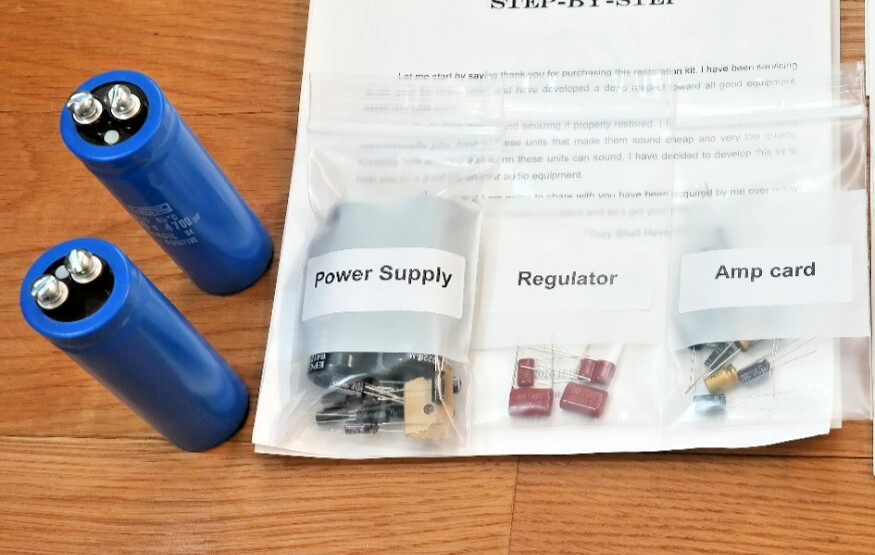
The maintenance story is the one to know before buying. Carver's PM-series amps use a custom double capacitor that is no longer available. The diyAudio consensus is blunt: you can't get them, and any spare you find will be as old as the one you're replacing. Aftermarket mod-boards exist to replace both double caps in one go, and that's the path most owners take. The other common report is protection-circuit trouble. One diyAudio thread describes an amp cutting in and out at an outdoor gig in hot, humid conditions with the protection light on. Another describes a pair bought used where only one worked on arrival and the second failed within a couple of weeks. Buy one with a service manual in hand - original manuals with a tech's notes inside turn up for sale - and budget for the capacitor mod.
eBay Listings

As an eBay Partner, we earn from qualifying purchases. This helps support our independent vintage technology research.