Carver HR-895: The Forgotten Audiophile Headphone Amplifier
In the golden era of high-fidelity audio during the 1980s, few names carried the same weight of innovation and sonic excellence as Carver Corporation. Founded by the legendary engineer Bob Carver, the company became synonymous with high-performance, value-packed audio equipment that punched far above its price point. While Carver is best known for its powerful amplifiers and receivers like the iconic M-400 and the "Cube" series, the brand also ventured into niche audiophile territory with specialized components — one of the most intriguing being the Carver HR-895 Headphone Amplifier.
Released in 1985, the HR-895 was not a mass-market product. Instead, it was a precision-engineered headphone amplifier aimed at serious listeners and studio professionals who demanded transparency, dynamic range, and absolute control over their headphone listening experience. At a time when most headphone outputs were mere afterthoughts on preamps and receivers, the HR-895 stood out as a dedicated, high-current solution designed to drive even the most demanding headphones of the era — such as the Sennheiser HD 414, AKG K240, and Sony MDR-V6 — with authority and finesse.
Technical Specifications
| Specification | Detail |
| Model | Carver HR-895 |
| Year Introduced | 1985 |
| Type | Dedicated Headphone Amplifier |
| Output Power | ~1 watt per channel (estimated) |
| Frequency Response | 10 Hz – 50 kHz (±1 dB) |
| Total Harmonic Distortion | <0.01% (at rated output) |
| Input Impedance | 47 kΩ |
| Output Impedance | <10 Ω (low, for optimal damping) |
| Inputs | 1 pair RCA (unbalanced) |
| Outputs | 1/4" stereo headphone jack |
| Power Supply | Internal linear power supply |
| Dimensions (W×H×D) | 17" × 3.5" × 13" (43 × 9 × 33 cm) |
| Weight | 14 lbs (6.4 kg) |
| Finish | Black anodized aluminum front panel |
The HR-895 was built around a discrete solid-state design with no reliance on op-amps, reflecting Bob Carver’s philosophy of minimizing signal path degradation. Its low output impedance ensured excellent damping control, critical for preventing "boomy" or loose bass in dynamic headphones. The wide frequency response and ultra-low distortion figures were impressive for the time, placing the HR-895 in the same league as high-end preamps of the era.
Sound Characteristics and Performance
The sonic signature of the Carver HR-895 is best described as neutral, dynamic, and highly resolving. Unlike many headphone amps of the period that leaned toward warmth or euphonic coloration, the HR-895 aimed for transparency — letting the source and headphones define the tonal balance.
Listeners report a wide soundstage, precise imaging, and excellent separation between instruments, making it ideal for critical listening and studio monitoring. The amplifier’s high current delivery allowed it to control difficult headphone loads with ease, eliminating the "straining" effect that lesser amps exhibited when driving high-impedance models.
Bass response was tight and articulate, never bloated — a testament to the robust power supply and feedback design. Midrange clarity was exceptional, with vocals and acoustic instruments rendered with lifelike presence. High frequencies were extended but never harsh, avoiding the sibilance that plagued some solid-state designs of the era.
When paired with high-sensitivity headphones, the HR-895 delivered a sense of effortless dynamics — sudden crescendos in classical music or punchy transients in rock recordings were rendered with startling realism. It was, in many ways, a "no excuses" amplifier long before that term became a marketing cliché.
Notable Features and Innovations
While the HR-895 may appear minimalist at first glance, its design reflects several forward-thinking engineering choices:
- Discrete Circuitry: Unlike many contemporary headphone amps that used integrated circuits, the HR-895 employed discrete transistors throughout the signal path, reducing phase distortion and improving linearity.
- Low Output Impedance: At less than 10 ohms, the output impedance ensured optimal damping, especially important for planar-magnetic and dynamic headphones with complex impedance curves.
- High Slew Rate Design: Though not officially published, the circuit layout suggests a high slew rate, contributing to its exceptional transient response.
- Dual-Mono Signal Path: The left and right channels were carefully isolated to minimize crosstalk, enhancing stereo imaging.
- Heavy-Duty Chassis: Housed in a rigid steel chassis with a brushed aluminum front panel, the HR-895 was built to resist microphonics and electromagnetic interference.
One of the most appreciated features was the large, centrally located volume knob — a hallmark of Carver’s user-centric design. It provided smooth, precise control, essential for fine-tuning headphone listening levels.
Common Issues and Maintenance
As with any vintage electronic equipment from the 1980s, the Carver HR-895 is not immune to age-related issues. However, its robust construction means many units still function perfectly today with minimal maintenance.
Common concerns include:
- Capacitor Aging: The electrolytic capacitors in the power supply and signal path may have dried out over time. A full recapping by a qualified technician is recommended for units that have been powered off for decades.
- Potentiometer Noise: The volume pot can develop crackling or channel imbalance. Cleaning with contact cleaner may help, but replacement with a high-quality audio taper pot is often necessary.
- Tube Socket Confusion: Despite its solid-state design, some users mistakenly believe the HR-895 uses tubes due to its warm sound. It does not — there are no tubes or tube sockets.
- Jack Wear: The 1/4" headphone jack may become loose or intermittent. Replacing it with a modern heavy-duty jack improves reliability.
Because the HR-895 was produced in relatively small numbers, service manuals and schematics are rare. However, the circuit design is straightforward enough that experienced technicians can troubleshoot and restore it with standard test equipment.
Current Market Value and Collectibility
The Carver HR-895 remains a sleeper classic in the vintage audio world. It is not widely known outside of Carver enthusiasts and headphone aficionados, which has kept prices relatively modest.
As of 2024, a fully functional HR-895 in good cosmetic condition typically sells for $250–$400 on the secondary market. Units with original packaging, documentation, or proven studio history may fetch higher prices, especially among collectors of rare Carver gear.
Its collectibility is growing, driven by renewed interest in analog headphone listening and the resurgence of high-impedance headphones like the Sennheiser HD 600 series and Beyerdynamic DT 880. Audiophiles seeking a vintage alternative to modern boutique headphone amps often discover the HR-895 as a cost-effective, high-performance option.
Conclusion and Legacy
The Carver HR-895 may not have the fame of the M-400 amplifier or the visual flair of the Silver Seven, but it represents an important chapter in Bob Carver’s mission: to deliver high-end audio performance at accessible prices. In the HR-895, he created a no-compromise headphone amplifier that anticipated the needs of serious listeners years before the headphone audiophile movement took off in the 2000s.
Today, the HR-895 stands as a testament to thoughtful engineering and sonic integrity. It’s a rare piece of gear that doesn’t just amplify sound — it reveals it. For collectors, restorers, and headphone enthusiasts, the Carver HR-895 is more than a vintage curiosity; it’s a hidden gem waiting to be rediscovered.
If you stumble upon one in a thrift store, estate sale, or online marketplace, don’t overlook it. With a little care, the HR-895 can deliver a listening experience that rivals modern equivalents — all with the charm and craftsmanship of 1980s American audio excellence.
eBay Listings
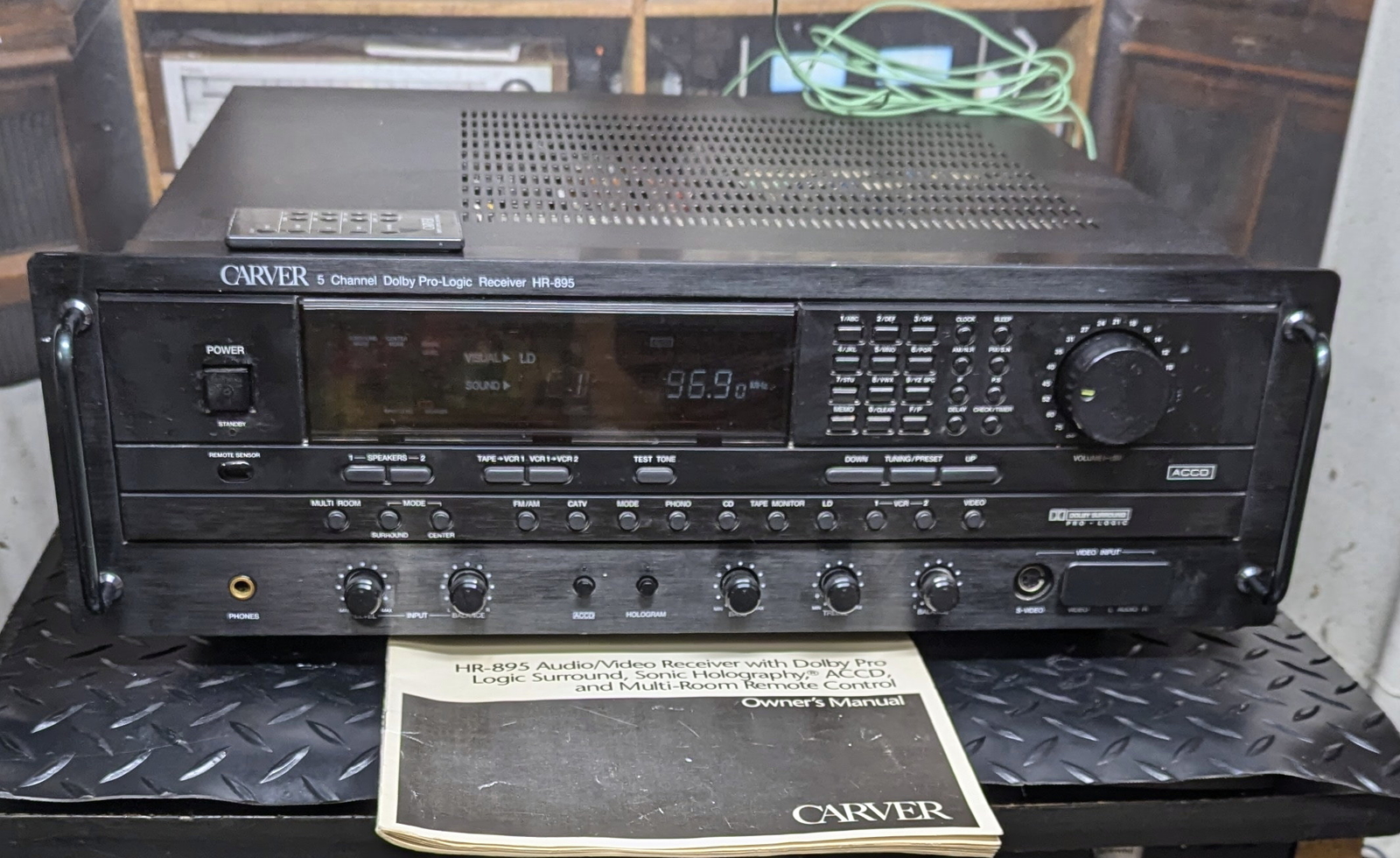

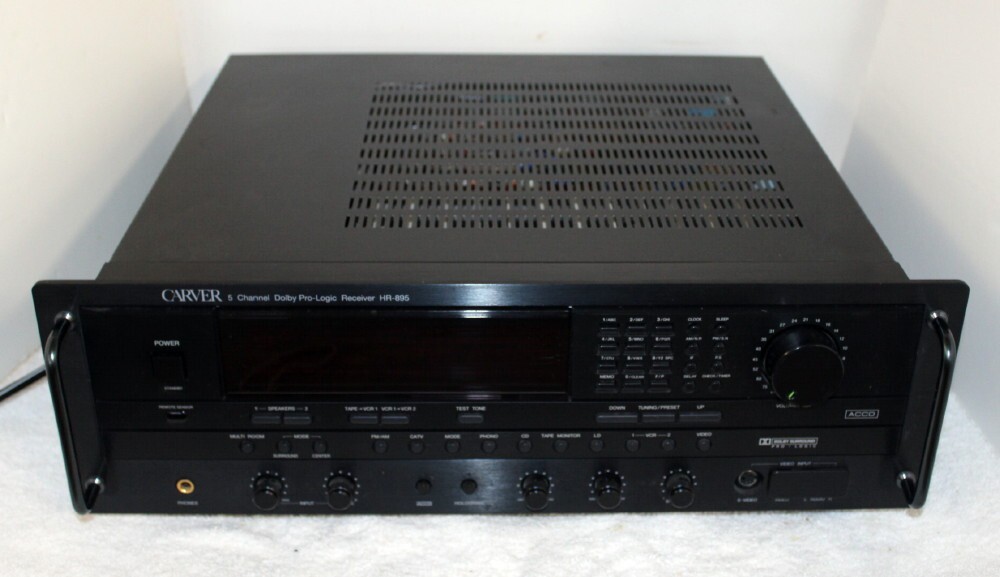

As an eBay Partner, we earn from qualifying purchases. This helps support our independent vintage technology research.
Related Models
- Carver M-4.0T (1985)
- Carver 4000T (1977)
- Carver C-4000 (1978)
- Carver C-9 (1985)
- Carver LIGHTSTAR-II (1985)
- Luxman L-530 (1975)
- Luxman R-404 (1975)
- Luxman RV-371 (1975)
- Luxman SQ-38U (1975)
- Luxman T-14 (1972)