Braun TG-1000-4: Precision, Simplicity, and the Soul of German Modernism
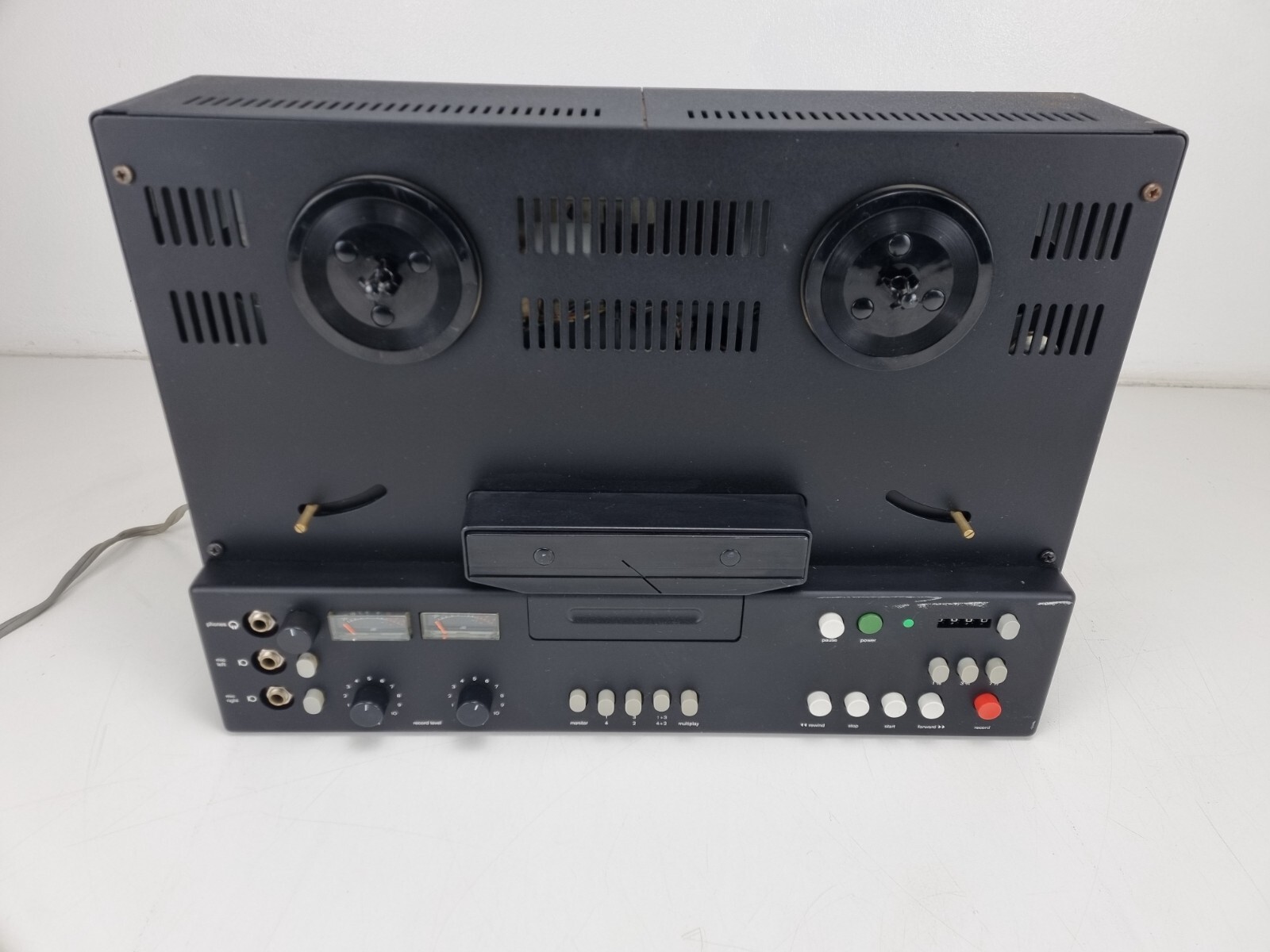
In the pantheon of vintage audio equipment, few brands command the same reverence for design and engineering as Braun. While best known for their minimalist clocks, radios, and phonographs, Braun also ventured into the world of high-fidelity reel-to-reel tape recorders during the 1960s. Among these, the TG-1000-4 stands as a quiet masterpiece—a machine that embodies the German brand’s commitment to functional elegance, technical precision, and user-centered design. Though not as widely documented as some of its contemporaries from Revox or Telefunken, the TG-1000-4 remains a sought-after artifact for collectors and audiophiles who appreciate the marriage of form and function.
A Legacy of Design Excellence
Launched in 1968, the Braun TG-1000-4 emerged during a golden era for both high-fidelity audio and modernist industrial design. At the time, Braun was under the creative direction of Dieter Rams, whose “less but better” philosophy would go on to influence generations of product designers—including Apple’s Jony Ive. The TG-1000-4 was not merely an audio device; it was a statement of intent. Every line, knob, and surface was stripped of ornamentation, leaving only what was essential.
Unlike many reel-to-reel machines of the era, which often featured cluttered control panels and flashy meters, the TG-1000-4 embraced restraint. Its clean aluminum and matte plastic housing, recessed transport controls, and monochrome color scheme (typically white, gray, or anthracite) made it as much a piece of furniture as a piece of technology. It was designed to disappear into the living space—quietly performing its task with dignity.
Technical Specifications
The TG-1000-4 was engineered for serious home recording and playback, supporting ¼-inch tape at professional speeds: 7.5 ips (inches per second) and 15 ips. It operated in 4-track stereo mode, allowing for two stereo programs on a single tape—ideal for musicians, broadcasters, and audiophiles seeking high-quality duplication and editing capabilities.
| Specification | Detail |
| Model | Braun TG-1000-4 |
| Year Introduced | 1968 |
| Format | ¼-inch reel-to-reel tape |
| Tracks | 4-track stereo (2 programs) |
| Tape Speeds | 7.5 ips, 15 ips |
| Heads | Separate record, playback, erase heads |
| Motors | Dual capstan servo-controlled motors |
| Frequency Response | 30 Hz – 18 kHz (at 15 ips) |
| Wow and Flutter | < 0.15% (weighted) |
| Signal-to-Noise Ratio | ~60 dB (Dolby not built-in) |
| Inputs/Outputs | Line in/out, mic in, headphone out |
| Power | 220–240V AC (European standard) |
| Dimensions | Approx. 45 x 14 x 32 cm |
| Weight | ~12 kg |
| Design | Dieter Rams / Braun Design Team |
The machine featured three dedicated tape heads—record, playback, and erase—ensuring optimal alignment and fidelity. The dual capstan drive system contributed to exceptional speed stability, minimizing wow and flutter, while the precision tape guides and tensioning system ensured smooth, reliable operation.
Sound Characteristics and Performance
The TG-1000-4 was not designed for sonic flamboyance. Instead, it delivered what Braun always aimed for: accuracy, neutrality, and clarity. Its frequency response was impressively flat for a domestic machine, capturing the full warmth of vocals and the crispness of acoustic instruments without coloration.
At 15 ips, the machine achieved near-broadcast quality, with a wide dynamic range and low distortion. While it lacked built-in Dolby noise reduction (a feature that became standard in the 1970s), its inherent low noise floor—thanks to high-quality tape transport and shielding—meant it performed admirably with Type I (ferric) tapes.
The 4-track system allowed users to record two separate stereo programs on a single reel. This was particularly useful for home studios or broadcasters who wanted to record a live performance and then overdub or edit later. Though not a multi-track recorder in the modern sense, the TG-1000-4 offered a level of flexibility uncommon in consumer reel-to-reel decks.
Notable Features and Innovations
What set the TG-1000-4 apart was not just its sound, but its user experience:
- Minimalist Control Layout: All transport controls were flush-mounted and clearly labeled, with intuitive operation. No unnecessary lights or switches.
- Precision Mechanical Transport: The dual capstan system and heavy die-cast chassis minimized vibration and ensured consistent tape-to-head contact.
- Modular Design: Braun’s philosophy of serviceability meant components were easily accessible, with standardized screws and clear internal layout.
- Integrated Headphone Monitoring: A dedicated headphone amplifier allowed for real-time monitoring during recording or editing.
- Synchronized Dual Reel Motors: Ensured even tape winding and reduced stress on delicate tapes.
Perhaps most remarkably, the TG-1000-4 was designed to be quiet—both acoustically and visually. The motors were heavily damped, and the entire chassis was isolated to prevent resonance. In a living room, it operated with a hushed precision that matched its aesthetic.
Common Issues and Maintenance
As with any 50+ year-old reel-to-reel machine, the TG-1000-4 requires careful attention to remain functional. Common issues include:
- Deteriorated Rubber Components: Idler tires, pinch rollers, and drive belts (if applicable) may have hardened or cracked. Replacement with modern equivalents is essential.
- Dirty or Worn Tape Heads: Accumulated oxide buildup can degrade sound quality. Regular cleaning with isopropyl alcohol and demagnetization are recommended.
- Capstan Shaft Oxidation: Can cause speed instability. Light polishing and lubrication may be needed.
- Capacitor Aging: Electrolytic capacitors in the power supply and audio circuits may need replacement to prevent hum or failure.
- Tape Path Misalignment: Over time, guides can shift. Professional alignment ensures optimal performance.
Due to its relatively low production numbers and niche market, replacement parts can be difficult to source. However, the machine’s modular design and use of standard components (such as Grundig or Philips motors in some variants) mean skilled technicians can often restore it to full working order.
Current Market Value and Collectibility
The Braun TG-1000-4 is a rare and increasingly collectible piece. While not as common as Revox or Tandberg models, it commands attention at auctions and vintage audio shows—especially among design collectors.
In excellent working condition, a fully serviced TG-1000-4 can fetch €1,500–€2,500 (or more) depending on provenance, finish, and accessories. Machines in original packaging with manuals and tapes are especially prized. Even non-working units in good cosmetic condition are valued for restoration or display.
Its appeal extends beyond audiophiles. The TG-1000-4 is often featured in design museums and mid-century modern interiors, where its aesthetic integrity holds as much value as its audio performance.
Conclusion: A Timeless Machine
The Braun TG-1000-4 is more than a reel-to-reel recorder—it is a testament to the belief that good design is long-lasting. In an age of disposable electronics, it stands as a durable, repairable, and beautiful machine built to last.
While it may lack the raw power of a vintage receiver or the convenience of modern digital recording, the TG-1000-4 offers something rarer: a moment of focus, of intentionality. Threading a tape, pressing record, and listening to sound captured in analog fidelity—these are rituals that connect us to the craft of audio.
For collectors, designers, and analog enthusiasts alike, the Braun TG-1000-4 is not just a relic of the past. It is a quiet revolution in a white-and-gray chassis—one that continues to inspire, decade after decade.
eBay Listings



As an eBay Partner, we earn from qualifying purchases. This helps support our independent vintage technology research.
Service Manuals & Schematics
- Service Manual — archive.org
Related Models
- Braun L-810 (1965)
- Braun ATELIER-1-81 (1965)
- Braun ATELIER-1 (1965)
- Braun ATELIER-3 (1965)
- Braun AUDIO-1 (1965)
- Akai AM-2850 (1975)
- Akai AP-206 (1975)
- Nakamichi BX-1 (1985)
- Acoustic Research research-ar-17 (1978)
- Acoustic Research AR-19 (1994)