Braun PS-350: The Epitome of German Hi-Fi Minimalism
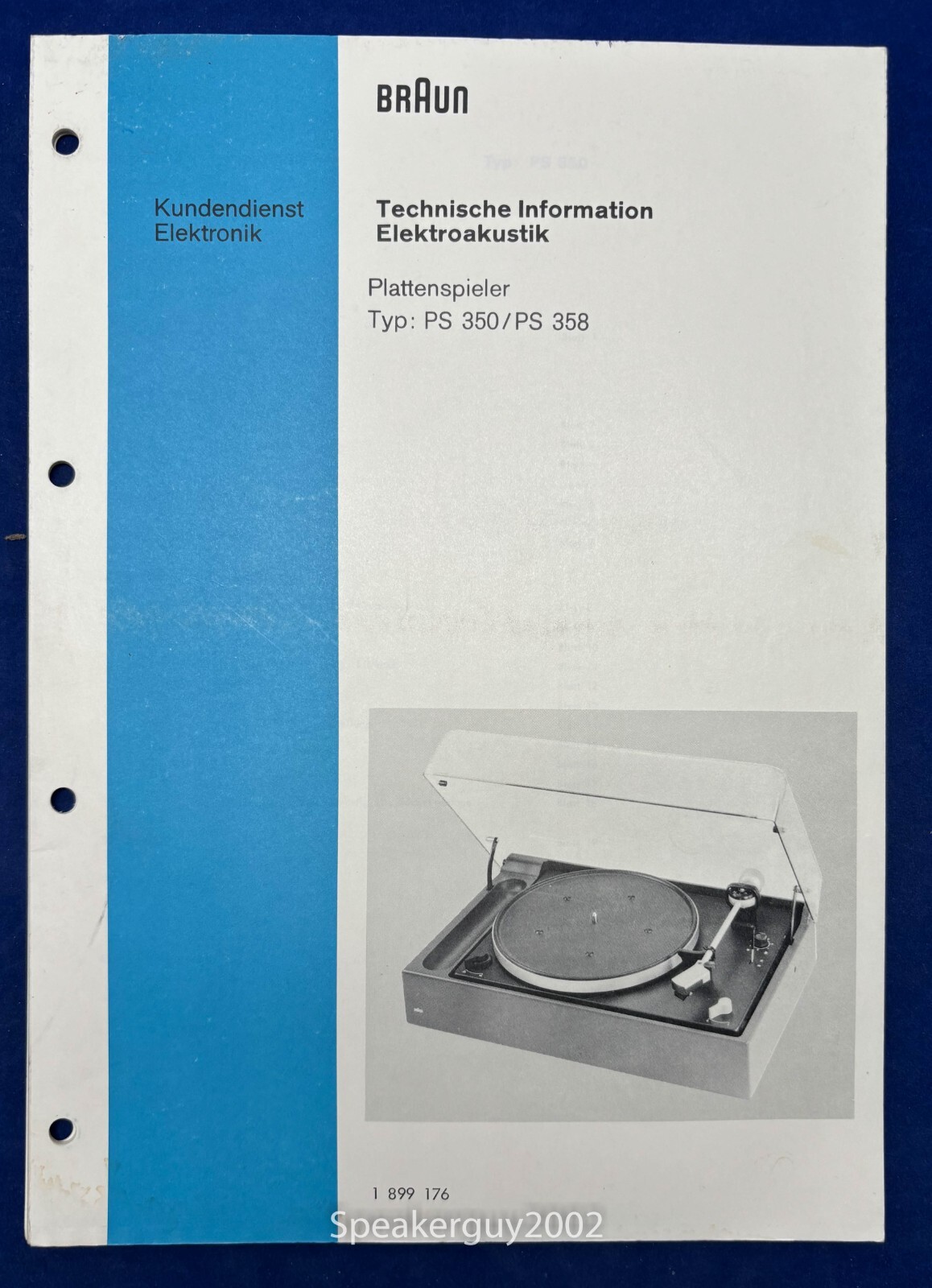
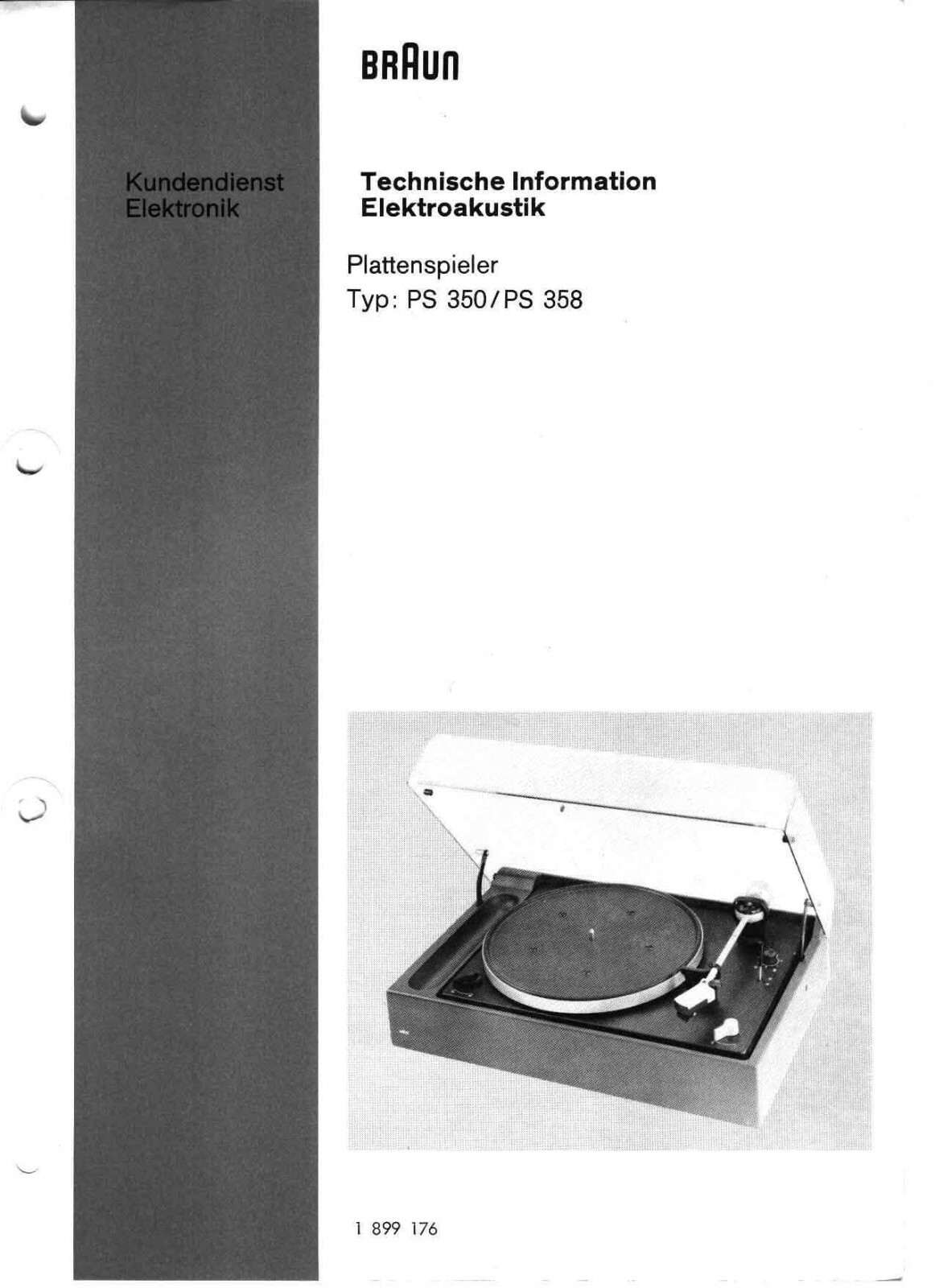
The Braun PS-350 is not merely a turntable—it is a statement. Crafted in the early 1970s by the legendary German design house Braun, the PS-350 stands as one of the most iconic examples of functionalist audio design ever produced. Developed under the visionary direction of Dieter Rams, the PS-350 embodies the principles of "less but better" (weniger, aber besser), merging precision engineering with minimalist aesthetics to create a turntable that remains highly sought after by collectors and audiophiles alike.
Though not as widely known as some of its contemporaries from Technics or Thorens, the PS-350 occupies a unique space in audio history: it is a high-fidelity component born from industrial design philosophy rather than pure sonic ambition. Yet, despite its restrained appearance, it delivers a listening experience that is both accurate and emotionally engaging.
Historical Context
Introduced around 1970, the PS-350 was part of Braun’s broader PS (Plattenspieler, or "turntable") series, which included models like the PS-50, PS-55, and PS-1000. These turntables were designed to complement Braun’s range of audio components, including amplifiers and tuners, many of which were also designed with Rams’ signature aesthetic.
The PS-350 was not intended for mass-market appeal. Instead, it was aimed at design-conscious audiophiles and professionals who valued precision, durability, and understated elegance. It was often paired with high-end tonearms—most famously the Braun AS-303 or third-party arms like the SME 3009—and used with cartridges such as the Shure M97xE or Ortofon offerings of the era.
Manufactured in Germany, the PS-350 reflects the post-war German commitment to engineering excellence and clean design. It was produced during a golden era when companies like Braun, Blaupunkt, and Grundig were exporting not just electronics, but a philosophy of rational, user-centered design.
Technical Specifications
| Feature | Specification |
| Model | Braun PS-350 |
| Year Introduced | 1970 |
| Turntable Type | Belt-driven, manual operation |
| Platter | 300 mm die-cast aluminum, felt mat |
| Motor | Synchronous AC motor, low-vibration design |
| Speeds | 33⅓, 45 RPM (manually switched) |
| Speed Accuracy | ±0.3% |
| Wow and Flutter | < 0.05% (weighted) |
| Tonearm Compatibility | Designed for SME-style mounting (standard 9" mount) |
| Drive System | Rubber belt, precision pulley system |
| Chassis | Solid MDF base with aluminum top plate |
| Dust Cover | Hinged acrylic, minimalist frame |
| Dimensions | 450 × 145 × 360 mm (W × H × D) |
| Weight | 8.5 kg (18.7 lbs) |
| Origin | Germany |
The PS-350 uses a belt-drive system powered by a low-noise synchronous motor isolated from the plinth to minimize vibration transmission. The heavy aluminum platter ensures excellent rotational inertia, contributing to stable speed and reduced wow and flutter—key metrics for high-fidelity playback.
Unlike fully automatic turntables of the time, the PS-350 is manually operated: the user lifts and places the tonearm by hand, and speed selection is done via a physical switch. This manual approach was deliberate, emphasizing user engagement and mechanical simplicity—hallmarks of Rams’ design ethos.
Sound Characteristics and Performance
Sonically, the PS-350 is a neutral, transparent platform. It doesn’t color the sound; instead, it reveals the true character of the record and cartridge. Its rigid construction and effective isolation from external vibrations allow for a clean, detailed presentation with excellent stereo imaging and dynamic range.
Bass response is tight and well-controlled, thanks to the stable platter and low rumble. Midrange clarity is exceptional, making it ideal for vocal and acoustic recordings. High frequencies are rendered with precision, without harshness or sibilance—assuming a quality cartridge is used.
Because the PS-350 was designed as a foundation rather than a complete system, its performance is highly dependent on the tonearm and cartridge pairing. When matched with a high-quality arm like the SME 3009 and a modern moving coil cartridge, the PS-350 can rival the performance of far more expensive modern turntables.
Notable Features and Design Innovations
The PS-350’s most striking feature is its design language. Every element serves a purpose. There are no decorative flourishes—no chrome, no wood veneer, no glowing meters. Instead, the turntable presents a monolithic form in matte black or white, with subtle gray or silver accents.
- Minimalist Control Layout: A single speed switch and power indicator (a small red LED) are the only visible controls.
- Integrated Acrylic Dust Cover: The cover opens smoothly on precision hinges, preserving the clean lines when closed and disappearing visually when open.
- Precision Engineering: The motor and platter assembly are decoupled from the main chassis using rubber damping mounts, reducing mechanical noise.
- Modular Compatibility: Designed to integrate seamlessly with other Braun audio components, such as the T-1000 tuner or LE-1 amplifier, forming a cohesive audio system.
Dieter Rams’ ten principles of good design are all evident here: innovation, utility, aesthetics, understandability, unobtrusiveness, honesty, longevity, thoroughness, environmental friendliness, and simplicity.
Common Issues and Maintenance
While the PS-350 is built to last, age has introduced some common maintenance concerns:
- Belt Replacement: The original rubber belt may have hardened or cracked after 50+ years. Replacement with a modern silicone belt (e.g., from The Funk Firm or Mobile Fidelity) is recommended.
- Motor Issues: Though robust, the synchronous motor can develop hum if the windings degrade. Cleaning and lubrication of motor bearings may be necessary.
- Tonearm Wiring: Older tonearm cables can become brittle. Re-reaming with modern, low-capacitance wiring improves signal integrity.
- Dust Cover Hinges: The acrylic cover hinges may crack or become loose over time. Replacement or reinforcement is often needed.
Regular cleaning of the platter and stylus, along with proper cartridge alignment, ensures optimal performance. Given its scarcity, finding original spare parts can be challenging, so many owners rely on third-party suppliers or custom solutions.
Current Market Value and Collectibility
The Braun PS-350 is a highly collectible piece, particularly among design enthusiasts and Rams aficionados. While not as common on audiophile forums as Technics or Linn turntables, it commands strong prices at auction and in vintage design markets.
- Condition-Dependent Pricing: A fully functional PS-350 in excellent cosmetic condition can fetch $1,200–$2,500, especially if paired with an original Braun tonearm.
- Museum-Quality Examples: Units with original packaging, documentation, and accessories have sold for over $3,000 in design auctions.
- Rarity: Unlike mass-produced turntables, the PS-350 was made in limited numbers, contributing to its exclusivity.
Its value is driven as much by its status as a design artifact as by its audio performance. It frequently appears in design retrospectives and has been featured in exhibitions at institutions like the Museum of Modern Art (MoMA) in New York.
Conclusion: A Legacy of Simplicity and Substance
The Braun PS-350 is more than a turntable—it is a masterpiece of industrial design. In an era when audio equipment often leaned toward the ornate or the overly complex, the PS-350 stood apart with its quiet confidence, precision engineering, and timeless form.
Today, it remains a symbol of what happens when design and function are perfectly aligned. For the collector, it’s a trophy. For the listener, it’s a window into the music. And for the design lover, it’s a daily reminder that beauty lies in simplicity.
If you’re lucky enough to own or encounter a PS-350, treat it with care. You’re not just handling a vintage turntable—you’re holding a piece of design history.
eBay Listings
As an eBay Partner, we earn from qualifying purchases. This helps support our independent vintage technology research.
Service Manuals & Schematics
- Service Manual — archive.org
Related Models
- Braun Atelier 2 (1965)
- Braun CSV-1000 (1965)
- Braun CSV-510 (1966)
- Braun PCS-4 (1965)
- Braun PCS-45 (1965)
- Luxman PD-272 (1983)
- Garrard 2025tc (1968)
- Onkyo CP-1010 (1976)
- Pioneer PL-15R (1975)
- Pioneer PL-250 (1979)