Braun AUDIO-1: The Marriage of Design and Sound in a Modular Vision
In the mid-1960s, as stereo audio technology was rapidly evolving and consumer electronics were becoming more accessible, German design house Braun made a bold statement not just in industrial design, but in the philosophy of how audio systems should be conceived. The Braun AUDIO-1, introduced in 1965, was not merely a hi-fi component — it was a radical reimagining of the home audio system as a modular, minimalist, and aesthetically unified experience. Though not a commercial blockbuster, the AUDIO-1 remains a landmark in the history of audio design, revered today by collectors, audiophiles, and design enthusiasts alike.
Conceived during the golden era of German modernism, the AUDIO-1 emerged from Braun’s collaboration with legendary designers including Dieter Rams and Hans Gugelot, who were instrumental in shaping the company’s design language. At a time when audio equipment was often ornate, bulky, and visually chaotic, Braun’s approach was revolutionary: less but better. The AUDIO-1 system embodied this ethos, offering a sleek, modular platform that prioritized function, clarity, and timeless aesthetics.
Technical Specifications
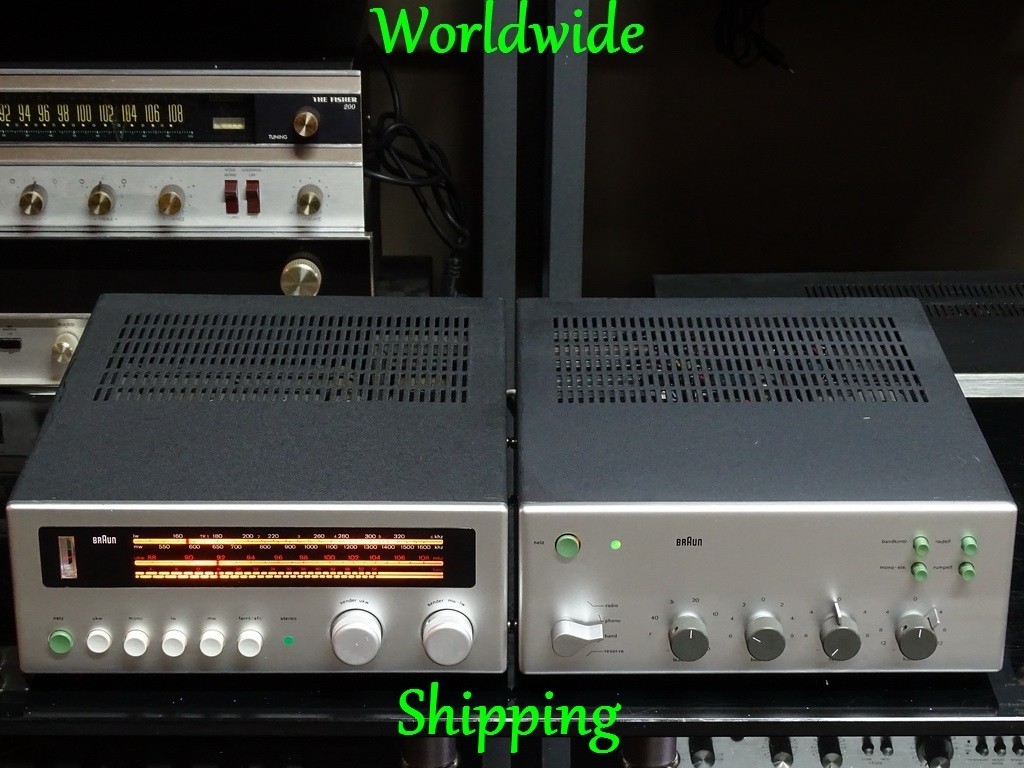
The Braun AUDIO-1 was not a single device but a modular audio system composed of interchangeable components that could be combined and stacked in a custom configuration. Each unit was housed in a minimalist aluminum and steel chassis with a distinctive horizontal slot grille and control layout that emphasized usability and visual harmony.
| Specification | Detail |
| Model | AUDIO-1 System |
| Manufacturer | Braun AG, Germany |
| Year Introduced | 1965 |
| System Type | Modular Hi-Fi Components |
| Components Available | Tuner, Amplifier, Tape Recorder, Turntable, Loudspeakers |
| Amplifier Output | Approx. 15W per channel (est.) |
| Frequency Response | 30Hz – 18kHz (system-dependent) |
| Inputs | Phono, Line, Tape (via modular backplane) |
| Power Supply | Integrated AC power distribution via backbone unit |
| Dimensions (per unit) | 450mm (W) × 120mm (H) × 280mm (D) approx. |
| Construction | Anodized aluminum front panel, steel chassis, wood side panels (on select models) |
| Color Finish | Silver aluminum, matte black accents |
The system operated on a backbone architecture — a central power and signal bus that allowed components to be physically and electrically interconnected without external cables. This was a visionary concept for its time, predating modern modular electronics by decades. Units snapped into a vertical or horizontal rack system, creating a seamless, furniture-like installation that could be wall-mounted or placed on a stand.
Sound Characteristics and Performance
While the Braun AUDIO-1 was celebrated first and foremost for its design, its sound quality was by no means an afterthought. The amplifier module delivered a clean, neutral output of approximately 15 watts per channel, sufficient for driving the matching LS 100 or LS 200 loudspeakers — compact bookshelf speakers with a balanced, detailed response.
The integrated tuner offered FM/AM reception with clear stereo separation, while the tape recorder (AUDIO 1 T) used a full-track mono or stereo configuration, depending on the model, and featured manual level controls and a VU meter. The turntable, though not part of the core AUDIO-1 lineup, was often paired with the system and typically sourced from high-quality third-party manufacturers like Saba or Grundig, ensuring compatibility and performance.
Overall, the sound of the AUDIO-1 system was transparent, uncolored, and precise — a reflection of Braun’s design philosophy. It avoided the warm, "tube-like" coloration common in 1960s audio gear, instead favoring accuracy and clarity. While not as powerful as some contemporary receivers, it excelled in midrange detail and stereo imaging, making it ideal for classical, jazz, and vocal recordings.
Notable Features and Innovations
The Braun AUDIO-1 was ahead of its time in several key areas:
- Modular Integration: The backbone system eliminated cluttered wiring and allowed users to expand their setup incrementally. This plug-and-play approach was revolutionary in the 1960s.
- Design Unity: Every component shared the same design language — flush-mounted controls, consistent typography (based on the Futura typeface), and a restrained color palette. This created a cohesive visual identity rare in consumer electronics of the era.
- User-Centered Interface: Knobs and sliders were logically arranged, with tactile feedback and clear labeling. Dieter Rams’ principles of “good design” — including honesty, simplicity, and longevity — are evident throughout.
- Furniture-Quality Build: The units were designed to be displayed, not hidden. With wood side panels and high-grade metalwork, the AUDIO-1 blurred the line between appliance and interior design object.
Common Issues and Maintenance
Today, finding a complete, functional Braun AUDIO-1 system is a challenge. Many units suffer from age-related issues:
- Capacitor Degradation: Electrolytic capacitors in the amplifier and power supply modules often dry out, leading to hum, distortion, or failure. A full recap is recommended for any unit in use.
- Worn Potentiometers: Volume and tone controls may become scratchy due to oxidation. Cleaning with contact cleaner can help, but replacement with modern equivalents may be necessary.
- Tape Mechanism Wear: The tape recorder modules may have degraded rubber drive belts and worn pinch rollers, requiring servicing by a specialist.
- Backbone Connectivity: The metal bus connectors can corrode over time, disrupting power or signal transfer between modules. Regular inspection and cleaning are advised.
Due to the rarity of replacement parts, restoration should be undertaken by technicians experienced in vintage German audio equipment. Original documentation is scarce, though some schematics and user manuals have been preserved by collector communities.
Current Market Value and Collectibility
The Braun AUDIO-1 is not a common find on the vintage market, and complete systems rarely appear for sale. When they do, prices reflect their status as design icons rather than pure audio performers.
- Individual Modules: €300–€600 each (depending on condition and rarity)
- Complete Systems (4+ components): €2,500–€5,000+
- Museum-Quality or Restored Sets: Can exceed €7,000 at auction
Collectors value the AUDIO-1 not only for its association with Dieter Rams but also as a physical manifestation of Bauhaus-inspired industrial design. It frequently appears in design retrospectives and has been featured in exhibitions at the Museum of Modern Art (MoMA) in New York and the Vitra Design Museum in Germany.
Conclusion and Legacy
The Braun AUDIO-1 was never intended to be a mass-market product. It was a statement piece, a demonstration of how technology and design could coexist in perfect harmony. While it lacked the raw power or convenience of later integrated receivers, its influence is undeniable.
It laid the conceptual groundwork for modern modular electronics, from high-end audio separates to today’s smart home systems. More importantly, it reinforced the idea that how a device looks and feels is as important as how it performs.
For vintage audio enthusiasts, the AUDIO-1 is a rare treasure — a system that transcends its function to become a work of art. For design lovers, it’s a masterpiece of mid-century modernism. And for those who experience it — whether through restored hardware or museum display — it remains a powerful reminder that good design is timeless.
The Braun AUDIO-1 isn’t just vintage audio equipment. It’s a legacy of clarity, simplicity, and enduring beauty.
eBay Listings



As an eBay Partner, we earn from qualifying purchases. This helps support our independent vintage technology research.
Service Manuals & Schematics
- Service Manual — archive.org
- Manual — archive.org
Related Models
- Braun L-810 (1965)
- Braun ATELIER-1-81 (1965)
- Braun ATELIER-1 (1965)
- Braun ATELIER-3 (1965)
- Braun AUDIO-2 (1965)
- Akai AM-2850 (1975)
- Akai AP-206 (1975)
- Nakamichi BX-1 (1985)
- Acoustic Research research-ar-17 (1978)
- Acoustic Research AR-19 (1994)