Braun ATELIER-1: The Pinnacle of Modular Audio Design
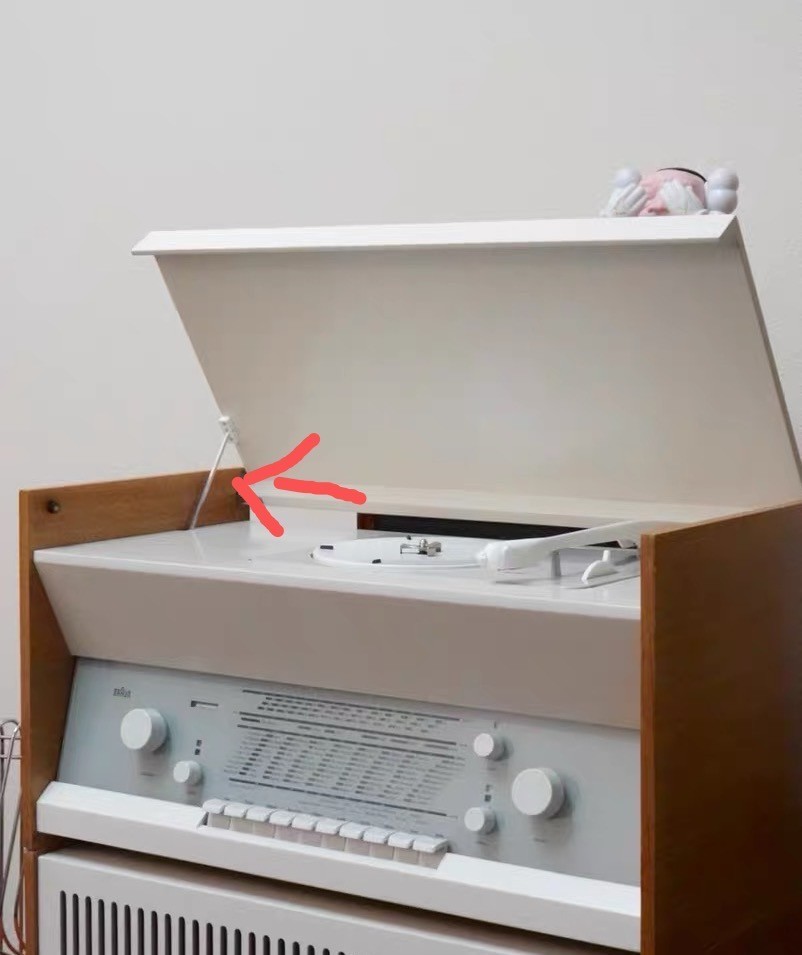
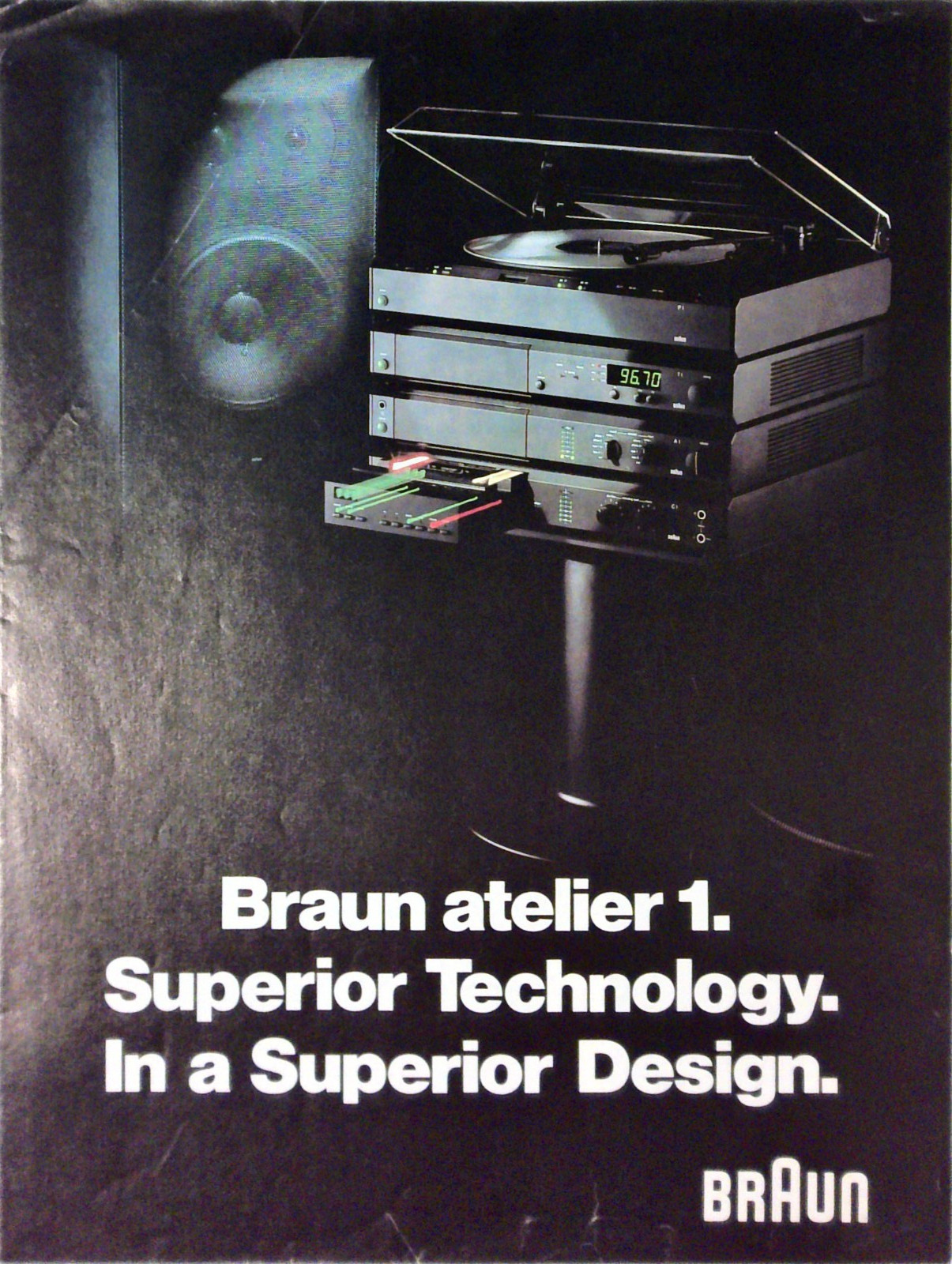
The Braun ATELIER-1 stands as one of the most iconic and forward-thinking audio systems of the 1960s, not for its raw power or technical complexity, but for its revolutionary approach to design, modularity, and user experience. Conceived under the visionary direction of Dieter Rams at Braun’s design studio in Frankfurt, Germany, the ATELIER-1 was more than just a hi-fi system—it was a statement about how technology should integrate into modern living. Released in 1965, it embodied the principles of functional minimalism, precision engineering, and aesthetic purity that would come to define modern industrial design.
Unlike conventional receivers or amplifiers of its era, the ATELIER-1 was not a single unit but a modular audio ecosystem. It allowed users to assemble a custom high-fidelity setup using standardized components that could be mounted on a dedicated rail system or integrated into custom cabinetry. This concept was groundbreaking at the time and prefigured today’s modular smart home systems by decades.
Historical Context and Design Philosophy
In the mid-1960s, consumer electronics were often ornate, bulky, and visually overwhelming—wooden cabinets, glowing dials, and chrome accents dominated living rooms. Braun, under Dieter Rams, rejected this trend. The company’s ethos—“less, but better” (weniger, aber besser)—was fully realized in the ATELIER-1 system.
Rams believed that audio equipment should be invisible in function but unforgettable in form. The ATELIER-1 components were designed to recede into the background while delivering exceptional performance. Every element—from the brushed aluminum faceplates to the recessed controls—was stripped of ornamentation. The result was a system that looked more like precision laboratory equipment than a consumer stereo.
The ATELIER-1 was targeted at the discerning audiophile and design-conscious consumer, often installed in architecturally significant homes or modernist interiors. It was not mass-market; instead, it was a bespoke solution, reflecting Braun’s ambition to merge technology with timeless design.
Technical Specifications
| Specification | Detail |
| Year Introduced | 1965 |
| Manufacturer | Braun AG, Germany |
| System Type | Modular high-fidelity audio system |
| Components Available | Tuner (TS 45), Amplifier (VE 45), Tape Recorder (TE 100), Record Player (PS 15), Loudspeakers (L 450, L 200) |
| Construction | Brushed aluminum, steel, and matte plastic |
| Mounting System | Wall-mounted aluminum rail or cabinet integration |
| Amplifier Output | 2 x 25W RMS (VE 45) |
| Frequency Response | 20Hz – 20kHz (amplifier) |
| Inputs | Phono, Tape, Aux (via modular backplane) |
| Impedance | 4–8Ω |
| Dimensions (per module) | Varies (standardized width: 360mm) |
| Power Supply | Centralized power distribution via rail system |
Each ATELIER-1 component was engineered for interchangeability. The standardized width allowed seamless alignment, while a hidden backplane facilitated electrical and signal connections—eliminating a tangle of cables. This “plug-in” architecture was remarkably advanced for its time and influenced later modular systems from companies like Bang & Olufsen and Linn.
Sound Characteristics and Performance
While Braun was first and foremost a design-led company, the ATELIER-1 did not sacrifice audio fidelity. The VE 45 amplifier, the heart of the system, delivered a clean, neutral sound with excellent channel separation and low distortion. Its Class AB design provided ample headroom for dynamic music, and its phono stage was well-matched to the PS 15 turntable, which featured a precision tonearm and low-resonance plinth.
The L 450 loudspeakers—designed in collaboration with audio engineer Hans G. Folkerts—were equally innovative. With their compact, sealed-box design and paper-cone drivers, they offered a balanced, detailed sound with surprisingly deep bass for their size. Their minimalist grilles and flush-mounted drivers complemented the system’s aesthetic language.
Overall, the ATELIER-1 prioritized clarity, neutrality, and spatial accuracy over warmth or coloration. It was not a “romantic” sounding system like many tube-based contemporaries, but rather a transparent window into the recording—ideal for jazz, classical, and acoustic music.
Notable Features and Innovations
- Modular Rail System: The aluminum mounting rail allowed components to be installed flush on a wall or within custom furniture, creating a “built-in” look years before it became common.
- Hidden Connectivity: A proprietary backplane eliminated external wiring between modules, enhancing both aesthetics and signal integrity.
- Tool-Free Assembly: Components snapped into place with precision fittings, making installation and reconfiguration simple.
- Uniform Design Language: All modules shared the same materials, typography (based on the Univers font), and control layout, creating visual harmony.
- Integration with Architecture: The system was often specified by architects and interior designers, blurring the line between appliance and interior element.
Common Issues and Maintenance
Due to its age and rarity, maintaining an original ATELIER-1 system today requires care and expertise.
- Capacitor Aging: Electrolytic capacitors in the VE 45 amplifier and TE 100 tape deck often need replacement to restore performance and prevent damage.
- Rubber Components: The tape recorder’s drive belts and turntable idler wheels may have perished and require replacement with modern equivalents.
- Oxidation: Aluminum faceplates and rail connectors can develop oxidation; gentle cleaning with non-abrasive polish is recommended.
- Parts Scarcity: Original replacement parts are extremely rare. Many restorers rely on donor units or custom fabrication.
- Speaker Foam: The L 450 speakers’ foam surrounds often degrade; reconing or foam replacement is typically necessary.
Despite these challenges, the ATELIER-1 is generally robust. Its simple circuitry and high-quality construction mean that, when properly restored, it performs reliably.
Current Market Value and Collectibility
The Braun ATELIER-1 is highly collectible, especially among design enthusiasts and Dieter Rams aficionados. Complete systems in good condition can command $8,000–$15,000 at auction or through specialist dealers. Rare configurations—such as full wall-mounted setups with original rail systems—can exceed $20,000.
Factors influencing value:
- Completeness: Systems with all original components and documentation are most desirable.
- Provenance: Units linked to notable designers or architects fetch premiums.
- Condition: Original finishes and unmodified electronics are critical.
- Restoration Quality: Professionally restored units are valued higher than poorly repaired ones.
The ATELIER-1 is frequently featured in design museums, including the Museum of Modern Art (MoMA) in New York, where it is celebrated as a landmark in industrial design.
Conclusion and Legacy
The Braun ATELIER-1 was never a commercial blockbuster, but it was a cultural and design milestone. It redefined what audio equipment could be—not just a box that plays music, but a thoughtfully designed system that enhances the living environment.
Its influence is visible in modern audio brands like Bang & Olufsen, Devialet, and even Apple, whose design language owes much to Rams’ principles. The ATELIER-1’s modular philosophy also foreshadowed today’s smart home ecosystems, where devices work together seamlessly behind a unified interface.
For collectors, the ATELIER-1 is more than a vintage audio system—it’s a sculptural artifact of modernist design, a testament to the belief that technology, when thoughtfully crafted, can elevate everyday life. In an age of disposable electronics, the ATELIER-1 remains a powerful reminder that good design is timeless.
eBay Listings


As an eBay Partner, we earn from qualifying purchases. This helps support our independent vintage technology research.
Service Manuals & Schematics
- Manual — archive.org
- Manual (1981) — archive.org
Related Models
- Braun L-810 (1965)
- Braun ATELIER-1-81 (1965)
- Braun ATELIER-3 (1965)
- Braun AUDIO-1 (1965)
- Braun AUDIO-2 (1965)
- Akai AM-2850 (1975)
- Akai AP-206 (1975)
- Nakamichi BX-1 (1985)
- Acoustic Research research-ar-17 (1978)
- Acoustic Research AR-19 (1994)