Bowers & Wilkins DM7 MKII
At 13kg and just under 60cm tall, these speakers carry a heft and presence that belies their modest footprint — serious engineering in a box.
Overview
While the base DM7 launched in 1976, the MKII variant arrived with subtle but meaningful upgrades, though exact technical distinctions between the two remain undocumented in available sources. What is clear is that the MKII inherited the core philosophy of its predecessor: to distill the high-resolution transducers from the flagship DM70 into a more accessible package. This wasn’t a downsized luxury item — it was a deliberate recalibration, trading none of the critical driver technology for a more conventional cabinet layout and pricing structure.
Its three-way, sealed-box design — known technically as an acoustic suspension system — prioritizes control over boom. The result is a sound that’s tight, articulate, and startlingly transparent in the midrange and treble, thanks to the DM70-derived dome tweeter and midrange unit. But this clarity comes with expectations.
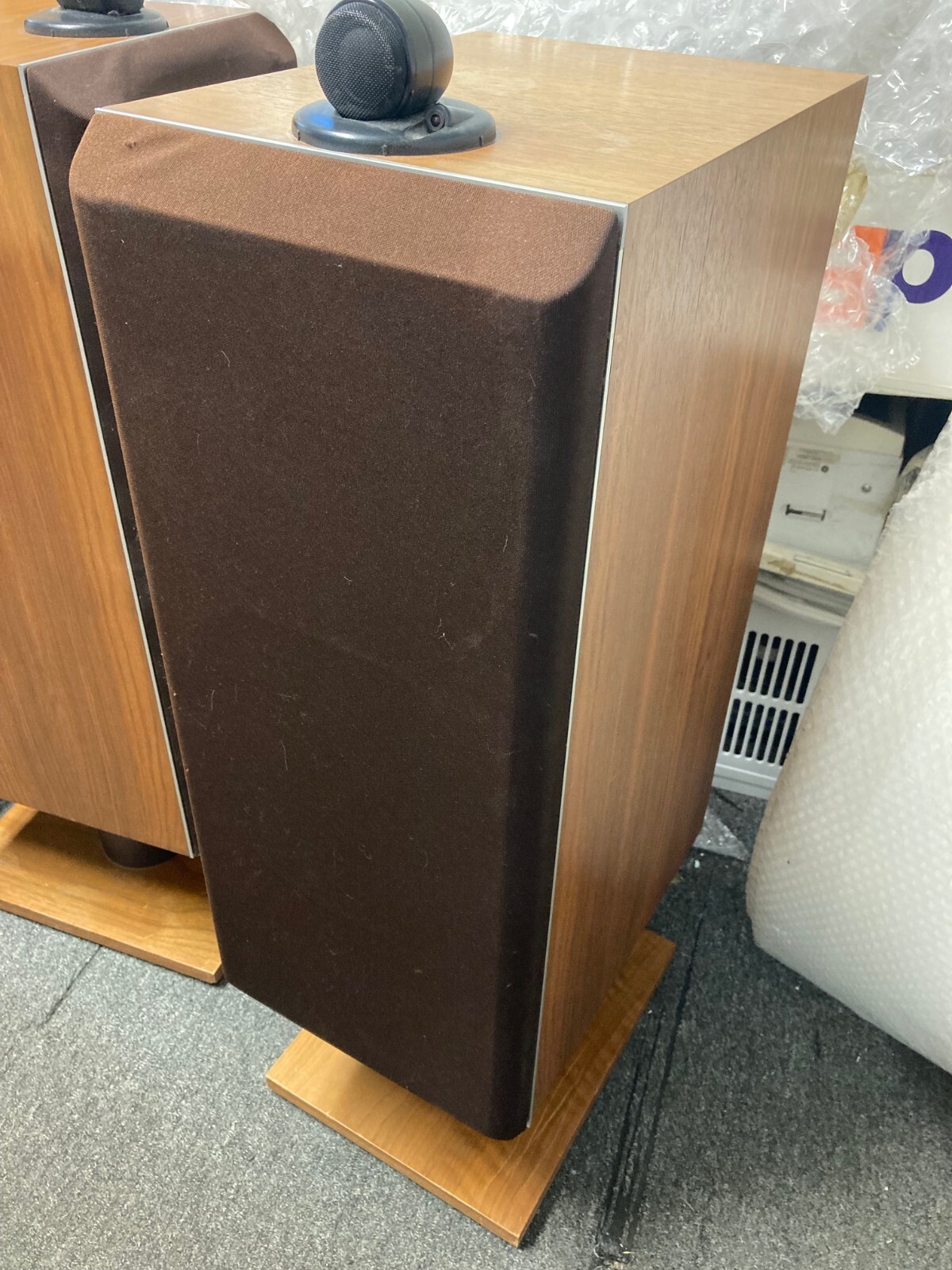
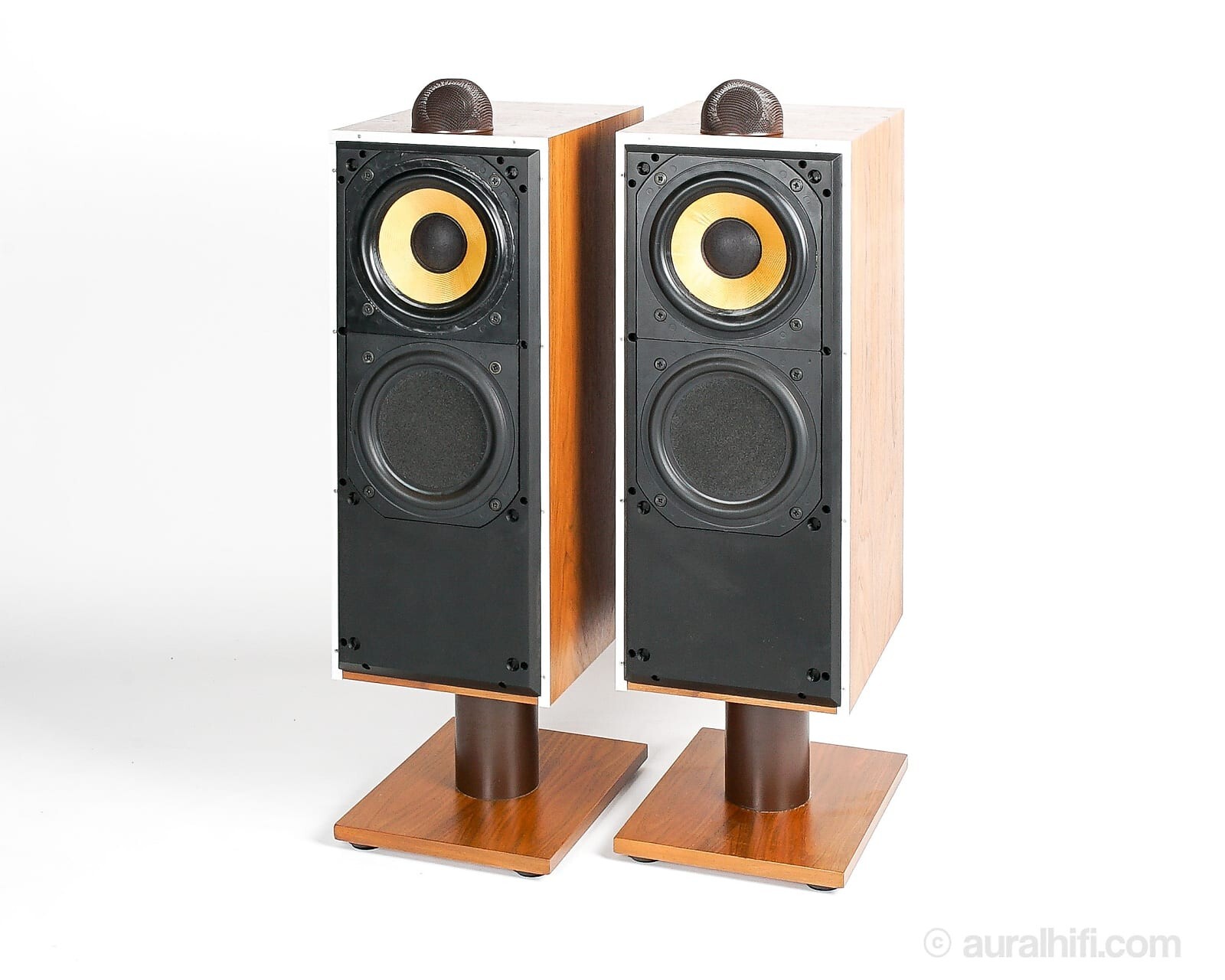
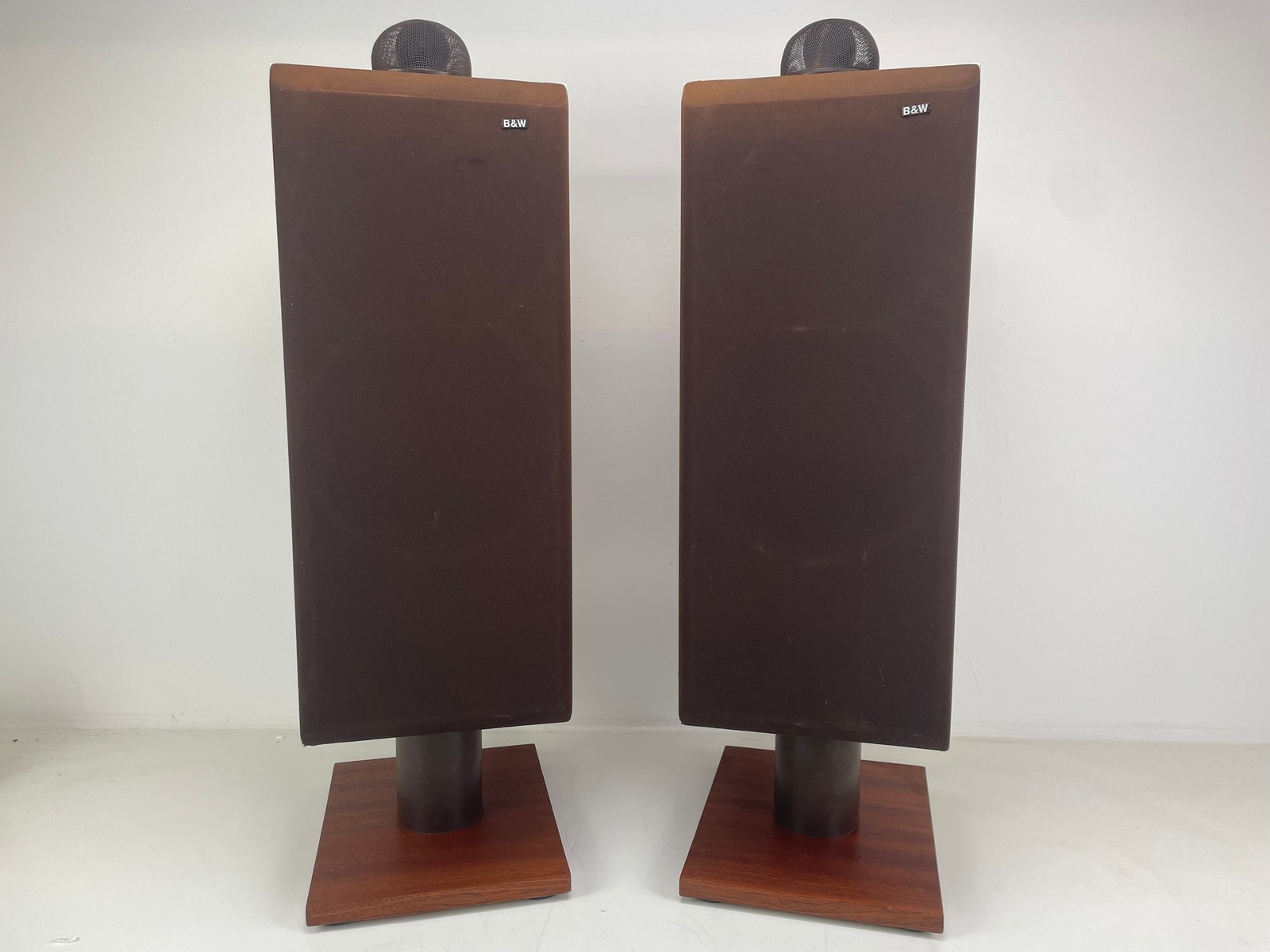
Physically, the speaker is a study in functional minimalism. The cabinet uses 19mm chipboard, damped with a bituminous layer and lined with foam to suppress internal resonances. The front baffle wears a black, textured paint finish, while the grille is a taut, acoustically transparent black fabric stretched over wood. Interestingly, multiple listings identify a teak-veneer version of the DM7 MKII, suggesting Bowers & Wilkins offered alternate finishes despite the factory documentation emphasizing the black baffle. Whether this was a factory option or a later modification isn’t clarified in the records, but surviving units confirm its existence.
Specifications
| Manufacturer | Bowers & Wilkins |
| Product type | Loudspeaker |
| Frequency Response | 50Hz–20kHz (±3dB) (main source); 30Hz to 25kHz (alternate listing) |
| Sensitivity | 87dB for 1W at 1m (main source); 95 dB (alternate listing) |
| Nominal Impedance | 8Ω |
| Recommended Amplifier Power | 25–100W |
| Crossover Frequencies | 400Hz, 3kHz |
| Drive Units | 200mm (8") bass, 100mm (4") midrange, 26mm (1") dome tweeter |
| Dimensions (H×W×D) | 580 × 280 × 280mm (main source); 35.5"H x 10.63"W x 15.04"D (alternate listing) |
| Weight | 13kg (main source); 32 lbs. ea. (alternate listing) |
Key Features
Three-Way Acoustic Suspension Design
The DM7 MKII’s sealed-box alignment is a deliberate choice, favoring transient accuracy and bass control over sheer low-end extension. Unlike ported designs that can sound boomy or loose, this system delivers tight, well-defined bass — ideal for critical listening in smaller rooms. The trade-off, as some users noted, is a roll-off below 50Hz, meaning deep organ notes or synth fundamentals might lack weight. But within its range, the bass is fast and articulate, integrating cleanly with the midrange.
DM70-Derived Midrange and Tweeter
The real magic lies in the upper drivers. By borrowing the dome tweeter and 100mm midrange unit from the flagship DM70, Bowers & Wilkins ensured the DM7 MKII retained the family’s signature clarity. The 26mm dome tweeter delivers extended highs with low distortion, though collectors note the ferrofluid that cools and dampens it can dry out over decades, potentially leading to failure. The midrange, free from the colorations of cone breakup, renders vocals and acoustic instruments with a neutrality that still impresses today.
Heavily Damped Cabinet Construction
The 19mm chipboard cabinet isn’t glamorous, but it’s effective. The added bituminous damping layer and internal foam lining work together to starve the enclosure of resonances that could smear the sound. This attention to cabinet rigidity was ahead of its time, reflecting John Bowers’ obsession with eliminating everything that wasn’t the original signal. The rectangular shape and flat baffle may look plain, but they serve a purpose — minimizing diffraction and phase anomalies.
Black Textured Baffle and Wooden-Frame Grille
The front baffle’s black, textured paint isn’t just cosmetic — it reduces surface reflections that could interfere with high-frequency dispersion. The grille, while removable, is designed to be acoustically transparent, so leaving it on doesn’t dull the sound. Its wooden frame adds rigidity, preventing sagging over time. That said, owners report the black finish is prone to fading or discolouration, especially under direct light, which can detract from the speaker’s appearance even if the sound remains intact.
Historical Context
Positioned between the smaller DM2 and DM4 models and the top-tier DM70, the DM7 MKII occupied a sweet spot for enthusiasts who wanted flagship DNA without the flagship cost. It wasn’t a radical departure, but an intelligent re-packaging of proven technology. While the product family hierarchy is sparsely documented, the lineage is clear: this was Bowers & Wilkins’ way of democratizing precision.
Collectibility & Value
Surviving pairs of the DM7 MKII are not common, and their condition is often the deciding factor in value. Foam deterioration on the bass and midrange drivers is a near-universal issue for speakers of this era, and the DM7 MKII is no exception. Replacement foam kits are available from specialist suppliers, making restoration feasible but not trivial. The ferrofluid in the tweeter is another potential failure point; if dried, it may require re-fluiding or replacement by a technician familiar with vintage drivers.
Market prices are poorly documented, but anecdotal evidence suggests interest remains. A restored pair was listed with a "New Price" of $699, while a forum member stated they would buy a pair in excellent condition for $350. An original-series DM7 pair appeared on Facebook Marketplace for $200, indicating that un-restored units command lower prices. Ultimately, the DM7 MKII appeals to collectors who value technical integrity over flash — a speaker that sounds better the more you invest in its upkeep.
eBay Listings

As an eBay Partner, we earn from qualifying purchases. This helps support our independent vintage technology research.
Related Models
- Bowers & Wilkins 805
- Bowers & Wilkins 805S (2007)
- Bowers & Wilkins CDM 7
- Bowers & Wilkins CM1 (2006)
- Bowers & Wilkins DM110 (1984)
- Akai AM-2850 (1975)
- Akai AP-206 (1975)
- Nakamichi BX-1 (1985)
- Acoustic Research research-ar-17 (1978)
- Acoustic Research AR-19 (1994)