Bowers & Wilkins DM6 (1976–1979): The British Bookshelf Behemoth That Redefined Hi-Fi Accuracy
A compact floor-stander in all but name, the DM6 packed KEF’s legendary B110 driver into a rigid, time-aligned cabinet that set a new benchmark for British speaker design—just as the audiophile boom hit full stride.
Overview
The Bowers & Wilkins DM6 wasn’t just another box in the golden age of hi-fi—it was a statement. Launched in 1976, at a time when American speakers leaned toward boomy warmth and Japanese models chased efficiency, the DM6 stood apart with its unflinching commitment to neutrality, precision, and engineering rigor. Priced at $450 per pair in 1977 (a serious investment, equivalent to over $2,300 today), it targeted serious listeners who wanted transparency, not hype. And it delivered: a speaker that didn’t shout, but whispered the truth of the recording with startling clarity.
Despite its modest footprint—just over two feet tall—the DM6 was no lightweight, tipping the scales at 18.2 kg (40.1 lbs) per cabinet. That heft wasn’t for show. Every pound was spent on a massively braced cabinet, a rear-firing bass reflex port, and the heart of the system: the KEF B110 12-inch bass driver. Yes, you read that right—12 inches in a speaker many classified as a "bookshelf" model. This was no mere shelf-sitter; it was a compact floor-stander in disguise, capable of authoritative bass down to 50 Hz. Audiophiles of the late '70s didn’t just own DM6s—they revered them. Engineers, broadcasters, and BBC-affiliated listeners snapped them up, drawn to their uncanny ability to reproduce speech and acoustic instruments with lifelike presence.
Specifications
| Type | 2-way bass reflex |
| Drivers | 1 x 300mm (12") bass, 1 x 25mm (1") dome tweeter |
| Frequency Response | 50 Hz - 20 kHz |
| Impedance | 8 ohms |
| Sensitivity | 89 dB (1W/1m) |
| Crossover Frequency | 3.2 kHz |
| Dimensions (H x W x D) | 580 mm x 305 mm x 270 mm |
| Weight | 18.2 kg (40.1 lbs) per cabinet |
| Enclosure Type | Bass reflex with rear port |
| Country of Manufacture | United Kingdom |
Key Features
- KEF B110 12-inch bass driver: This wasn’t just any cone—it was one of KEF’s most celebrated units, renowned for its large magnet structure and exceptional linearity. Paired with a well-tuned reflex cabinet, it gave the DM6 bass authority that belied its size. The B110’s low distortion and controlled roll-off made it a favorite in studio monitors and high-end domestic systems alike. B&W didn’t reinvent the wheel here—they picked the best one available and built a cathedral around it.
- Proprietary Bowers & Wilkins dome tweeter: While the bass unit was outsourced to KEF, the 25mm (1") dome tweeter was B&W’s own design, optimized for wide dispersion and smooth off-axis response. This was no afterthought—it was engineered to time-align with the woofer, a concept B&W was pioneering at the time. The result? A seamless handoff at 3.2 kHz and a soundstage that remained coherent even when you weren’t sitting dead-center. For 1976, that was borderline revolutionary.
- Massively braced cabinet with rear port: The DM6’s cabinet wasn’t just wood—it was a structural exercise in damping. Internal bracing minimized panel resonance, while the rear-firing port allowed for deeper bass extension without the port noise that plagued front-vented designs. The downside? Placement mattered. These speakers needed breathing room from the wall—too close, and the bass would bloat; too far, and you’d lose the room coupling. But get it right, and the bass was tight, articulate, and shockingly deep for a cabinet under 30 cm deep.
Historical Context
The DM6 arrived at a pivotal moment. The mid-1970s saw hi-fi transition from a niche hobby to a cultural obsession. Turntables were spinning vinyl in living rooms across Europe and North America, and listeners were demanding more fidelity, more realism, more truth. Against this backdrop, Bowers & Wilkins was emerging as a serious contender. The DM7 (1975–1977) had laid the groundwork, but the DM6 refined the formula with better driver integration and cabinet refinement. It was a bridge between the raw experimentation of the early DM series and the precision engineering that would define the DM602 and beyond.
And then there was the competition. The KEF LS3/5A, developed for BBC outside broadcast use, was its closest spiritual cousin—compact, neutral, and critically adored. But the LS3/5A was a nearfield monitor, while the DM6 was built for full-range listening in real rooms. Where KEF prioritized portability and consistency, B&W chased scale and dynamics. The DM6 was also a counterpoint to the American high-efficiency horns and boomy bass reflex designs of the era. It didn’t play loud to impress—it played honest to reveal. That philosophy resonated with a growing cohort of listeners who valued accuracy over spectacle, and the DM6 became a touchstone for what British hi-fi could be: understated, over-engineered, and utterly uncompromising.
Collectibility & Value
Today, the DM6 is a rare find—genuinely rare, not just “hard to find.” Fewer than 5,000 pairs were reportedly made during its three-year production run, and many have succumbed to time’s cruelties. As of 2025, a well-maintained pair in original condition commands between $800 and $1,500 USD, with prices climbing for units that have been professionally restored. What drives the value? Provenance, performance, and pedigree. These were the speakers that helped establish Bowers & Wilkins as a first-tier brand, and collectors recognize that.
But buying a DM6 today is not for the faint of heart. Two issues are nearly universal: foam degradation in the bass reflex port surrounds and aging crossover components, particularly the electrolytic capacitors. The foam rings around the port often disintegrate into black dust, which can choke airflow and ruin bass response. The capacitors, meanwhile, dry out and drift in value, leading to a dull, lifeless treble. A “working” pair isn’t enough—you want one that’s been re-foamed and recapped by a specialist. Look for clean grilles, uncracked cabinets, and original drivers. If the B110 units have been replaced, you’re not buying a DM6—you’re buying a tribute. And while modern amps can drive these 8-ohm, 89 dB-sensitive speakers with ease, they’ll expose any flaws in the signal chain. The DM6 doesn’t flatter poor recordings or sloppy electronics. It never did.
eBay Listings
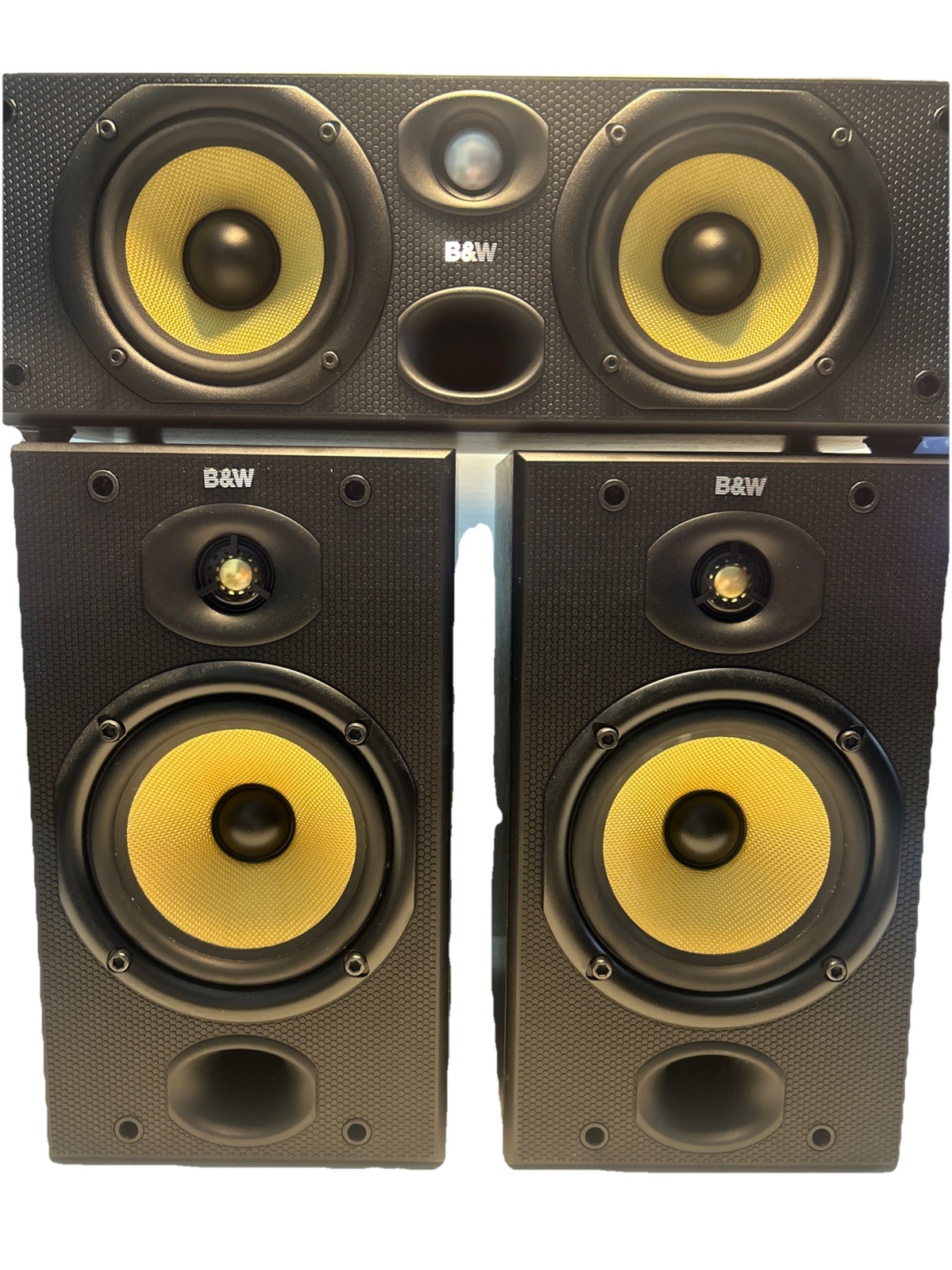


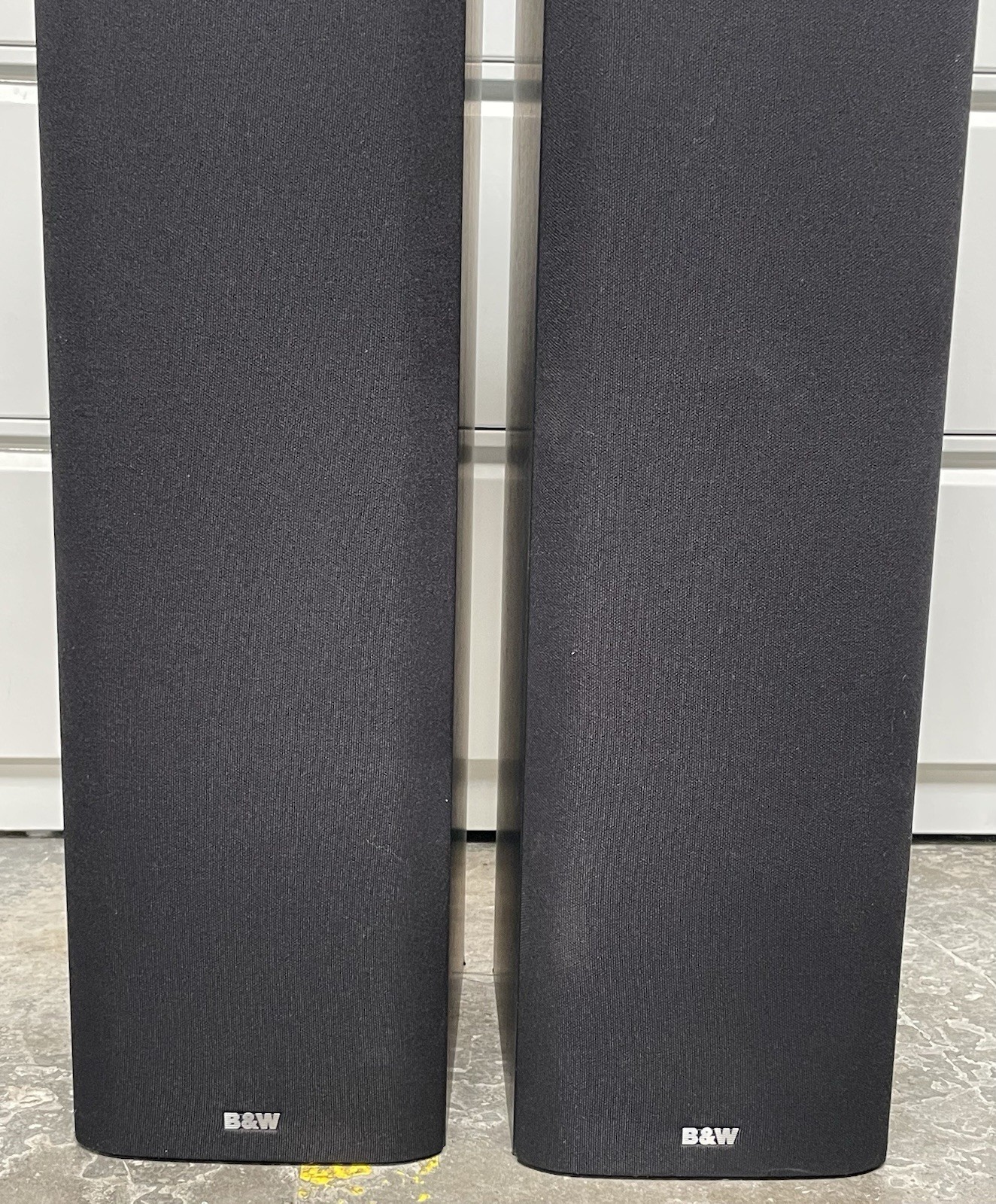
As an eBay Partner, we earn from qualifying purchases. This helps support our independent vintage technology research.
Related Models
- Bowers & Wilkins 801 (1979-1987)
- Bowers & Wilkins 802 (1979-1987)
- Bowers & Wilkins Matrix 801 (1987-1998)
- Akai AM-2850 (1975)
- Akai AP-206 (1975)
- Nakamichi BX-1 (1985)
- Acoustic Research research-ar-17 (1978)
- Acoustic Research AR-19 (1994)
- Acoustic Research AR-1W (1954)
- Acoustic Research AR-28S (1992)