Bose AM-5 Acoustimass 5 Series I: The Compact Revolution of the 1980s
In the mid-1980s, Bose Corporation continued to redefine how consumers thought about home audio with the introduction of the AM-5 Acoustimass 5 Series I. Part of Bose’s innovative Acoustimass line, the AM-5 represented a bold departure from traditional speaker design—offering a compact, space-saving solution without sacrificing the fullness of sound. At a time when floor-standing towers dominated audiophile setups, Bose challenged the status quo with a system that prioritized room-filling audio from minimal visual footprint. The AM-5 Acoustimass 5 Series I became a hallmark of early compact home audio systems and laid the groundwork for modern satellite-subwoofer configurations.
A New Philosophy in Speaker Design
Launched in 1985, the AM-5 Acoustimass 5 Series I emerged during a period of rapid innovation in consumer audio. As living spaces became smaller and aesthetics more important, Bose responded with a system that separated bass reproduction from midrange and treble frequencies. This was the core idea behind the Acoustimass technology: a compact bass module (the “Acoustimass”) paired with small, unobtrusive satellite speakers.
The AM-5 system consisted of:
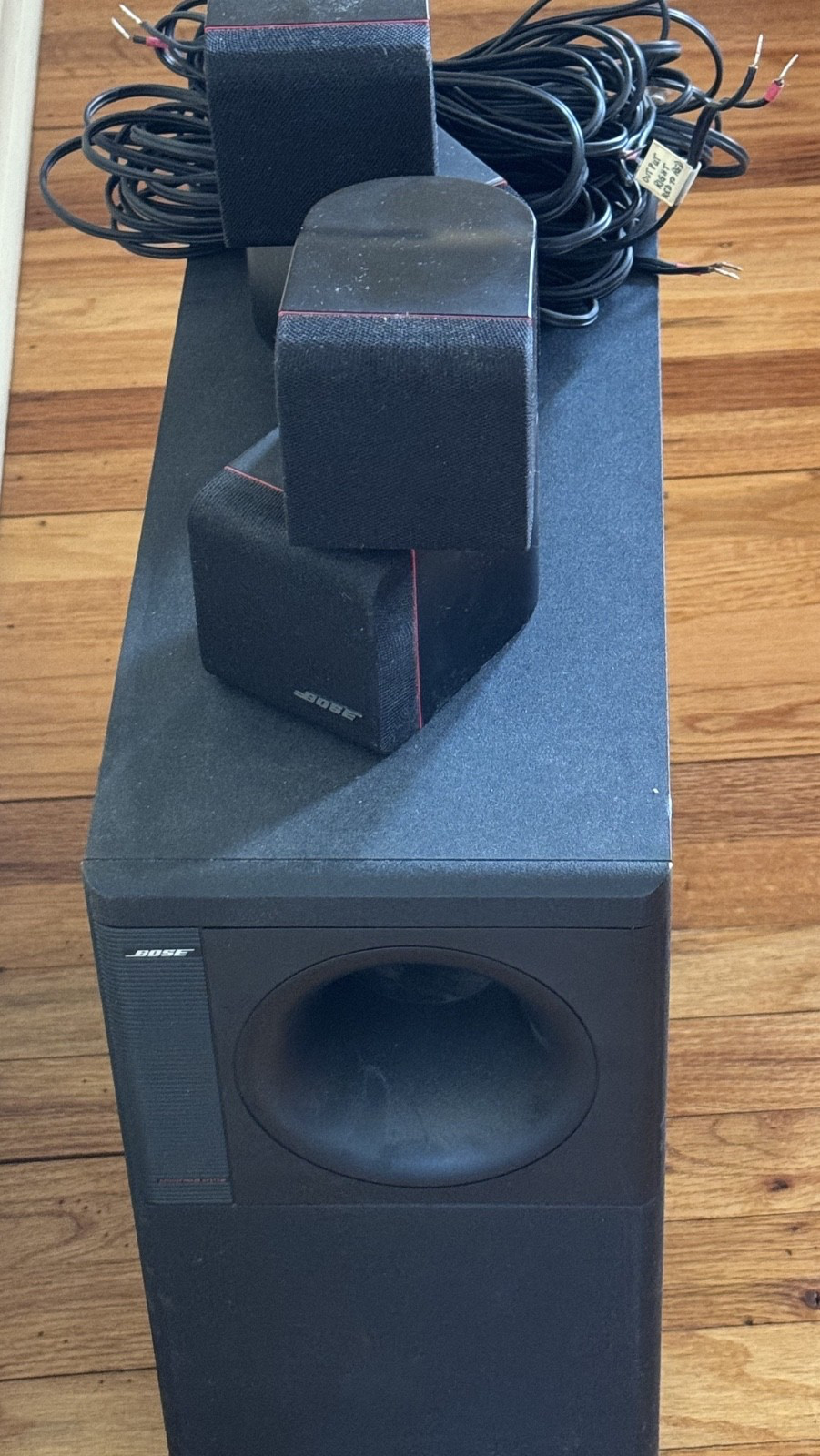
- Two compact satellite speakers (typically two-way, with a midrange driver and tweeter)
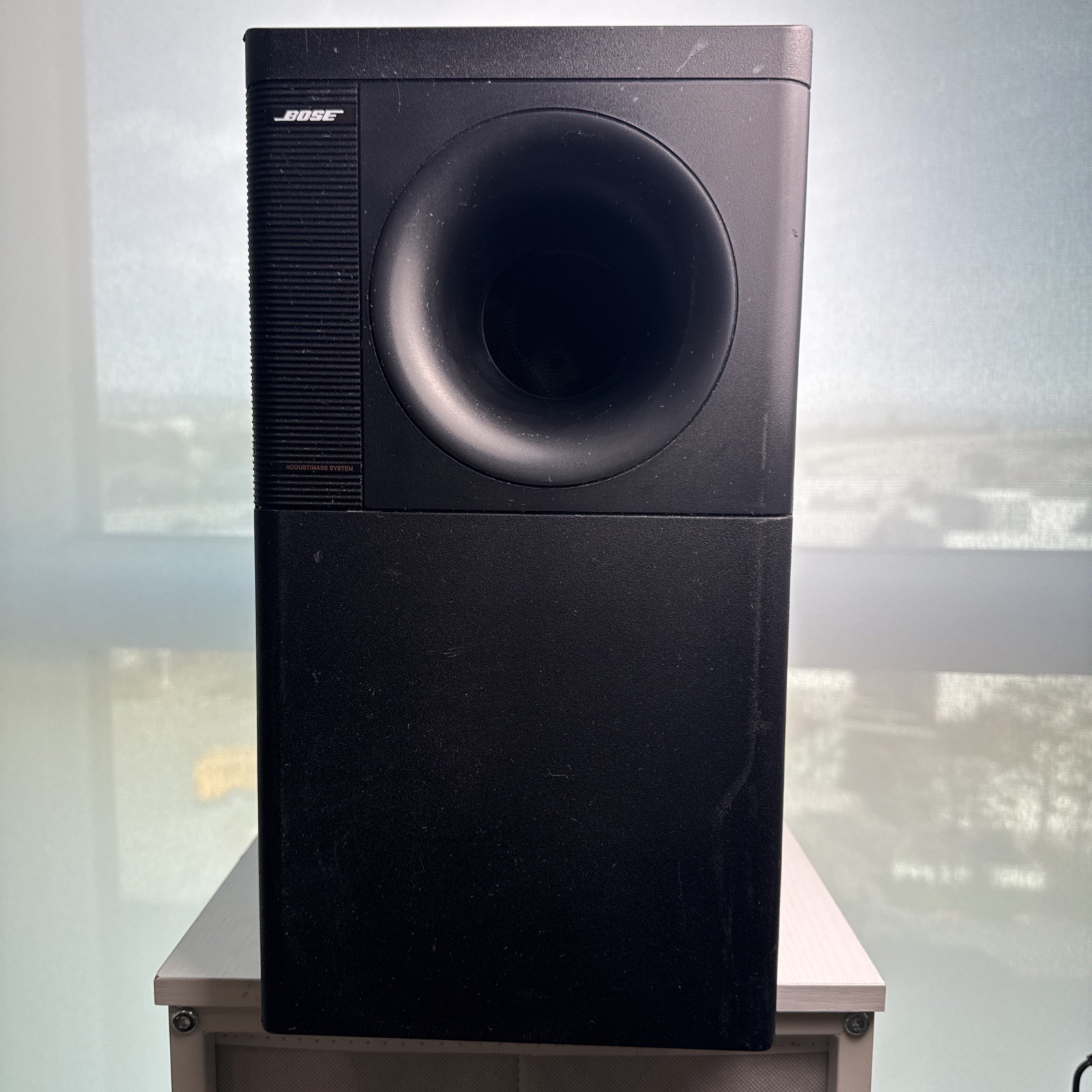
- One Acoustimass bass module (a sealed enclosure housing a long-throw woofer)
- Passive crossover network housed in the bass module
This configuration allowed the satellites to focus on clarity and imaging, while the bass module—often placed out of sight—delivered deep, resonant low-end. The system could be used in stereo or expanded into early surround sound setups, making it one of the first consumer audio systems to hint at modern home theater potential.
Technical Specifications
| Specification | Detail |
| Model | AM-5 Acoustimass 5 Series I |
| Manufacturer | Bose Corporation |
| Release Year | 1985 |
| System Type | 2.1 (satellite + bass module) |
| Satellite Drivers | 1 x 2.25" full-range driver, 1 x 0.75" dome tweeter |
| Bass Module Driver | 1 x 5.25" long-throw woofer |
| Enclosure Type | Sealed (Acoustimass module) |
| Frequency Response | 40 Hz – 20 kHz (system) |
| Impedance | Not applicable (passive system with internal crossover) |
| Recommended Amplifier | 10–100 watts per channel |
| Crossover | Passive, integrated in bass module |
| Dimensions (Satellite) | 5.5" H × 3.25" W × 3.5" D |
| Dimensions (Bass Module) | 15" H × 6.5" W × 6.5" D |
| Weight (Bass Module) | ~12 lbs |
| Finish Options | Black cloth grille, beige or black cabinet |
Note: The AM-5 is a passive system and requires an external amplifier or receiver.
Sound Characteristics and Performance
The AM-5 Acoustimass 5 Series I was never designed to compete with high-end audiophile towers in raw fidelity, but it excelled in delivering a surprisingly balanced and immersive sound for its size. The satellite speakers provided clear midrange and crisp highs, ideal for vocals and acoustic instruments. The real magic, however, came from the Acoustimass module.
Bose’s proprietary bass-loading design allowed the 5.25" woofer to produce bass down to 40 Hz, a remarkable feat for a compact, sealed enclosure in the 1980s. The bass was not ultra-tight or punchy like modern ported subwoofers, but it was deep, room-filling, and well-integrated—creating a sense of acoustic space that belied the system’s modest footprint.
Listeners often described the sound as “spacious” and “effortless,” with a wide stereo image that seemed to come from beyond the physical speakers. This was partly due to Bose’s emphasis on reflected sound—a design philosophy that used room acoustics to diffuse audio, creating a more ambient listening experience. While purists criticized this for reducing precision, many casual listeners appreciated the enveloping, concert-hall-like quality.
Notable Features and Innovations
The AM-5 Acoustimass 5 Series I was notable for several reasons:
- Space-Saving Design: At a time when speakers were large and obtrusive, the AM-5 offered a sleek, minimalist alternative—perfect for apartments, dorms, or living rooms where aesthetics mattered.
- Modular Bass: The separation of bass into a dedicated module was revolutionary. It allowed users to place the bass unit discreetly (under furniture or in corners) while keeping satellites on shelves or walls.
- Ease of Setup: With simple wiring (satellites connected to the bass module, which then connected to the amplifier), the system was user-friendly and accessible to non-technical consumers.
- Early Home Theater Potential: Though predating the official "home theater" era, the AM-5 was often used in multi-channel setups with additional satellites, foreshadowing Bose’s later dominance in surround sound systems.
Common Issues and Maintenance
Like all vintage audio gear, the AM-5 Acoustimass 5 Series I requires some care to remain functional:
- Foam Surround Degradation: The most common issue is the deterioration of the foam surround on the bass driver. Over time, foam can dry out, crack, or disintegrate, leading to distorted bass or complete failure. Replacement surrounds or full driver reconing are viable fixes.
- Crossover Component Aging: The passive crossover inside the bass module may suffer from capacitor drying or resistor drift, affecting frequency balance. Replacing electrolytic capacitors can restore clarity.
- Grille Fabric and Cabinet Finish: Original black or beige cabinets may show wear. Grille cloth can discolor or tear—replacements are available from specialty audio restoration suppliers.
- Wiring and Connectors: Check for brittle insulation or loose connections, especially at binding posts. Upgrading to modern speaker wire can improve reliability.
Restoration is generally straightforward, and many vintage Bose enthusiasts keep these systems alive due to their nostalgic value and unique sonic character.
Current Market Value and Collectibility
The AM-5 Acoustimass 5 Series I is not a high-value collector’s item in the traditional sense, but it holds a special place among vintage audio enthusiasts. Complete, working systems typically sell for $100–$200 on the secondhand market, depending on condition and finish. Systems with original packaging or rare finishes may fetch slightly more.
While not as sought-after as vintage receivers or high-end speakers, the AM-5 is appreciated for its historical significance as an early compact system that influenced modern soundbars and home theater packages. It’s also a favorite among retro-tech collectors and those nostalgic for 1980s audio design.
Conclusion and Legacy
The Bose AM-5 Acoustimass 5 Series I was more than just a speaker system—it was a statement about the future of home audio. In an era dominated by large, boxy speakers, Bose proved that great sound didn’t require big cabinets. The Acoustimass concept paved the way for countless compact systems, from multimedia speakers to today’s Dolby Atmos soundbars.
Though it may not meet the standards of modern high-resolution audio, the AM-5 remains a charming and effective system for casual listening, vintage setups, or as a conversation piece. Its blend of innovation, simplicity, and sonic warmth ensures that the AM-5 Acoustimass 5 Series I continues to resonate with audiophiles who value both history and harmony in their audio journey.
eBay Listings


As an eBay Partner, we earn from qualifying purchases. This helps support our independent vintage technology research.
Related Models
- Bose 4.2-SERIES-I (1984)
- Bose 101-MUSIC-MONITOR (1970)
- Bose 10.2-SERIES-I (1988)
- Bose 10.2-SERIES-II (1988)
- Bose 1800-SERIES-II (1979)
- Akai AM-2850 (1975)
- Akai AP-206 (1975)
- Nakamichi BX-1 (1985)
- Acoustic Research research-ar-17 (1978)
- Acoustic Research AR-19 (1994)