Bose 901 Series VI: The Final Chapter of an Audio Icon
The Bose 901 Series VI, introduced in 1993, stands as the last and most refined iteration of one of the most polarizing yet enduring loudspeaker designs in audio history. As the culmination of decades of refinement, the Series VI embodies Bose’s long-standing philosophy of time-aligned, direct-radiating sound with heavy reliance on equalization to achieve a spacious, room-filling sonic signature. While not traditional in design or performance, the 901 Series VI remains a fascinating artifact of audio engineering, beloved by some and debated by many.
Historical Context
The story of the Bose 901 begins in 1968 with the original Series I, designed by Dr. Amar G. Bose after a disappointing experience with conventional speakers. Inspired by research into how humans perceive sound in enclosed spaces, Bose concluded that most of the sound we hear in a concert hall is reflected, not direct. This led to the radical design of the 901: eight out of nine drivers fire backward and sideways, reflecting sound off the walls to create a diffuse, ambient field, while only one driver fires forward. This concept was revolutionary—and controversial.
Over the years, the 901 evolved through multiple iterations, each improving materials, driver design, and cabinet construction. The Series VI, released in 1993, was the final version before Bose discontinued the line in 2016. It incorporated lessons from decades of user feedback and technical innovation, offering improved clarity, durability, and integration with modern audio systems—albeit still requiring its signature equalizer.
Technical Specifications
| Specification | Detail |
| Model | 901 Series VI |
| Type | Passive, direct-radiator loudspeaker with active equalization |
| Drivers | 9 total: 1 forward-firing 1" dome tweeter, 8 side- and rear-firing 4.5" midrange drivers |
| Frequency Response | 40 Hz – 20 kHz (with EQ) |
| Sensitivity | 92 dB (1W/1m) with EQ |
| Impedance | Not applicable (requires proprietary EQ) |
| Recommended Amplifier | 20–200 watts (must drive EQ input) |
| Crossover | Passive internal crossover; active EQ required for proper response |
| Enclosure | Molded ABS plastic with internal damping |
| Dimensions (each) | 23.5" H × 6.5" W × 7.5" D |
| Weight | 22 lbs (10 kg) per speaker |
| Accessories | Bose EQ-6 equalizer (required), wall-mount brackets, dual 18' speaker cables |
Sound Characteristics and Performance
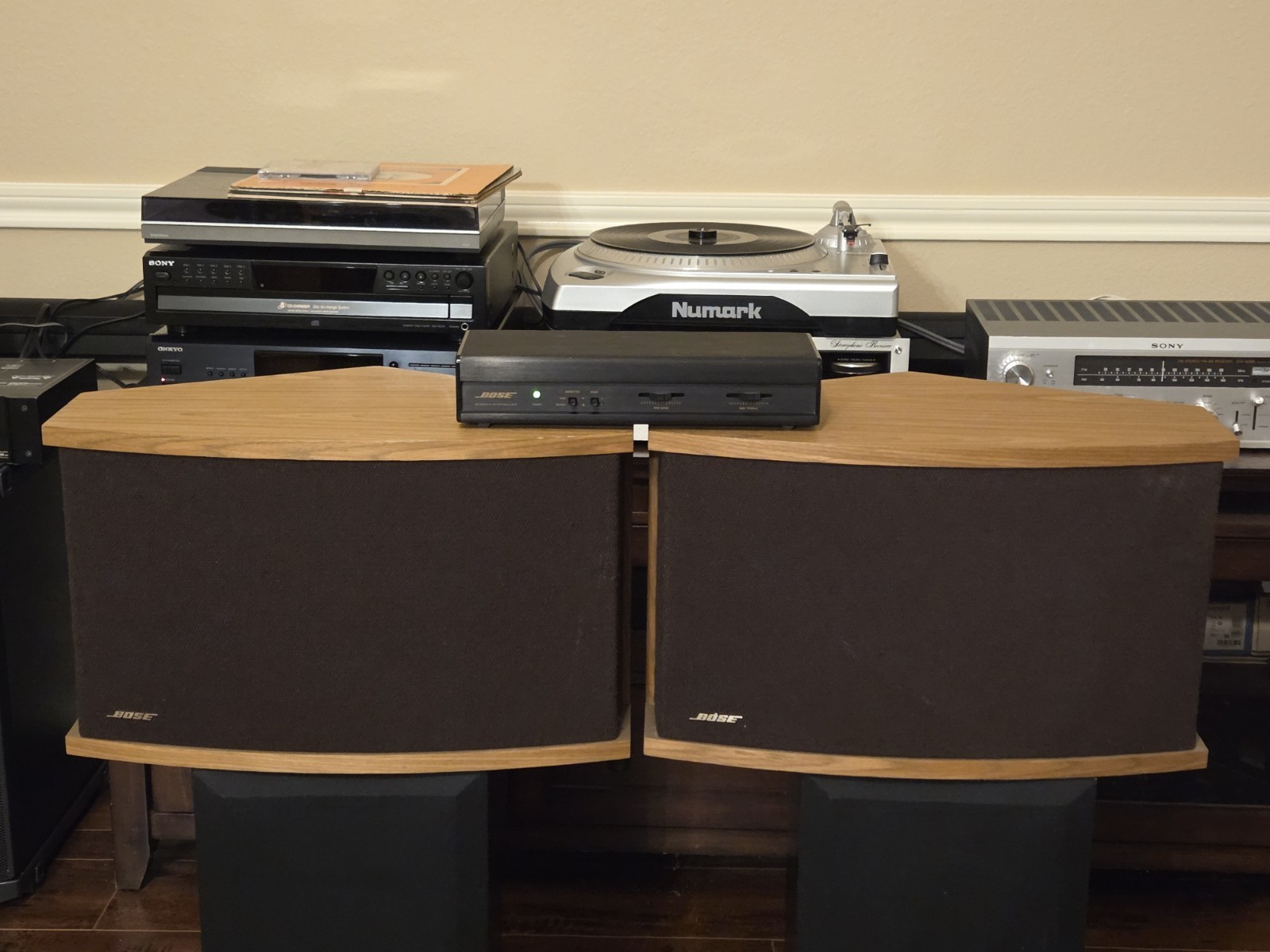
The sonic signature of the Bose 901 Series VI is unlike any conventional speaker. Thanks to its unique driver array and mandatory equalization, it produces a diffuse, enveloping soundfield that many describe as “you’re in the orchestra” rather than “the orchestra is in front of you.” This creates a lush, spacious presentation that excels with orchestral music, ambient recordings, and vocals.
With the EQ-6 properly adjusted, the 901 Series VI delivers smooth, extended bass (down to 40 Hz) and a silky, non-fatiguing treble. The midrange is rich and full-bodied, though not as detailed or transparent as high-end conventional speakers. Imaging is intentionally diffuse—don’t expect pinpoint stereo placement. Instead, the 901s create a wide, immersive soundstage that fills the room, making them ideal for background listening or environments where precise stereo focus is less important.
Critics often point to the lack of dynamic punch and transient speed compared to modern high-efficiency speakers. However, fans argue that the 901’s magic lies in its ability to reproduce the emotional weight of music, particularly in larger rooms where reflections enhance the intended effect.
Notable Features and Innovations
1. Nine-Driver Array with Reflective Design
The 901’s use of eight rear/side-firing drivers and one front-firing tweeter is its defining feature. This configuration floods the room with reflected sound, mimicking the acoustic behavior of live music in a concert hall.
2. Mandatory Active Equalization (EQ-6)
The EQ-6 equalizer is not optional—it’s essential. Without it, the 901s sound thin and unbalanced. The EQ applies a significant +8 dB bass boost and +6 dB midrange lift to compensate for the energy lost in indirect radiation. The EQ-6 also includes a calibration mode and room compensation settings, allowing users to fine-tune response based on speaker placement.
3. Damped Enclosure Design
The Series VI features a rigid, injection-molded ABS cabinet with internal damping to minimize resonance. Unlike earlier wooden models, the plastic enclosure resists warping and offers consistent performance over time.
4. Wall-Mount Capability
Designed to be mounted on walls (ideally 2–3 feet from the back wall), the 901s are meant to interact with room boundaries. The included brackets allow for secure installation, ensuring optimal reflection angles.
5. High Sensitivity
At 92 dB sensitivity, the 901 Series VI is easy to drive—even modest amplifiers can achieve high volume levels. However, due to the EQ’s insertion loss, the amplifier effectively sees a lower input signal, so a robust preamp or integrated amp with strong voltage gain is recommended.
Common Issues and Maintenance
While the 901 Series VI is generally durable, a few issues are common over time:
- Foam Surround Deterioration: Though the Series VI uses more stable foam than earlier models, the surrounds on the 4.5" drivers can still degrade after 20+ years, especially in humid environments. Replacement kits are available from specialty audio restoration shops.
- EQ-6 Reliability: The EQ-6 unit contains analog circuitry and potentiometers that may develop noise or channel imbalance. Cleaning controls with contact cleaner can help, but full servicing may require professional repair.
- Cable Wear: The included 18' dual speaker cables are proprietary and prone to fraying at connection points. Keeping them neatly routed and avoiding stress on the connectors is essential.
- Placement Sensitivity: The 901s are highly dependent on room acoustics. Poor placement—such as too close to corners or in dead rooms—can result in boomy bass or weak imaging. Following Bose’s placement guidelines is critical.
Regular dusting and occasional inspection of drivers and cables will keep the system performing well. For long-term preservation, storing the EQ-6 in a dry, temperature-controlled environment is advised.
Current Market Value and Collectibility
As of 2024, a complete Bose 901 Series VI system (pair of speakers, EQ-6, cables, and brackets) typically sells for $400–$700 on the secondary market, depending on condition and originality. Fully operational sets with clean cabinets and a working EQ command premium prices.
While not traditionally “high-end” in the audiophile sense, the 901 Series VI has developed a cult following among vintage audio enthusiasts and Bose collectors. Its historical significance, distinctive design, and unique sonic character make it a sought-after piece for those exploring alternative speaker philosophies.
The discontinuation of the 901 line in 2016 has also increased its nostalgic appeal. However, due to the reliance on the EQ-6 and specialized setup, it remains a niche product—more of a statement piece or listening room centerpiece than a mainstream upgrade.
Conclusion and Legacy
The Bose 901 Series VI is not just a speaker—it’s a philosophy in wood (or plastic) and wire. It challenges conventional wisdom about speaker design, prioritizing ambient realism over analytical precision. While it may never satisfy purists seeking transparency and tight bass, it delivers an emotionally engaging, room-filling experience that few speakers can replicate.
As the final evolution of a 48-year lineage, the Series VI represents Bose’s unwavering commitment to a singular vision of sound reproduction. Whether you love it or question it, the 901 Series VI remains a landmark in audio history—a bold experiment that continues to spark conversation, admiration, and debate among audiophiles worldwide.
For those willing to embrace its quirks and invest in proper setup, the Bose 901 Series VI offers a listening experience that is, quite simply, like no other.
eBay Listings


As an eBay Partner, we earn from qualifying purchases. This helps support our independent vintage technology research.
Related Models
- Bose 4.2-SERIES-I (1984)
- Bose 101-MUSIC-MONITOR (1970)
- Bose 10.2-SERIES-I (1988)
- Bose 10.2-SERIES-II (1988)
- Bose 1800-SERIES-II (1979)
- Akai AM-2850 (1975)
- Akai AP-206 (1975)
- Nakamichi BX-1 (1985)
- Acoustic Research research-ar-17 (1978)
- Acoustic Research AR-19 (1994)