Bose 901 Series V: The Iconic Direct/Reflecting Speaker System
Few loudspeakers in the history of high-fidelity audio have generated as much discussion, admiration, and controversy as the Bose 901 Series V. Introduced in 1980 as the fifth and final evolution of Dr. Amar G. Bose’s groundbreaking direct/reflecting speaker concept, the 901 Series V represents the culmination of decades of research into how humans perceive sound in enclosed spaces. More than just a pair of speakers, the 901 system is a complete audio philosophy — one that prioritizes natural, ambient sound reproduction over traditional stereo imaging.
Born from Bose’s dissatisfaction with conventional speaker designs during the 1960s, the 901 series was revolutionary in its approach. Dr. Bose, an MIT professor and audio visionary, discovered that in real listening environments, most of the sound we hear is reflected off walls, ceilings, and furniture — not direct from the source. This insight led to the development of the Direct/Reflecting® speaker technology, which the 901 Series V perfected.
Rather than focusing energy directly at the listener, the 901 Series V emits the majority of its sound toward the rear and sides of the room, relying on reflections to create a spacious, enveloping soundfield. The result is an experience that mimics the way we hear live music — not as a pinpoint source, but as an ambient event filling the space around us.
Technical Specifications
| Specification | Detail |
| Model | 901 Series V |
| Year Introduced | 1980 |
| Driver Configuration | 9 x 4" full-range drivers (8 rear-firing, 1 front-firing) |
| Frequency Response | 40 Hz – 20 kHz |
| Sensitivity | 88 dB (2.83V @ 1m) |
| Impedance | Not applicable (requires equalizer) |
| Crossover | Passive, internal |
| Enclosure Type | Bass-reflex, rear-ported |
| Recommended Placement | 2 feet from rear wall, side-firing |
| Equalizer Required | Yes – Bose EQ (e.g., EQ-1, EQ-2, EQ-3) |
| Dimensions (H×W×D) | 20.5" × 6.5" × 4.5" (52 × 16.5 × 11.4 cm) |
| Weight | 22 lbs (10 kg) per speaker |
Sound Characteristics and Performance
The sonic signature of the Bose 901 Series V is unmistakable. With nine 4-inch drivers per cabinet — eight firing backward and one forward — the speakers are engineered to deliver 90% reflected sound and only 10% direct sound. This radical design creates a diffuse, ambient stereo field that eliminates the "sweet spot" limitation of conventional speakers.
When properly set up and paired with the required Bose equalizer, the 901 Series V produces a smooth, natural tonal balance with rich midrange presence and extended high-frequency response. The bass, while not as deep or tight as modern ported or powered subwoofers, is surprisingly full and resonant due to the rear-firing drivers exciting room boundaries.
One of the most praised aspects of the 901s is their ability to reproduce the spaciousness of live performances. Whether it’s a jazz trio in a club or a symphony in a concert hall, the 901s excel at conveying the acoustics of the original space. This makes them particularly well-suited for classical, vocal, and acoustic recordings.
However, the soundstage is intentionally diffuse. Unlike traditional speakers that create a precise left-right image, the 901s envelop the listener in a 360-degree sonic cloud. Audiophiles seeking pinpoint instrument placement may find this disorienting, but many listeners appreciate the realism and lack of "speaker baffle" coloration.
Notable Features and Innovations
The 901 Series V introduced several refinements over earlier versions:
- Improved Driver Materials: The Series V featured updated full-range drivers with better damping and reduced distortion compared to earlier models.
- Enhanced Cabinet Construction: The enclosures were redesigned for greater rigidity and reduced resonance, minimizing unwanted coloration.
- Optimized Port Design: The rear-firing bass reflex port was fine-tuned for smoother low-frequency response.
- Magnetic Shielding: Added to prevent interference with nearby CRT televisions — a practical upgrade for home theater integration in the 1980s.
- Gold-Plated Binding Posts: Improved connectivity and compatibility with a wider range of speaker cables.
Crucially, the 901 Series V must be used with a Bose equalizer (such as the EQ-1, EQ-2, or EQ-3). The speakers are intentionally voiced with a rising high-frequency response and rolled-off bass, which the equalizer corrects to deliver a flat, natural curve. Without the EQ, the sound is harsh and unbalanced.
Common Issues and Maintenance
While the 901 Series V is built to last, age-related issues are common in surviving units:
- Driver Foam Surround Deterioration: The foam rings around the 4-inch drivers degrade over time, leading to rattles, reduced bass, or complete failure. Re-foaming or reconing is a common and worthwhile restoration.
- Capacitor Aging: Internal crossover capacitors can dry out, affecting sound clarity and balance. Upgrading these components can significantly improve performance.
- EQ Unit Reliability: The companion equalizers (especially EQ-2 and EQ-3) may suffer from failing potentiometers or power supply issues. Cleaning controls and replacing old electrolytic capacitors can restore functionality.
- Cabinet Finish: The woodgrain vinyl finish can peel or discolor. While not affecting sound, cosmetic restoration enhances value.
Regular maintenance — including cleaning driver surfaces, checking connections, and storing in a dry environment — can extend the life of these speakers for decades.
Current Market Value and Collectibility
The Bose 901 Series V remains a sought-after vintage audio component, particularly among collectors and enthusiasts of classic American hi-fi. Complete systems (speakers + equalizer) in good condition typically sell for $400–$800, with mint, fully restored units commanding higher prices.
Their collectibility stems not just from their sound, but from their historical significance. As one of the first commercially successful speakers based on psychoacoustic research, the 901 Series V helped popularize the idea that speaker design should account for room interaction.
They are also prized for their distinctive appearance — tall, narrow, and minimalist — which fits well in mid-century modern interiors. Replacement parts and restoration services are readily available from specialty vendors, making long-term ownership practical.
Conclusion and Legacy
The Bose 901 Series V is more than a speaker — it’s a statement about how we experience sound. While controversial among purists for its non-traditional imaging and reliance on equalization, it delivers a uniquely immersive listening experience that few other speakers can match.
Its legacy lives on in Bose’s continued emphasis on room-filling audio, as well as in the broader industry’s growing recognition of the importance of spatial sound and acoustic integration. Modern soundbars and surround systems owe a debt to the pioneering work embodied in the 901.
For vintage audio enthusiasts, the 901 Series V offers a chance to experience a landmark in speaker design — one that challenged conventions and redefined what high-fidelity could be. If you're looking for a time capsule of 1980s audio innovation with real emotional impact, the Bose 901 Series V remains a compelling and rewarding choice.
eBay Listings

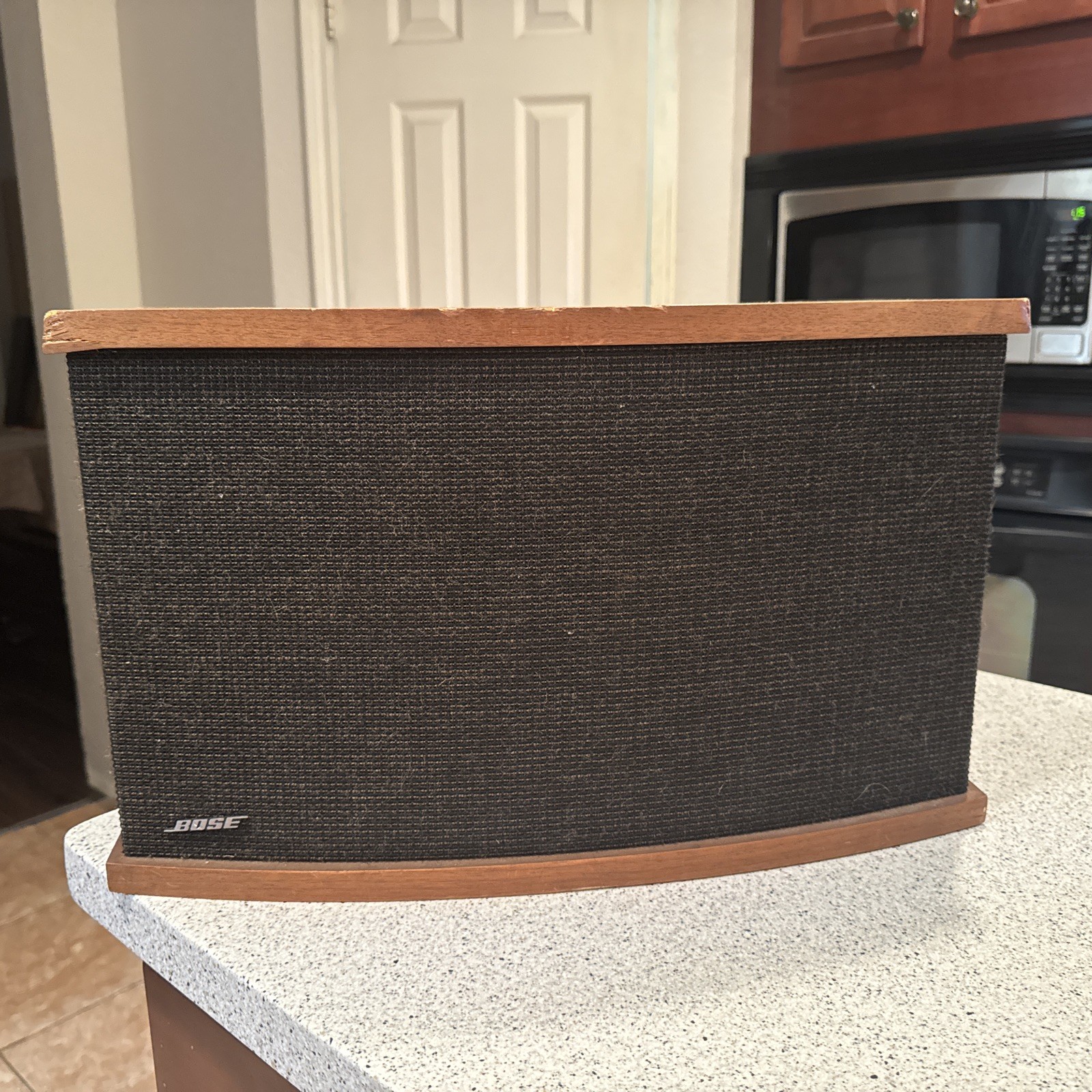
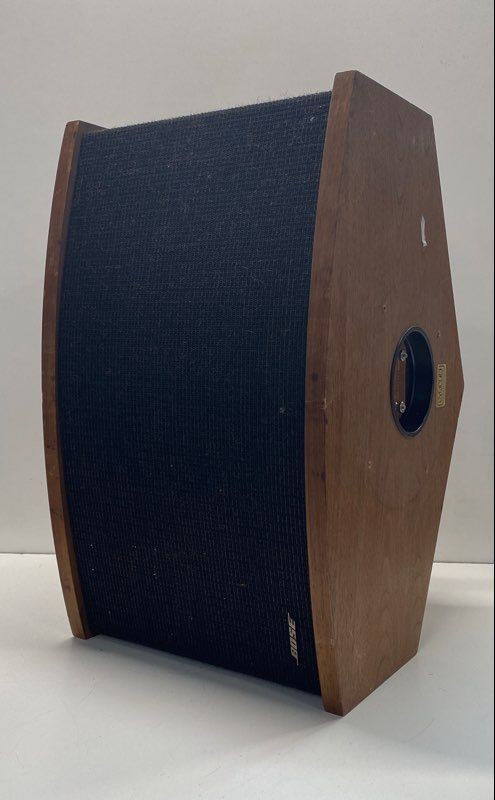

As an eBay Partner, we earn from qualifying purchases. This helps support our independent vintage technology research.
Related Models
- Bose 4.2-SERIES-I (1984)
- Bose 101-MUSIC-MONITOR (1970)
- Bose 10.2-SERIES-I (1988)
- Bose 10.2-SERIES-II (1988)
- Bose 1800-SERIES-II (1979)
- Akai AM-2850 (1975)
- Akai AP-206 (1975)
- Nakamichi BX-1 (1985)
- Acoustic Research research-ar-17 (1978)
- Acoustic Research AR-19 (1994)