Bose 601 Series III: The Speaker That Redefined Spacious Sound
In the mid-1980s, when audiophiles were locked in debates over cone materials, crossover designs, and flat frequency responses, Bose took a different path—one rooted not in traditional speaker design, but in psychoacoustics and room interaction. The Bose 601 Series III, introduced in 1985, was a bold evolution of the original 601 launched in the 1970s. It wasn’t built to win spec-sheet battles; it was engineered to deliver an expansive, immersive soundstage from a compact enclosure, even with modest amplification. For many, the 601 Series III became a gateway into high-fidelity audio—a speaker that prioritized experience over technical orthodoxy.
Part of Bose’s long-running 601 lineage, the Series III refined its predecessors with improved drivers, updated aesthetics, and enhanced dispersion characteristics. While often categorized as a bookshelf speaker, the 601 Series III defied simple classification. It was designed to be mounted on dedicated stands or wall brackets, angled toward the listener, and used in stereo pairs to create a wide, enveloping soundfield. This philosophy—spatial realism over raw accuracy—was quintessential Bose, and the 601 Series III executed it with remarkable consistency.
Technical Specifications
| Specification | Detail |
| Model | Bose 601 Series III |
| Year Introduced | 1985 |
| Type | 3-way, reflex-loaded loudspeaker |
| Driver Complement | 1" dome tweeter, 3.5" midrange, dual 5.25" woofers |
| Frequency Response | 55 Hz – 20 kHz |
| Sensitivity | 92 dB (1W/1m) |
| Nominal Impedance | 8 ohms (compatible with most receivers) |
| Crossover Frequencies | 500 Hz (woofer/midrange), 5 kHz (midrange/tweeter) |
| Enclosure Type | Bass reflex with dual front-firing ports |
| Dimensions (H×W×D) | 18.5" × 8.5" × 8" (47 × 21.6 × 20.3 cm) |
| Weight | 22 lbs (10 kg) per speaker |
| Recommended Placement | On stands or wall mounts, angled inward |
| Finish Options | Black ash, walnut, rosewood veneers |
Sound Characteristics and Performance
The Bose 601 Series III was never intended to be a neutral, analytical monitor. Instead, it aimed to create a sense of space and scale that belied its physical size. Thanks to its three-driver array arranged in a vertical line, the speaker projected a wide stereo image with excellent front-to-back depth. The dual 5.25" woofers handled bass duties with surprising authority for a speaker of its class, while the 3.5" midrange driver ensured vocal clarity and instrumental presence.
The 1" dome tweeter delivered smooth high frequencies, avoiding the harshness that plagued some contemporary designs. However, purists often noted a slight roll-off in the upper treble, contributing to a "soft" or "polite" top end. This was by design—Bose engineers favored listener fatigue reduction over extended airiness.
One of the 601 Series III’s most celebrated traits was its exceptional sensitivity (92 dB). This allowed the speakers to perform well even with low-powered receivers or vintage tube amps, making them a favorite in era when many consumers used modest AV equipment. Paired with a solid mid-tier receiver of the 1980s—like a Yamaha or Pioneer—the 601 Series III could fill a medium-sized room with rich, dynamic sound.
Bass response, while respectable down to 55 Hz, benefited from the addition of a subwoofer or placement near a rear wall to enhance low-end reinforcement. Still, for a speaker without a dedicated port for deep bass, the 601 Series III held its own in pop, rock, and jazz playback.
Notable Features and Innovations
The 601 Series III carried forward Bose’s signature direct/reflecting design philosophy, though not to the extreme of later models like the 802 or 901. The vertical driver alignment and angled cabinet encouraged sound to reflect off side walls, creating a more ambient listening experience. This made the speakers less dependent on perfect room symmetry and more forgiving in typical living spaces.
Another standout feature was the dual front-firing bass ports. Unlike many speakers of the time that used a single rear or bottom port, Bose’s dual-port design helped reduce port noise and improve transient response. This contributed to a cleaner, more articulate bass—especially at higher volumes.
The magnetically shielded cabinet was also ahead of its time, allowing safe placement near CRT televisions without causing color distortion—a practical consideration in the era of combined audio-visual setups.
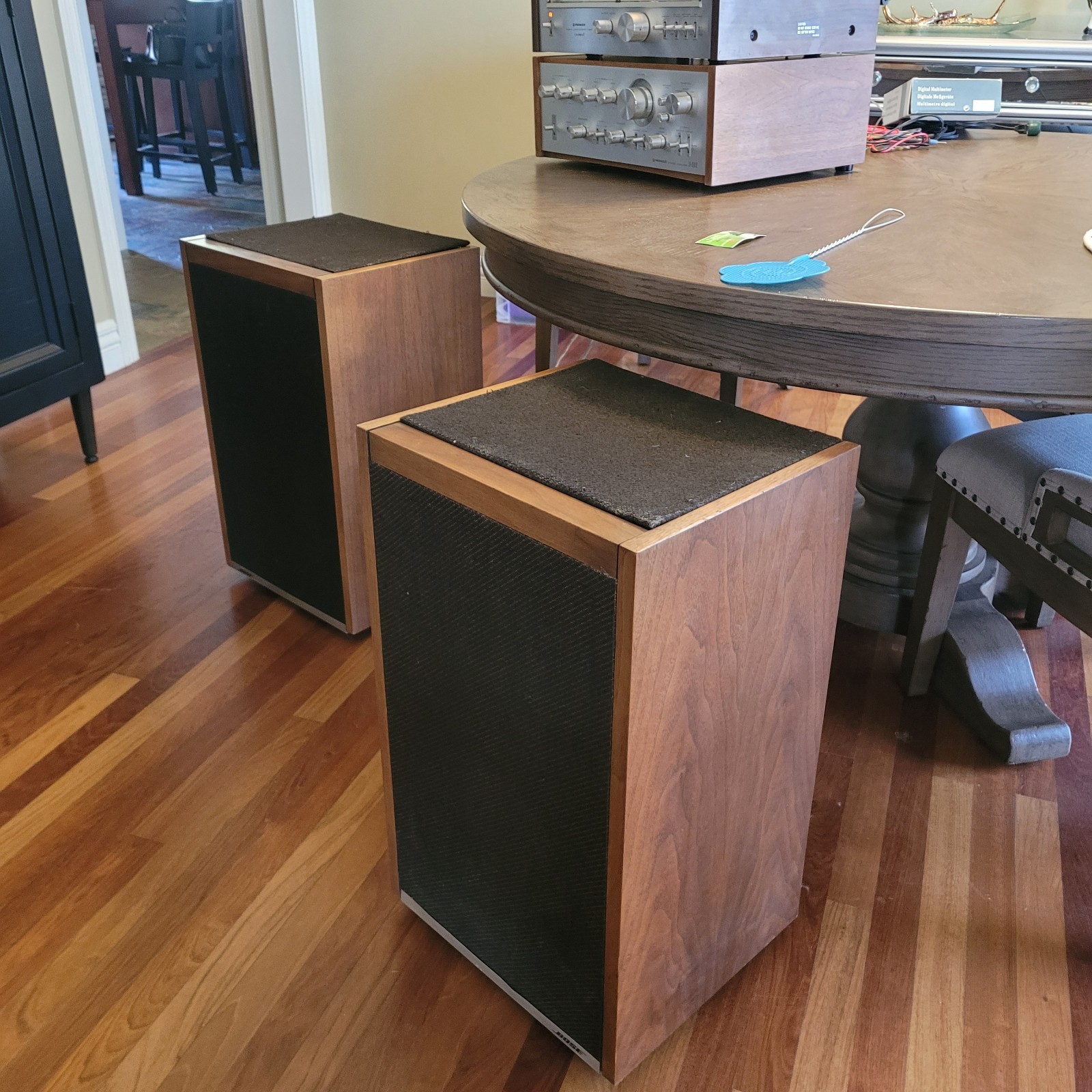
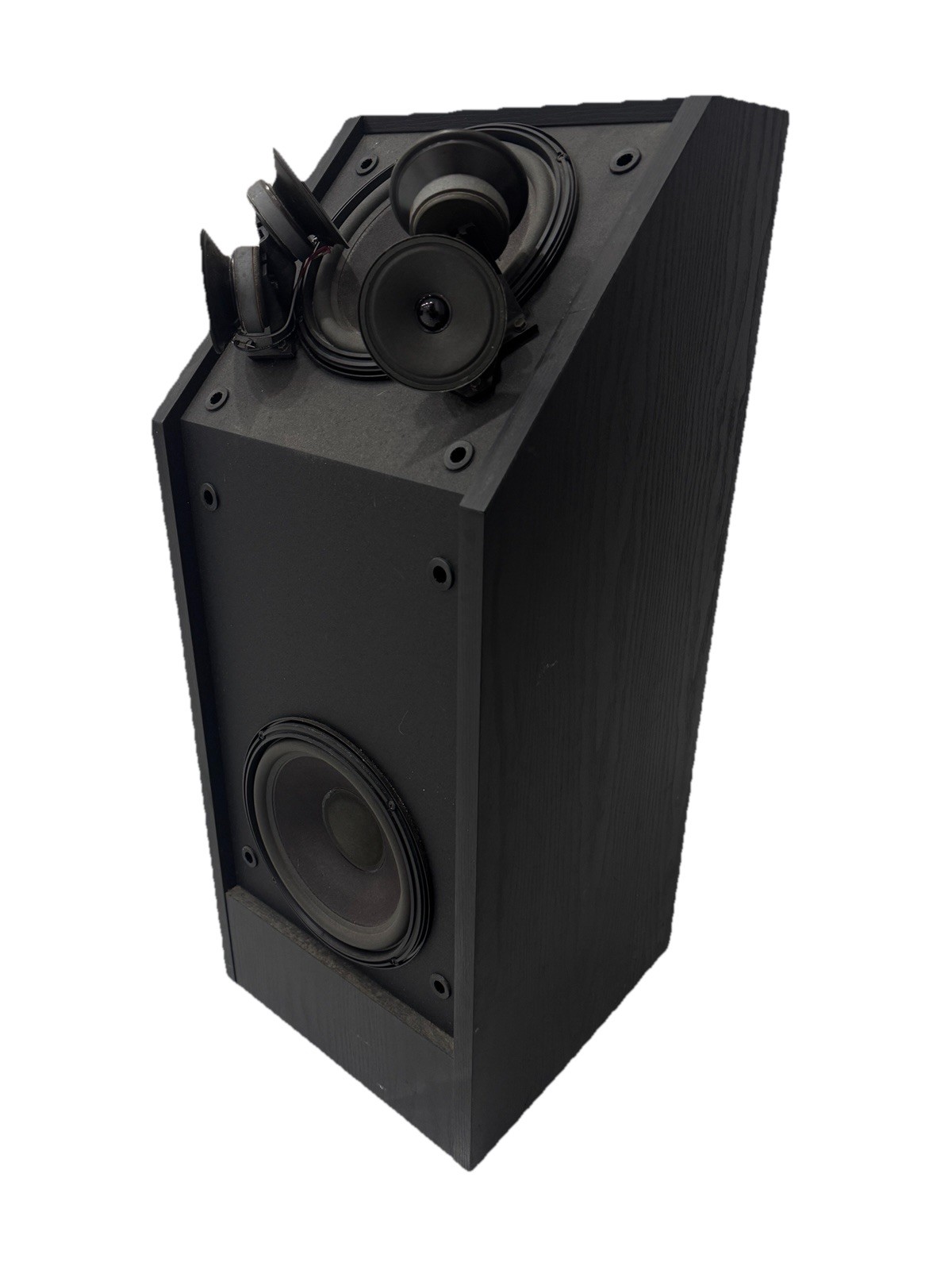
Aesthetically, the 601 Series III featured a sleek, trapezoidal cabinet with real wood veneer finishes. The slightly angled baffle not only aided dispersion but also gave the speaker a modern, purposeful look. Grilles were optional, and many owners chose to leave them off to showcase the symmetrical driver array.
Common Issues and Maintenance
While generally robust, vintage 601 Series III speakers require some attention today due to their age. The most common issue is surround degradation on the woofers and midrange drivers. The original foam or rubber surrounds can dry out, crack, or disintegrate after 30+ years, leading to buzzing or loss of bass. Replacement surrounds or full driver reconing are viable restoration options.
The crossover components, while well-built for their time, may suffer from capacitor aging. Symptoms include muffled highs or imbalanced tonality. Replacing electrolytic capacitors and checking resistors can restore original performance.
Dust and grime accumulation in the tweeter dome can also dull high-frequency response. Gentle cleaning with a soft brush or low-tack tape is recommended—never use liquids or abrasive materials.
Original stands or wall mounts are now rare, but third-party solutions exist. Proper angling is crucial; if the speakers aren’t aimed toward the listening position, the spatial magic diminishes significantly.
Current Market Value and Collectibility
The Bose 601 Series III is not a high-value collector’s item in the traditional sense, but it holds a nostalgic appeal for vintage audio enthusiasts and former owners. Pairs in good cosmetic and working condition typically sell for $150–$300, depending on finish, included hardware, and geographic location.
Fully restored units—especially those with reconed drivers and upgraded crossovers—can command higher prices, particularly among users seeking the "Bose sound" without the quirks of age. The walnut and rosewood finishes are more desirable than black ash, and original packaging or documentation adds modest value.
While not as sought-after as classic electrostatics or high-end Japanese receivers, the 601 Series III represents an important chapter in consumer audio history. It exemplifies Bose’s unique approach to sound reproduction—one that prioritized perception over measurement.
Conclusion and Legacy
The Bose 601 Series III may not have won over hardcore audiophiles with its measured performance, but it succeeded where it mattered most: in living rooms across America and beyond. It brought spatial audio, high efficiency, and elegant design to a broad audience at a time when "hi-fi" still felt intimidating to many.
Today, the 601 Series III stands as a testament to Bose’s early innovation in room-filling sound. It’s a speaker that doesn’t just play music—it stages it. For those seeking a vintage speaker with character, ease of drive, and a timeless design, the 601 Series III remains a compelling choice. It’s not perfect by modern standards, but it’s undeniably memorable—a true icon of 1980s audio engineering.
eBay Listings


As an eBay Partner, we earn from qualifying purchases. This helps support our independent vintage technology research.
Related Models
- Bose 4.2-SERIES-I (1984)
- Bose 101-MUSIC-MONITOR (1970)
- Bose 10.2-SERIES-I (1988)
- Bose 10.2-SERIES-II (1988)
- Bose 1800-SERIES-II (1979)
- Akai AM-2850 (1975)
- Akai AP-206 (1975)
- Nakamichi BX-1 (1985)
- Acoustic Research research-ar-17 (1978)
- Acoustic Research AR-19 (1994)