Bose 301 Series III: The Wall-Mounted Wonder of Vintage Audio
In the world of vintage audio, few speaker designs are as instantly recognizable—or as polarizing—as the Bose 301 Series III. Introduced in 1980 as part of Bose’s long-running 301 series, the Series III iteration refined a design philosophy that prioritized spacious sound dispersion and room-filling audio over traditional stereo imaging. Though not a high-end audiophile favorite in the purist sense, the 301 Series III carved out a loyal following among casual listeners, dorm room dwellers, and early adopters of home audio convenience during the 1980s.
Designed to be mounted on walls or placed on stands, the 301 Series III embodies Bose’s signature approach to acoustics: reflected sound. Rather than focusing sound directly at the listener, these speakers were engineered to bounce audio off walls and ceilings, creating a diffuse, ambient listening experience. This made them ideal for environments where precise stereo placement wasn’t possible—bedrooms, dens, and offices—where enveloping sound mattered more than pinpoint accuracy.
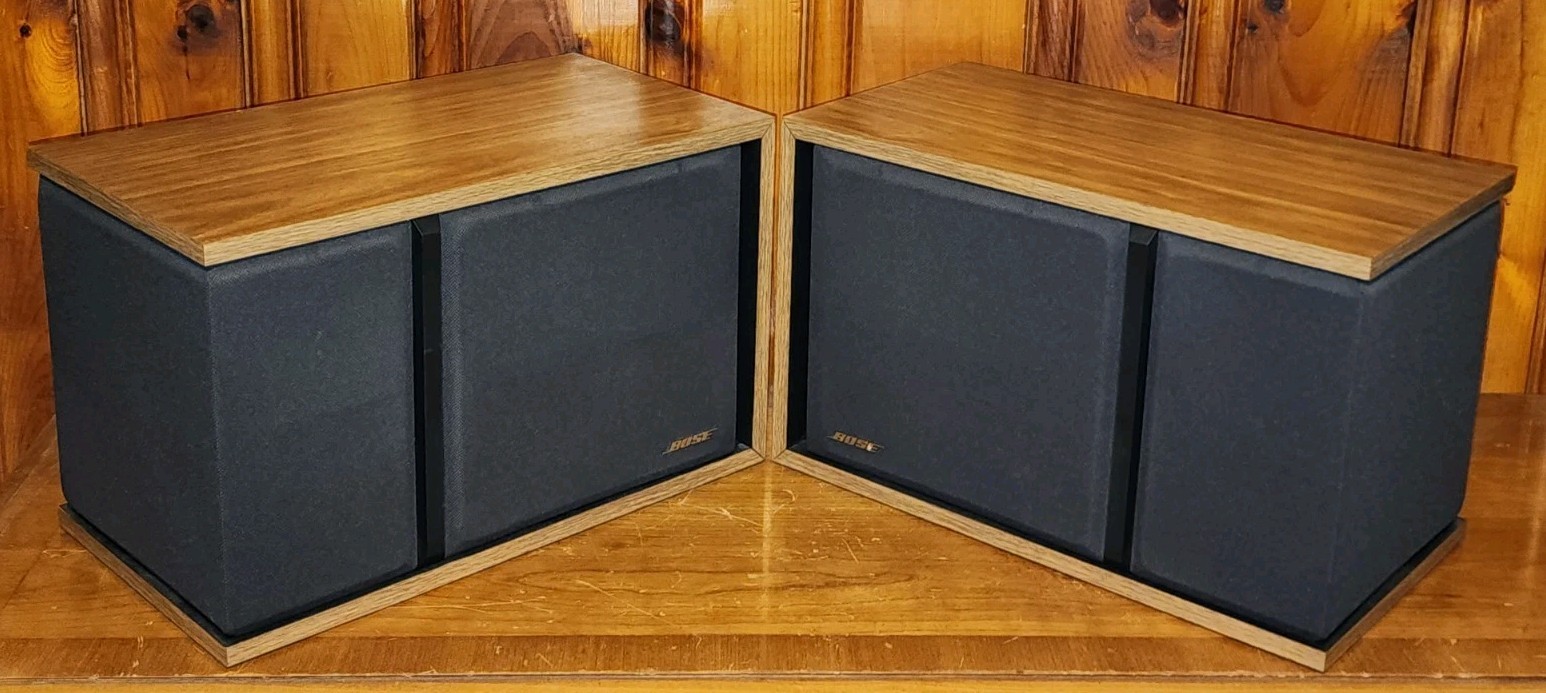
At a time when bookshelf speakers were typically boxy and utilitarian, the 301 Series III stood out with its sleek, slightly curved cabinet, woodgrain vinyl finish, and prominent midrange driver flanked by dual tweeters. It wasn’t just a speaker—it was a design statement, emblematic of the era’s blend of form and function.
Technical Specifications
| Specification | Detail |
| Model | Bose 301 Series III |
| Year Introduced | 1980 |
| Type | Passive 2-way bookshelf speaker |
| Driver Configuration | 1x 6.5" midrange, 2x 1" dome tweeters |
| Frequency Response | 55 Hz – 17 kHz |
| Impedance | 8 ohms (nominal) |
| Sensitivity | 88 dB (2.83V/1m) |
| Crossover Frequency | 5 kHz |
| Enclosure Type | Bass-reflex (rear port) |
| Mounting Options | Wall-mount (keyhole slots), stand placement |
| Dimensions (H×W×D) | 16" × 8" × 6" (40.6 × 20.3 × 15.2 cm) |
| Weight | 11 lbs (5 kg) per speaker |
| Finish | Walnut, black, and light oak vinyl veneer |
The dual tweeter setup—one firing forward, one rearward—was a hallmark of the 301 series and central to Bose’s spatial audio concept. Combined with the front-firing 6.5-inch midrange driver and a rear bass port, the speaker delivered a surprisingly full sound for its size, especially in midrange clarity.
Sound Characteristics and Performance
The Bose 301 Series III was never designed to satisfy the demands of critical listening or tight stereo imaging. Instead, its strength lay in ambience and sonic spaciousness. Thanks to the rear-firing tweeter and wide dispersion pattern, the speakers created a broad, almost three-dimensional soundstage that filled a room with music, making them ideal for background listening, casual enjoyment, or environments where the listener wasn’t seated in a fixed “sweet spot.”
Midrange performance was clear and articulate, particularly for vocals and acoustic instruments. The 6.5-inch driver handled mids with warmth and presence, avoiding the thinness common in smaller bookshelf models of the era. Bass response, while not deep or powerful by modern standards, was adequate for the time—extending down to 55 Hz with the help of the bass-reflex port. However, owners often paired these speakers with a separate subwoofer or used them in systems with a powered receiver that included bass management.
Treble was smooth and non-fatiguing, thanks to the soft-dome tweeters. The rear tweeter’s reflected highs added a sense of airiness, though this could lead to a slightly “echoey” quality in overly reflective rooms. Audiophiles often criticized the 301s for their lack of detail and dynamic punch, but for the average listener in the 1980s, they offered a pleasing, easygoing sound that made music feel present and immersive.
Notable Features and Innovations
The 301 Series III wasn’t just another bookshelf speaker—it introduced several user-friendly features that set it apart:
- Wall-Mount Design: Integrated keyhole slots allowed for easy wall mounting, saving floor space and enabling flexible placement. This made the speakers popular in college dorms and small apartments.
- Dual-Tweeter System: The forward and rear-firing tweeters were central to Bose’s “direct/reflecting” speaker concept, aiming to mimic the way sound behaves in a live acoustic environment.
- 8-Ohm Compatibility: Unlike some of Bose’s later impedance-challenging designs, the 301 Series III played nicely with most receivers of the era, making them a safe choice for mainstream consumers.
- Attractive Cabinet Design: With curved edges and woodgrain finishes, the speakers looked more like furniture than audio gear—appealing to buyers who valued aesthetics.
These features made the 301 Series III a commercial success, helping Bose maintain its reputation for accessible, lifestyle-oriented audio products.
Common Issues and Maintenance
As with any vintage speaker, the Bose 301 Series III can suffer from age-related wear. The most common issues include:
- Foam Surround Deterioration: The foam around the 6.5-inch midrange driver often disintegrates over time, leading to distorted bass or a “rattling” sound. Replacing the foam or reconing the driver is a common restoration step.
- Tweeter Fatigue: While generally durable, the dome tweeters can lose clarity or develop a “crackling” noise if exposed to high volumes or moisture over decades.
- Cabinet Wear: The woodgrain vinyl finish is prone to peeling or scuffing, especially on edges. While not affecting performance, it impacts resale value.
- Internal Wiring: Older internal crossovers may have degraded solder joints or frayed wires, especially if the speakers were frequently moved or reconnected.
Maintenance is relatively straightforward: gentle cleaning with a soft cloth, inspection of drivers, and, if necessary, professional refoaming or crossover repair. Due to their passive design and standard 8-ohm load, they integrate easily into modern systems with proper amplification.
Current Market Value and Collectibility
Today, the Bose 301 Series III occupies a niche in the vintage audio market. They’re not highly sought after by serious collectors in the way that, say, AR or Klipsch Heritage models are, but they do have nostalgic appeal. Pairs in good cosmetic and working condition typically sell for $75 to $150, depending on finish, originality, and whether they’ve been restored.
Their value lies more in nostalgia and usability than rarity. Many buyers are people who owned them in the 1980s and want to relive the sound of their youth. Others appreciate them as affordable, functional vintage speakers for secondary systems, retro setups, or as part of a period-correct audio display.
While not a “high-end” collectible, the 301 Series III remains a symbol of a pivotal era in consumer audio—when speakers began to be designed not just for performance, but for lifestyle integration.
Conclusion and Legacy
The Bose 301 Series III may not have won over hardcore audiophiles, but it succeeded in bringing high-quality, room-filling sound to everyday listeners. Its innovative use of reflected sound, user-friendly design, and attractive aesthetics made it a staple of 1980s home audio.
More than just a speaker, the 301 Series III represents a philosophy: that great sound doesn’t always require precision—it can also mean comfort, convenience, and immersion. For those who appreciate vintage audio with character and a story, the Bose 301 Series III remains a charming and functional piece of audio history.
Whether mounted on a dorm wall or sitting on a retro shelf, these speakers continue to deliver a warm, spacious sound that reminds us why so many fell in love with home audio in the first place.
eBay Listings


As an eBay Partner, we earn from qualifying purchases. This helps support our independent vintage technology research.
Service Manuals & Schematics
- Service Manual — archive.org
Related Models
- Bose 4.2-SERIES-I (1984)
- Bose 101-MUSIC-MONITOR (1970)
- Bose 10.2-SERIES-I (1988)
- Bose 10.2-SERIES-II (1988)
- Bose 1800-SERIES-II (1979)
- Akai AM-2850 (1975)
- Akai AP-206 (1975)
- Nakamichi BX-1 (1985)
- Acoustic Research research-ar-17 (1978)
- Acoustic Research AR-19 (1994)