Bose 201-SERIES IV: The Quiet Innovator in Compact Stereo Imaging
In the early 1980s, as audiophiles debated the merits of flat frequency response and room-filling sound, Bose quietly refined its unique approach to speaker design with the release of the Bose 201-SERIES IV. Part of the company’s long-running 201 series, this compact bookshelf speaker embodied Bose’s philosophy of leveraging room acoustics rather than fighting them. Designed for small to medium-sized listening environments, the 201-SERIES IV offered a distinctive listening experience that prioritized spacious stereo imaging over traditional accuracy—making it a favorite in dorm rooms, offices, and secondary listening spaces where big sound from a small package was essential.
Unlike conventional speakers that aim for direct, forward-firing sound, the 201-SERIES IV employed Bose’s proprietary Direct/Reflecting® speaker technology, first introduced in the late 1970s. This design featured multiple drivers firing both forward and upward, reflecting sound off the ceiling and walls to create a diffuse, ambient stereo field. The result was a surprisingly wide and enveloping soundstage that belied the speaker’s modest footprint. While purists often criticized Bose for sacrificing tonal neutrality, the 201-SERIES IV found a loyal audience among listeners who valued atmosphere and ease of placement over clinical precision.
Technical Specifications
| Specification | Detail |
| Model | 201-SERIES IV |
| Manufacturer | Bose Corporation |
| Production Years | Circa 1980–1985 |
| Type | 2-way, direct/reflecting bookshelf |
| Drivers | 1 x 5.25" woofer, 1 x 1" dome tweeter (firing upward) |
| Frequency Response | 60 Hz – 20 kHz (±3 dB) |
| Nominal Impedance | 8 ohms |
| Sensitivity | 86 dB (2.83V/1m) |
| Crossover Frequency | 5 kHz |
| Enclosure Type | Bass-reflex with rear-firing port |
| Dimensions (HxWxD) | 14.5" x 6.5" x 7.5" (36.8 x 16.5 x 19 cm) |
| Weight | 12 lbs (5.4 kg) each |
| Recommended Amp Power | 10–100 watts per channel |
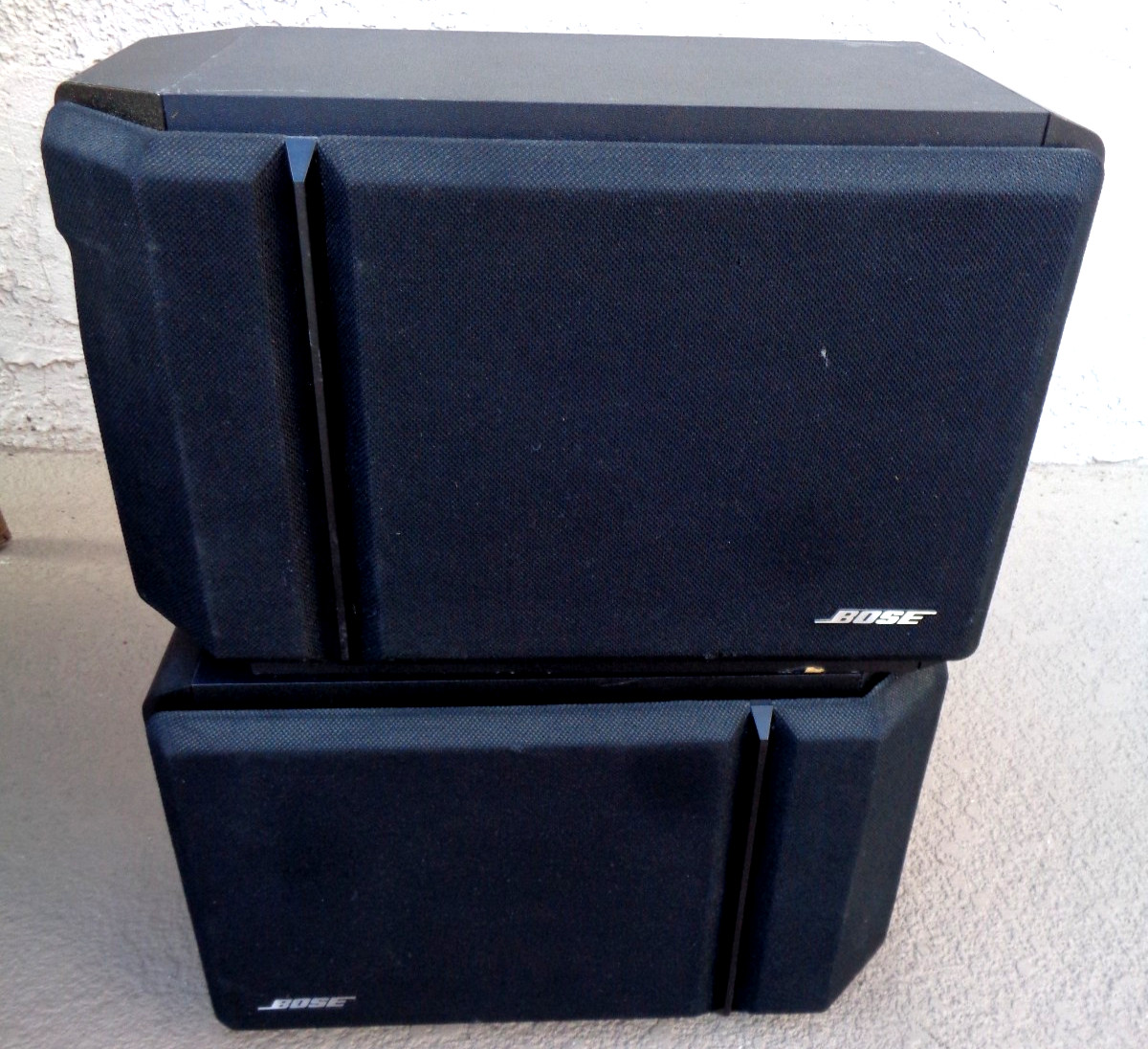
| Finish Options | Black cloth grille, simulated wood veneer (walnut, rosewood) |
Sound Characteristics and Performance
The sonic signature of the Bose 201-SERIES IV is best described as spacious, ambient, and forgiving. Thanks to its upward-firing tweeter and angled baffle, much of the high-frequency energy is reflected off the ceiling, creating a diffuse stereo image that fills the room. This makes the speakers less dependent on precise toe-in or placement near side walls—unlike traditional bookshelf models that require careful positioning for optimal imaging.
Bass response extends down to 60 Hz, which was respectable for a speaker of its size in the early 1980s. The bass-reflex port enhances low-end output, giving the 201-SERIES IV a fuller sound than its compact cabinet might suggest. However, deep bass extension is limited, and these speakers were never intended to reproduce sub-bass frequencies. They perform best when paired with a modest amplifier (25–50 watts) and are particularly well-suited to acoustic music, vocals, and FM radio—genres where clarity and ambiance matter more than slam or deep bass.
Midrange clarity is adequate, though slightly recessed due to the reflective design. The upward-firing tweeter can sound a bit soft or diffuse compared to forward-firing models, lacking the crispness audiophiles associate with high-resolution listening. However, this very quality makes the 201-SERIES IV remarkably non-fatiguing—ideal for long listening sessions or background music.
Notable Features and Innovations
The Direct/Reflecting® design is the defining innovation of the 201-SERIES IV. By combining direct and reflected sound, Bose aimed to mimic the way we hear live music in a room—where sound arrives from multiple directions. This approach was revolutionary at the time and influenced later Bose models like the 301 and 501 series.
Other notable features include:
- Dual-driver array: A single 5.25" woofer handles mid-bass, while the 1" dome tweeter is mounted at an upward angle to maximize ceiling reflection.
- Room-adaptive tuning: The speakers perform best when placed a few feet from the rear and side walls, allowing reflected sound to develop fully.
- Simple, elegant design: With their wood-grain vinyl finish and minimalist cloth grilles, the 201-SERIES IV speakers blended into home decor without drawing attention—typical of Bose’s consumer-friendly aesthetic.
- 8-ohm impedance: Compatible with most receivers of the era, including vintage solid-state and tube amplifiers.
Common Issues and Maintenance
While generally reliable, vintage Bose 201-SERIES IV speakers may exhibit age-related issues:
- Grille fabric degradation: The original black cloth grilles are prone to fraying or discoloration. Replacement grilles are occasionally available through specialty audio parts suppliers.
- Tweeter failure: The small dome tweeters can become brittle over time, leading to crackling or loss of high frequencies. Re-coning or replacement with modern equivalents is possible but requires careful matching to preserve the original sound balance.
- Crossover component aging: The internal crossover uses basic capacitors and inductors that may drift in value over decades. A conservative recapping can restore clarity and dynamics.
- Cabinet integrity: The particleboard cabinets are generally sturdy, but edge chipping or veneer peeling can occur. Avoid placing in high-humidity environments.
Cleaning is straightforward: use a dry or slightly damp cloth for the cabinet and a soft brush for the grille. Avoid harsh chemicals that could damage the finish.
Current Market Value and Collectibility
The Bose 201-SERIES IV is not a high-value collector’s item, but it holds nostalgic appeal for vintage audio enthusiasts and former college students who remember them from dorm rooms in the 1980s. Pairs in good cosmetic and working condition typically sell for $75–$150 on the secondary market, depending on finish and provenance.
They are not sought after by high-end audiophiles due to their non-neutral sound signature, but they are appreciated for their historical significance in popularizing reflected sound design and making quality stereo accessible in small spaces. Some users retrofit them with modern amplifiers or use them as secondary speakers in offices or bedrooms.
Complete sets with original grilles, manuals, or packaging command a slight premium, especially in walnut or rosewood finishes. As with all vintage Bose products, authenticity can be confirmed by the model number and serial tag on the rear panel.
Conclusion and Legacy
The Bose 201-SERIES IV may not top any “best sound” lists, but it represents an important chapter in consumer audio history. At a time when bookshelf speakers were becoming smaller and more design-conscious, Bose offered a compelling alternative: sound that filled the room, not just the listening position. Its innovative use of reflection helped democratize stereo imaging, making immersive sound accessible without complex setup.
While later models surpassed it in fidelity and bass response, the 201-SERIES IV remains a symbol of Bose’s commitment to user-friendly, room-optimized audio. It’s a speaker that values experience over measurement—a philosophy that continues to define the brand.
For the vintage audio collector or casual listener, the 201-SERIES IV offers a nostalgic journey into the early days of ambient stereo. It won’t shake the walls, but it might just make you forget where the speakers are—exactly what Bose intended.
eBay Listings


As an eBay Partner, we earn from qualifying purchases. This helps support our independent vintage technology research.
Related Models
- Bose 4.2-SERIES-I (1984)
- Bose 101-MUSIC-MONITOR (1970)
- Bose 10.2-SERIES-I (1988)
- Bose 10.2-SERIES-II (1988)
- Bose 1800-SERIES-II (1979)
- Akai AM-2850 (1975)
- Akai AP-206 (1975)
- Nakamichi BX-1 (1985)
- Acoustic Research research-ar-17 (1978)
- Acoustic Research AR-19 (1994)