Bose 201-SERIES-II: The Compact Ambassador of Spacious Sound
In the late 1970s, Bose Corporation was already making waves in the audio world with its unconventional approach to speaker design. While most manufacturers focused on direct-radiating speakers that projected sound straight at the listener, Bose pursued a different philosophy: the idea that sound should reflect off walls and ceilings to create a more immersive, room-filling experience. The Bose 201-SERIES-II, introduced in 1979, was a compact embodiment of this vision — a speaker system designed not for audiophiles obsessed with pinpoint imaging, but for listeners who wanted natural, enveloping sound in everyday living spaces.
Part of Bose’s Direct/Reflecting® speaker family, the 201-SERIES-II was a successor to the original 201, refined with improved materials and performance. Though modest in size and power handling, it became a favorite in offices, bedrooms, and smaller apartments where space was limited but sound quality still mattered. Even today, the 201-SERIES-II holds a nostalgic charm and a unique place in the history of consumer audio — not as a high-end reference monitor, but as a clever, space-conscious solution that delivered more than its size suggested.
Technical Specifications
| Specification | Detail |
| Model | 201-SERIES-II |
| Year Introduced | 1979 |
| Type | 2-way Direct/Reflecting® speaker |
| Driver Complement | 1 x 5.25" full-range woofer, 1 x 1" dome tweeter |
| Frequency Response | 55 Hz – 20 kHz (±3 dB) |
| Nominal Impedance | 8 ohms |
| Recommended Amp Power | 10 – 100 watts per channel |
| Crossover Frequency | Not specified (integrated design) |
| Sensitivity | 86 dB (2.83V/1m) |
| Enclosure Type | Bass-reflex (ported) |
| Dimensions (H×W×D) | 13.5" × 6.5" × 7.5" (34.3 × 16.5 × 19.1 cm) |
| Weight | 9.5 lbs (4.3 kg) each |
| Finish Options | Black cloth grille, woodgrain vinyl (walnut or rosewood) |
| Mounting | Tabletop or optional wall brackets (WB-20) |
Sound Characteristics and Performance
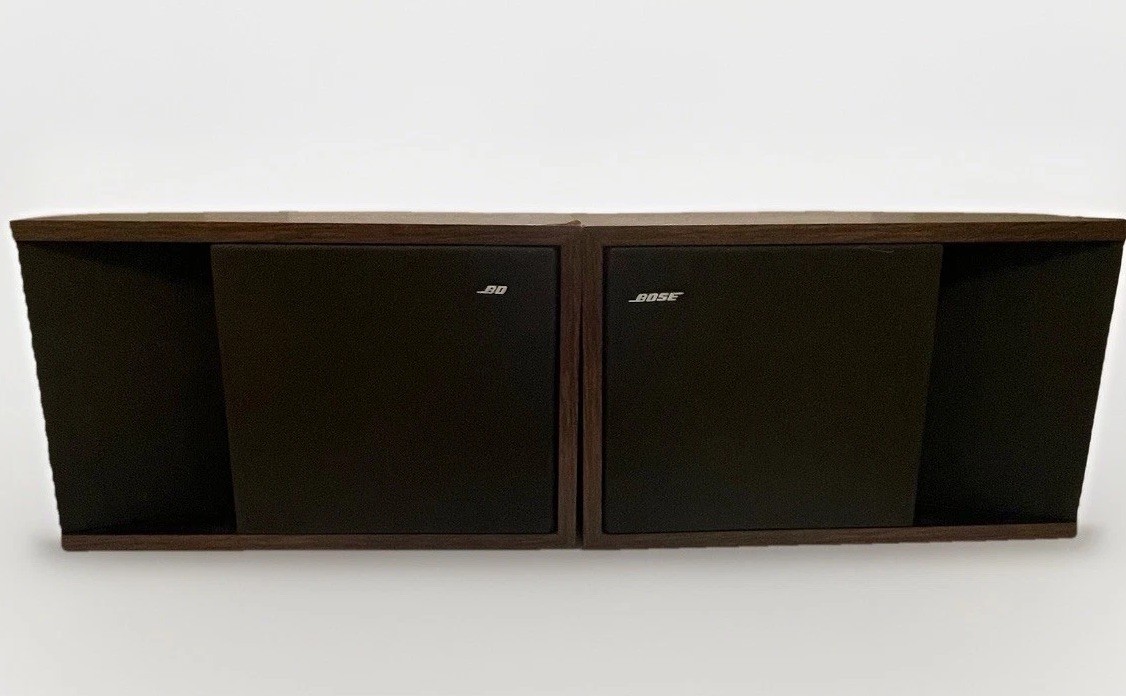
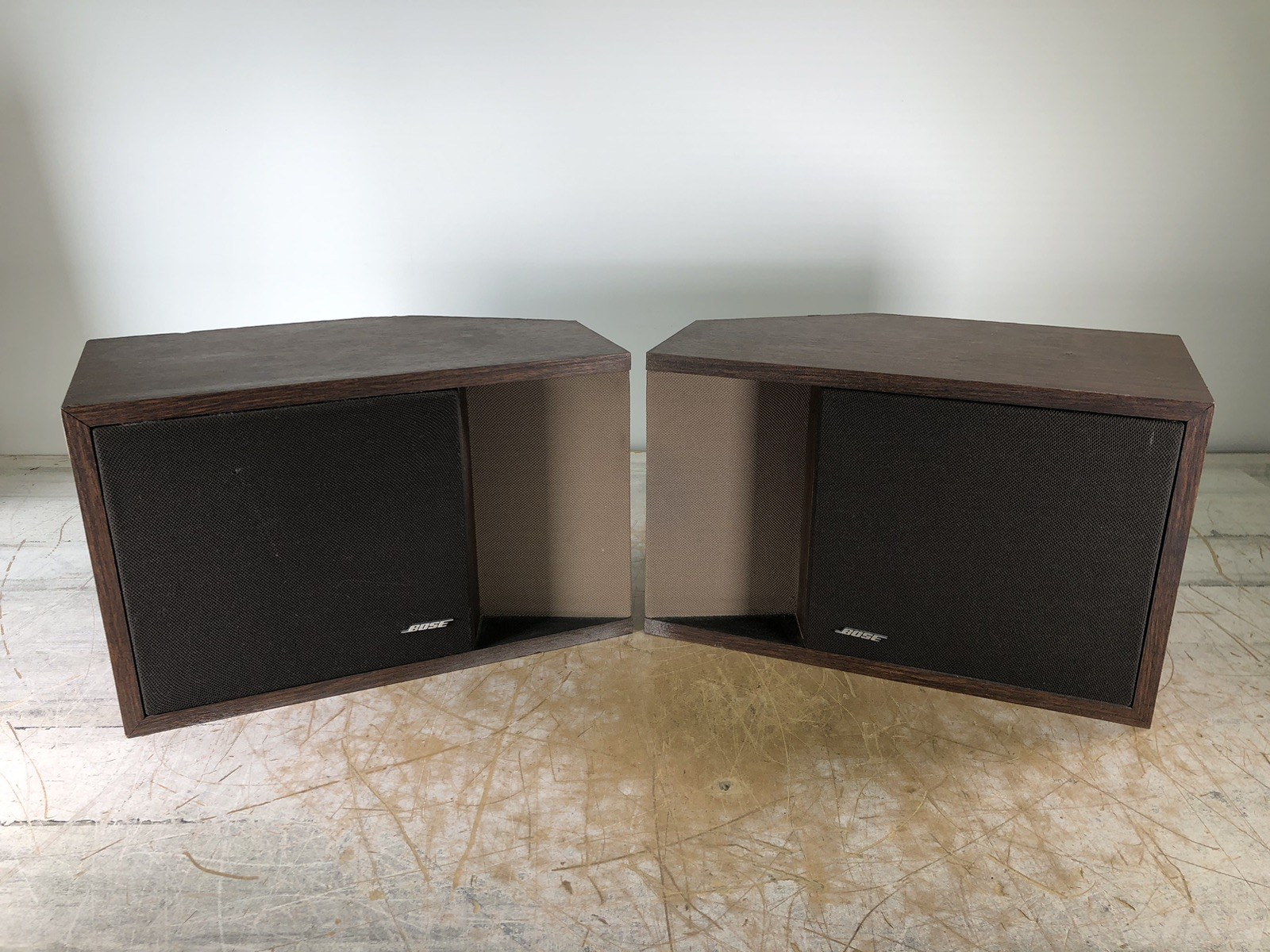
The Bose 201-SERIES-II was never intended to compete with floor-standing towers or high-sensitivity studio monitors. Instead, its sonic signature was built around ambience, diffusion, and a sense of spaciousness. Thanks to its Direct/Reflecting® design, the speaker fires sound both forward and backward, allowing waves to bounce off nearby walls and create a diffuse stereo field. This results in a wide “sweet spot” — unlike traditional speakers that require precise positioning, the 201s sound cohesive even when you're off-axis or moving around the room.
Bass response is modest but present for a speaker of its size, dipping down to 55 Hz. It won’t rattle your floorboards, but it delivers enough low-end to make acoustic guitar, vocals, and jazz feel full-bodied. The midrange is smooth and non-fatiguing, with a slight warmth that many found pleasing for long listening sessions. The 1" dome tweeter provides clear, if not ultra-detailed, high frequencies — crisp enough for cymbals and string harmonics without becoming harsh.
One of the most notable traits of the 201-SERIES-II is its lack of traditional stereo imaging. You won’t hear instruments sharply localized between the speakers. Instead, the soundstage feels more like a soft halo of music surrounding you — a characteristic that divided listeners. Audiophiles seeking precision often dismissed it, while casual listeners appreciated its forgiving, room-filling quality.
Notable Features and Innovations
The 201-SERIES-II was a product of Bose’s long-standing belief that room acoustics are as important as the speaker itself. Its dual-directional driver layout was revolutionary for consumer speakers at the time, predating the surround-sound era but anticipating the desire for immersive audio experiences.
- Direct/Reflecting® Technology: The rear-firing driver and angled baffle allow sound to reflect off walls, simulating the acoustic behavior of live music in a concert hall.
- Compact, Bookshelf-Friendly Design: At just over 13 inches tall, the 201s fit easily on shelves, desks, or credenzas — ideal for urban dwellers or those with limited space.
- 8-Ohm Impedance: Unusual for Bose at the time, this made the 201-SERIES-II more compatible with a wider range of amplifiers, including budget and mid-tier receivers.
- Durable Construction: The MDF cabinet (covered in woodgrain vinyl) and thick cloth grille gave it a professional, understated look that blended into home and office environments.
Though passive and simple by modern standards, the 201-SERIES-II was engineered to perform well with modest amplification — a hallmark of Bose’s consumer-friendly approach.
Common Issues and Maintenance
Like many vintage speakers, the Bose 201-SERIES-II can suffer from age-related wear, but it’s generally robust if stored properly.
- Foam Surround Deterioration: The most common failure point is the foam surround on the woofer, which can dry out, crack, or disintegrate after 30+ years. Replacement with rubber or butyl surrounds is a common and effective fix.
- Tweeter Fatigue: While dome tweeters are more durable than horns, some early units may exhibit dull highs if the diaphragm or voice coil is damaged. Fortunately, tweeter rebuilds are available from specialty shops.
- Grille Fabric and Vinyl: The cloth grilles can yellow or tear, and the woodgrain vinyl may peel. Replacement grilles and refinished cabinets are available through vintage audio refurbishers.
- Crossover Components: Though sealed and not user-serviceable, the internal crossover can degrade over time. Upgrading with modern components can improve clarity and reliability.
Maintenance is straightforward: keep them away from moisture and direct sunlight, and avoid overdriving with high-powered amps. Given their 8-ohm rating and moderate sensitivity, they pair well with vintage receivers from the 1970s and 1980s — think Marantz, Denon, or Yamaha of that era.
Current Market Value and Collectibility
The Bose 201-SERIES-II is not a high-value collector’s item like some Quad or Altec speakers, but it holds steady interest among vintage audio enthusiasts, Bose collectors, and retro office setup aficionados. Pairs in good condition typically sell for $100–$200, with fully restored units commanding slightly more.
Their value lies more in nostalgia and usability than rarity. They’re often found on eBay, Reverb, or Facebook audio groups — sometimes still in original packaging. Fully functional sets with original documentation and wall brackets (WB-20) are especially desirable.
While not a “must-have” for purist audiophiles, the 201-SERIES-II appeals to those who appreciate design history, compact vintage gear, and the unique Bose sound philosophy. They’re also popular in retro-themed home offices or media rooms where aesthetics and ambient sound matter more than flat frequency response.
Conclusion and Legacy
The Bose 201-SERIES-II may not have won awards for accuracy or bass extension, but it succeeded in its mission: to bring spacious, natural-sounding audio to small spaces without demanding perfect placement or high-end gear. In an era when speakers were either huge floorstanders or tinny bookshelf boxes, the 201 offered a compelling middle ground.
Its legacy lives on in Bose’s later Direct/Reflecting® models — like the 301 and 501 — and even in modern soundbars that use wall reflection to simulate surround sound. The 201-SERIES-II was a stepping stone in Bose’s mission to make high-quality audio accessible and unobtrusive.
Today, it stands as a well-engineered relic of late-1970s audio innovation — a speaker that prioritized experience over specification, ambiance over precision. For the right listener, in the right room, the Bose 201-SERIES-II still delivers a surprisingly engaging and immersive sound that belies its compact size and quiet presence.
eBay Listings


As an eBay Partner, we earn from qualifying purchases. This helps support our independent vintage technology research.
Related Models
- Bose 4.2-SERIES-I (1984)
- Bose 101-MUSIC-MONITOR (1970)
- Bose 10.2-SERIES-I (1988)
- Bose 10.2-SERIES-II (1988)
- Bose 1800-SERIES-II (1979)
- Akai AM-2850 (1975)
- Akai AP-206 (1975)
- Nakamichi BX-1 (1985)
- Acoustic Research research-ar-17 (1978)
- Acoustic Research AR-19 (1994)