Bose 10.2-SERIES-II: A Visionary Active Speaker System from the Late 1980s
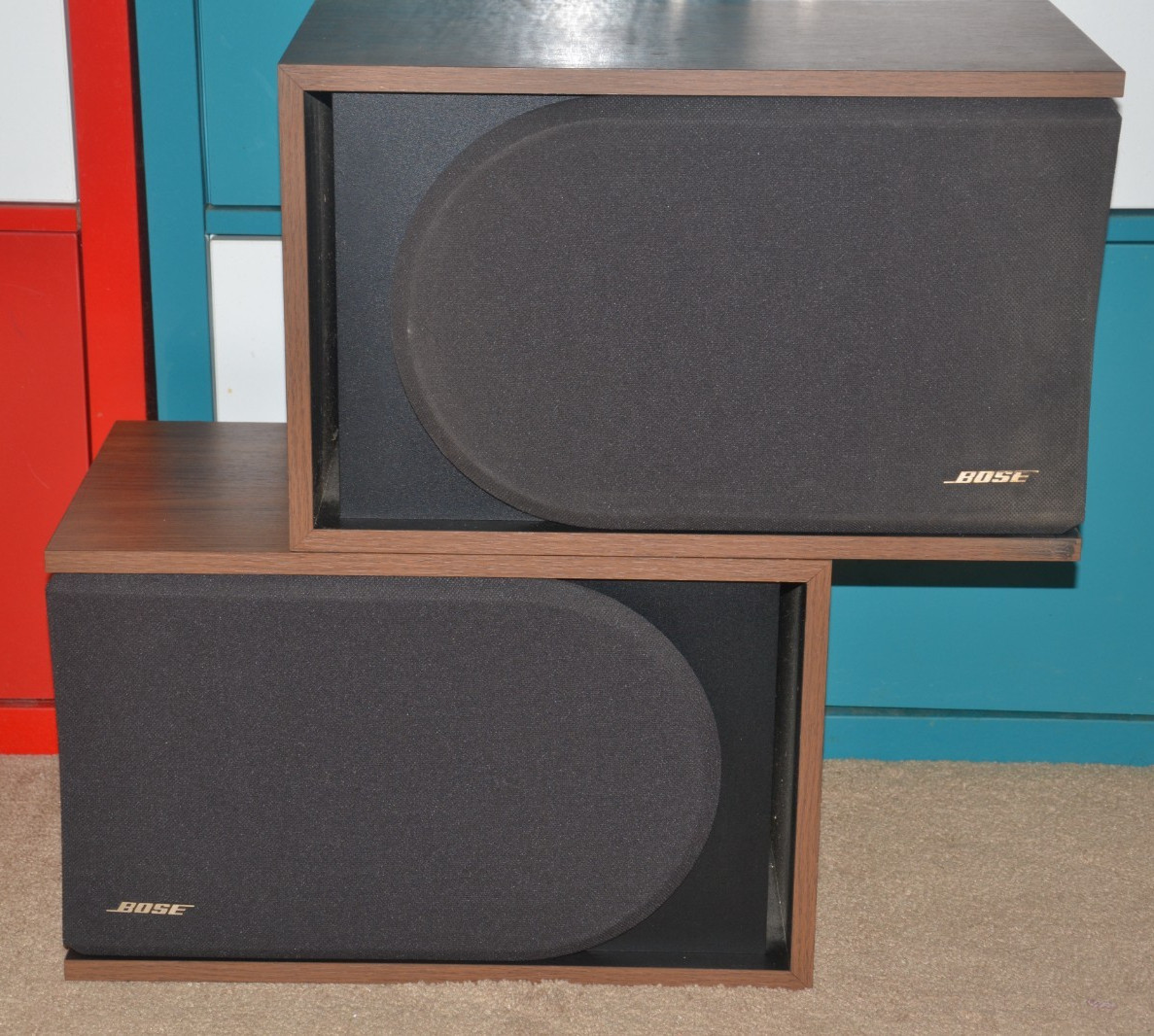
In the late 1980s, Bose continued to push the boundaries of consumer audio with innovative speaker designs that prioritized room integration, compact form factors, and engineered sound reproduction. Among these was the Bose 10.2-SERIES-II, a distinctive active speaker system that blended powered bass technology with passive satellite drivers in a sleek, modular configuration. While not as widely recognized as the iconic Bose 901, the 10.2-SERIES-II represented a bold step toward integrated, self-contained audio systems—foreshadowing the modern era of active and smart speakers.
Designed for audiophiles and discerning listeners who valued both aesthetics and performance, the 10.2-SERIES-II was part of Bose’s broader effort to deliver high-fidelity sound without the need for large floor-standing enclosures. It was particularly suited to smaller listening environments—apartments, offices, and desktop setups—where space efficiency and clean design were paramount.
Technical Specifications
The 10.2-SERIES-II was an active/passive hybrid system, meaning it combined powered and unpowered components in one cohesive package. At its core was a powered bass module that housed the amplifier and subwoofer, while the satellite speakers relied on passive drivers and were driven by the internal amp via dedicated outputs.
| Specification | Detail |
| Model | 10.2-SERIES-II |
| Manufacturer | Bose Corporation |
| Year Introduced | 1988 |
| System Type | Active bass module with passive satellites |
| Bass Driver | 1 x 8-inch powered woofer (in bass module) |
| Satellite Drivers | 2 x 2.5-inch full-range drivers (per satellite) |
| Amplifier Power | Approximately 50 watts RMS (bass module) |
| Frequency Response | 40 Hz – 18 kHz (system) |
| Crossover | Internal electronic crossover at ~150 Hz |
| Inputs | Stereo RCA line-level inputs |
| Outputs | Speaker-level outputs to satellites |
| Enclosure Material | MDF with vinyl wrap (bass module), plastic (satellites) |
| Dimensions (Bass Module) | 14" H × 8" W × 10" D |
| Satellite Dimensions | 6" H × 4" W × 5" D |
| Weight (Bass Module) | ~18 lbs |
| Finish Options | Black vinyl, simulated woodgrain |
The system was typically sold as a complete trio: one powered bass module and two satellite speakers. The bass module acted as the hub, accepting line-level input from a preamp or integrated amplifier and then amplifying the low frequencies while passing the high frequencies to the satellites via internal circuitry.
Sound Characteristics and Performance
The sonic signature of the 10.2-SERIES-II was unmistakably Bose: smooth, balanced, and carefully tuned for natural tonal reproduction. The system was engineered to deliver a wide soundstage despite its compact size, with the bass module providing a solid low-end foundation that belied its modest footprint.
The 8-inch woofer in the bass module was capable of reaching down to 40 Hz, offering surprising depth for a system of its era. While not designed for high-SPL home theater use (a concept still in its infancy in 1988), it handled acoustic jazz, vocal performances, and classic rock with commendable authority. The crossover was well-integrated, avoiding the "two-box" sound that plagued many early satellite/subwoofer systems.
The satellite speakers, each housing two small 2.5-inch drivers in a push-pull configuration, were designed to minimize distortion and deliver clear midrange and high-frequency response. Their compact size allowed for flexible placement—on shelves, desktops, or wall mounts—while the time-aligned design ensured coherent imaging.
Critics at the time noted that while the system didn’t offer the raw dynamics of larger floor-standing speakers, it excelled in clarity, coherence, and room-filling dispersion. It was particularly praised for its ability to maintain tonal balance across a wide listening area, a hallmark of Bose’s acoustic research.
Notable Features and Innovations
The 10.2-SERIES-II stood out for several forward-thinking design choices:
- Active Bass Integration: At a time when most "powered" systems were still in development, Bose integrated a high-quality amplifier directly into the bass enclosure, ensuring optimal matching between driver and amp.
- Compact Satellite Design: The push-pull driver arrangement in the satellites reduced cabinet vibration and improved clarity—unusual for such small enclosures.
- Room-Friendly Tuning: Like other Bose products, the 10.2-SERIES-II was engineered to perform well in typical living spaces without requiring precise placement or acoustic treatment.
- Clean Aesthetic: The system featured a minimalist, modern design that blended into home environments—a precursor to today’s lifestyle audio products.
While not as radical as the direct/reflecting technology of the 901, the 10.2-SERIES-II demonstrated Bose’s commitment to user-centric design, where performance was balanced with practicality and ease of use.
Common Issues and Maintenance
As with any vintage electronic system, the 10.2-SERIES-II can present some challenges for today’s collectors and users:
- Capacitor Aging: The electrolytic capacitors in the bass module’s amplifier can degrade over time, leading to hum, reduced output, or complete failure. A recapping by a qualified technician is often recommended.
- Driver Foam Surrounds: While the satellite drivers used rubber surrounds (more durable than foam), the bass driver may have original foam that has perished. Replacement surrounds are available from specialty suppliers.
- Input Jacks and Wiring: RCA jacks and internal speaker wiring can become brittle or corroded. Inspecting and cleaning connections is a good preventive step.
- Power Supply: The internal power supply should be checked for stability, especially if the unit has been in storage for decades.
Despite these age-related concerns, the 10.2-SERIES-II is generally robust. Its modular design makes repairs more manageable than fully integrated systems, and replacement parts—while not abundant—are accessible through vintage audio forums and Bose enthusiast communities.
Current Market Value and Collectibility
The Bose 10.2-SERIES-II is not a high-demand collector’s item like the L100 or 901, but it holds a quiet appeal among Bose enthusiasts and vintage audio tinkerers. Complete, working systems typically sell for $150–$300 on secondary markets such as eBay or Audiogon, depending on condition and finish.
Its value lies more in its historical significance than in rarity. As an early example of a powered satellite system, it represents a transitional phase in speaker design—one that anticipated the all-in-one audio solutions of the 2000s and beyond. For users seeking a compact, vintage-friendly setup with genuine Bose sound, the 10.2-SERIES-II offers a compelling blend of nostalgia and performance.
Conclusion and Legacy
The Bose 10.2-SERIES-II may not have achieved the legendary status of its louder siblings, but it remains a thoughtful, well-engineered system that embodies Bose’s philosophy of accessible, room-optimized sound. It was ahead of its time in integrating amplification and speaker design, paving the way for modern active monitors and lifestyle audio systems.
Today, the 10.2-SERIES-II serves as a reminder that innovation isn’t always about raw power or radical design—it can also be about refinement, integration, and user experience. For the vintage audio enthusiast, restoring and enjoying a 10.2-SERIES-II is not just a technical challenge, but a journey into the evolution of how we listen to music at home.
Whether you're a Bose loyalist, a fan of 1980s audio tech, or simply curious about the roots of modern active speakers, the 10.2-SERIES-II deserves a place in the conversation.
eBay Listings



As an eBay Partner, we earn from qualifying purchases. This helps support our independent vintage technology research.
Related Models
- Bose 4.2-SERIES-I (1984)
- Bose 101-MUSIC-MONITOR (1970)
- Bose 10.2-SERIES-I (1988)
- Bose 1800-SERIES-II (1979)
- Bose 201-SERIES-I (1974)
- Akai AM-2850 (1975)
- Akai AP-206 (1975)
- Nakamichi BX-1 (1985)
- Acoustic Research research-ar-17 (1978)
- Acoustic Research AR-19 (1994)