Bang & Olufsen S75 (1985)
The Bang & Olufsen S75 is a landmark floor-standing loudspeaker released in 1985, representing the Danish company's unwavering commitment to design excellence, acoustic innovation, and premium craftsmanship. As part of Bang & Olufsen’s high-fidelity speaker lineup during the 1980s, the S75 was engineered to deliver a spacious, detailed, and dynamically rich listening experience, suitable for both music and home theater applications—though home cinema was still in its infancy at the time.
Design Philosophy and Aesthetic
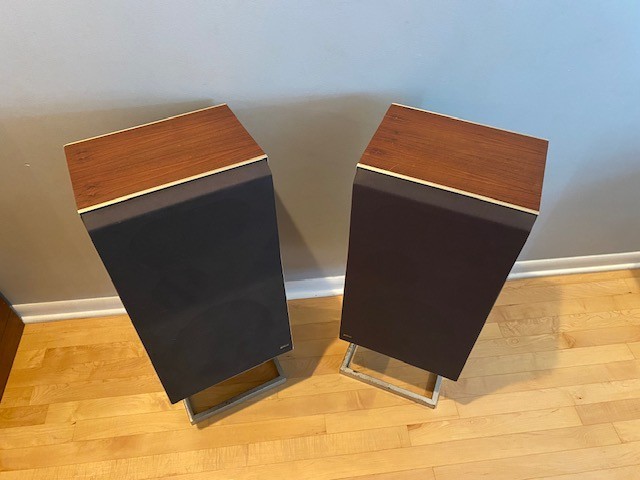
True to Bang & Olufsen’s heritage, the S75 embodies the principles of Scandinavian minimalism and functional elegance. The speaker features a tall, slender cabinet constructed from high-density fiberboard (HDF) with a premium wood veneer finish, available in finishes such as walnut, rosewood, and black ash, depending on the market and production year. The cabinet is both rigid and acoustically inert, minimizing resonance and coloration.
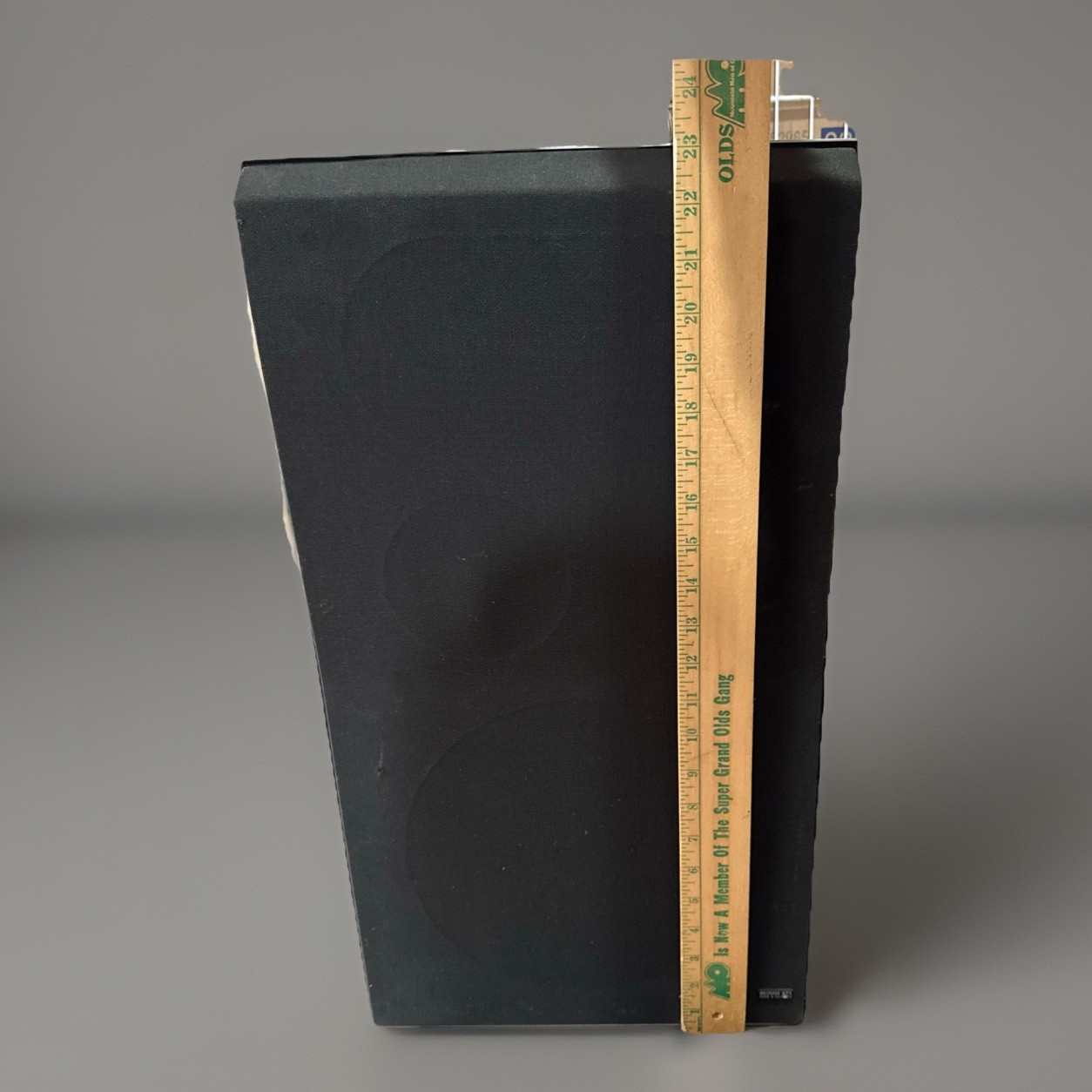
One of the most distinctive visual elements of the S75 is its vertically aligned driver array, housed in a narrow baffle that contributes to a coherent wavefront and improved stereo imaging. The front baffle is often covered in a fine metal mesh grille that stretches the full height of the speaker, giving it a sleek, modern appearance. The grille is magnetically attached, allowing for easy removal without visible fasteners—consistent with B&O’s obsession with clean lines and hidden mechanics.
At the base, the S75 sits on a polished aluminum plinth that not only elevates the speaker for optimal acoustics but also houses the proprietary connection system used in many B&O products of the era. This plinth includes recessed terminals for speaker cables and, in some configurations, integrated spike feet for decoupling from the floor.
Acoustic Design and Driver Configuration
The S75 is a three-way, bass-reflex loudspeaker designed for full-range performance. It features a carefully engineered driver array that includes:
- Tweeter: A 22mm silk dome tweeter positioned at the top of the baffle, protected behind the full-height grille. The silk dome provides a smooth, extended high-frequency response up to 22 kHz, with low distortion and excellent dispersion characteristics. The tweeter is mounted in a waveguide that helps control directivity and ensures a wide, even soundstage.
- Midrange: A 75mm (approximately 3-inch) midrange driver made from anodized aluminum, placed just below the tweeter. This driver is optimized for clarity and speed, handling frequencies from around 800 Hz to 5 kHz. Its rigid cone material reduces breakup modes, resulting in a clean midrange crucial for vocal and instrumental reproduction.
- Woofers: Two 165mm (6.5-inch) bass drivers located in the lower section of the cabinet. These woofers are constructed with paper composite cones and rubber surrounds, designed for controlled excursion and low distortion. The dual-woofer configuration allows for increased bass output and improved power handling, enabling the S75 to produce deep, articulate low frequencies down to around 35 Hz.
The crossover network is a passive, second-order design with precision components, carefully tuned to ensure seamless integration between the drivers. It is housed internally and protected from environmental factors, contributing to long-term reliability and consistent performance.
The bass-reflex port is located on the rear panel, tuned to enhance low-frequency extension without compromising transient response. This design allows the S75 to deliver impactful bass in medium to large listening rooms, especially when positioned correctly relative to walls and corners.
Performance Characteristics
The S75 was designed to deliver a balanced, natural sound signature with a slight emphasis on clarity and spatial accuracy—hallmarks of the B&O house sound during this era. With a nominal impedance of 8 ohms and a sensitivity of approximately 88 dB (1W/1m), the S75 is relatively easy to drive and pairs well with a wide range of amplifiers, from vintage tube amps to modern solid-state receivers.
Its frequency response spans from 35 Hz to 22 kHz, making it capable of reproducing the full spectrum of human hearing. The speaker’s vertical driver alignment contributes to a tall, well-defined soundstage, with precise imaging that allows listeners to pinpoint individual instruments within a recording.
In practical listening tests, the S75 excels with acoustic music, jazz, and vocal performances, where its midrange transparency and low coloration shine. It also handles orchestral and electronic music with authority, thanks to its extended bass and dynamic headroom. While not marketed as a “bass monster,” the dual woofers provide a solid low-end foundation that remains tight and controlled even at higher volumes.
Integration with Bang & Olufsen Ecosystem
Like many B&O products of the 1980s, the S75 was designed to integrate seamlessly with other components in the Bang & Olufsen ecosystem. It was often paired with amplifiers such as the Beomaster 900 or Beosound 3000, and could be used in conjunction with B&O’s proprietary Beolink infrared remote control system for unified operation.
The speaker’s rear panel includes gold-plated binding posts compatible with banana plugs, spades, or bare wire, ensuring a secure and high-quality connection. The design also supports bi-wiring, allowing audiophiles to separate the high- and low-frequency signal paths for potentially improved clarity and dynamics.
Legacy and Collectibility
Today, the Bang & Olufsen S75 is regarded as a classic example of 1980s high-end audio design. Its combination of timeless aesthetics, solid build quality, and refined sound has earned it a loyal following among vintage audio enthusiasts and B&O collectors.
While not as widely known as some of B&O’s later models like the Beolab 5 or Beolab 8000, the S75 holds a special place in the brand’s history as a bridge between analog craftsmanship and emerging digital audio trends. It represents a period when Bang & Olufsen was expanding its global presence and solidifying its reputation for blending art and engineering.
Well-preserved examples of the S75 are increasingly sought after, particularly those with original grilles, intact finishes, and functioning drivers. Replacement parts can be difficult to source, so original condition is highly valued.
Conclusion
The Bang & Olufsen S75 is more than just a speaker—it is a statement of design integrity and acoustic sophistication. From its elegant cabinet and innovative driver layout to its balanced sonic performance, the S75 reflects the core values of a company dedicated to excellence in every detail. For vintage audio aficionados and design lovers alike, the S75 remains a compelling choice, offering both sonic refinement and visual beauty that transcends decades. Whether displayed in a modern living room or used in a dedicated listening space, the S75 continues to deliver an immersive and emotionally engaging audio experience.
eBay Listings


As an eBay Partner, we earn from qualifying purchases. This helps support our independent vintage technology research.
Related Models
- Bang & Olufsen Beocord C75 (1968)
- Bang & Olufsen BeoSound S120 (1995)
- Bang & Olufsen BeoSound 5500 (1997)
- Bang & Olufsen 1702 (1976)
- Bang & Olufsen 505 (1970)
- Akai AM-2850 (1975)
- Akai AP-206 (1975)
- Nakamichi BX-1 (1985)
- Acoustic Research research-ar-17 (1978)
- Acoustic Research AR-19 (1994)