Bang & Olufsen BeoSound 22 (1998)
The Bang & Olufsen BeoSound 22, released in 1998, stands as a striking example of the Danish company’s unwavering commitment to design excellence, acoustic precision, and technological innovation. Though sometimes confused due to its alphanumeric designation, the BeoSound 22 is not a receiver or amplifier but a compact active speaker system that embodies the minimalist elegance and engineering sophistication for which Bang & Olufsen is globally renowned.
Design Philosophy and Aesthetic
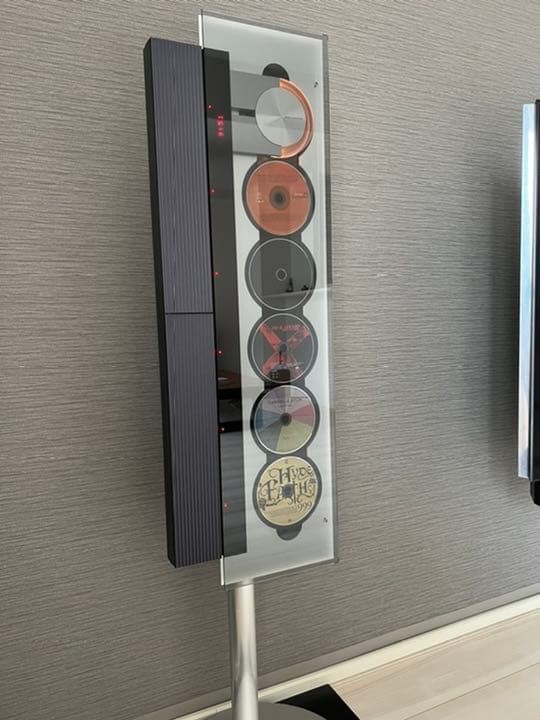
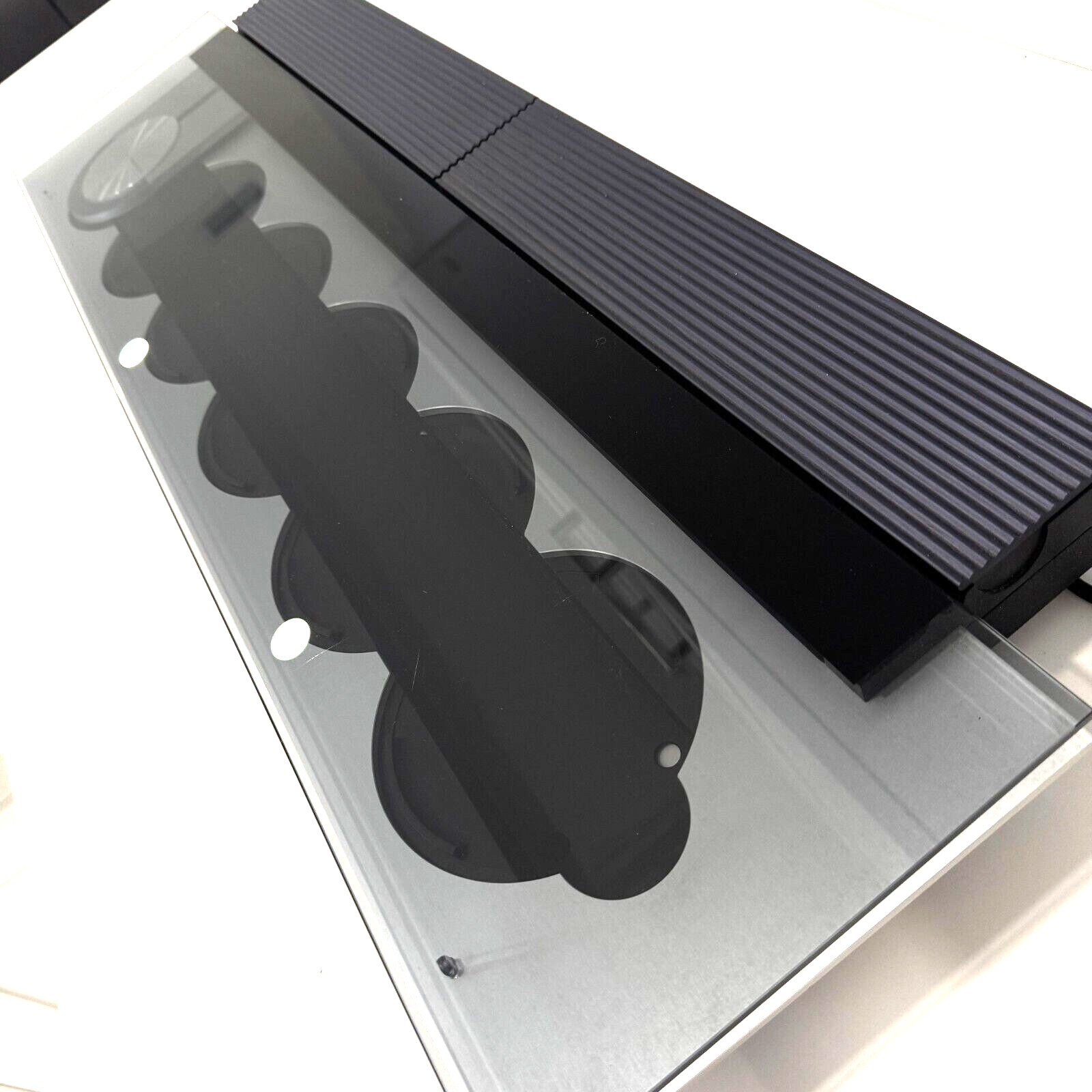
True to Bang & Olufsen’s heritage, the BeoSound 22 was conceived as much as a piece of functional art as it was a high-fidelity audio component. Designed by David Lewis, one of B&O’s most celebrated industrial designers, the speaker reflects the principles of Scandinavian minimalism—clean lines, geometric purity, and a focus on premium materials. The cabinet is typically constructed from die-cast aluminum with a brushed finish, available in silver or black anodized variants, giving it a sleek, futuristic appearance that remains timeless decades after its release.
The speaker’s form factor is compact and self-contained, measuring approximately 24 cm in height, 14 cm in width, and 12 cm in depth. Its trapezoidal shape not only contributes to its visual distinctiveness but also serves an acoustic purpose by minimizing internal standing waves and reducing cabinet resonance. The front baffle is slightly angled, allowing for optimal sound projection toward the listener when placed on a shelf or stand.
Acoustic Engineering and Performance
Despite its modest size, the BeoSound 22 delivers a surprisingly full and balanced sound signature. Each unit is a two-way active speaker system, meaning it contains built-in amplification and separate drivers for high and mid-to-low frequencies. The system is bi-amplified, with dedicated 50-watt RMS amplifiers for each channel, totaling 100 watts of continuous power output (50W per speaker in a stereo pair). This configuration ensures dynamic headroom and precise control over the drivers.
The speaker features a 1-inch soft-dome tweeter made from textile material, positioned above a 4.5-inch midrange/woofer with a glass-fiber composite cone. The tweeter is waveguide-loaded, a design choice that enhances dispersion and creates a wide, stable stereo image. The mid/woofer is designed for low distortion and fast transient response, allowing the speaker to reproduce music with clarity and authority, especially within its intended nearfield listening environment.
Bass response is naturally limited by the speaker’s compact enclosure, but B&O engineers mitigated this through the use of a tuned bass-reflex port on the rear panel. This port is carefully shaped and positioned to reduce turbulence and port noise, allowing for deeper bass extension than would typically be expected from a speaker of this size.
The crossover network, located internally, is a second-order design (12 dB/octave) for both high and low frequencies. It is optimized to ensure a seamless blend between the tweeter and woofer, preserving phase coherence and minimizing audible artifacts. Because the BeoSound 22 is an active speaker, the crossover operates at line level before amplification, which improves efficiency and reduces intermodulation distortion.
Connectivity and Integration
The BeoSound 22 was designed to function as part of a larger Bang & Olufsen ecosystem. It does not have traditional speaker-level inputs; instead, it accepts line-level or digital signals via proprietary connectors that interface with other B&O components such as the BeoCenter 2200, BeoVision televisions, or the BeoLink control system. This integration allows for seamless control via B&O’s iconic remote handsets, such as the BeoRemote or Beo4.
Input options typically include analog stereo (RCA), coaxial digital (S/PDIF), and sometimes optical digital, depending on the production variant. The speaker contains internal digital-to-analog conversion (DAC) when receiving digital signals, ensuring high-quality signal processing before amplification.
One notable feature is the speaker’s adaptive room compensation. While not as advanced as modern room correction systems, the BeoSound 22 includes basic equalization settings accessible via dip switches on the rear panel. These allow users to adjust the tonal balance based on placement—for example, reducing bass output when the speaker is placed near a wall or in a corner.
Positioning and Use Case
The BeoSound 22 was primarily marketed as a high-end compact speaker for nearfield listening, secondary rooms, or as part of a multi-room audio setup. It was often paired with B&O’s larger systems as surround or zone speakers, though it was fully capable of delivering stereo sound when used as a standalone pair.
Due to its active design and built-in amplification, the BeoSound 22 does not require an external receiver or amplifier. This makes it ideal for minimalist setups where space and cable clutter are concerns. However, its proprietary connectivity means it works best within the B&O ecosystem, limiting compatibility with third-party audio gear unless used with adapters or external preamplifiers.
Legacy and Collectibility
Today, the BeoSound 22 is regarded as a classic example of late-1990s high-end audio design. While it has been superseded by newer models such as the BeoSound 35 and contemporary wireless systems like BeoSound Shape, the 22 remains sought after by collectors and design enthusiasts. Its combination of sculptural form, premium materials, and solid acoustic performance ensures its status as a vintage audio gem.
Units in good condition—with original finishes, undamaged grilles, and functioning electronics—can command high prices in the secondhand market, particularly when sold as matched pairs. As with all vintage B&O gear, maintenance is key; aging capacitors in the power supply or amplifier sections may require servicing by specialists familiar with B&O’s proprietary circuitry.
Conclusion
The Bang & Olufsen BeoSound 22 is more than just a speaker—it is a statement of design integrity and engineering excellence. Released at the cusp of the digital audio revolution, it bridges the gap between analog warmth and digital precision. While its proprietary nature may limit its appeal to mainstream audiophiles, for those who appreciate the fusion of art and technology, the BeoSound 22 remains a compelling and enduring icon of Scandinavian audio design. Whether displayed in a modern living room or integrated into a curated vintage setup, it continues to deliver both sonic pleasure and visual delight.
eBay Listings


As an eBay Partner, we earn from qualifying purchases. This helps support our independent vintage technology research.
Related Models
- Bang & Olufsen Beocord C75 (1968)
- Bang & Olufsen BeoSound S120 (1995)
- Bang & Olufsen BeoSound 5500 (1997)
- Bang & Olufsen 1702 (1976)
- Bang & Olufsen 505 (1970)
- Akai AM-2850 (1975)
- Akai AP-206 (1975)
- Nakamichi BX-1 (1985)
- Acoustic Research research-ar-17 (1978)
- Acoustic Research AR-19 (1994)