Bang & Olufsen Beolab RL2000 (1986)
The Bang & Olufsen Beolab RL2000 stands as a remarkable example of Danish audio engineering and minimalist design philosophy from the mid-1980s. Introduced in 1986, the RL2000 was part of Bang & Olufsen’s Beolab series, a line of premium active loudspeakers that emphasized not only sonic excellence but also architectural integration and aesthetic refinement. At a time when most speaker systems were passive and required external amplification, the RL2000 represented a bold step forward by integrating amplification directly into the speaker enclosure, allowing for precise tuning and optimized performance.
Design and Aesthetic Philosophy
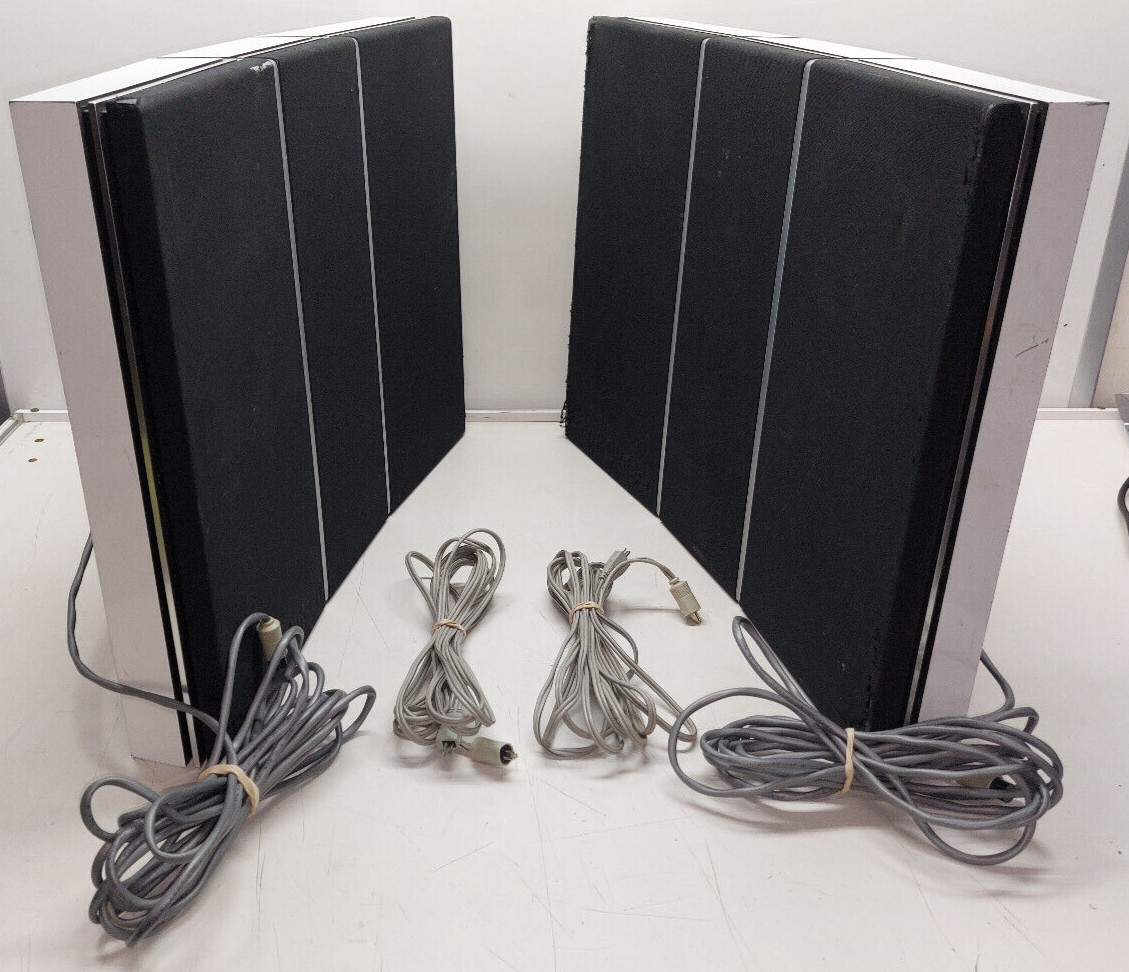
The RL2000 was designed by David Lewis, one of Bang & Olufsen’s most celebrated industrial designers. His work on the RL2000 reflects the brand’s signature approach: clean lines, functional elegance, and a focus on materials that age gracefully. The speaker features a tall, slender cabinet constructed from high-quality wood, often finished in teak or walnut veneer, with a brushed aluminum front baffle. The minimalist front panel houses the drivers and a small status indicator, maintaining a sleek profile that complements modern interiors.
One of the most distinctive features of the RL2000 is its vertical orientation and compact footprint. Despite its relatively narrow width, the cabinet is tall and deep, allowing for proper internal volume to support bass response. The design was intended to be unobtrusive yet commanding—a piece of furniture as much as an audio component. The speakers were often mounted on matching floor stands or placed directly on shelves, with careful attention paid to positioning for optimal stereo imaging.
Technical Specifications and Engineering
The Beolab RL2000 is an active speaker, meaning it contains built-in amplification. Each unit is equipped with a dedicated 250-watt peak power amplifier, specifically tuned to the characteristics of the drivers and enclosure. This integration allows for superior control over the speaker’s performance, reducing the variables associated with external amplifiers and speaker cables.
Inside each RL2000, the speaker system employs a two-way design with a 1-inch soft-dome tweeter and a 6.5-inch midrange/bass driver. The tweeter is mounted low on the baffle, aligned with the ear level when seated, while the mid-bass driver is positioned above it. This unusual arrangement was intended to create a coherent soundstage across a wide listening area, a concept Bang & Olufsen referred to as “spatial sound dispersion.”
The crossover network is active and electronic, located before the amplification stage, allowing for sharper filtering and better driver protection. This design choice also enables precise phase alignment between the drivers, contributing to a more accurate stereo image. The bass response is enhanced through a ported enclosure design, with a rear-facing bass reflex port that extends low-frequency output without requiring excessive cabinet size.
Input to the RL2000 is via balanced XLR and unbalanced RCA connectors, allowing compatibility with a wide range of preamplifiers and source components. A level control on the rear panel enables fine-tuning of volume, and the speakers were typically paired with a Bang & Olufsen preamp such as the Beomaster 8000 or Beovox C5000 for seamless system integration.
Performance and Sound Characteristics
The RL2000 was engineered to deliver a balanced, detailed, and dynamic sound signature. Thanks to the active design, the speakers exhibit tight bass control, clear midrange articulation, and smooth high-frequency extension. The integrated amplification ensures that the drivers are driven optimally, minimizing distortion and maximizing transient response.
Listeners often describe the sound of the RL2000 as “refined” and “natural,” with a strong emphasis on vocal clarity and instrumental separation. The speakers perform exceptionally well with acoustic music, jazz, and classical recordings, where their ability to render subtle nuances is most apparent. While not designed as high-SPL disco speakers, they handle dynamic peaks with composure and maintain clarity even at moderate to high volumes.
One of the RL2000’s strengths is its consistent performance across different room environments. The vertical dispersion pattern and controlled directivity help minimize the impact of room reflections, making the speakers less sensitive to placement than many conventional designs. However, optimal performance still requires careful setup, including proper distance from walls and symmetrical positioning relative to the listening position.
System Integration and Legacy
The RL2000 was typically sold as a pair and was intended to be the centerpiece of a high-end Bang & Olufsen audio system. It was often paired with matching components such as the Beomaster 8000 receiver or the Beovox C5000 preamplifier, creating a cohesive ecosystem of audio equipment. The design language and build quality ensured visual and functional harmony across the system.
Despite its advanced engineering, the RL2000 remained a niche product due to its high price and specialized nature. Production numbers were limited, and today the speakers are sought after by collectors and audiophiles who appreciate both their sonic qualities and design heritage. Well-maintained examples can still be found in the second-hand market, though servicing may require specialized knowledge due to the integrated electronics.
Maintenance and Modern Use
Owning a pair of RL2000s today requires some consideration. The internal amplifiers, while robust, may need capacitor replacement or other servicing after decades of use. Finding replacement parts or technicians familiar with vintage B&O electronics can be challenging, though dedicated online communities and specialty repair shops exist to support owners.
For modern use, the RL2000 can be integrated into contemporary systems with the help of adapters or modern preamplifiers with variable outputs. Some enthusiasts have successfully paired them with high-end DACs and streamers, proving that their sound remains competitive even by today’s standards.
Conclusion
The Bang & Olufsen Beolab RL2000 is more than just a speaker—it is a statement of design integrity and audio innovation. Combining active electronics, precision engineering, and timeless aesthetics, it represents a high point in 1980s high-fidelity audio. While it may not have achieved mass-market success, its influence can be seen in modern active speakers from companies like Bowers & Wilkins, KEF, and even Bang & Olufsen’s own Beolab series.
For the discerning listener who values both form and function, the RL2000 remains a compelling choice. It is a testament to Bang & Olufsen’s belief that audio equipment should not only sound exceptional but also enrich the living space it inhabits. In an era increasingly dominated by digital streaming and compact systems, the RL2000 reminds us of the enduring appeal of well-crafted, purpose-built audio hardware.
eBay Listings

As an eBay Partner, we earn from qualifying purchases. This helps support our independent vintage technology research.
Related Models
- Bang & Olufsen Beocord C75 (1968)
- Bang & Olufsen BeoSound S120 (1995)
- Bang & Olufsen BeoSound 5500 (1997)
- Bang & Olufsen 1702 (1976)
- Bang & Olufsen 505 (1970)
- Akai AM-2850 (1975)
- Akai AP-206 (1975)
- Nakamichi BX-1 (1985)
- Acoustic Research research-ar-17 (1978)
- Acoustic Research AR-19 (1994)