Bang & Olufsen BeoLab Penta (1987)
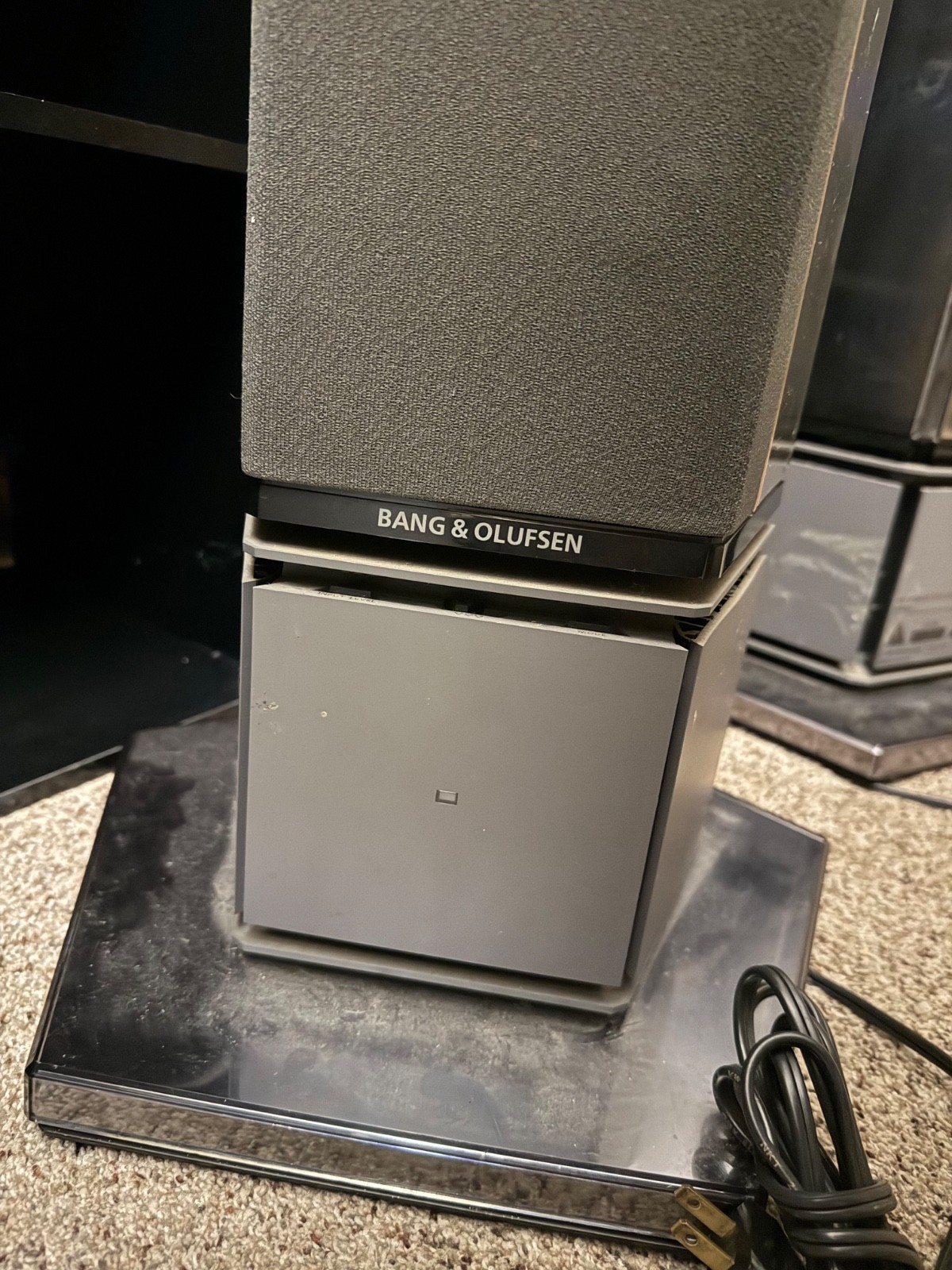
The Bang & Olufsen BeoLab Penta, introduced in 1987, stands as a bold and sculptural statement in the evolution of high-end audio design. Part of B&O’s innovative BeoLab speaker series, the Penta was not merely a speaker but a fusion of acoustics, architecture, and industrial artistry. Designed during a period when Bang & Olufsen was pushing the boundaries of form and function, the Penta exemplifies the Danish brand’s commitment to minimalist elegance and technical sophistication.
Design and Aesthetic Philosophy
The BeoLab Penta’s most defining characteristic is its geometric, angular form—reminiscent of a crystalline structure or a modernist sculpture. Constructed with precision-machined aluminum and featuring a distinctive five-sided (hence “Penta”) enclosure, the speaker commands attention as a piece of furniture as much as a piece of audio equipment. Its sharp edges and reflective surfaces were intended to interact with light and space, making it a dynamic presence in any room.
Available in finishes typical of B&O’s high-end offerings—such as anodized aluminum in silver or black—the Penta was designed to be wall-mounted or placed on a stand, allowing for optimal positioning and visual impact. The speaker’s orientation directs sound forward and slightly upward, leveraging room acoustics for a spacious soundstage.
True to Bang & Olufsen’s design language of the late 1980s, the Penta avoids traditional speaker grilles. Instead, the drivers are exposed within the angular frame, emphasizing the mechanical beauty of the components. This design choice not only reinforces the product’s modernist aesthetic but also reduces acoustic diffraction, potentially improving sound clarity.
Technical Specifications and Acoustic Engineering
The BeoLab Penta is an active speaker, meaning it contains built-in amplification—unusual for the era, especially in consumer-grade products. It features a total power output of 150 watts, distributed across its driver array. This integration of amplifier and speaker allowed B&O engineers to precisely match the electronics to the drivers, optimizing performance and minimizing signal loss.
The speaker houses a two-way active system consisting of a 13 cm (5.1 inch) midrange/bass driver and a 2.5 cm (1 inch) tweeter. Both drivers are magnetically shielded, an important feature at the time for users placing speakers near CRT televisions or other sensitive electronics. The mid-bass unit is designed for low distortion and controlled excursion, while the tweeter delivers crisp, detailed highs with minimal harshness.
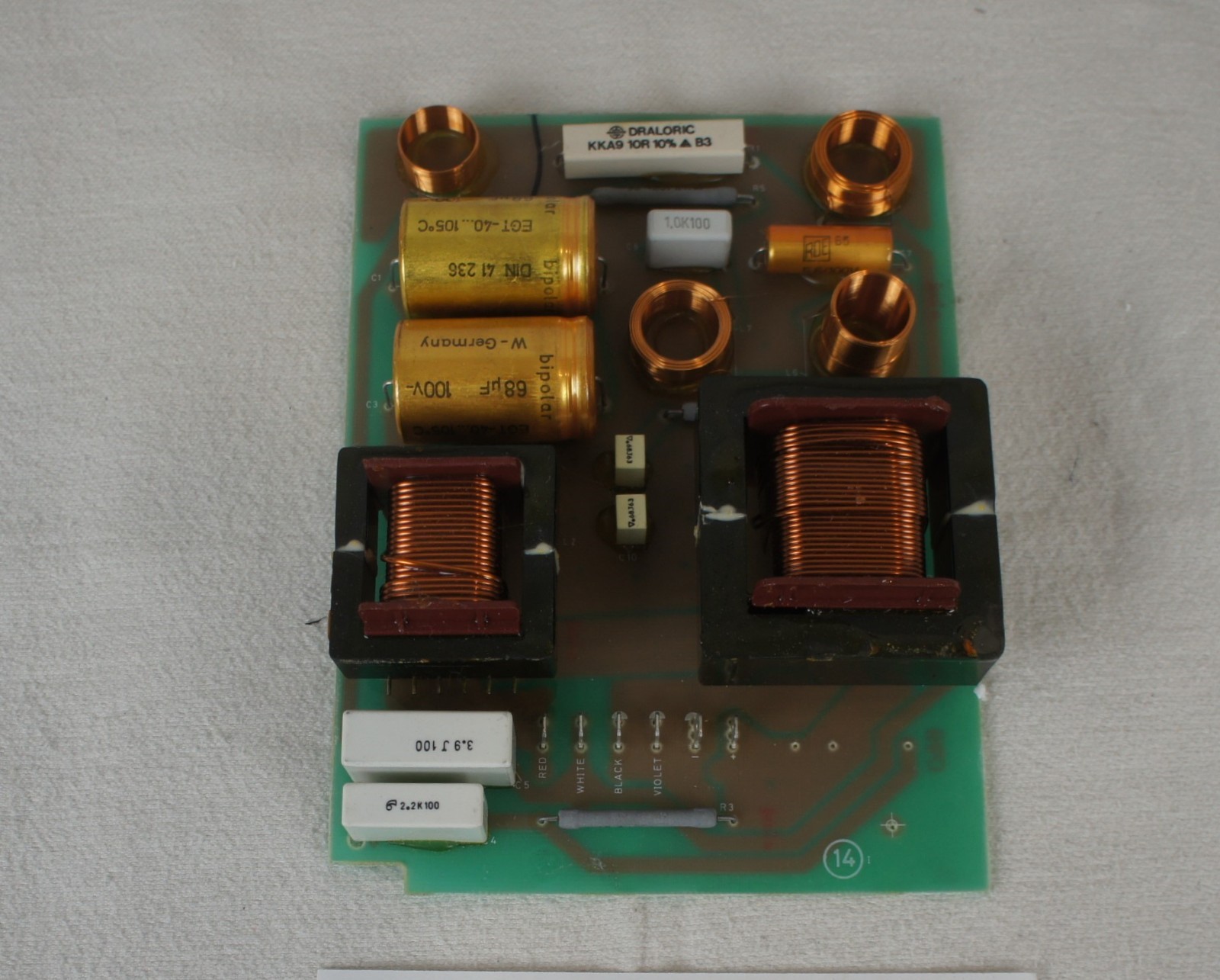
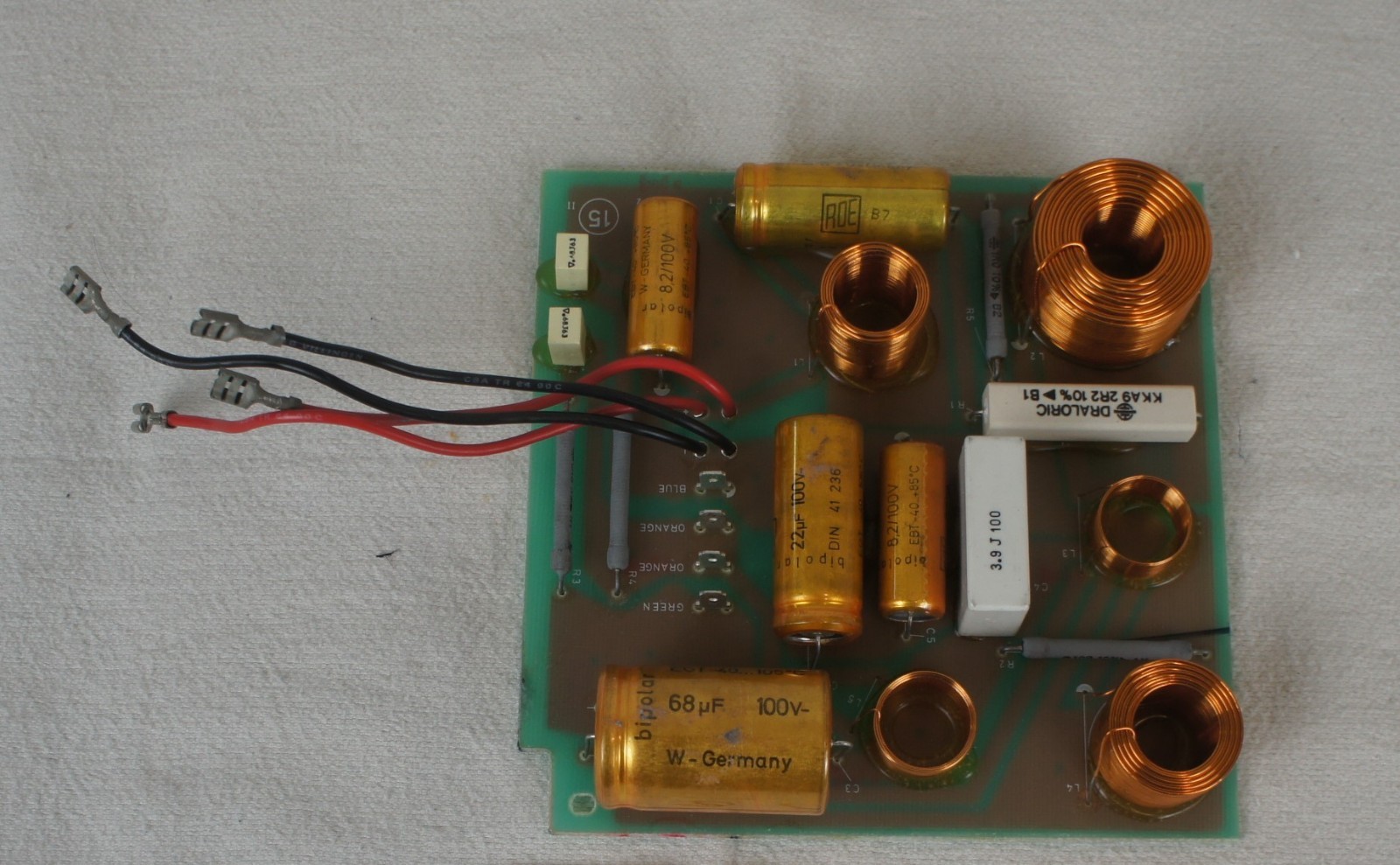
Crossover networks in the Penta are active and electronic, located before the amplification stage, allowing for steeper filter slopes and better driver integration than passive crossovers. This contributes to a coherent and phase-accurate sound signature.
Frequency response is rated from 55 Hz to 22 kHz, which was impressive for a compact speaker in the late 1980s. While not a subwoofer, the Penta delivers surprisingly full bass for its size, thanks to careful cabinet design and active equalization. The absence of a port (sealed enclosure) ensures tight, controlled bass without the resonance or chuffing common in ported designs.
Impedance is not specified in traditional terms because the Penta is a fully active system—the amplifier is designed specifically for the internal drivers, eliminating the need for user-managed impedance matching.
Integration and Connectivity
The BeoLab Penta was designed to work within Bang & Olufsen’s ecosystem of audio and video products. It features balanced XLR and unbalanced RCA inputs, allowing connection to a variety of preamplifiers or B&O’s proprietary control units. A dedicated BeoLink system enabled synchronization with other B&O components, maintaining the brand’s signature seamless integration.
Each speaker operates independently, requiring two units for stereo playback. A master/slave configuration was often used, where one speaker housed additional control circuitry or served as the primary input point. This modular approach was forward-thinking and aligned with B&O’s vision of customizable, scalable audio environments.
Cultural and Historical Context
Launched in 1987, the Penta emerged during a golden era for Bang & Olufsen, when the company was gaining international acclaim for its design-forward electronics. This was the age of the BeoCom telephones, the BeoVision TVs, and iconic turntables like the Beogram 4000. The Penta fit perfectly into this portfolio—a high-cost, low-volume product aimed at design-conscious audiophiles and affluent early adopters.
It was not a mass-market speaker. Instead, it was sold through exclusive dealerships and often custom-installed in high-end homes. Its price reflected not just the materials and engineering, but also the brand’s aura of luxury and exclusivity.
The Penta also reflected a broader shift in audio design—away from wood-veneered boxes and toward minimalist, industrial forms. Alongside contemporaries like the B&O BeoLab 8000 (released a few years later), the Penta helped define what premium audio could look like in a modern interior.
Legacy and Collectibility
Today, the BeoLab Penta is a sought-after collector’s item. Its rarity, striking appearance, and association with B&O’s design heyday make it a prized possession among vintage audio enthusiasts. While not as technically advanced as modern active speakers with digital signal processing, the Penta remains a functional and sonically competent system when properly maintained.
Restoration projects are not uncommon, as aging capacitors and amplifiers may require servicing. However, the robust aluminum construction ensures that the enclosures remain in excellent condition, often showing only minor wear after decades.
In the broader context of audio history, the Penta was a precursor to today’s smart, self-amplified speakers. Its integration of amplifier, speaker, and design language anticipated products like the BeoLab 5, the Devialet Phantom, and even high-end offerings from companies like KEF and Sonus Faber with active variants.
Conclusion
The Bang & Olufsen BeoLab Penta is more than a speaker—it is a symbol of design-driven engineering. From its angular aluminum form to its integrated amplification and precise acoustic tuning, the Penta represents a moment when audio equipment transcended utility to become art. It appeals to those who value both sound quality and aesthetic integrity, and it remains a testament to Bang & Olufsen’s enduring philosophy: that technology should enhance life, not dominate it.
For collectors, designers, and audiophiles alike, the BeoLab Penta is not just a relic of the 1980s, but a timeless object that continues to inspire.
eBay Listings

As an eBay Partner, we earn from qualifying purchases. This helps support our independent vintage technology research.
Related Models
- Bang & Olufsen Beocord C75 (1968)
- Bang & Olufsen BeoSound S120 (1995)
- Bang & Olufsen BeoSound 5500 (1997)
- Bang & Olufsen 1702 (1976)
- Bang & Olufsen 505 (1970)
- Akai AM-2850 (1975)
- Akai AP-206 (1975)
- Nakamichi BX-1 (1985)
- Acoustic Research research-ar-17 (1978)
- Acoustic Research AR-19 (1994)