Bang & Olufsen BeoLab 3 (1984)
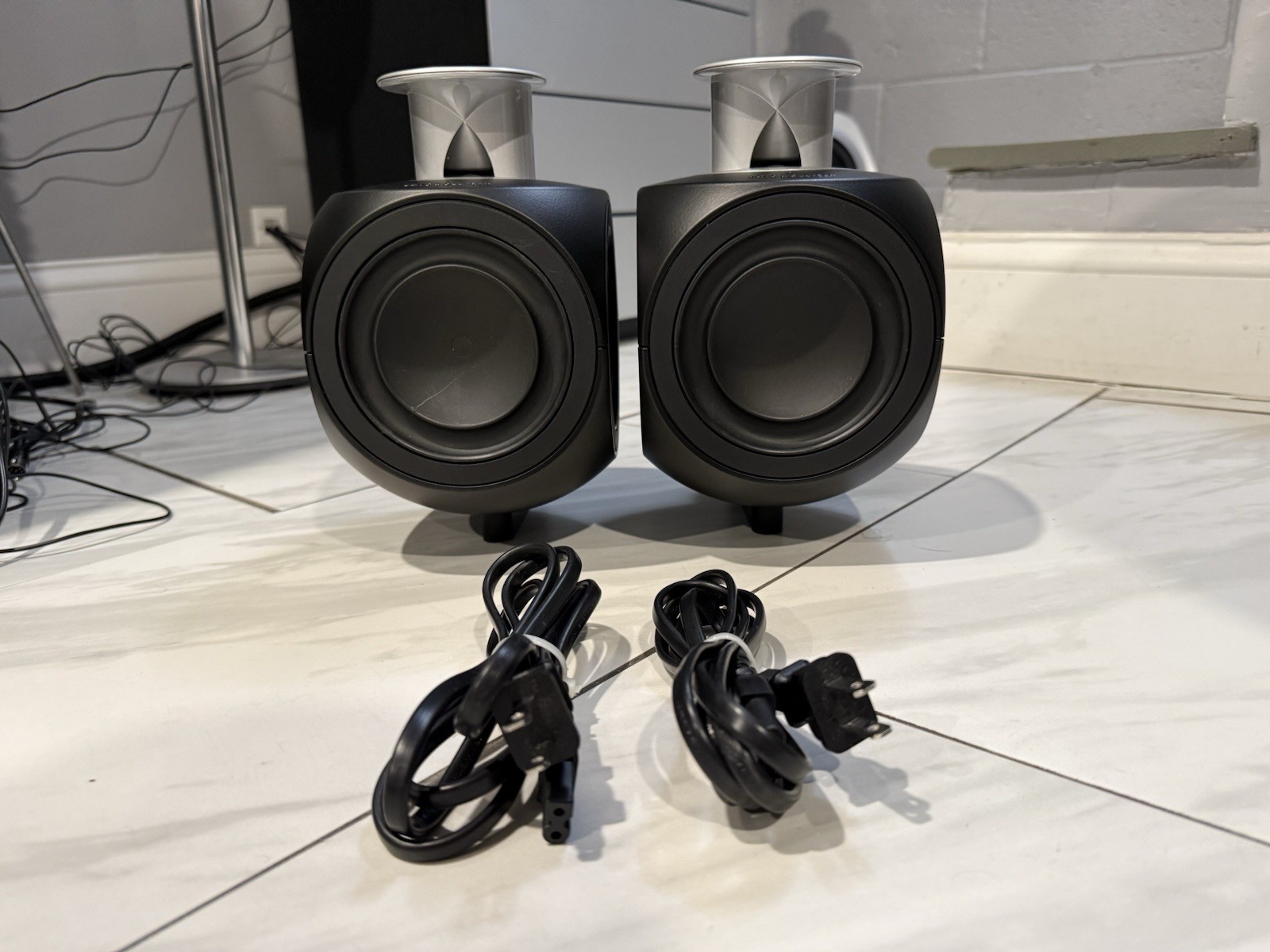
The Bang & Olufsen BeoLab 3, sometimes erroneously referred to as the "BM3," is a landmark in high-fidelity loudspeaker design from the Danish audio giant. Introduced in 1984, the BeoLab 3 represents the pinnacle of Bang & Olufsen’s early foray into active speaker systems, blending cutting-edge engineering with the brand’s signature minimalist aesthetic. While the model number "BM3" does not correspond to any known Bang & Olufsen product, it is likely a misinterpretation or typo of the BeoLab 3, a model that fits the naming pattern and era.
Design and Aesthetic Philosophy
The BeoLab 3 is a quintessential example of Scandinavian design—sleek, functional, and timeless. Encased in a cylindrical aluminum housing with a distinctive perforated grille, the speaker exudes elegance and modernity. The body is available in a range of anodized finishes, including silver, black, and gold, allowing it to blend seamlessly into high-end living spaces. Unlike conventional box-shaped speakers, the BeoLab 3’s columnar form was not only a stylistic choice but also an acoustic one, designed to minimize internal standing waves and diffraction.
Standing at approximately 95 cm (37.4 inches) tall, the speaker is both imposing and unobtrusive, thanks to its slender profile. It was often paired with matching floor stands or integrated into Bang & Olufsen’s modular audio furniture systems, such as the Beosystem 2500. The attention to detail is evident in every aspect—from the precision-machined base to the flush-mounted controls and indicators on the top panel.
Acoustic Engineering and Performance
The BeoLab 3 is an active (powered) loudspeaker, meaning it contains built-in amplification tailored specifically to its drivers. This integration allows for precise control over frequency response, phase alignment, and dynamic range. The system is bi-amplified, with a total power output of 150 watts—75 watts dedicated to the woofer and 75 watts to the combined midrange and tweeter section.
At the heart of the BeoLab 3 is a three-way driver configuration:
- Woofer: A 20 cm (8-inch) aluminum-cone bass driver, designed for low distortion and high excursion.
- Midrange: A 7.5 cm (3-inch) aluminum dome unit, optimized for vocal clarity and instrumental precision.
- Tweeter: A 2.5 cm (1-inch) textile dome tweeter, delivering smooth high-frequency response up to 22 kHz.
Each driver is independently powered and filtered via an active crossover network located inside the speaker cabinet. This approach eliminates the need for passive crossovers, which can degrade signal quality and introduce phase anomalies. The result is a speaker with exceptional clarity, tight bass, and a wide, coherent soundstage.
The BeoLab 3 was designed to operate in a sealed enclosure (acoustic suspension), which provides tighter bass response compared to ported designs. While this limits maximum bass extension compared to larger systems, it ensures accuracy and low distortion—hallmarks of high-end audio reproduction.
Connectivity and Integration
As an active speaker, the BeoLab 3 requires an external line-level signal. It features balanced XLR and unbalanced RCA inputs, allowing integration with a wide range of preamplifiers and source components. A dedicated BeoLink connection enabled synchronization with other Bang & Olufsen components, supporting remote control via the brand’s iconic remote handsets.
The top panel includes a volume control, power switch, and status indicator, allowing for standalone operation. However, the speaker was typically used in conjunction with a BeoCenter or Beosystem control unit, which managed input selection, balance, and system muting.
One of the BeoLab 3’s most innovative features was its adaptive room compensation. While not as sophisticated as modern DSP-based systems, it included basic equalization settings accessible via internal DIP switches, allowing users to adjust bass and treble response based on room acoustics and placement.
Historical Context and Legacy
The BeoLab 3 was launched during a period of rapid innovation at Bang & Olufsen. The early 1980s saw the company transition from traditional hi-fi components to integrated, design-forward audio systems. The BeoLab series, introduced in 1983 with the BeoLab 5000, represented a bold departure from conventional speaker design, emphasizing aesthetics as much as acoustics.
The BeoLab 3 was positioned as a premium product, targeting affluent consumers who valued both performance and design. It was often showcased in luxury homes, executive offices, and high-end retail spaces. Its price point—several thousand dollars per pair at launch—reflected its status as a luxury audio object.
Despite its age, the BeoLab 3 remains highly collectible. Original units in good condition command strong prices in the vintage audio market, particularly those with rare finishes or complete accessories. Audiophiles appreciate its warm, balanced sound signature, which avoids the harshness sometimes associated with early digital-era speakers.
Technical Specifications
- Model: BeoLab 3
- Type: Active three-way loudspeaker
- Year of Introduction: 1984
- Cabinet Material: Anodized aluminum
- Height: 95 cm (37.4 in)
- Diameter: 14 cm (5.5 in)
- Weight: 12.5 kg (27.5 lbs)
- Frequency Response: 45 Hz – 22 kHz (±3 dB)
- Crossover Frequencies: 300 Hz (woofer/midrange), 3.5 kHz (midrange/tweeter)
- Amplification: Bi-amped, 150W total (75W + 75W)
- Inputs: XLR (balanced), RCA (unbalanced), BeoLink
- Controls: Volume, power, EQ DIP switches
- Finish Options: Silver, black, gold anodized aluminum
Conclusion
The Bang & Olufsen BeoLab 3 is more than just a speaker—it is a statement of design philosophy and engineering excellence. While it may be confused with a non-existent "BM3" model, its legacy as a high-end active loudspeaker from the 1980s is well-documented and respected. With its elegant form, advanced active electronics, and rich sonic character, the BeoLab 3 continues to captivate audiophiles and design enthusiasts alike.
Today, it stands as a testament to Bang & Olufsen’s enduring commitment to merging art and technology. Whether displayed in a modern living room or cherished in a vintage audio collection, the BeoLab 3 remains a timeless icon of Danish industrial design and high-fidelity sound.
eBay Listings


As an eBay Partner, we earn from qualifying purchases. This helps support our independent vintage technology research.
Related Models
- Bang & Olufsen Beocord C75 (1968)
- Bang & Olufsen BeoSound S120 (1995)
- Bang & Olufsen BeoSound 5500 (1997)
- Bang & Olufsen 1702 (1976)
- Bang & Olufsen 505 (1970)
- Akai AM-2850 (1975)
- Akai AP-206 (1975)
- Nakamichi BX-1 (1985)
- Acoustic Research research-ar-17 (1978)
- Acoustic Research AR-19 (1994)