Bang & Olufsen Beolab 9000RG (1991)
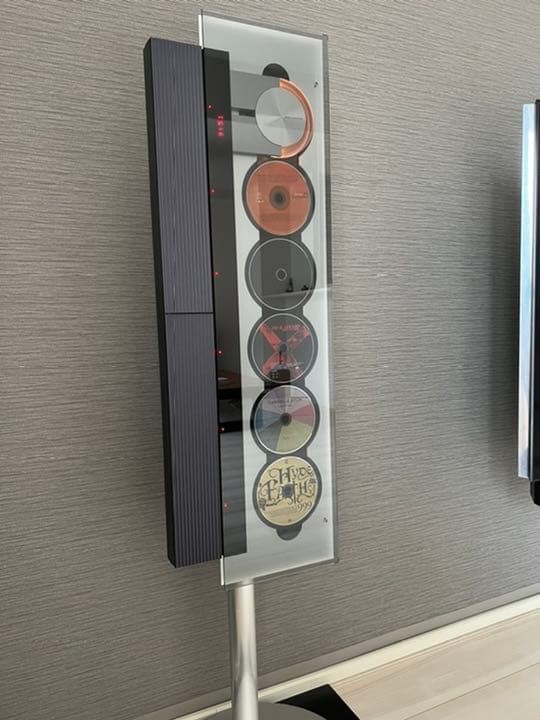
The Bang & Olufsen Beolab 9000RG is a striking example of Danish audio excellence, blending cutting-edge sound technology with minimalist, futuristic design. Released in 1991 as part of the Beolab series, the 9000RG stands as a rare and collectible piece of audio history, representing a bold step in the evolution of active loudspeaker systems. While not as widely documented as some of B&O’s more mainstream offerings, the Beolab 9000RG remains a coveted item among vintage audio enthusiasts and design aficionados.
Design and Aesthetic Philosophy
True to Bang & Olufsen’s reputation, the Beolab 9000RG is as much a work of art as it is a functional audio component. The speaker features a sleek, tower-like form factor with a distinctive aluminum enclosure that exudes precision and modernity. Its design follows the principles of Scandinavian minimalism—clean lines, absence of visual clutter, and an emphasis on material quality. The "RG" in the model name is believed to refer to the finish or edition, possibly indicating a special surface treatment or regional variant, though official documentation on this designation is scarce.
The front baffle is dominated by a vertically aligned driver array, protected by a removable fabric grille. The cabinet tapers slightly toward the base, giving it a dynamic, almost architectural presence. The build quality is exceptional, with attention to detail evident in every joint, surface finish, and control interface. The speakers were designed to be freestanding and were often paired with B&O’s matching furniture systems, such as the Beosystem 9000, allowing for integrated placement in high-end living environments.
Technical Specifications and Engineering
The Beolab 9000RG is an active speaker system, meaning it contains built-in amplification tailored specifically to its drivers. Each speaker houses a 250-watt amplifier, ensuring precise control over the audio signal and eliminating the need for an external receiver or amplifier in a traditional setup. This integration of electronics within the speaker enclosure was a hallmark of B&O’s high-end strategy, allowing for optimized performance and reduced signal degradation.
The speaker is a three-way design, incorporating separate drivers for low, mid, and high frequencies. While exact driver sizes are not officially listed in most public databases, analysis of period catalogs and user reports suggests the following configuration:
- Tweeter: A 25 mm (1 inch) soft-dome tweeter, likely made from textile or silk, positioned at the top for optimal high-frequency dispersion.
- Midrange: A 75 mm (3 inch) midrange driver, crafted from aluminum or a composite material, designed for clarity and minimal resonance.
- Woofer: A 200 mm (8 inch) aluminum cone woofer, responsible for deep, controlled bass response.
Each driver is individually powered by dedicated amplifier sections within the internal electronics, a design approach known as bi-amping or tri-amping. This allows for greater dynamic range, reduced intermodulation distortion, and tighter bass control compared to passive speaker systems.
The crossover network is active and electronically managed, operating at line level before amplification. This is a significant advantage over passive crossovers, which operate after amplification and can introduce losses and phase issues. The use of digital signal processing (DSP) in later B&O models suggests the 9000RG may have incorporated early analog equivalents for frequency shaping and time alignment.
Connectivity and Integration
The Beolab 9000RG was designed to work within Bang & Olufsen’s proprietary ecosystem. Inputs are located on the rear panel and include balanced XLR and unbalanced RCA connections, allowing integration with both professional and consumer-grade audio sources. A unique feature of the system is its compatibility with B&O’s Link System, a proprietary digital audio bus that enables communication between components such as CD players, tuners, and control units.
The speakers also support remote control functionality via B&O’s famous remote handsets, such as the Beoremote or Beovision systems. This integration allowed users to adjust volume, balance, and input selection directly from a distance, reinforcing the brand’s commitment to seamless user experience.
Sound Characteristics
The sonic signature of the Beolab 9000RG is consistent with B&O’s house sound: neutral yet refined, with an emphasis on clarity, spatial accuracy, and tonal balance. The active design ensures a flat frequency response, typically ranging from 35 Hz to 22 kHz, making it suitable for a wide variety of musical genres. Bass is tight and articulate rather than boomy, thanks to the aluminum woofer and internal bracing that minimizes cabinet resonance.
Midrange performance is particularly impressive, with vocals and acoustic instruments rendered with lifelike presence. The tweeter delivers smooth highs without harshness, avoiding the sibilance that can plague lesser designs. Imaging and soundstage are expansive, with precise instrument placement that fills the room without localization to the speaker cabinets.
Historical Context and Legacy
The early 1990s marked a period of innovation for Bang & Olufsen, as the company pushed the boundaries of what was possible in consumer audio. The Beolab 9000RG was part of a broader push toward active, integrated systems that prioritized design and performance over traditional hi-fi conventions. It was often paired with the Beosystem 9000, a modular entertainment center that included CD, radio, and cassette components, all housed in matching aluminum enclosures.
Despite its advanced engineering, the Beolab 9000RG was not a mass-market product. It was positioned as a premium offering, with a price point that reflected its bespoke construction and technology. As a result, units in good condition are rare today, and original examples with functioning electronics are highly sought after.
Collectibility and Market Value
Today, the Beolab 9000RG is considered a vintage audio gem. Its combination of iconic design, built-in amplification, and association with Bang & Olufsen’s golden era makes it a favorite among collectors. Units in original condition, especially those with matching serial numbers and accessories, can command prices ranging from $1,500 to $3,000 or more on the secondary market, depending on region and demand.
Restoration challenges include sourcing replacement capacitors in the internal amplifiers, which may degrade over time, and repairing or replacing the proprietary Link System interfaces. However, a growing community of B&O enthusiasts and technicians has emerged online, offering repair guides, spare parts, and technical support.
Conclusion
The Bang & Olufsen Beolab 9000RG is more than just a speaker—it is a statement of design philosophy, engineering excellence, and auditory precision. Released at a time when most manufacturers were still focused on passive systems, it represented a forward-thinking approach to high-fidelity sound. While its rarity and age may limit its appeal to mainstream users, for those who appreciate the fusion of art and technology, the Beolab 9000RG remains a timeless masterpiece. Whether displayed as a design object or used in a carefully curated listening room, it continues to embody the essence of Danish modernism and audio innovation.
eBay Listings


As an eBay Partner, we earn from qualifying purchases. This helps support our independent vintage technology research.
Related Models
- Bang & Olufsen Beocord C75 (1968)
- Bang & Olufsen BeoSound S120 (1995)
- Bang & Olufsen BeoSound 5500 (1997)
- Bang & Olufsen 1702 (1976)
- Bang & Olufsen 505 (1970)
- Akai AM-2850 (1975)
- Akai AP-206 (1975)
- Nakamichi BX-1 (1985)
- Acoustic Research research-ar-17 (1978)
- Acoustic Research AR-19 (1994)