Bang & Olufsen Beocenter 2300 (1981)
The Bang & Olufsen Beocenter 2300 is a quintessential example of early 1980s high-end audio design, blending sophisticated engineering with the minimalist elegance for which the Danish manufacturer is renowned. Released in 1981, the Beocenter 2300 was part of Bang & Olufsen’s Beocenter series, a line of integrated audio systems that combined multiple functions—such as AM/FM radio, cassette playback, and amplifier circuitry—into a single, compact unit. The 2300 model stood out for its sleek aluminum casing, intuitive user interface, and exceptional build quality, making it a favorite among audiophiles and design enthusiasts alike.
Design and Aesthetic Philosophy
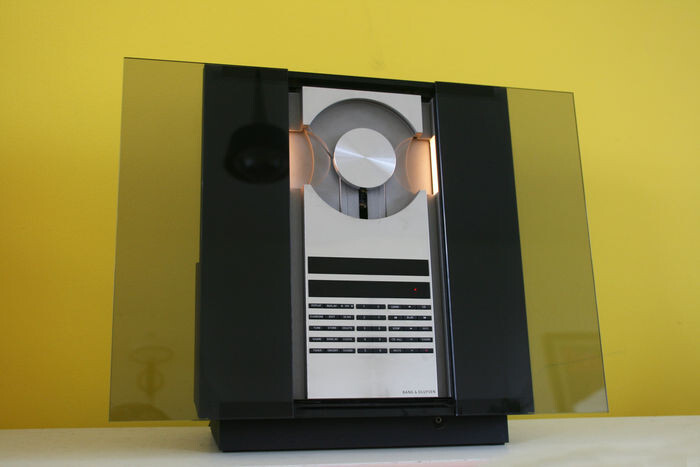
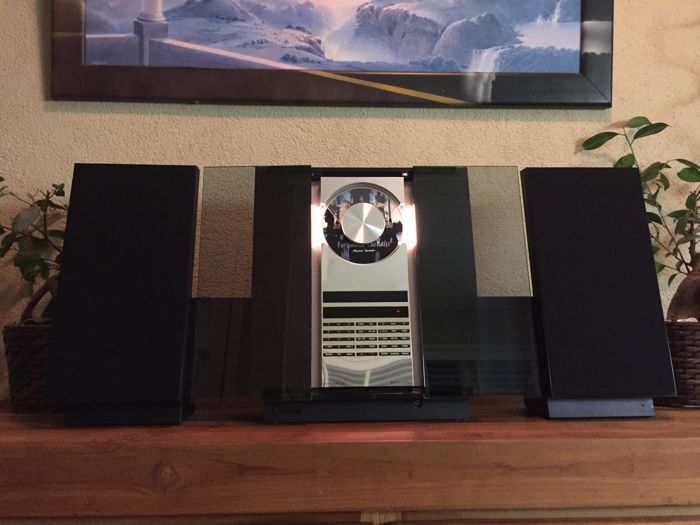
True to Bang & Olufsen’s design ethos, the Beocenter 2300 emphasizes clean lines, functional simplicity, and premium materials. The unit features a horizontal, low-profile chassis constructed from brushed aluminum, with a black anodized finish that resists fingerprints and wear. Its front panel is uncluttered, with only essential controls: a large rotary dial for volume and tuning, a cassette transport mechanism with minimal buttons, and a small analog VU meter to indicate recording levels. The cassette door opens vertically with a smooth, motorized action—a signature touch that underscores the product’s luxury positioning.
The Beocenter 2300 was designed by David Lewis, one of Bang & Olufsen’s most celebrated industrial designers. Lewis was known for his “user-friendly minimalism,” a philosophy that sought to eliminate visual noise while enhancing usability. The 2300 exemplifies this approach: every element serves a purpose, and no control is superfluous. The use of high-quality materials and precision engineering gives the unit a substantial, almost sculptural presence, allowing it to function as both a high-performance audio device and a piece of modernist furniture.
Technical Specifications and Audio Performance
The Beocenter 2300 is a dual-deck cassette system with integrated AM/FM radio tuner and built-in amplifier. It supports both standard and chrome cassette tapes, with automatic bias and equalization switching to optimize playback quality. The tape transport uses a direct-drive capstan system, which reduces wow and flutter to exceptionally low levels—typically below 0.07%, a remarkable figure for a consumer cassette deck of the era.
Audio output is rated at 2 x 25 watts RMS into 8 ohms, sufficient to drive most passive loudspeakers of the time. The frequency response for tape playback is 20 Hz to 20 kHz, with a signal-to-noise ratio of approximately 64 dB (Dolby B encoded). The unit includes Dolby B noise reduction as standard, improving the clarity of recorded tapes by reducing high-frequency hiss.
The FM tuner section features digital frequency synthesis, allowing for precise station selection and excellent reception stability. It supports both stereo and mono broadcasts, with a signal-to-noise ratio of around 60 dB. The AM band is equally well implemented, with good selectivity and minimal interference.
One of the standout features of the Beocenter 2300 is its modular design. It was intended to be used as part of a larger Bang & Olufsen audio system, often paired with Beolab or Beovox speakers. The unit includes multiple input and output options: two line-level inputs, a tape monitor loop, a phono input for turntables, and a headphone jack. This flexibility made it a central hub in a high-fidelity setup.
User Experience and Innovation
The Beocenter 2300 was ahead of its time in terms of user interface design. The large central knob controls both volume and tuning, with a tactile click mechanism that provides precise feedback. When tuning the radio, the VU meter doubles as a tuning indicator, with the needle peaking at the center of the scale when a station is properly locked in. This dual-purpose design reduces clutter and enhances the aesthetic coherence of the front panel.
The cassette mechanism supports both playback and recording, with independent level controls for each channel. The motorized tape door opens and closes with a soft, deliberate motion, adding a sense of ceremony to the act of playing a tape. The transport controls—play, stop, rewind, fast forward, and record—are arranged in a vertical column to the right of the cassette well, within easy reach but visually subordinate to the main dial.
Despite its compact size, the Beocenter 2300 does not compromise on internal layout. The chassis is divided into isolated compartments to minimize electromagnetic interference between the analog amplifier, tape heads, and radio tuner. This attention to internal architecture contributes to the unit’s low noise floor and high channel separation.
Legacy and Collectibility
Today, the Beocenter 2300 is highly sought after by collectors of vintage audio equipment and mid-century design aficionados. Its combination of timeless design, robust construction, and excellent sound quality ensures that well-maintained units remain functional and desirable. Unlike many electronics of the era, the 2300 was built to last, with metal gears, sealed potentiometers, and high-grade capacitors throughout.
While cassette technology has long been superseded, the Beocenter 2300 continues to appeal to those who appreciate analog warmth and tactile interaction. Its design has been featured in numerous exhibitions on industrial design, including retrospectives at the Museum of Modern Art in New York and the Design Museum in London.
Finding a working Beocenter 2300 requires diligence, as rubber belts and idler tires can degrade over time, and the motorized door mechanism may need servicing. However, a growing community of enthusiasts and specialized repair technicians ensures that parts and expertise are available for restoration.
Conclusion
The Bang & Olufsen Beocenter 2300 is more than just a vintage cassette deck—it is a milestone in the integration of form and function. Released at a time when consumer electronics were becoming increasingly complex, it offered a refreshing alternative: a device that was powerful yet simple, luxurious yet understated. Its enduring appeal lies in its ability to deliver high-fidelity sound through a design that feels both timeless and deeply human.
For collectors, audiophiles, or design lovers, the Beocenter 2300 represents the pinnacle of 1980s Danish audio engineering. It stands as a testament to Bang & Olufsen’s belief that technology should serve people, not overwhelm them—a philosophy that continues to resonate decades after its release.
eBay Listings


As an eBay Partner, we earn from qualifying purchases. This helps support our independent vintage technology research.
Related Models
- Bang & Olufsen Beolab 8000 (1980)
- Bang & Olufsen 8004 (1983)
- Bang & Olufsen BeoCom 2400 (1982)
- Bang & Olufsen BeoCom 3500 (1982)
- Bang & Olufsen BeoCom 6002 (1992)
- Sony TC-2050SD (1978)
- Aiwa AD-F990 (1993)
- Kenwood KX-3060 (1982)
- Sony TC-2130A (1974)
- Sony TC-2220 (1972)