Bang & Olufsen BeoLab Penta MK1 (1977)
The Bang & Olufsen BeoLab Penta MK1, introduced in 1977, is a landmark in high-fidelity audio design. As part of B&O's bold foray into modular, high-end consumer audio systems, the Penta MK1 combined aesthetic elegance with technical innovation. Its unique configuration—featuring satellite speakers paired with a powered subwoofer—set a precedent for modern multi-way active speaker systems.
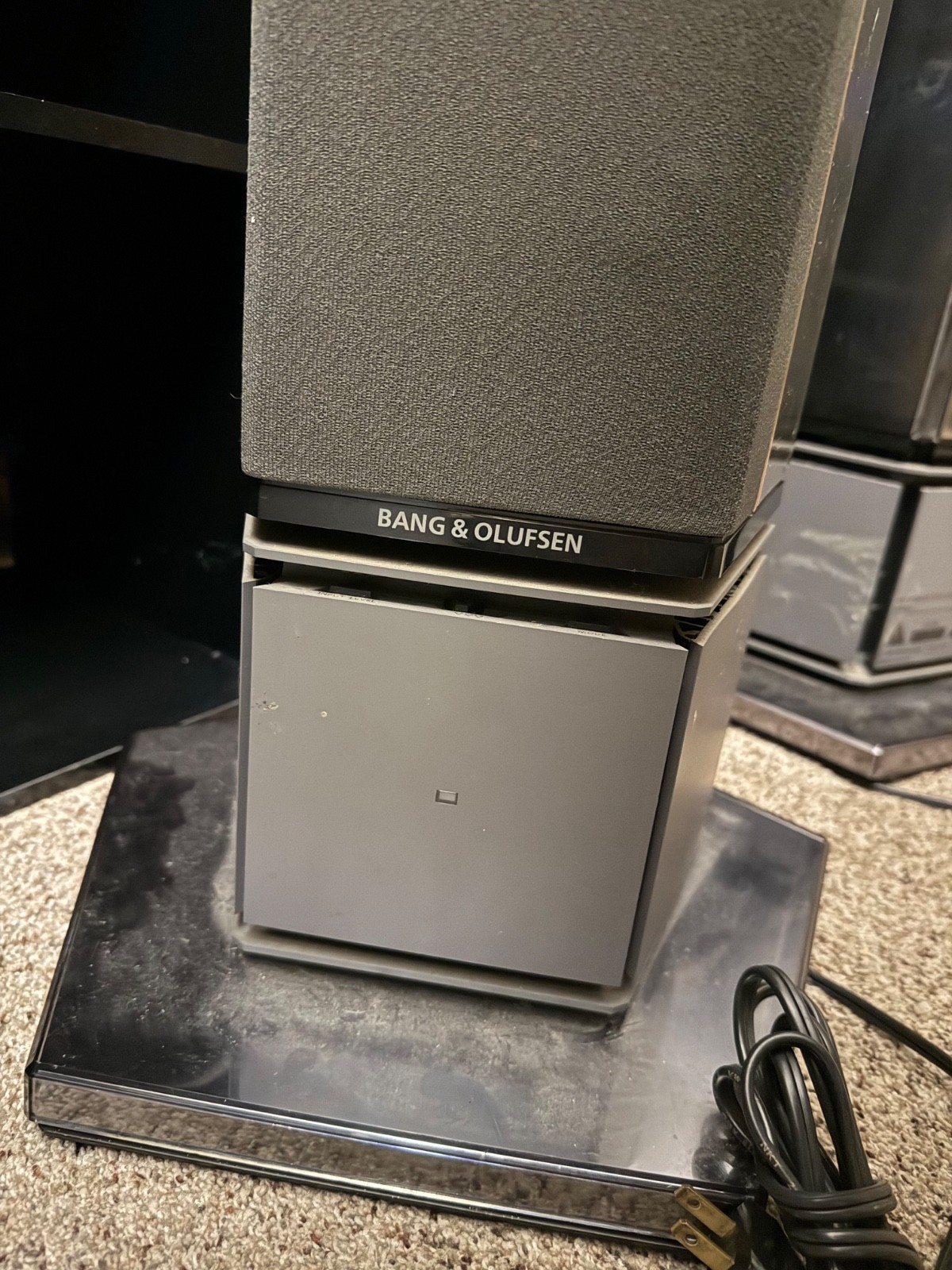
Engineered for both passive and active operation, the Penta MK1 offered flexibility uncommon for its era. With its distinctive beech wood enclosures, acoustic lens tweeters, and built-in subwoofer amplifier, it exemplified Bang & Olufsen’s philosophy of merging form, function, and craftsmanship.
Specifications
| Feature | Specification |
| Year of Production | 1977–1980 |
| Recommended Amplifier Power | 50–100W |
| Nominal Impedance | 4 ohms |
| Sensitivity | 86 dB (2.83V/1m) |
| Frequency Response | Not officially published; extended bass via active subwoofer |
| Tweeter | Acoustic lens design for wide dispersion |
| Woofer | Dedicated subwoofer with foam surround (prone to aging) |
| Enclosure Material | Solid beech wood |
| Configuration | Modular: satellite speakers + separate subwoofer unit |
| Amplification | Built-in amplifier for subwoofer (active mode); passive operation also supported |
| Dimensions (Subwoofer) | Approx. 35 x 35 x 35 cm (varies by setup) |
| Weight | Varies; subwoofer ~15 kg |
Historical Significance
The BeoLab Penta MK1 was a pioneering system in the evolution of home audio. It was among the first consumer speaker systems to integrate an active subwoofer with satellite units, foreshadowing the 2.1 speaker configurations that would become standard decades later. This modular approach allowed users to place the subwoofer discreetly while positioning the satellites for optimal stereo imaging.
Designed during a period of bold experimentation at Bang & Olufsen, the Penta MK1 reflected the Danish brand’s commitment to minimalist design and acoustic precision. The use of an acoustic lens—a B&O innovation—ensured even high-frequency dispersion across a wide listening area, reducing the "sweet spot" limitation common in conventional tweeters.
Its release in 1977 positioned it at the forefront of high-end audio, appealing to design-conscious audiophiles who valued both sonic performance and aesthetic integration into modern living spaces.
Sound Signature
The Penta MK1 delivers a balanced and transparent sound profile:
- Midrange and Highs: Crisp and detailed, thanks to the acoustic lens tweeter, offering excellent vocal clarity and instrument separation.
- Bass Response: Tight and well-controlled in active mode, with the built-in subwoofer amplifier ensuring optimal driver performance.
- Imaging: Precise stereo imaging with a wide soundstage, enhanced by the strategic placement of satellite units.
In active mode, the integrated amplifier allows for seamless crossover management, resulting in a cohesive sound that belies the system’s age.
Maintenance and Restoration Tips
Due to its age, the BeoLab Penta MK1 requires careful maintenance to preserve performance and value:
- Capacitor Replacement: The built-in subwoofer amplifier often suffers from aging electrolytic capacitors. A full recapping by a qualified technician is recommended for reliable operation.
- Foam Surround Degradation: The subwoofer driver’s foam surrounds are prone to disintegration over time. Re-foaming or full driver reconing is typically necessary for restored bass performance.
- Acoustic Lens Mechanism: The lens assembly can stiffen or produce noise when adjusted. Gentle cleaning and lubrication of the movement mechanism can restore smooth operation.
- Cabinet Care: The beech wood enclosures should be cleaned with a dry or slightly damp cloth. Avoid chemical cleaners that may damage the finish.
- Cabling: Inspect internal and external wiring for brittleness or corrosion, especially at connection points.
Restoration by specialists familiar with vintage B&O equipment is highly recommended to maintain authenticity and performance.
Collectibility and Market Value
The BeoLab Penta MK1 holds strong appeal among vintage audio collectors and design enthusiasts:
- Collectibility Rating: 7/10 — Valued for its innovative design, modularity, and iconic B&O heritage.
- Market Value: $800–$1,500, depending on condition, completeness (including original accessories and manuals), and whether restoration has been performed.
- Rarity: Moderate — While not extremely rare, fully functional and original units are increasingly scarce.
Its status as a design artifact as much as an audio component ensures continued interest in the collector’s market.
Conclusion
The Bang & Olufsen BeoLab Penta MK1 stands as a testament to late-1970s audio innovation. Combining modular flexibility, active bass management, and striking Scandinavian design, it remains a sought-after system for vintage audio aficionados. With proper care and restoration, the Penta MK1 continues to deliver a listening experience that bridges the gap between classic analog warmth and forward-thinking engineering.
eBay Listings


As an eBay Partner, we earn from qualifying purchases. This helps support our independent vintage technology research.
Related Models
- Bang & Olufsen 3702 (1974)
- Bang & Olufsen 4703 (1978)
- Bang & Olufsen BeoCombi 700K (1972)
- Bang & Olufsen Beolab 1602 (1973)
- Bang & Olufsen Beolab 2100 (1970)
- Luxman L-530 (1975)
- Luxman R-404 (1975)
- Luxman RV-371 (1975)
- Luxman SQ-38U (1975)
- Luxman T-14 (1972)