AR XB (1972–1976)
It’s not the flashiest, but this unassuming belt-drive turntable from the golden age of HiFi delivers a sound that still silences skeptics.
Overview
There’s a quiet confidence to the AR XB, the kind that comes not from showy design but from knowing you’ve nailed the fundamentals. Slide one out of a dusty cabinet, dust off the acrylic platter, and lower the tonearm onto a well-worn Beatles LP, and within seconds you’ll understand why owners speak of it in hushed tones. It doesn’t shout; it sings. The bass has a taut, articulate presence that belies its modest price point, mids are open and natural, and the highs shimmer without ever turning brittle. It’s not clinical, not romanticized—just honest. And that’s the magic: the XB doesn’t impose a personality. It gets out of the way and lets the music breathe.
Introduced in 1972 at $130—$15 more than the beloved XA—it was positioned as a modest upgrade, not a revolution. But dig into the details and you see where Acoustic Research sharpened the formula. The XB kept the iconic three-point suspended sub-chassis, a design pioneered by Edgar Villchur to isolate the platter and tonearm from cabinet vibrations, but added a few refinements. Most notably, it featured a tonearm lift mechanism, a small convenience that serious listeners quickly came to appreciate. No more fumbling to lift the arm by hand, risking a jump or groove damage. The counterweight was stainless steel, a subtle upgrade over plated brass, and the headshell was black plastic—functional, not flashy. The base came in a walnut-grained vinyl veneer, a far cry from exotic wood, but it wore its humble materials with dignity.
Under the plinth, the hysteresis-synchronous motor hums with quiet reliability, driving the platter via a rubber belt that damps motor noise and contributes to the turntable’s remarkably low rumble. It’s a two-speed model—33⅓ and 45 RPM—manually switched by moving the drive belt between pulley steps. No auto-start, no fancy speed sensors, just you and the record. That simplicity is part of its charm. It demands engagement. You cue the record, drop the arm, and the music begins—no blinking lights, no microprocessors, no waiting. And when you’re done, you lift the arm, return it to rest, and the ritual completes itself. In an age of automation, the XB feels like a quiet rebellion.
Despite its understated specs, the XB earned a reputation as one of the finest mass-market turntables ever made. Audioholics forum users have pitted it against modern $2,800 decks and found it holding its own. Reddit threads overflow with stories of $6 thrift store finds transformed into reference-grade players with a new belt and cartridge. One owner, after five years of daily use with a Shure cartridge, claimed he couldn’t hear an improvement over a hypothetical $5,000 upgrade. That’s not audiophile hyperbole—it’s a testament to the brilliance of Villchur’s original suspension concept and AR’s disciplined execution.
Specifications
| Manufacturer | Acoustic Research |
| Production Years | 1972–1976 |
| Original Price | $130 |
| Turntable Type | Belt-drive, suspended sub-chassis |
| Speeds | 33⅓, 45 RPM |
| Motor Type | Hysteresis-synchronous |
| Drive System | Belt-drive |
| Platter | Acrylic |
| Tonearm | Straight aluminum, 9-inch |
| Effective Tonearm Mass | 14 grams |
| Overhang | 18 mm |
| Tracking Force Range | 0–3 grams |
| Cartridge Mount | ½-inch |
| Cueing | Manual with tonearm lift |
| Damping | No mechanical damping |
| Headshell | Black plastic |
| Counterweight | Stainless steel |
| Spindle Diameter | 0.2830" nominal, tolerance +0, -0.0005" |
| Dustcover | Transparent tinted plastic |
| Plinth Material | Plywood with walnut-grained vinyl veneer |
| Dimensions | 16.5" × 5.5" × 14.5" (W×H×D) |
| Weight | Approx. 12 lbs |
Key Features
The Three-Point Suspension That Changed Everything
The heart of the XB’s performance lies in its suspended sub-chassis—a design so effective it became the blueprint for high-end turntables for decades. Three damped springs connect the inner platter/tonearm assembly to the outer plinth, creating a mechanical low-pass filter that blocks cabinet vibrations from reaching the stylus. It’s physics, not marketing. Tap the plinth while the record’s spinning and you’ll hear nothing in the speakers. That isolation is why the XB can sit on a wobbly bookshelf and still deliver a stable, focused soundstage. The springs are simple, the damping is passive, but the result is profound: a stillness beneath the music that lets microdynamics emerge. You hear the breath before the singer’s first note, the subtle decay of a cymbal, the texture of bow on string. It’s not just about avoiding feedback—it’s about revealing detail.
Manual Simplicity, Maximum Engagement
In an era when turntables were becoming increasingly automated, the XB went the other way. No auto-lift, no electronic speed control, no strobe light. You manually place the record, move the belt for 45 RPM if needed, cue the arm, and play. This isn’t a limitation—it’s a feature. The lack of automation forces attention. You become part of the playback chain, and that connection deepens the listening experience. The tonearm lift is a small but meaningful touch: a lever that raises the arm smoothly, reducing the risk of damage and making repeat listens effortless. It’s the kind of thoughtful detail that suggests AR listened to real users, not just engineers.
Acrylic Platter and Precision Spindle
The acrylic platter isn’t just for looks. It’s heavier and more inert than the aluminum platters common on budget decks, contributing to speed stability and reducing resonance. Combined with the belt-drive system, it ensures consistent rotational inertia, minimizing wow and flutter. The spindle is machined to tight tolerances—nominal 0.2830" diameter, with a one-sided tolerance of -0.0005"—ensuring a snug, wobble-free fit for the record. That precision matters. Eccentricity in the spindle or platter can introduce low-frequency modulation that clouds bass definition. The XB’s build quality, while not exotic, is disciplined. Every part serves a purpose, and nothing is over-engineered.
Historical Context
The early 1970s were a turning point for home audio. Stereo was no longer a luxury—it was mainstream. Companies like AR, Technics, and Dual were racing to bring high-fidelity sound to the middle class. The AR XB arrived at a moment when the suspended sub-chassis design was still novel, and belt-drive was considered a premium feature. Most mass-market turntables were direct-drive or idler-wheel designs, both prone to transmitting motor noise. AR’s approach—simple, elegant, and effective—stood out. It wasn’t the first (that was the XA), but it refined the formula at a time when competitors were still catching up.
Technics, for example, was still a few years away from launching the SL-1200, which would later dominate DJ culture. Dual offered suspended decks like the 1219, but they were often heavier, more complex, and more expensive. The XB carved a niche as the sensible choice—the turntable that didn’t need tweaking, modding, or justification. It was sold through high-end audio dealers and department stores alike, often bundled with AR speakers. While not as iconic as the XA, the XB represented AR’s commitment to accessible, no-nonsense performance. It was the workhorse of the line, the model you bought when you wanted something better than basic but didn’t need flagship status.
Collectibility & Value
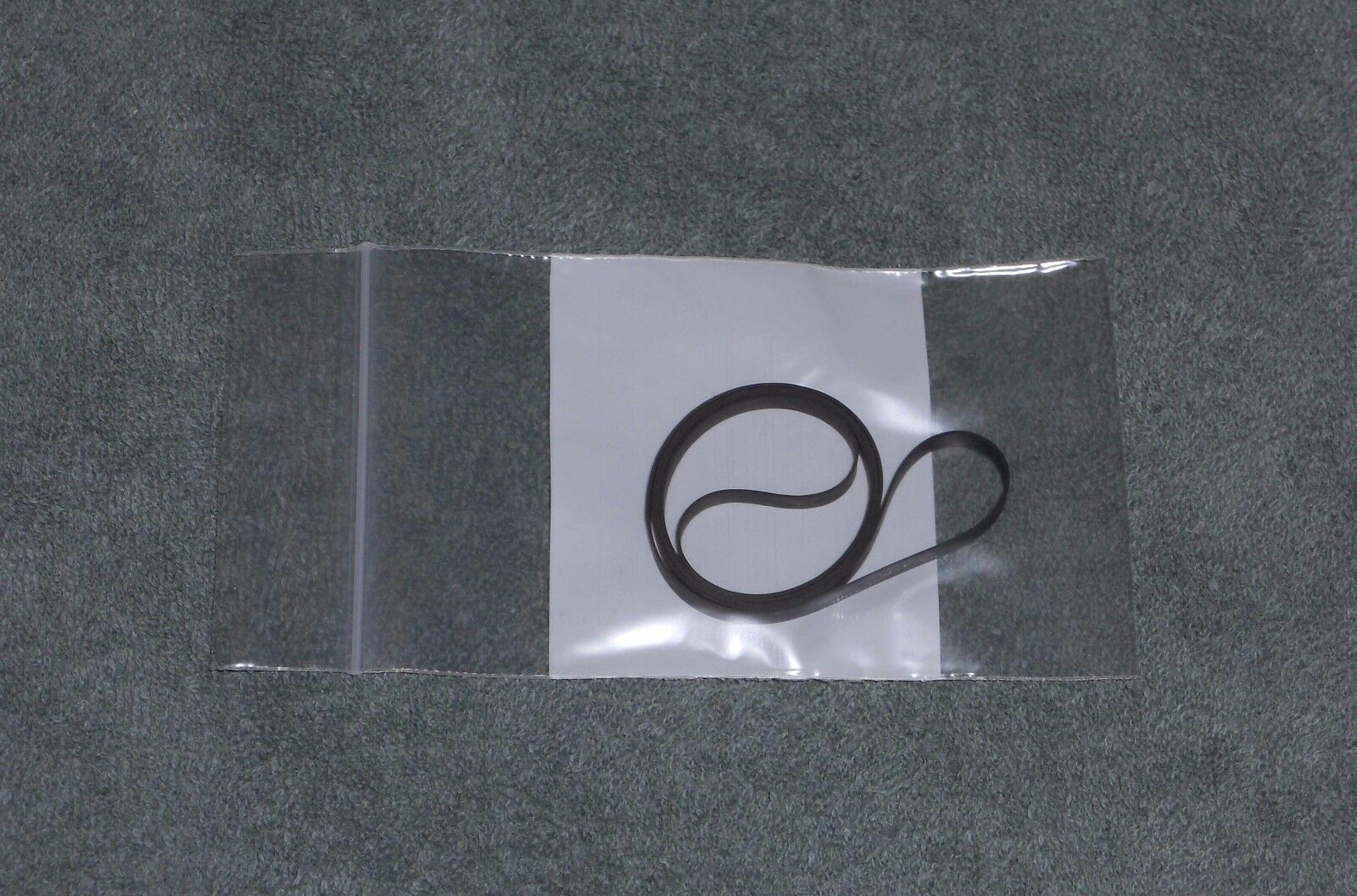
Today, the AR XB is a quiet favorite among vintage audio collectors—not because it’s rare, but because it’s good. Fully serviced units sell for $200–$300, with mint-in-box examples occasionally reaching $400. Unrestored models can be found for $50–$100, making them one of the best entry points into vintage turntable ownership. But caveat emptor: condition is everything. The rubber belt degrades over time, and a dried-out belt will cause speed instability and increased wow. Replacement belts are inexpensive and easy to install, but if the motor hasn’t been cleaned and lubricated in decades, you’re looking at a full service.
The tonearm bearings can stiffen with age, leading to tracking issues or skating. The gossamer signal wires inside the arm are delicate and prone to breakage—repairable, but not for the faint of heart. The acrylic platter is durable, but older units sometimes show hairline cracks or yellowing. The dustcover hinges are plastic and can snap. These aren’t dealbreakers, but they’re the kind of things you check before buying. Look for a unit with smooth arm movement, no wobble in the platter, and a clean, uncracked base. If it’s been recently serviced and comes with a modern cartridge, it’s likely worth the premium.
Mods are common but rarely necessary. Some owners upgrade to an acrylic subchassis or add a record clamp for improved stability, but the stock setup holds its own. The tonearm, while basic, is well-regarded for its rigidity and low resonance. It pairs beautifully with moving magnet cartridges like the Shure M97xE or Audio-Technica AT-95E—affordable, reliable, and sonically transparent. If you’re restoring one, skip the exotic upgrades and focus on fundamentals: a new belt, clean motor, proper alignment, and a decent cartridge. That’s all it needs to shine.
eBay Listings



As an eBay Partner, we earn from qualifying purchases. This helps support our independent vintage technology research.