AR Turntable (1984–1987)
A suspended subchassis, a dead-quiet belt drive, and a price that made high-end sound feel attainable—this was AR’s late-era bid to reclaim its turntable crown.
Overview
You don’t hear it first—you feel it. The stillness. Drop the needle on a worn copy of Kind of Blue, and what hits you isn’t just the clarity, but the absence: no low-end hum, no motor buzz lurking beneath the bassline, no sense that the machine beneath the record is even trying. The AR Turntable, introduced in 1984, wasn’t reinventing the wheel—quite the opposite. It was refining a philosophy born two decades earlier with the legendary XA: isolate the platter and tonearm from everything else, and let the music breathe. This wasn’t a flashy statement piece or a lab-built exotic. It was a deliberate, understated return to form from a company that had helped define what a modern turntable should be.
By the mid-80s, AR was no longer the disruptive force it had been in the 1960s. The audio world had moved on—Linn, Thorens, and Technics were setting new benchmarks, and AR’s own lineup had drifted. The 1984 “The AR Turntable” (yes, that’s its actual model designation) was a clear signal: they were back in the game. It wasn’t a budget model, nor was it a flagship. Priced at $350 without a tonearm and $475 with one, it sat squarely in the upper-mid tier, aimed at serious listeners who wanted proven engineering without the boutique markup. It shared DNA with the ES-1—so much so that early ads and reviews sometimes conflated them—but it wasn’t identical. The AR Turntable had a fully veneered plinth, rounded edges, and a slightly different arm mounting system. It was, in essence, a refined, production-optimized version of the ES-1 concept, built for consistency and ease of ownership.
Under the hood, it stuck to the formula that had made AR famous: a damped three-point sprung suspension isolating a rigid subchassis that carried the platter and tonearm. The motor, mounted to the main plinth, drove the platter via a belt, ensuring mechanical noise never reached the stylus. The 1.8 kg (about 4 lbs) cast aluminum platter—coated in a thin felt mat—provided enough mass for stable speed without demanding a massive motor. Wow and flutter was rated at a stellar 0.04%, and rumble measured at -73 dB, figures that held up against far more expensive competition. It was a 2-speed turntable (33⅓ and 45 rpm), stereo only, with no auto-stop or changers to complicate the design. This was pure analog: simple, focused, and built to last.
Specifications
| Manufacturer | Acoustic Research Inc.; Cambridge, MA |
| Production Years | 1984–1987 |
| Original Price | $350 (motor unit only), $475 (with tonearm) |
| Turntable Type | Belt-driven, suspended subchassis |
| Speeds | 33⅓, 45 rpm |
| Platter Weight | 1.8 kg (3.96 lbs) |
| Platter Material | Cast aluminum |
| Suspension | Damped 3-point sprung |
| Wow and Flutter | 0.04% |
| Rumble | -73 dB |
| Power Supply | AC 110–120V / 50–60Hz, 220–240V |
| Power Consumption | 9 Watts |
| Dimensions (WHD) | 462 x 179 x 387 mm (18.2 x 7 x 15.2 in) |
| Net Weight | 8.2 kg (18 lb 1 oz) |
| Chassis Material | Veneered MDF |
| Tonearm Mount | Removable headshell, 9-inch effective length |
| Cable Capacitance | 82–85 pF |
| Dust Cover | Yes |
Key Features
Suspended Subchassis: The AR Legacy Perfected
The heart of the AR Turntable’s performance is its suspended subchassis—a rigid platform holding the platter bearing and tonearm, isolated from the outer plinth by three damped springs. This wasn’t new in 1984, but AR had decades of refinement in this design. The resonance frequency of the suspension is tuned low enough to decouple the critical playback components from floor vibrations, speaker feedback, and even someone walking across the room. Reviewers at the time noted that you could thump the top of the cabinet and the needle wouldn’t skip—proof that the isolation worked exactly as intended. Unlike some suspension designs that feel “floaty” or unstable, the AR’s system is controlled, with just enough give to absorb shocks without introducing wobble. It’s a mature implementation of a proven concept, not a theoretical exercise.
Belt-Drive Simplicity Done Right
The motor is a low-vibration AC synchronous type, mounted directly to the main chassis to prevent any resonance from transferring to the subchassis. It drives the platter via a rubber belt routed around a precision pulley. This setup eliminates the cogging and noise inherent in direct-drive systems and avoids the wear and speed inconsistency of idler-wheel designs. The belt itself is long-lasting, but like all rubber components, it will eventually harden and crack—replacement is straightforward and inexpensive. Speed accuracy is excellent, relying on the stability of the AC line frequency, which in most regions is tightly regulated. No electronic speed control was offered, keeping the design clean and reducing potential failure points. For purists, this is a feature, not a limitation.
Build and Serviceability: Solid, But Not Bulletproof
The plinth is made of medium-density fiberboard (MDF) with a real wood veneer—oiled walnut in the U.S., deeper cherry in the UK—giving it a warm, finished look that aged better than the plastic-heavy designs of the era. The rounded edges and clean lines reflect a late-80s aesthetic that’s neither retro nor overly modern. Internally, the wiring is straightforward, and the motor assembly is accessible from below. However, early production models were prone to bearing noise due to quality control issues in the platter well material. AR addressed this in 1985 with a revised motor and improved bearing materials, so later units are generally more reliable. The tonearm, while functional, is a known weak point—many developed sticky bearings or cueing mechanism failures, leading to warranty replacements and field upgrades. If you’re buying one today, ensure the arm moves smoothly and the cueing works without hesitation.
Historical Context
The 1984 AR Turntable arrived at a crossroads. The vinyl revival of the late 70s had cooled, and CDs were gaining momentum. High-end audio was becoming more technical, with brands like Linn pushing modular, upgradeable systems, and Technics perfecting direct-drive precision. AR, once a pioneer, had become a legacy brand—still respected, but not leading. The reintroduction of a turntable under the simple name “The AR Turntable” was a bold move: a declaration that the company hadn’t abandoned its roots. It wasn’t trying to out-tech the competition; it was offering a refined, reliable version of the suspended-belt-drive formula that had made AR famous with the XA.
It faced stiff competition. The Linn LP12, introduced in 1972, had become the benchmark for modularity and tuning. The Technics SL-1200 series dominated DJ booths and home setups alike with its durability and direct-drive speed stability. The Thorens TD-150 offered similar suspension principles with a more traditional aesthetic. In this landscape, the AR Turntable stood out by being neither exotic nor utilitarian. It was a well-engineered, no-nonsense turntable for listeners who valued consistency over customization. It was reviewed favorably—Peter Mitchell in Audio magazine praised its low noise and solid performance, though he noted a quirk: the vertical pivot point of the tonearm was nearly half an inch above the record surface, which could exaggerate warp-induced wow on non-flat records. It wasn’t a dealbreaker, but it was a reminder that no design is perfect.
By 1985, AR had three turntables in its lineup: the EB-101 (a budget model), the ES-1 (very close to this one), and the ETL-1, a larger, more expensive table with a 9.5-inch tonearm. The AR Turntable was the sweet spot—more refined than the EB-101, more accessible than the ETL-1. But by late 1987, rumors of discontinuation were confirmed. AR’s parent company, Teledyne, was shifting focus, and the turntable line was phased out. The AR Turntable’s production run was short, but it served as a final, dignified statement from a company that had helped shape modern hi-fi.
Collectibility & Value
Today, the AR Turntable occupies a quiet corner of the vintage market. It’s not as coveted as the XA, nor as collectible as a Linn or a Technics. But for what it is—a well-built, sonically neutral turntable from a respected brand—it offers excellent value. Prices vary widely based on condition and completeness. A unit without a tonearm in fair condition might go for $150–$200, while a fully serviced model with a working arm and dust cover can fetch $300–$400. Mint, boxed examples are rare and can approach $500, but they’re more trophy than tool.
The biggest concerns for buyers are the tonearm and motor. Many original arms suffer from binding in the vertical or lateral bearings, especially if the table was stored improperly or not used for years. The cueing mechanism was redesigned under warranty, so if it’s original, it may fail. Replacing the belt is a must for any untested unit. The motor itself, especially in post-1985 models, is generally reliable, but early versions can develop bearing noise. Check for any rumbling or grinding sounds when the platter spins. The suspension springs can sag over decades, so ensure the subchassis is level and doesn’t tilt when gently pressed.
Restoration is straightforward. New belts are available from specialty suppliers. The tonearm can be disassembled and cleaned, though it requires care—the internal wiring is delicate. Upgrading to a modern cartridge like the Shure V15 (a popular pairing at the time) or an Ortofon 2M Red brings out the best in its neutral character. Some owners have replaced the stock arm with a Rega or SME, but that’s overkill for a table designed around simplicity. The AR Turntable doesn’t need to be “fixed” to shine—it just needs to be cared for.
eBay Listings
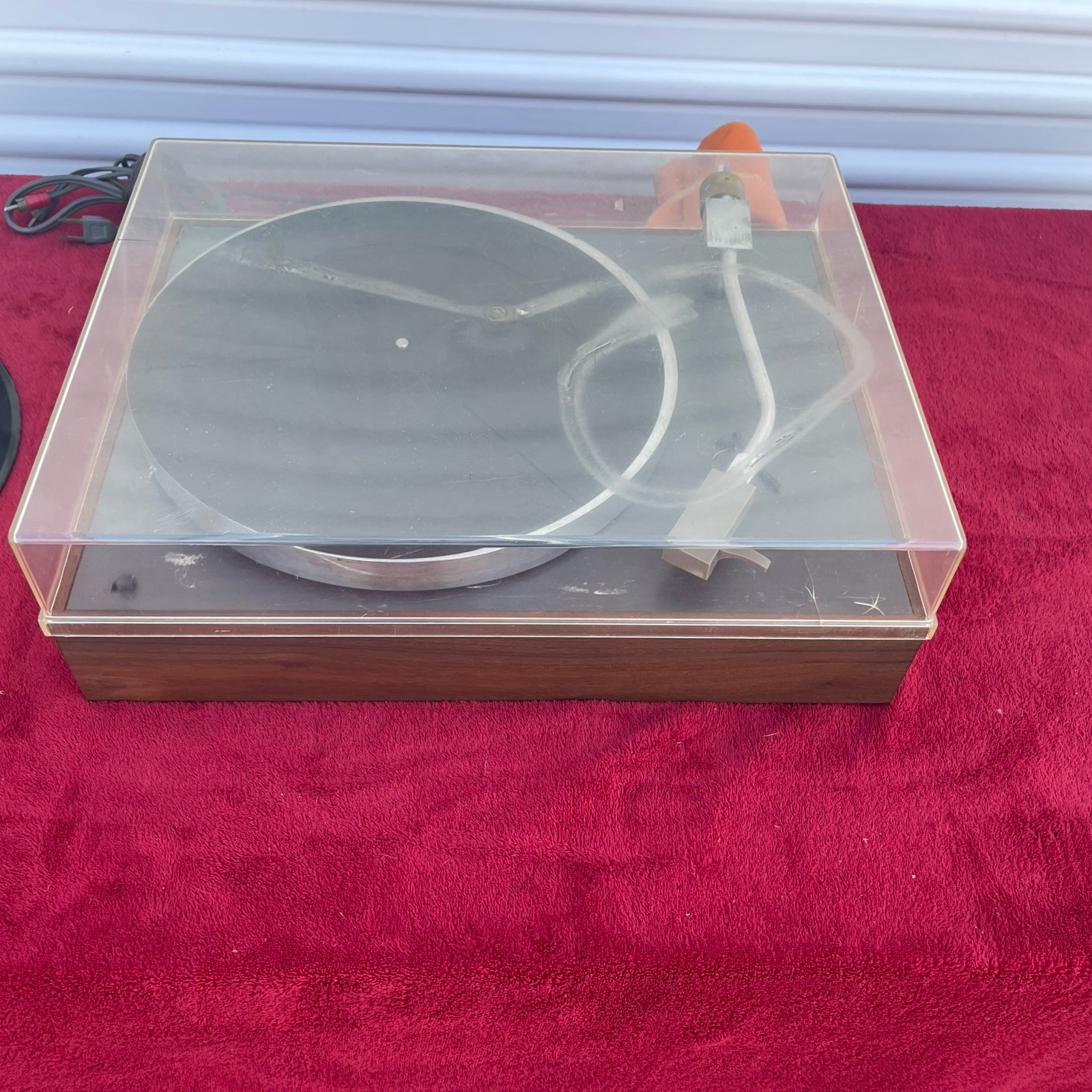

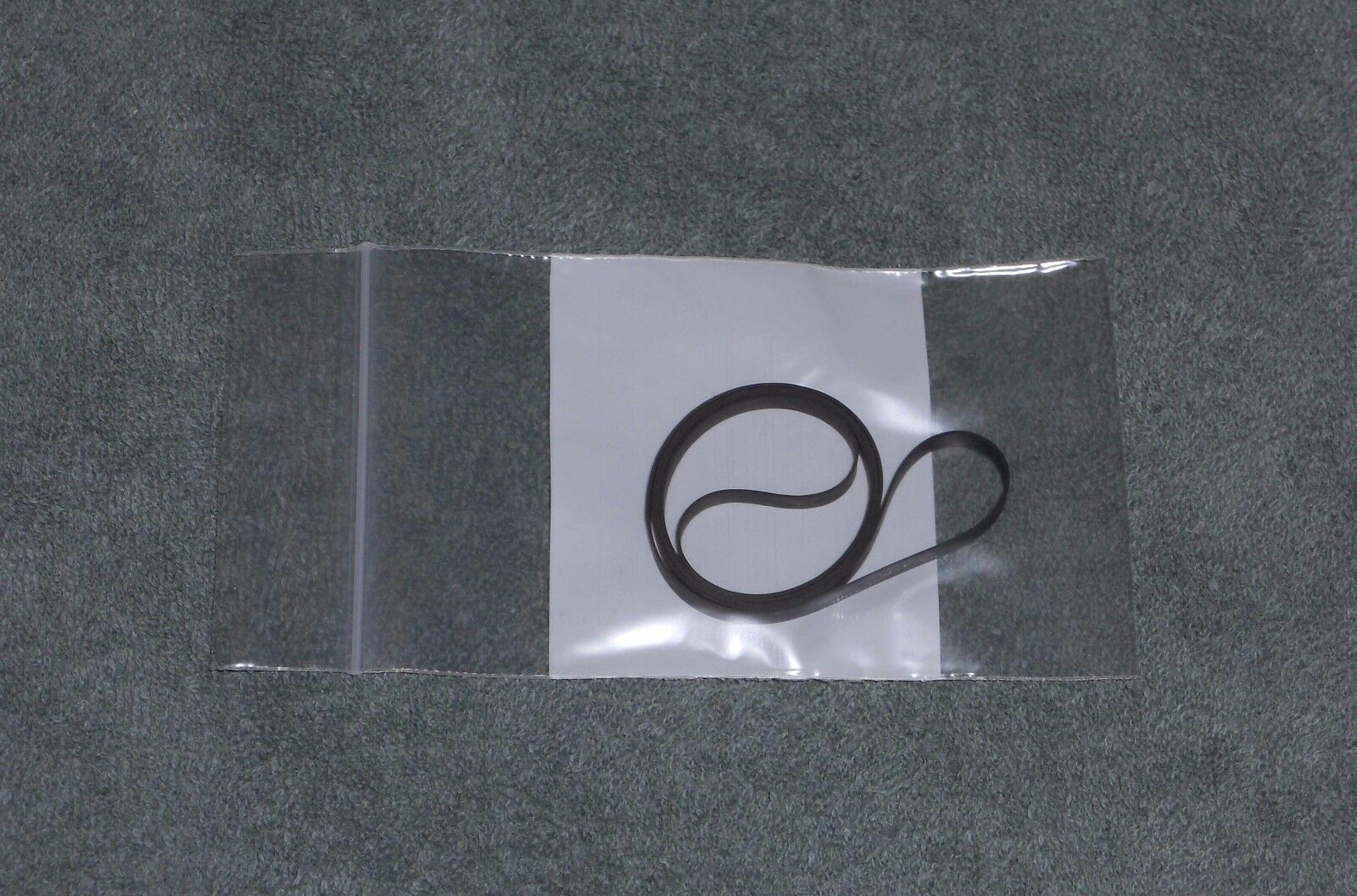

As an eBay Partner, we earn from qualifying purchases. This helps support our independent vintage technology research.