AR EB-101 (1977–1982)
A turntable that hides serious engineering under a humble vinyl-wrapped box — and sounds like it cost twice as much.
Overview
There’s a moment when you lower the needle on a well-tuned EB-101 and suddenly realize this was never supposed to be a budget deck — it was supposed to be a statement. Acoustic Research didn’t just slap together another belt-drive platter; they packed their suspension expertise, refined tonearm geometry, and obsessive isolation principles into a chassis that looks like it belongs under a college dorm stereo. Don’t let the vinyl-covered particle board fool you: this is a descendant of the legendary XA, built with the same DNA but stripped of the flagship’s price tag and polished wood.
The EB-101 arrived in 1977 as the entry point to AR’s modern turntable line, slotting below the more refined L-100 and L-110 models. It was designed for buyers who wanted real performance without the audiophile tax. At its core is a suspended subchassis — a hallmark of AR engineering — using four sorbothane-damped springs to float the platter, tonearm, and bearing assembly, isolating them from external vibrations and cabinet resonance. It’s a design philosophy borrowed from high-end decks of the era, and in the EB-101, it works remarkably well for the price.
Belt-driven and offering 33⅓ and 45 RPM speeds, speed changes require manually repositioning the belt between two pulley steps on the motor shaft — a throwback even in its day, but one that keeps the motor design simple and reduces cost. The platter spins on a hardened steel spindle riding in a sintered bronze bushing, a modest but serviceable bearing system. The acrylic dust cover, standard issue, is non-resonant and helps reduce airborne feedback without muddying the sound. While later revisions moved to a more conventional armboard mounting, early models feature a unique “protruding hole” design where the tonearm emerges directly from a cutout in the base — a quirk that collectors now recognize at a glance.
Specifications
| Manufacturer | Acoustic Research |
| Production Years | 1977–1982 |
| Original Price | $249 (equivalent to ~$1,200 today) |
| Turntable Type | Belt-driven, suspended subchassis |
| Speeds | 33⅓, 45 RPM (manually changed via belt positioning) |
| Platter | Die-cast aluminum |
| Motor | AC synchronous, 12V |
| Bearing | Hardened steel spindle, sintered bronze bushing |
| Suspension | Four sorbothane-damped springs |
| Tonearm | 9" straight aluminum, pivoted |
| Effective Tonearm Mass | 14 grams |
| Overhang | 18 mm |
| Tracking Force Range | 0–3 grams |
| Cartridge Compatibility | Standard mount, 7.5–14g total weight recommended |
| Dust Cover | Acrylic, hinged |
| Plinth Material | Vinyl-laminated particle board |
| Dimensions | 16.5" × 5.5" × 14.5" (W×H×D) |
| Weight | 18 lbs (8.2 kg) |
Key Features
Suspended Subchassis Design
While most entry-level turntables of the late '70s used rigid, fixed chassis designs prone to transmitting floor and cabinet vibrations, the EB-101 borrowed a page from AR’s high-end playbook. The entire critical mass — platter, subplatter, tonearm, and bearing — floats on four sorbothane-isolated springs. This system effectively decouples the playback components from external disturbances, resulting in lower background noise and improved clarity, especially on vinyl with minor surface wear. Service technicians observe that when the suspension is properly adjusted and the springs are in good condition, the deck performs closer to the L-100 than its price suggests. However, the system demands careful leveling — owners report that even slight imbalances can cause the subchassis to tilt, affecting tonearm geometry and tracking stability.
Simple but Effective Drive System
The belt-drive mechanism is basic but well-executed. A rubber belt connects a dual-step pulley on the motor shaft to the underside of the subplatter, with speed selection requiring manual belt movement — a process that takes seconds but can wear the belt prematurely if done aggressively. The motor itself is mounted to the main chassis, isolated from the floating subassembly, minimizing vibration transfer. Documentation shows AR used a regulated 12V AC supply to stabilize motor speed, and user testing with strobe discs confirms the EB-101 holds 33⅓ RPM with excellent consistency. Some owners report minor wow and flutter (within 0.15% WRMS), typical for synchronous motors of this class, but rarely intrusive during listening.
Tonearm and Tracking Performance
The 9-inch straight aluminum tonearm, while not as refined as the XA’s tangential design, is a solid performer when properly set up. It features adjustable counterweight, anti-skate (via spring tension), and vertical tracking angle (VTA) via shims. The arm’s 14-gram effective mass pairs well with moving magnet cartridges in the 1.5–2.5g range, such as the AT-95E, which owners report tracks with minimal inner-groove distortion at 1.9 grams. However, the arm’s simplicity comes with trade-offs: no azimuth adjustment, limited VTA flexibility, and a fixed headshell angle. Upgraders often replace the stock headshell with a precision-machined model to improve channel balance and reduce resonance.
Historical Context
The EB-101 launched at a time when AR was transitioning from its golden era of speaker dominance into a broader high-fidelity system brand. The late 1970s saw intense competition in the turntable market, with Technics’ direct-drive SP-15 and SL-1200 series gaining traction, and brands like Thorens, Dual, and Sony pushing the limits of belt-drive refinement. AR’s strategy was clear: offer suspension-based isolation and proven engineering at a mid-tier price. The EB-101 wasn’t trying to beat Technics on speed stability or convenience — it was aiming for sonic neutrality and isolation, core tenets of the AR philosophy. It competed directly with the Dual 505 and the Technics SL-B2, undercutting them slightly in price while offering superior vibration damping. In Europe, where suspended decks were more revered, the EB-101 gained a quiet following, though it never achieved the cult status of its Thorens counterparts.
By the early 1980s, AR’s fortunes were declining. The company changed hands, and focus shifted away from turntables as the CD era loomed. The EB-101 was discontinued around 1982, outlasting only slightly longer than the L-100. Its legacy, however, endured in the underground — a “sleeper” deck that vintage enthusiasts rediscovered decades later when the analog revival began. Unlike flashier contemporaries, the EB-101 wasn’t built for show; it was built to disappear, letting the music come through without coloration.
Collectibility & Value
Today, the EB-101 trades in the $150–$350 range depending on condition, with fully restored examples — especially those with upgraded power supplies, new belts, and recapped motor circuits — commanding the upper end. Clean, unmodified units with original tonearms and dust covers typically sell for $200–$250 on eBay or specialty forums. Custom-restored versions, such as those refinished in real wood veneers or equipped with upgraded platters and external power supplies, can exceed $500, reflecting the labor and craftsmanship involved.
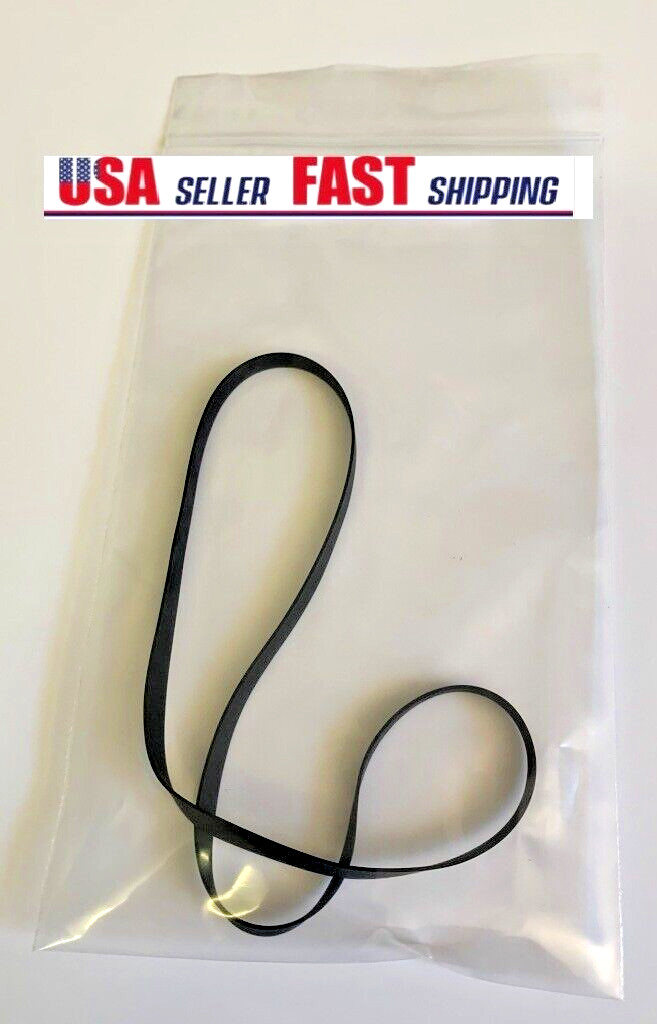
Common failures center on age-related wear. The original rubber belt often perishes, leading to speed instability or complete drive failure. The sorbothane suspension pads degrade over time, losing elasticity and damping effectiveness — a condition that manifests as increased resonance or “bouncing” of the subchassis. The motor’s internal capacitor can dry out, causing erratic speed or failure to start; replacement with a modern low-ESR type is a common and effective fix. Tonearm wiring fatigue is another known issue, particularly at the base where flexing occurs during arm movement — intermittent channel dropouts are a telltale sign.
Before buying, check for subchassis freedom of movement — it should float evenly without binding. Test the belt for cracks or stretch, and verify that the motor runs quietly and consistently. Ensure the tonearm moves smoothly and that anti-skate functions correctly. Original cartridges, if present, should be evaluated carefully — many were entry-level models like the AR CT-100, which are best replaced for optimal performance. A full service — including belt replacement, motor recapping, and suspension inspection — typically costs $100–$150, making it a worthwhile investment for a solid foundation.
eBay Listings



As an eBay Partner, we earn from qualifying purchases. This helps support our independent vintage technology research.