Acoustic Research AR-8BX (1980s)
A bookshelf speaker that doesn’t shout, but knows exactly how to tell the truth in the middle of your room.
Overview
Pull one out of a dimly lit cabinet from 1987 and it doesn’t look like a revolution—just a modest, walnut-veneered box with a fabric grille that’s probably a little dusty. But power it up with something honest, like a NAD 3020 or a vintage Sansui receiver, and the AR-8BX reveals itself as the quiet scholar of the high-fidelity world: articulate, balanced, and unafraid of nuance. This isn’t a speaker built for booming bass or flashy imaging tricks. It’s the kind that makes you notice the breath before the singer’s first note, or the subtle decay of a piano key in an otherwise silent passage. That’s the legacy of Acoustic Research, a company that never chased trends but instead doubled down on engineering principles—like the acoustic suspension design pioneered by Edgar Villchur—that prioritized accuracy over exaggeration.
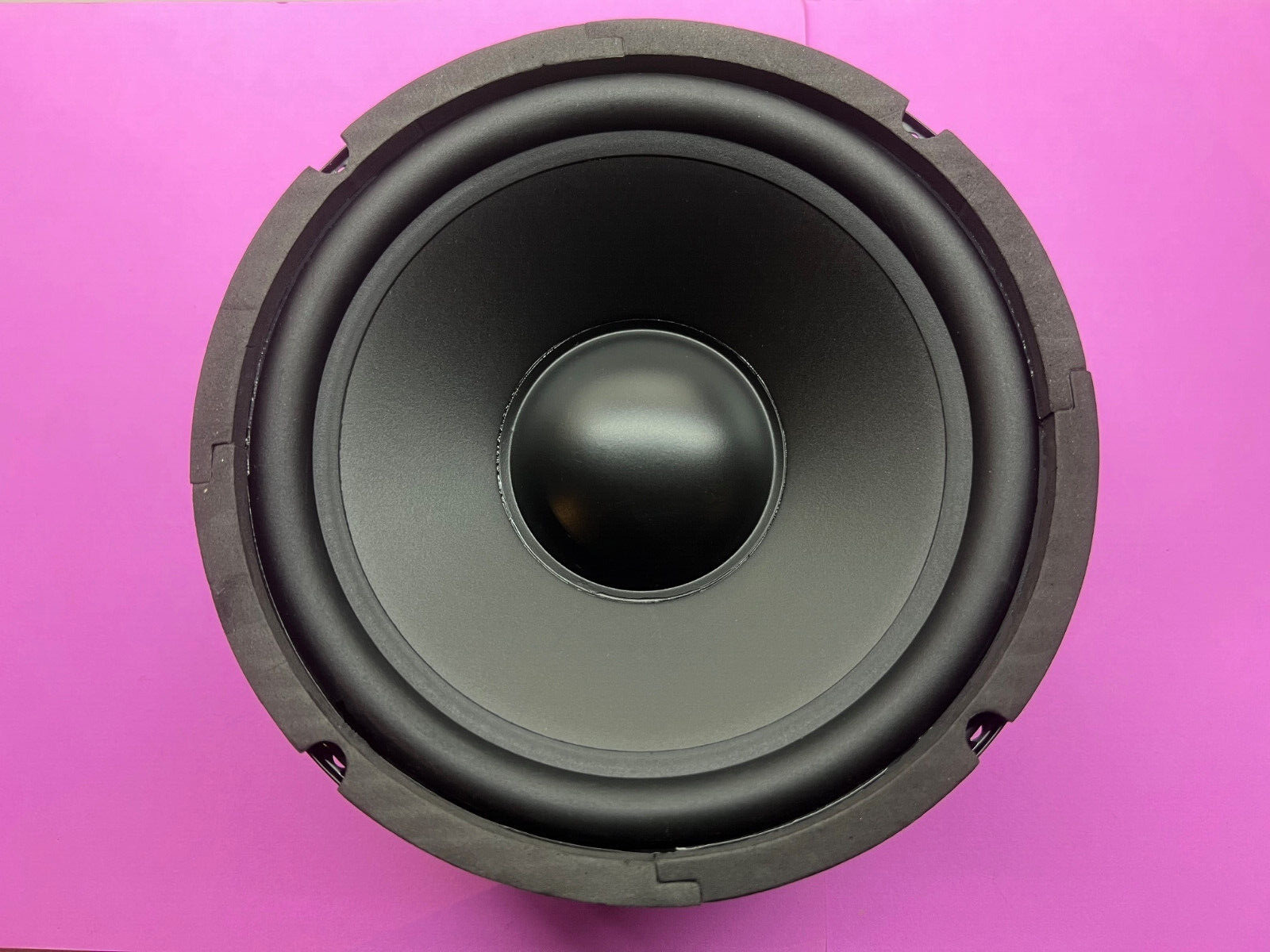
The AR-8BX landed in the mid-1980s, a time when speaker design was being pulled in two directions: one toward the bright, forward sound of some British imports, and another toward the warm, forgiving curves of mass-market consoles. AR chose a third path—neutrality. The 8BX was never the flagship (that honor went to the AR-18BX or AR-33BX), nor was it the budget play (that was the AR-6BX). Instead, it occupied a sweet spot: a serious two-way for listeners who wanted more refinement than the entry models offered, but without the price tag or size of the floorstanders. It used a 6.5-inch carbon-loaded polypropylene woofer—small by today’s standards, but well-damped and paired with a sealed (acoustic suspension) cabinet that trades raw output for tight, controlled bass. The real magic, though, lives in the tweeter: a 25mm liquid-cooled dome, likely ferrofluid-damped, that delivers smooth highs without the edginess that plagues so many vintage speakers as they age.
And yes, they age—like all of them. The foam surrounds on the woofer will degrade. The tweeter fluid may dry. But when properly restored, the 8BX sings with a coherence that feels almost modern. It’s not about slamming dynamics or room-filling volume; it’s about transparency. These speakers don’t flatter poorly recorded tracks, but they reward good ones with a clarity that makes you forget you’re listening to 35-year-old technology.
Specifications
| Manufacturer | Acoustic Research |
| Production Years | Mid 1980s |
| Type | 2-way, 2-driver loudspeaker system |
| Enclosure | Acoustic suspension (sealed) |
| Woofer | 6.5" carbon-loaded polypropylene cone |
| Tweeter | 25mm low-mass, liquid-cooled dome |
| Frequency Response | 62 Hz – 25 kHz |
| Sensitivity | 87 dB |
| Nominal Impedance | 8Ω |
| Recommended Amplifier Power | 10 – 75 W |
| RMS Power Handling | 60 W |
| Cabinet Volume | 9.8 liters |
| Dimensions (H x W x D) | 394 x 244 x 189 mm |
| Weight | 5.7 kg |
| Crossover | Minimalist passive network |
Key Features
Acoustic Suspension Done Right
While the term “acoustic suspension” became a marketing slogan for many brands, AR treated it as a physics problem to be solved, not a buzzword to be slapped on a brochure. The AR-8BX’s sealed cabinet eliminates the port noise and tuning limitations of bass-reflex designs, trading efficiency for precision. The result is bass that starts and stops on a dime—no overhang, no bloating. It won’t rattle your floorboards like a modern subwoofer, but it renders kick drums and upright bass with a realism that’s hard to fake. The 6.5-inch woofer, while modest in size, is well-suited to the 9.8-liter cabinet, avoiding the flabby low end that plagues undersized drivers in oversized enclosures. This is bass you can *feel* in the rhythm, not just hear.
Liquid-Cooled Tweeter for Smooth Highs
The 25mm liquid-cooled tweeter is where the 8BX distances itself from budget contemporaries. Ferrofluid damping wasn’t just a gimmick—it improved power handling, reduced distortion, and smoothed the high-frequency response. Unlike some vintage tweeters that turn glassy or harsh over time, a healthy 8BX tweeter remains remarkably neutral. Cymbals shimmer without sizzle, strings breathe without bite. But—and this is critical—this benefit only lasts if the fluid hasn’t dried out. A dried ferrofluid cell can lead to tweeter failure or a brittle, fatiguing sound. Replacing or re-fluiding the tweeter is a known restoration path, but it’s not trivial. Owners report that sourcing original-spec replacements is difficult, and many resort to high-quality Audax or Peerless units as substitutes, though purists argue they lose a bit of the original character.
Minimalist Crossover, Maximum Transparency
The crossover network in the AR-8BX is deliberately simple—few components, high-quality parts (for the era), and carefully tuned to maintain phase coherence between drivers. AR engineers knew that every extra capacitor or inductor introduces potential for distortion and coloration. By keeping the crossover light, they preserved the “unfiltered” quality that AR fans love. This design philosophy means the speaker reveals amplifier character more clearly than complex multi-way systems. Pair it with a bright solid-state amp, and the sound can turn clinical. But match it with a warm tube amp or a well-balanced integrated like a Marantz 2270, and the balance becomes intoxicating—detailed without being harsh, present without being aggressive.
Historical Context
The AR-8BX emerged during a transitional period for Acoustic Research. The company’s golden era—defined by the AR-3 and AR-4—was behind it, and the brand had been acquired by Teledyne in the 1960s, shifting focus from boutique innovation to broader consumer appeal. By the 1980s, AR was competing in a crowded mid-fi market dominated by brands like JBL, Polk, and Sony, all pushing ported designs and flashy aesthetics. AR stuck to its guns: sealed cabinets, modest sensitivity, and measured frequency response. The BX series—8BX, 18BX, 33BX—was AR’s attempt to modernize its legacy without abandoning its principles. The “BX” stood for “balanced experience,” a nod to the brand’s commitment to neutrality. While it didn’t capture the cult status of the AR-3a, the 8BX earned quiet respect among listeners who valued accuracy over spectacle. It was also a speaker built for the rise of compact systems—small enough for bookshelves, serious enough for critical listening. In an era when “high efficiency” often meant “colored sound,” the 8BX was a reminder that good speakers don’t have to be loud to be right.
Collectibility & Value
Today, the AR-8BX trades in the shadow of its more famous siblings. You won’t find collectors lining up to pay hundreds for a pair, and that’s part of its charm. These are working-class classics—affordable, functional, and restorable. A pair in good original condition, with intact foam and functioning tweeters, typically sells for $100–$180 on the secondary market. Fully restored units—re-foamed, re-capped, and tested—can fetch $200–$250, especially if sold with original grilles and hardware. But condition is everything. The foam surrounds on the woofers degrade over time, leading to flapping, distortion, or complete failure. Re-foaming is a common and well-documented process, with kits available from several vintage speaker specialists. The cost is modest—$40–$60 per speaker—and the improvement is transformative.
The tweeter is the real wildcard. If the ferrofluid has dried, the dome may still work, but it’s living on borrowed time. Some technicians can re-fluid the tweeter, but many owners opt for replacement. The ubiquitous 1-inch mylar dome (like those from Audax) is a popular swap, but it changes the tonal balance—often making the speaker brighter. Finding original-spec tweeters is difficult, and used ones are a gamble. Service technicians observe that early 8BX tweeters had better build quality than later production runs, so serial number and build date matter.
Cosmetically, these speakers age gracefully. The walnut veneer holds up well, though edge wear and finish scratches are common. Replacement grilles are available, but original ones with the AR logo are preferred. For buyers, the checklist is simple: verify the woofers move freely without rubbing, listen for rattles or distortion at low volumes, and check the tweeters for clarity—no fizz, no dropouts. Avoid units advertised as “vintage charm” without functional testing. And don’t be swayed by original boxes—unlike some collectibles, the 8BX’s value is in its sound, not its packaging.
eBay Listings



As an eBay Partner, we earn from qualifying purchases. This helps support our independent vintage technology research.