Acoustic Research AR-10pi (1977–1980)
The moment you hear one, you understand why engineers once believed truth in sound was worth chasing with foam surrounds and hand-rubbed walnut.
Overview
Turn the corner in a dimly lit listening room and there they stand—tall, unassuming, finished in that quiet satin walnut that never screams for attention. You’ve seen AR-3as before, maybe even the legendary AR-11, but the AR-10pi sits just below them in the hierarchy, quietly packing nearly all their magic into a slightly more manageable footprint. When Acoustic Research launched the 10pi in 1977, it wasn’t trying to reinvent the wheel. It was refining it. This speaker took the proven driver suite from the AR-3a—the 12-inch acoustic suspension woofer, the 1.5-inch hemispherical midrange dome, and the 0.75-inch tweeter—and wrapped it in a cabinet that offered studio-grade flexibility few consumer speakers could match. The result? A speaker that didn’t just reproduce music—it invited you into the recording.
What sets the 10pi apart from its siblings isn’t just the spec sheet. It’s the details. The rear panel includes level controls for both the midrange and tweeter, a rarity in consumer speakers of the era. That meant you could tune the voicing to your room, your taste, or even the recording—something more common in broadcast monitors than living-room furniture. And while the AR-3a was often treated like a museum piece, the 10pi was built to be used, adjusted, and lived with. It wasn’t just a passive listener; it was a collaborator. In an age when most hi-fi speakers were sealed boxes with fixed voicing, the 10pi’s tweakability felt like handing the keys to the engineer’s chair.
Sonically, it delivers that classic AR balance: deep, articulate bass from the airtight 12-inch woofer, a midrange so transparent it feels like the singer is in the room, and highs that shimmer without screeching. There’s no artificial warmth or bass boost to flatter weak recordings—just neutrality, clarity, and a startling sense of space. On well-recorded jazz or acoustic sets, the 10pi can disappear, leaving only the illusion of musicians playing live. But it doesn’t flinch at rock or orchestral swells either. The bass stays tight and controlled, never bloating, thanks to the acoustic suspension design that AR pioneered. It won’t shake your floor like a modern sub, but it’ll reveal the texture of a plucked upright bass or the resonance of a kick drum in a way few speakers—then or now—can match.
Still, it’s not a perfect fit for every system or room. The 10pi demands quality amplification. It’s not inefficient—92 dB sensitivity is respectable—but its 8-ohm nominal load can dip, and it doesn’t forgive harsh or compressed sources. Pair it with a bright solid-state amp or a poorly mastered CD, and the midrange clarity becomes unforgiving. But feed it good tubes or a well-tuned integrated, and it sings. It also needs space. These aren’t bookshelf speakers; they’re floor-standers that want to breathe. Toe them in just right, and the stereo image locks into a holographic plane that floats between them. Get the placement wrong, and they’ll sound distant or diffuse. This isn’t a speaker that blends into the background. It demands attention, and when treated right, it rewards it.
Specifications
| Manufacturer | Acoustic Research |
| Production Years | 1977–1980 |
| Original Price | $895 per pair (1977) |
| Driver Complement | Low-Frequency: 300 mm (12 in.) acoustic suspension woofer; Mid-Frequency: 38 mm (1.5 in.) hemispherical dome; High-Frequency: 19 mm (0.75 in.) hemispherical dome |
| Crossover Frequencies | 525 Hz, 5000 Hz |
| Frequency Response | 35 Hz – 18,000 Hz ±3 dB |
| Impedance | 8 ohms nominal |
| Sensitivity | 92 dB (1W/1m) |
| Recommended Amplifier Power | 20–100 watts |
| Cabinet Type | Acoustic suspension (sealed) |
| Dimensions (H×W×D) | 890 mm × 305 mm × 356 mm (35 in. × 12 in. × 14 in.) |
| Weight | 34 kg (75 lbs) per cabinet |
| Finish | Satin walnut veneer |
| Controls | Rear-panel level adjustments for midrange and tweeter |
| Inputs/Outputs | Single pair of binding posts per speaker |
| Enclosure Volume | 110 liters |
Key Features
The Studio-Grade Crossover with User Adjustments
Most speakers of the late '70s treated the crossover as a sealed, untouchable circuit—once it left the factory, it was set in stone. The AR-10pi flipped that script. Its rear panel features two recessed level controls: one for the midrange driver, another for the tweeter. Each offers ±3 dB of adjustment, letting owners tailor the tonal balance to their room acoustics or personal taste. This wasn’t a gimmick; it was a serious design choice borrowed from professional monitoring. In a bright room with lots of glass or tile, you could roll off the tweeter slightly. In a dead space with heavy drapes, you could add a touch of sparkle. The midrange control was even more valuable—used to compensate for speaker placement or to match the voicing of other AR models in a multi-speaker setup. These controls were protected by recessed pots to prevent accidental changes, but they opened up a level of customization most competitors didn’t offer. It’s a feature that feels modern even today.
Driver Lineage from the AR-3a and AR-11
The 10pi didn’t reinvent AR’s driver technology—it inherited it. The 12-inch woofer is the same unit used in the AR-3a, known for its long throw, low distortion, and tight bass response thanks to the foam surround and acoustic suspension loading. The 1.5-inch midrange dome, often overlooked, is where the 10pi truly sings. It’s fast, detailed, and remarkably neutral—capable of rendering vocals and acoustic instruments with startling realism. The 0.75-inch tweeter, while small, avoids the harshness that plagued many dome tweeters of the era. Together, they form a trio that’s time-aligned and phase-coherent, delivering a cohesive soundstage that doesn’t spotlight any one frequency band. Because these drivers were shared with the flagship AR-11 and the revered AR-3a, the 10pi benefits from decades of refinement. Owners report that when these drivers are restored, they can outperform many modern equivalents in transparency and coherence.
Handcrafted Cabinet with Acoustic Suspension
AR didn’t cut corners on the cabinet. The 10pi’s enclosure is made from thick, multi-ply hardwood, internally braced and finished with a hand-rubbed satin walnut veneer that ages beautifully. Unlike ported designs that rely on resonance to extend bass, the 10pi uses acoustic suspension—essentially a sealed box where the air inside acts as a spring. This design eliminates port noise and time-smearing, resulting in bass that’s tight, accurate, and free from the “one-note” boom of reflex cabinets. The trade-off? It requires more amplifier power to drive the woofer’s long excursion, and the bass rolls off gradually below 40 Hz rather than extending deep with artificial reinforcement. But for those who value timing and pitch definition over sheer slam, the acoustic suspension approach remains unmatched. The cabinet’s shape—tall, narrow, and gently tapered—also reduces internal standing waves and diffraction, contributing to the speaker’s clean imaging.
Historical Context
The AR-10pi arrived in 1977, a time when high-fidelity audio was at a crossroads. The era of monolithic tube amps and full-range single drivers was fading, replaced by solid-state electronics, multi-driver systems, and a growing obsession with technical measurement. AR, under the leadership of engineer Edgar Villchur and later Henry Kloss, had already revolutionized speaker design in the 1950s with the invention of acoustic suspension. By the late '70s, the company was no longer the scrappy innovator—it was a respected name in high-end audio, competing with newer players like KLH, JBL, and Infinity. The 10pi was positioned as a premium, but accessible, alternative to the flagship AR-11 and the iconic AR-3a. It offered most of their performance at a lower price, while adding the unique advantage of user-adjustable voicing.
At the same time, the recording industry was shifting. Multitrack analog tape, quadraphonic experiments, and the rise of FM stereo broadcasting meant that consumers had more access to high-quality music than ever. The 10pi was designed for this moment—detailed enough to reveal the layers in a complex mix, neutral enough to handle diverse genres, and flexible enough to adapt to different listening environments. It was also a speaker that reflected AR’s engineering-first philosophy. While competitors chased flashy aesthetics or bass-heavy voicing to appeal to mass markets, AR stuck to measured performance, relying on word-of-mouth and critical acclaim rather than advertising hype. The 10pi wasn’t built to impress at a trade show; it was built to endure in a serious listening room.
Collectibility & Value
Today, the AR-10pi is a sought-after piece among vintage audio collectors, especially those restoring classic systems or chasing the “AR sound.” Prices vary widely based on condition, with fully restored pairs commanding $1,200 to $2,000, while untested or cosmetically worn units sell for $500 to $800. The real value lies in the drivers—original, unrestored foam surrounds degrade over time, leading to flaking, loss of bass, and distorted midrange. Replacement foam kits are available from specialty vendors, but a full recone job by a skilled technician can cost $150–$250 per driver. Given that each speaker has three drivers, restoration isn’t cheap—but it’s often worth it. A properly restored 10pi can outperform many modern speakers in clarity and coherence.
Common failure points include deteriorated foam surrounds (especially on the woofer), dried-out crossover capacitors, and oxidized binding posts. Before buying, check that all drivers move freely and produce clean sound across the range. Tap the woofer cone lightly—it should have a tight, drum-like response, not a flabby thud. Look for cabinet damage, particularly at the base where the weight concentrates, and verify that the rear-panel level controls still function smoothly. Original grilles are rare and add value, but many owners prefer the look of the bare drivers.
Despite its collectibility, the 10pi isn’t a “safe” investment like a mint AR-3a. It’s less iconic, less documented, and harder to find in excellent condition. But for those who know the model, it’s often seen as the sweet spot—offering nearly flagship performance with more practical size and the added benefit of user tuning. It’s the speaker that serious AR fans recommend when someone says, “I want that AR magic, but I don’t need the museum piece.”
eBay Listings
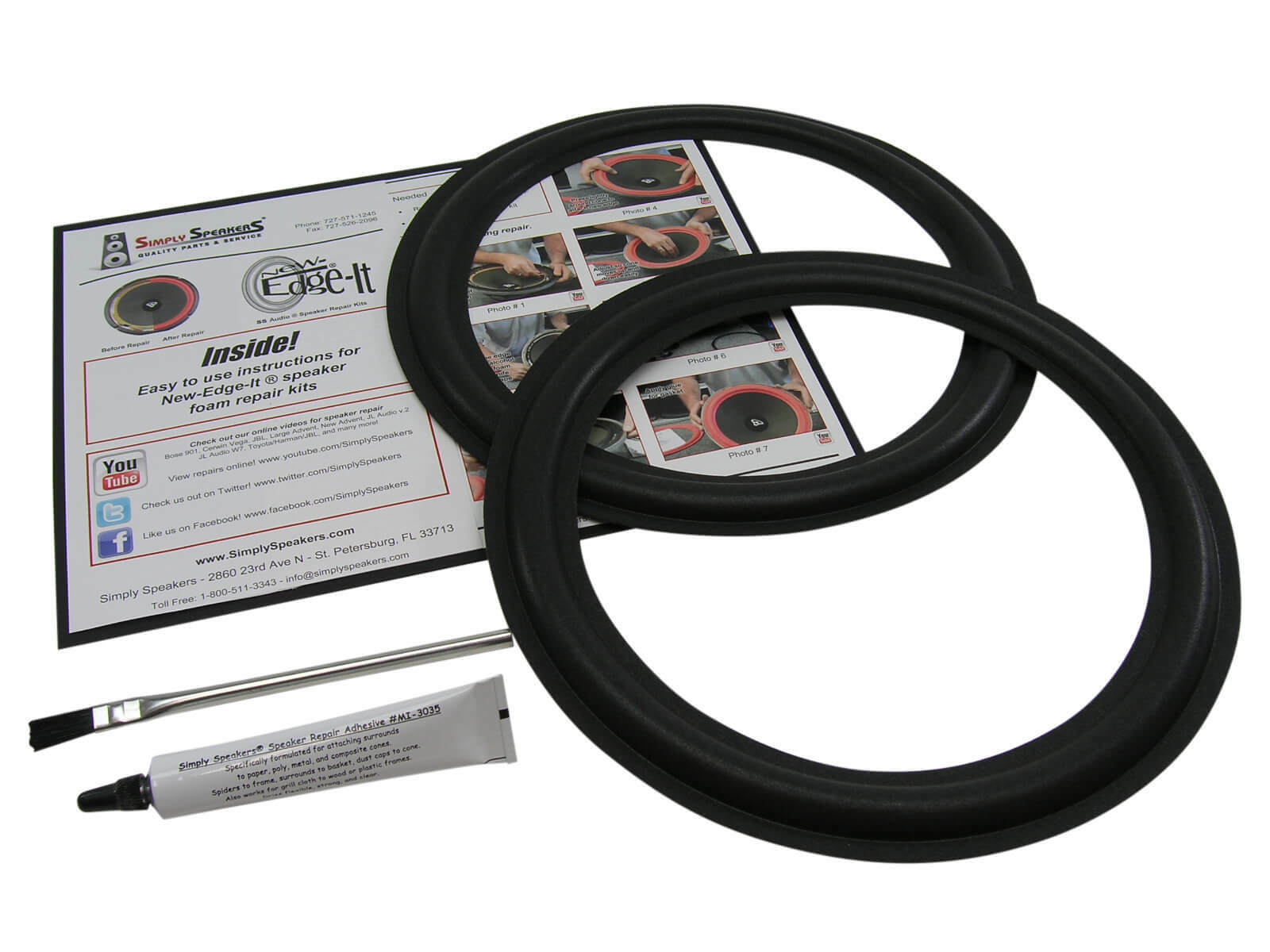


As an eBay Partner, we earn from qualifying purchases. This helps support our independent vintage technology research.