AR Acoustic Research AR-58 (1981–1984)
A floor-standing time capsule from AR’s post-Kloss era—rich, warm, and built like a New England cabinetmaker’s pride, but don’t expect the legendary magic of the classics.
Overview
Turn the corner into a dimly lit basement with a pair of AR-58s flanking a turntable, and you’re not just hearing music—you’re stepping into the early 1980s as they were meant to be lived: analog, deliberate, and wrapped in walnut veneer. These aren’t the speakers that made Acoustic Research famous—the AR-3s or AR-2as that defined high fidelity in the 1960s—but they carry the torch with a quiet dignity. Released in 1981, the AR-58 arrived during a turbulent time for the brand, long after Henry Kloss had left and Edgar Villchur had stepped back, when AR was navigating corporate ownership under Teledyne and chasing a market that now demanded bigger cabinets, deeper bass, and flashier specs. The result? A speaker that sounds better than its reputation suggests, but one that never quite recaptures the revolutionary spark of its ancestors.
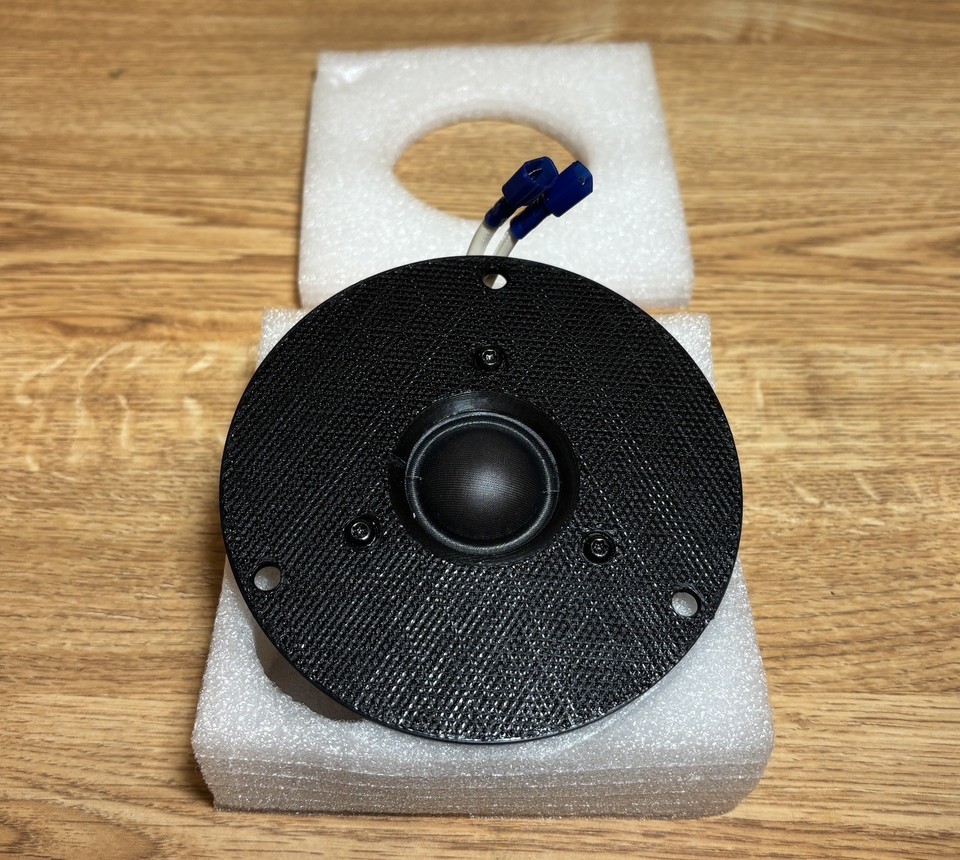
At first glance, the AR-58 looks the part of a serious floorstander: nearly four feet tall, with a gracefully tapered cabinet in American walnut, flared at the base like a vintage console radio. It’s a two-and-a-half-way design, which means the crossover isn’t just splitting duties between woofer and tweeter—it’s giving the midrange its own dedicated real estate while letting the woofers handle only the deepest frequencies. This isn’t just marketing jargon; it pays off in the sound. Vocals emerge with a smooth, almost liquid presence, and there’s a warmth in the lower mids that makes acoustic guitars and cello recordings feel intimate, like the performer is just across the room. But it’s not all warmth—there’s clarity too, especially in the tweeter, which uses a 3/4-inch soft dome. It doesn’t scream into the upper registers like some modern designs; instead, it rolls off gently, avoiding harshness even with worn vinyl or compressed digital sources.
Positioned above the AR-8s and below the flagship AR-8, the AR-58 was the sweet spot in AR’s late-era lineup—not the budget model, not the halo product, but the speaker meant for the serious listener who wanted substance without extravagance. It competed directly with offerings from Advent, KLH, and Polk during a period when the “big box” speaker was king, and AR responded with a cabinet that’s both massive and acoustically inert, thanks to internal bracing and constrained-layer damping. The bass reflex port is on the front, a rarity that helps the speaker play deeper in smaller rooms and reduces the usual bass cancellation that plagues rear-ported designs when placed near walls. Still, these aren’t earth-shaking subs—they won’t rattle your floorboards with electronic music or modern hip-hop, but they do deliver a taut, well-damped low end that’s more about accuracy than impact.
Specifications
| Manufacturer | Acoustic Research (Teledyne) |
| Production Years | 1981–1984 |
| Model | AR-58 |
| Type | 3-driver, 2.5-way floorstanding loudspeaker |
| Enclosure | Acoustic suspension / bass reflex hybrid (front-firing port) |
| Woofer | 2 x 6.5-inch treated paper cone |
| Midrange | 6.5-inch treated paper cone |
| Tweeter | 0.75-inch soft dome |
| Crossover Frequency | 1,800 Hz (woofer to midrange/tweeter), 3,200 Hz (midrange to tweeter) |
| Frequency Response | 45 Hz – 20,000 Hz (±3 dB) |
| Impedance | 8 ohms nominal |
| Sensitivity | 89 dB (2.83V @ 1m) |
| Power Handling | 100 watts (maximum) |
| Cabinet Finish | American walnut veneer |
| Dimensions (H×W×D) | 45.5 × 11.5 × 14.5 inches (115.6 × 29.2 × 36.8 cm) |
| Weight | 62 pounds (28.1 kg) per speaker |
| Inputs | Single pair of binding posts (accepts bare wire, spades, or banana plugs) |
| Original Price | Approx. $898 DM (Germany, 1981) |
| Country of Manufacture | USA |
Key Features
The 2.5-Way Crossover: Smarter Than It Looks
Most speakers from this era slapped together a simple two-way design and called it a day. The AR-58 does something more thoughtful: it uses a 2.5-way configuration, meaning the two woofers only handle frequencies below the midrange driver’s passband. This reduces intermodulation distortion—especially during complex passages where deep bass and vocal fundamentals compete—and keeps the midrange clean. The crossover itself is a passive, second-order design with film capacitors and air-core inductors, not the cheapest parts, but not exotic either. What matters is that it’s well executed: phase alignment is tight, and there’s no audible “hole” between drivers. Owners report that the transition from mid to tweeter is particularly seamless, a credit to AR’s continued attention to time-domain coherence, even in this later period.
Front-Firing Bass Reflex: Room-Friendly Design
In an era when most floorstanders vented out the back, AR stuck a port on the front baffle, just below the midrange driver. This isn’t just cosmetic—it makes the AR-58 far more forgiving in typical living rooms. Because the port and woofer are on the same plane, their outputs sum constructively, reducing phase cancellation when the speaker is placed near a rear wall. The result? More consistent bass response across different room positions, and a design that doesn’t demand to be pulled three feet into the room to sound right. It’s a subtle but meaningful engineering choice that reflects AR’s long-standing commitment to real-world usability, not just anechoic chamber performance.
Build Quality That Ages Gracefully
These cabinets are over-engineered in the best possible way. The MDF core is thick, heavily braced, and wrapped in real walnut veneer that ages into a warm, honeyed glow. The grilles are held on with hidden magnets—advanced for the early '80s—and the binding posts, while not the highest end, are robust and accept a full range of connector types. Unlike many speakers from this period that used cheap foam surrounds, the AR-58’s drivers feature butyl rubber surrounds, which are far more resistant to drying and cracking. That doesn’t mean they last forever—40-year-old rubber is still 40-year-old rubber—but replacement parts are available, and reconing is a well-trodden path.
Historical Context
The AR-58 emerged at a crossroads. By 1981, Acoustic Research was no longer the scrappy innovator of the 1950s and '60s. Edgar Villchur had retired from active design, and Henry Kloss was long gone, having founded KLH, Advent, and eventually Cambridge SoundWorks. AR had been acquired by Teledyne in 1967, and while the brand still carried prestige, it was now part of a larger corporate machine, chasing market trends rather than setting them. The early '80s saw a shift toward larger, more powerful speakers, driven by the rise of stereo receivers with 100+ watts per channel and the growing popularity of rock and electronic music. The AR-58 was AR’s answer: a modern floorstander that abandoned the compact, acoustic-suspension purity of the AR-3 in favor of deeper bass and higher efficiency.
It wasn’t alone. Competitors like the Advent Challenger Series, the KLH Model Eleven, and the Polk RTA A1 were all vying for the same buyer: the college grad with a first real job, a rack of gear, and a desire for “big sound.” The AR-58 didn’t win on specs—its 45 Hz bass extension wasn’t class-leading, and its 89 dB sensitivity was merely average—but it competed on refinement. Where some of its rivals sounded bright or boomy, the AR-58 offered balance. It was the speaker for someone who valued accuracy over excitement, who’d rather hear a jazz trio as it sounded in the club than feel like they’re at a stadium show.
Collectibility & Value
Today, the AR-58 occupies a quiet corner of the vintage speaker world. It’s not a grail like the AR-3a, nor is it a forgotten relic—more of a “sleeper” that serious collectors appreciate but rarely hype. Pairs in good condition typically sell between $400 and $800, with recapped and professionally serviced units reaching $1,200 or more, especially if sold with a warranty. The price spread reflects a key truth: these speakers live or die by their maintenance history.
The most common failure point is the crossover capacitors. While not as prone to catastrophic failure as some brands, the electrolytics do dry out over time, leading to a loss of high-frequency clarity and uneven driver balance. A full recapping—replacing all capacitors and inspecting resistors and inductors—is strongly recommended for any pair that hasn’t been serviced in the last 15 years. It’s not a DIY job for beginners, but it’s routine for experienced techs and typically costs $200–$300 per pair.
The drivers themselves are more durable. The butyl rubber surrounds have proven far more resilient than foam, and original cones often survive in good shape. That said, if a surround has perished, reconing is possible—companies like Audio Classics and The Speaker Exchange still support AR drivers. The tweeters are less of a concern; soft domes from this era rarely fail outright, though they can lose output if the ferrofluid dries (though AR didn’t use ferrofluid in these models).
When buying, check for cabinet damage—especially at the base, where the wood is thin and prone to chipping. Also verify that both speakers have matching serial numbers and that the grilles are present and undamaged. Avoid pairs advertised as “tested with an iPod”—this usually means no proper testing was done. Instead, look for sellers who provide frequency response sweeps or at least confirm that both channels play cleanly across the range.
For all its strengths, the AR-58 isn’t for everyone. It needs a decent amplifier—50 watts or more per channel—to breathe properly, and it won’t impress someone used to the slam of modern ported designs. But if you value coherence, midrange purity, and a design that ages with grace, the AR-58 remains one of the smarter vintage floorstander buys of the early '80s.
eBay Listings


As an eBay Partner, we earn from qualifying purchases. This helps support our independent vintage technology research.
Service Manuals & Schematics
- Manual — archive.org