AR Acoustic Research AR-10pi (1977–1979)
A speaker that lets you tune your room like a lab tech—because sometimes the problem isn’t the gear, it’s the corner it’s stuck in.
Overview
Turn the volume down, walk into the next room, and you’ll still hear it—deep, articulate bass rolling out of a cabinet that’s not supposed to produce that much low end. That’s the AR-10pi doing what it was engineered to do: cheat physics without cheating accuracy. Born in 1977, the same year Star Wars exploded into theaters and vinyl still ruled the living room, the AR-10pi wasn’t just another floorstander—it was Acoustic Research’s answer to the eternal question: how do you make a speaker sound neutral in a world where no two rooms are alike? The answer? Give the owner three switches on the front panel that adjust bass, midrange, and treble output independently, letting you dial in flat response whether the speakers are shoved against a wall or floating in mid-room. It sounds like overkill now, but back then, this level of user control was borderline radical—especially for a consumer speaker.
Sitting at the top of AR’s lineup alongside the slightly simplified AR-11, the 10pi was the company’s no-compromise flagship, inheriting the revered 12-inch acoustic suspension woofer from the legendary AR-3a but adding a trio of front-mounted switches that made it a favorite in semi-pro studios and obsessive audiophile dens alike. These weren’t tone controls in the cheap sense—they were precision attenuators, part of a sophisticated autotransformer-based crossover network that preserved phase coherence while letting you tweak output levels. The goal wasn’t to make the speakers “fun” or “warm”—it was to make them disappear, leaving only the music. And in a properly treated room with the switches dialed in, they come damn close.
It’s not all magic, though. The 10pi weighs in at 55 pounds each, thanks to its dense MDF construction and massive internal bracing, so don’t expect to shift them around once they’re set. And while the three-way design with separate 1.5-inch dome midrange and 3/4-inch tweeter delivers exceptional clarity, the trade-off is complexity—more drivers, more crossovers, more things that can go wrong over 45 years. But when they’re working, the soundstage is wide, stable, and shockingly three-dimensional, with imaging that feels more like live chamber music than playback. This was AR at its most confident: not chasing trends, but refining a philosophy of accuracy that had already changed how people thought about home audio.
Specifications
| Manufacturer | Acoustic Research |
| Production Years | 1977–1979 |
| Original Price | $795 per pair (equivalent to ~$4,000 today) |
| Drive Units (Low-Frequency) | 300 mm (12 in.) acoustic suspension woofer |
| Drive Units (Mid-Frequency) | 38 mm (1-1/2 in.) hemispherical dome midrange |
| Drive Units (High-Frequency) | 19 mm (3/4 in.) hemispherical dome tweeter |
| Crossover Frequencies | 525 Hz, 5000 Hz |
| Frequency Range | 27 Hz – 30 kHz |
| Impedance | 4–8 Ω (nominal, switch-dependent) |
| Sensitivity | 86 dB SPL (1 watt, 1 meter, on axis) |
| Amplifier Power Requirement | 25 watts per speaker for 100 dB SPL in a 3000 cu ft room |
| Power Handling (Nominal) | 100 watts (max 250 watts) |
| Power Handling Ability | Up to 150 watts continuous, 10% clipping on music material |
| Crossover Network | Half-section LC network with air-core chokes and computer-grade bipolar electrolytic capacitors |
| Controls | Three 3-position switches: woofer environmental control, midrange level, highrange level |
| Driver Resonance Frequencies | Woofer: 18 Hz (free air), Midrange: 400 Hz, Tweeter: 400 Hz |
| System Resonance Frequency | 42 Hz |
| System Low Frequency Response | –3 dB at 35 Hz |
| Effective System Q | 0.75 |
| Flux Density | Woofer: 9800 gauss, Midrange: 13000 gauss, Tweeter: 14000 gauss |
| Volume of Enclosure | 41.9 liters (1.48 cu. ft.) |
| Cabinet Dimensions | 354 × 635 × 273 mm (13-15/16 × 25 × 10-3/4 in.) |
| Weight | 24.9 kg (55 lb.) unpacked per speaker |
Key Features
Front-Panel Room Tuning Switches
The most radical thing about the AR-10pi wasn’t its drivers or cabinet—it was the row of three rocker switches hidden behind a flip-down panel on the top front. Each controlled a different section: one for the woofer’s output based on room placement (center of wall, against wall, or free-standing), one for midrange level, and one for tweeter output. These weren’t crude EQs; they were precision attenuators built into an autotransformer network that adjusted driver output without destabilizing the crossover’s phase response. In an era when most speakers expected you to adapt your room to them, the 10pi flipped the script. You could put them in a cramped apartment corner and dial back the bass reinforcement, or float them in a large room and boost the low end for full impact. It was a pro-level feature in a consumer box—and one that scared off buyers who just wanted to plug in and play.
Evolution of the AR-3a Legacy
The 10pi wasn’t a clean-sheet design—it was the final evolution of AR’s acoustic suspension philosophy, carrying forward the 12-inch woofer and dome midrange/tweeter combo from the AR-3a, but with refinements. The tweeter, in particular, was updated for greater power handling and extended high-frequency response, though some owners note slightly reduced dispersion compared to earlier models. The midrange driver also benefited from higher flux density (13,000 gauss), improving transient response and reducing distortion. These weren’t flashy upgrades, but they mattered—especially when paired with the new crossover network, which used air-core inductors and computer-grade capacitors to minimize signal loss and coloration. This was AR at its measurement-obsessed peak: every change backed by lab data, not marketing hype.
Compact Cabinet, Deep Bass
At just over two feet tall, the 10pi doesn’t look like a bass monster—until you hear it. The sealed 1.48 cubic foot cabinet uses acoustic suspension to deliver clean, tight low end down to 35 Hz (–3 dB), with a system Q of 0.75 that avoids the one-note “boom” of ported designs. The 12-inch woofer, with its high compliance and 9800 gauss motor, moves air with authority while staying under control, even at high volumes. Unlike bass reflex speakers that rely on port tuning, the 10pi’s sealed design eliminates time-smearing and port noise, resulting in bass that’s articulate and time-coherent. It won’t shake drywall like a modern sub, but it integrates seamlessly with the midrange, creating a cohesive sound that feels natural rather than hyped. For classical, jazz, or vocal recordings, it’s a revelation—bass you feel in your chest, not just your floor.
Historical Context
The AR-10pi arrived in 1977, a time when high-fidelity audio was shifting from technical novelty to mainstream aspiration. Stereo systems were no longer just for engineers and obsessives—they were living room furniture, status symbols, even lifestyle accessories. Against that backdrop, AR doubled down on science. While competitors chased wattage wars and flashy cabinets, AR stuck to its roots: flat response, wide dispersion, and measurable accuracy. The 10pi was the culmination of that philosophy, combining the proven AR-3a driver suite with a new level of user customization that mirrored the precision of studio monitors.
It also arrived at a turning point for the company. Founder Edgar Villchur had already left, and Henry Kloss was long gone, having formed KLH and later Advent. AR was now under Teledyne, a defense and electronics conglomerate that valued engineering but not necessarily market trends. The 10pi’s complexity and high price—more than the iconic AR-3a—made it a tough sell in an era when simpler, flashier speakers were gaining traction. The simultaneous release of the AR-11, which used the same drivers but without the front-panel switches, further muddied the waters. Why pay more for adjustability when most buyers wouldn’t use it? As a result, the 10pi sold in relatively small numbers, making it rare today. But its influence lingered: the idea that a speaker should adapt to its environment, not the other way around, would resurface decades later in digital room correction and DSP-based systems.
Collectibility & Value
Today, the AR-10pi is a cult favorite—respected but not overhyped. A clean, fully restored pair trades between $800 and $1,500, depending on condition and provenance, with unrestored units often selling for $300–$600. The ceiling is higher if they come with original stands, documentation, or rare finishes, but don’t expect them to appreciate like a pair of AR-3as. Their value lies in performance, not nostalgia.
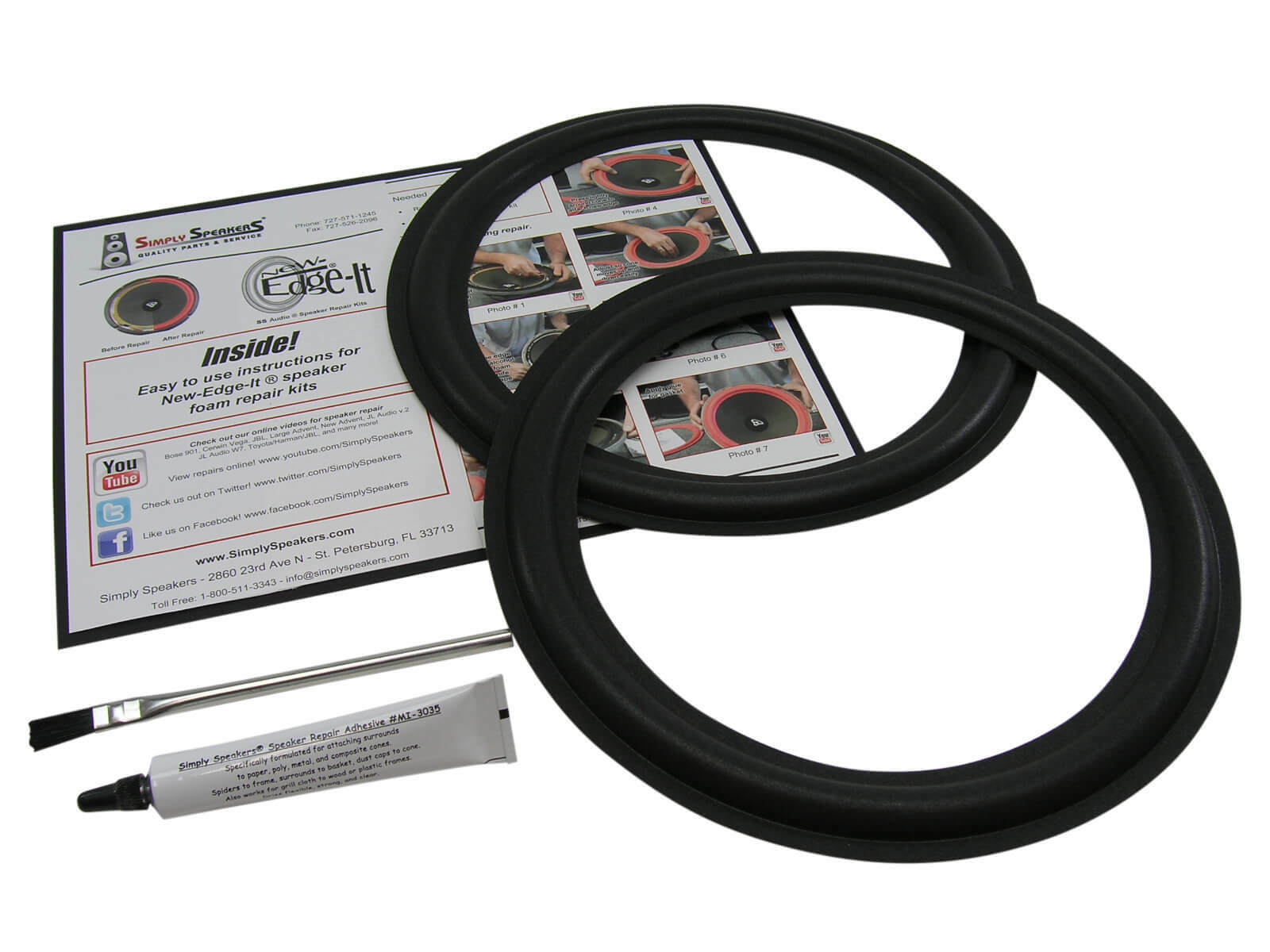
The biggest threat to longevity? The foam surrounds on the 12-inch woofers. After 45 years, they’re almost certainly perished, leading to flapping, distortion, or complete failure. Re-foaming is a must—and while DIY kits exist, the size and weight of the driver make it a two-person job. The midrange and tweeter domes are more durable, but owners report occasional failures in the tweeter’s suspension, especially if the speakers were overdriven. The crossover capacitors, while high-quality for their time, should be checked or replaced during restoration—electrolytics from the late ’70s rarely survive without drying out.
When buying, inspect the switch mechanisms: they’re mechanical rockers with internal contacts that can oxidize or wear. Test each position for clean engagement and listen for crackling. The real walnut veneer holds up well, but water rings and UV fading are common. Grilles are often missing—the original foam types disintegrated decades ago—so replacements are usually fabric-covered frames. And don’t overlook the weight: at 55 pounds each, shipping is expensive, and floor protection is non-negotiable on hardwood.
If you’re restoring a pair, budget $300–$500 for professional re-foaming, crossover recapping, and driver servicing. Done right, they’ll last another 40 years. Done poorly, you’ll have expensive bookends. But get it right, and you’ll own one of the most honest, adaptable speakers of its era—a time machine not to a sound, but to a philosophy.
eBay Listings


As an eBay Partner, we earn from qualifying purchases. This helps support our independent vintage technology research.