Ampex VPR-2
A one-inch C-format videotape recorder whose audio chain was weak enough that Dolby built a module specifically to fix it.
Overview
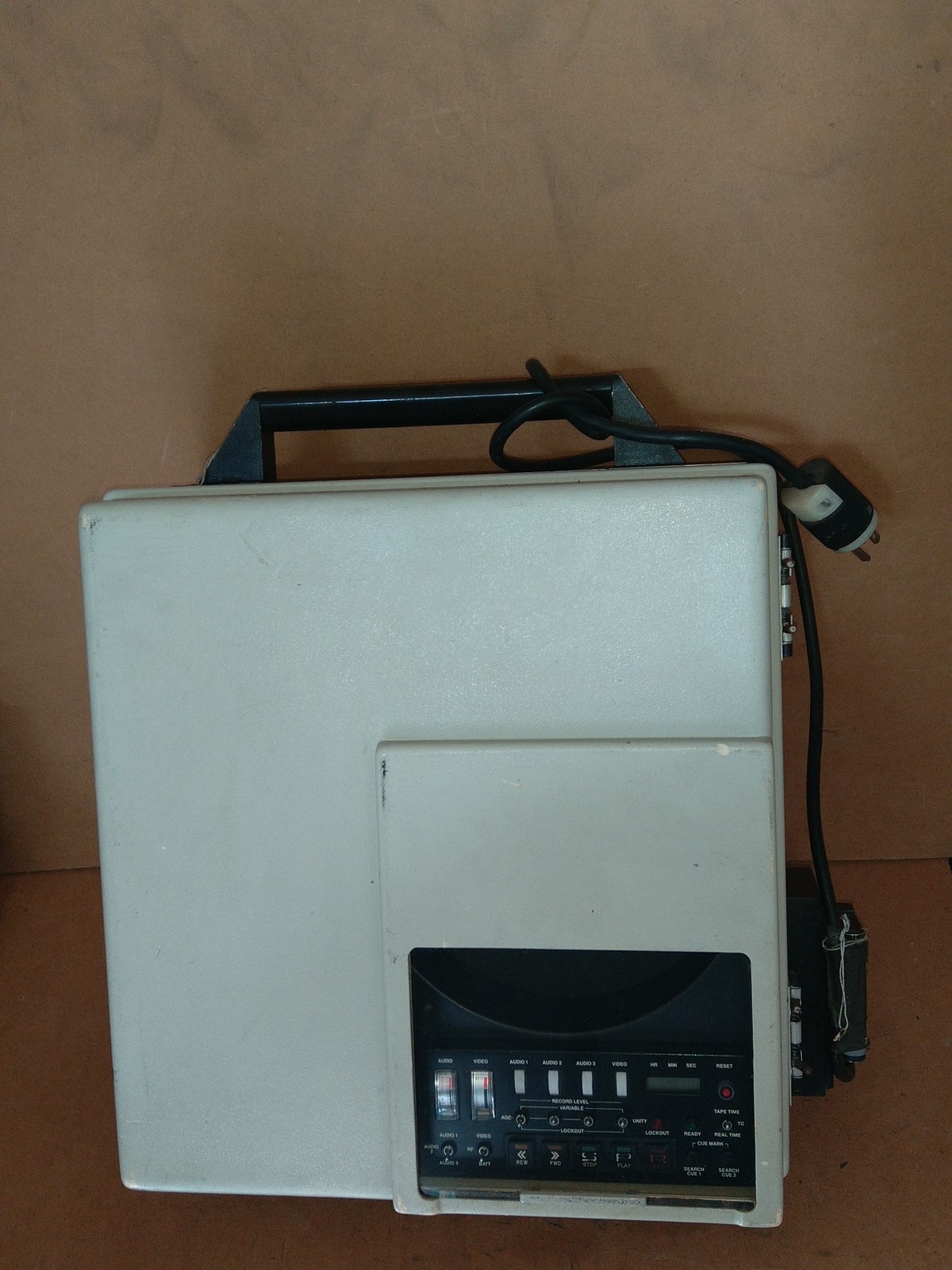
The Ampex VPR-2 is a one-inch helical-scan videotape recorder, and the most telling thing about it isn't in the video section. It's in the audio. Dolby Laboratories ran a long advertising campaign through the early and mid-1980s pitching its CN 226 module as a direct plug-in fix for the VPR-2's audio performance. The copy pulled no punches: the module would let the recorder's sound "at long last" rival that of professional audio tape machines. That's a manufacturer's advertising claim, not an independent verdict. Still, Dolby singled out the VPR-2 by name alongside Sony's BVH-1000/1100, which tells you where the machine sat in the food chain. The video was the point. The audio was the weak link.
The fix was Dolby A-type noise reduction, delivered through the CN 226 module built specifically for the Ampex VPR-2 (and, per Dolby's literature, the Marconi MR-2/MR-2B). Dolby's own published figures for the A-type system claimed 10 dB of noise reduction from 30 Hz upward, rising to 15 dB at 9 kHz and above. Dolby also said it came without the noise modulation and overshoot distortion the company associated with cruder compander schemes. Conservative recording levels were part of the pitch too: backing off the level reduces the risk of tape saturation, which in turn lowers distortion. In a broadcast chain where the audio track was routinely the afterthought, that was a meaningful upgrade for anyone cutting spots or laybacks on a VPR-2.
Mix (1984, p.41) was still running the CN 226 module in its pages years into the machine's service life, which says something about how many VPR-2s were still earning their keep in post houses well after the format's introduction. The module was automatic in operation — no fiddling — which mattered in facilities where the VTR was one link in a chain and nobody had time to babysit a compander.
The VPR-2 turns up repeatedly in period facility surveys and equipment listings, usually as the one-inch machine in a room that also ran Sony BVH-series VTRs. One 1983 Mix facility directory lists an Ampex VPR2 alongside Sony BVH 1000, 1100 and 1100A decks at a Hollywood post house, the standard C-format lineup of the era. Another listing in the same survey names "Ampex VPR2 1" C format" as the house VTR for a post-sound operation.
What separates a working VPR-2 from a museum piece is how owners treated the audio electronics. A 1989 Mix piece on analog post quoted an engineer at a facility whose one-inch layback machine was an Ampex VPR-2. He described its electronics as "nonstandard, very good-sounding" after being reworked in-house. The stock audio was a compromise, and the people who cared about sound didn't leave it stock. They either bolted on the Dolby module or rebuilt the audio chain entirely.
The VPR-2 also shows up in the synchronizer and autolocator literature of the period. Adams-Smith's Model 605 synchronizer listed interfaces for the VPR1 and VPR2 among its supported transports, and the company's timecode products were priced around £8,000 with three interfaces in 1980. That's serious money for serious rooms. A 1980 Studio Sound survey of synchronizers names the VPR2 in its interface lists, and Cipher Digital was still advertising its Phantom II VTR emulator in 1990 as able to interface editing systems with "even older VTRs like the VPR-2."
The VPR-2 is a video machine first and an audio machine a distant second. The video transport, the head life, and the sheer mass of a one-inch deck are the practical concerns. The audio is the part that was always compromised and always needed help. The Dolby CN 226 module was the period solution, and period documentation treats it as the standard fix rather than an exotic upgrade. Expect to find VPR-2s in various states of electronic modification, because that's how they were used. The in-house rework described in the 1989 Mix piece was not unusual for a machine that spent its life in a professional post environment.
The VPR-2's place in the archive is as a representative of one-inch C-format video — a format that left behind a fleet of machines whose audio sections were the part that needed the most attention. The Dolby module exists precisely because the VPR-2's audio wasn't good enough on its own, and that's the most honest thing that can be said about it.
eBay Listings


As an eBay Partner, we earn from qualifying purchases. This helps support our independent vintage technology research.