Ampex MM-1100 (circa 1972–1974)
Ampex built a machine you could shove around, dolly across town, and forget about - and priced it so a working studio could actually buy one.
Overview
The MM-1100 is the machine Ampex built for the studio that couldn't quite justify an MM-1000. The company's own literature is blunt about the hierarchy: the MM-1100 is described as "a companion recorder to the MM-1000, which remains in the Ampex line as the premium machine for recording and studio production work." That's not a knock. It's a positioning statement. The MM-1100 was the economical way into serious multi-track work, for the production house, the rock band, or the mid-sized room that needed channels and reliability more than the flagship's every last flexibility.
Ampex's advertising sold it hard on durability, and the copy is unusually specific about the physical build. The machine rides on wheels - "dolly it from studio to studio, or truck it across town," the ads urged - and Ampex pointed to a heavy cast frame and solid steel cabinetwork as the reason the transport would survive the abuse. The pitch was that installation consisted of plugging in power and input lines and nothing more. Whether or not every owner tested that claim, the intent is clear. This recorder was meant to be moved and used, not coddled in a single room.
Configuration is where buyers need to pay attention. The standard model provides 16 channels of recording and reproduction, and the transport handles 2-inch magnetic tape. But Ampex sold the machine in multiple formats over its run. 8, 16, and 24-channel head assemblies were all offered, and at least one 1-inch 8-track version appears in the used market. The same transport and electronics package could be ordered to fit the room's budget and track count. Anyone shopping today should confirm which head assembly and tape width a given machine carries before assuming anything.
Reel capacity is generous. Period advertising in Recording Engineer (April 1972, p.47) and dB Magazine (July 1972, p.2) emphasized smooth handling of 10½-inch and 14-inch reels, and the machine will reportedly take reels up to 16 inches in diameter. That means fewer reel changes during a long session.
Key Features
Sel-Sync Playback That Matches Normal Reproduce
The claim Ampex leaned on hardest in its period ads was that the MM-1100 delivered identical playback performance in both sel-sync and normal reproduce modes. That matters on a machine where the sync head sounds noticeably different from the playback head, because every overdub becomes a compromise and the performer hears something the final mix won't. Ampex's promise was that the sync path was good enough to trust as a monitoring reference, not just a timing tool. Whether that held up in every unit is undocumented, but it was the headline technical claim. The idea was stacked overdubs, one track at a time, with the artist hearing a faithful version of what was already down.
Functionally Grouped Controls and Tilt-Up Meters
The transport and electronics controls were grouped by function, and the meters tilt up toward the operator. Ampex's ads presented this as a workflow feature, and it is one. The layout keeps things reachable and readable so a session doesn't stall while someone hunts for a switch. The tilt-up meters suggest the machine was designed to be operated from a seated position at a console rather than standing over a rack.
Heavy Cast Frame and Steel Cabinetwork
Ampex described a heavy cast frame and solid steel cabinetwork holding "all the little parts and things where they belong," and put the whole thing on wheels. For a machine expected to move between rooms, that matters, since a transport that gets bumped around tends to drift out of alignment. The tradeoff is obvious. This is not a lightweight piece of gear, and anyone buying one today should plan for the logistics of moving it.
Multi-Format Head Assemblies
Ampex built 8, 16, and 24-channel head assemblies for the MM-1100, and the design allowed them to be swapped. A machine ordered as a 16-track can, in principle, be reconfigured, and parts listings for the MM-1100 and MM-1200 frequently overlap. It also means the exact spec of any individual machine depends on how it was ordered and what's been done to it since.
Historical Context
The MM-1100 arrived in a market Ampex already dominated. The company's ad copy opened with a boast - "we've been building professional recorders longer than anyone else" - and the tagline for the launch was "another step forward by the leader." It was advertised in Recording Engineer (April 1972, p.47) and dB Magazine (July 1972, p.2), and by the end of 1973 it was being priced in the UK trade press. Studio Sound (December 1973, p.6) listed the 16-channel configuration at £8,150 and 24 channels at £12,845, while noting the machine was also well suited to demanding 8-channel work. Production years are reported variously. The source heading gives circa 1972-1974, with other references citing 1972, 1974, and 1975, so the run should be treated as early-to-mid 1970s rather than pinned to exact dates.
The MM-1100 sat in a family of Ampex multitracks. It's routinely grouped with the MM-1200 in parts listings and service documentation, and a bias card from an MM-1100 is said to work across the MM-1000, MM-1200, and AG-440 as well. The MM-1000 remained the premium machine, and the MM-1100 was the economical companion built to bring more rooms into multi-track work.
Collectibility & Value
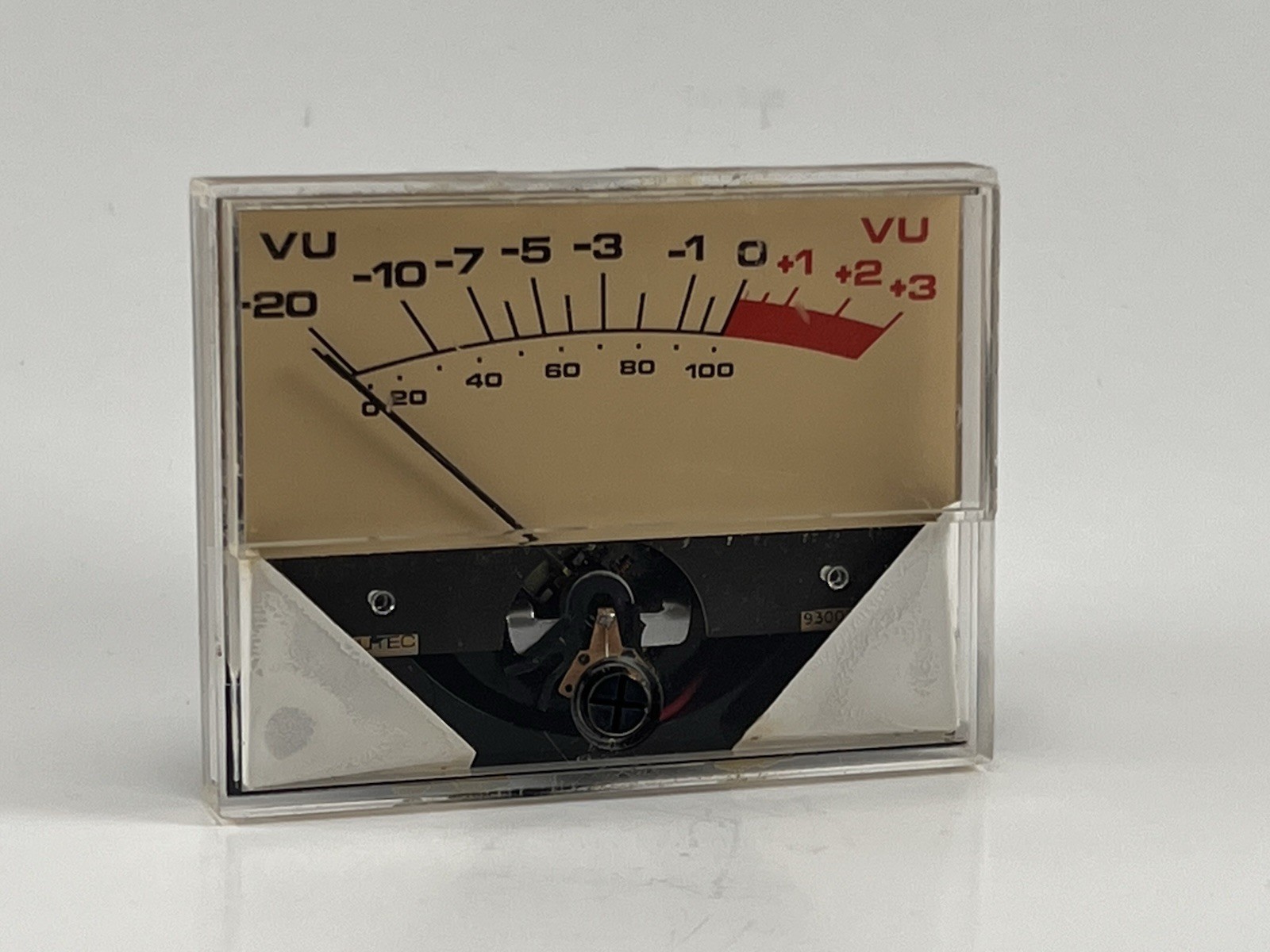
Complete MM-1100s rarely surface, and when they do the price depends heavily on condition and configuration. What circulates most freely is parts. Motherboards and record/bias cards turn up around $99.95, single VU meters around $30, and a new 2-inch pinch roller for the MM-1100 and MM-1200 runs about $250. Operation and maintenance manuals sell for roughly $79.99 to C$133.58. Little independent documentation survives, so a manual is arguably the most valuable accessory an owner can buy.
Condition notes from sellers tell the usual story of a machine that sat too long. One Reverb listing describes transport buttons that work but a tape speed that drags after long storage, two channels that don't pass signal, a dead fan, and several burned-out bulbs, with heads that tested strong before the machine was parked. That's a fair summary of what to expect. The heads and mechanicals are often sound, while the electronics and lubrication need attention. The belt is a known weak point, reportedly prone to rapid wear from frequent direction changes, which can let tape mangle between the capstans. Buy on the strength of the heads and the completeness of the electronics, budget for a full service, and expect to hunt for parts.
eBay Listings



As an eBay Partner, we earn from qualifying purchases. This helps support our independent vintage technology research.
Related Models
- Ampex 200
- Ampex 350
- Ampex 351
- Ampex 354
- Ampex 400-A
- Braun TG-1000 (1970–1975)
- Teac X-1000 (1981–1986)
- Teac X-1000M (circa 1982)
- Teac X-1000R (1981–1986)
- Teac X-10R