Altec Lansing Model 18 (1980)
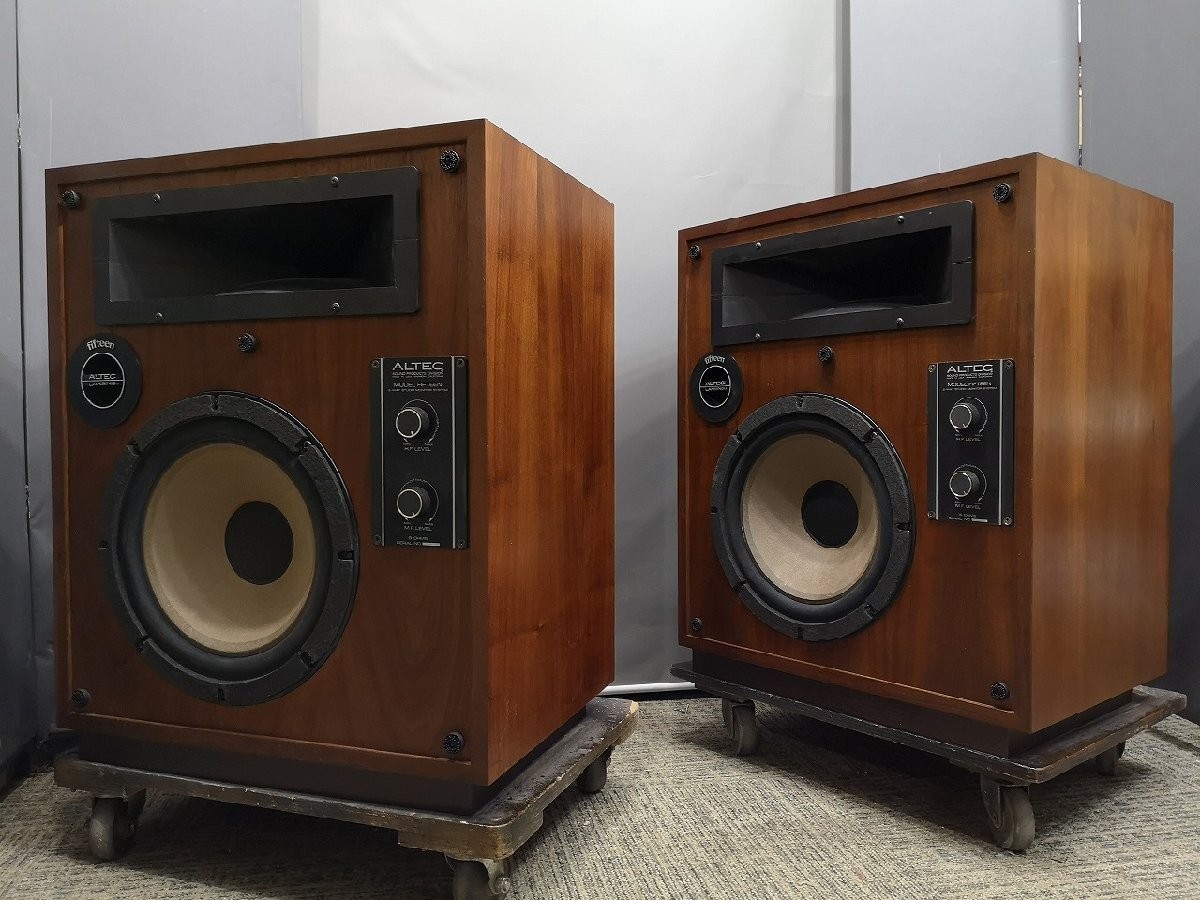
The Altec Lansing Model 18 is a high-efficiency, two-way floorstanding loudspeaker introduced in 1980 as part of Altec’s acclaimed Voice of the Home series. Designed to bring the sonic clarity and dynamic range of professional studio monitors into domestic listening environments, the Model 18 exemplifies Altec’s engineering legacy during a transitional period in the company’s history. With its powerful horn-loaded design and elegant walnut veneer cabinet, this speaker remains a sought-after classic among vintage audio enthusiasts.
Specifications
| Feature | Specification |
| Production Years | 1980–1982 |
| Type | 2-way, bass-reflex with passive radiator |
| Driver Complement | 12-inch woofer, 2-inch compression driver |
| Horn Design | Multicell horn for high-frequency dispersion |
| Power Handling | 100W RMS (2-channel stereo) |
| Nominal Impedance | 8 ohms |
| Sensitivity | 94 dB (1W/1m) |
| Frequency Response | 45 Hz – 18 kHz (±3 dB) |
| Crossover Frequency | 1.6 kHz |
| Cabinet Finish | Walnut veneer |
| Bi-Wiring | Yes |
| Dimensions (H×W×D) | 36" × 12" × 16" (91 × 30 × 41 cm) |
| Weight | 62 lbs (28 kg) per cabinet |
Historical Context
The Altec Lansing Model 18 was developed during a pivotal era for the company. As one of the final models released before Altec shifted focus toward commercial and installed audio systems, the Model 18 represents a bridge between Altec’s legendary studio monitor heritage and the burgeoning high-fidelity home audio market of the late 1970s and early 1980s.
Part of the Voice of the Home series, the Model 18 was engineered to deliver the same articulate midrange and dynamic punch found in Altec’s famed 604 and 605 studio monitors, but in a form factor optimized for residential use. The use of a multicell horn and compression driver ensured wide dispersion and high efficiency, making the speaker an excellent match for lower-powered tube amplifiers popular at the time.
Its release in 1980 marked one of the last major efforts by Altec to compete directly in the premium home loudspeaker segment before corporate restructuring redirected its priorities. As such, the Model 18 holds a special place among collectors as both a technical achievement and a historical milestone.
Sound Signature
The Model 18 delivers a warm, dynamic, and highly efficient sound profile. Its 94 dB sensitivity allows it to perform exceptionally well with low-wattage amplifiers, particularly vintage tube designs. The multicell horn provides smooth, detailed highs with excellent dispersion, while the 12-inch woofer—assisted by a passive radiator—offers extended bass response that is tight and articulate, though not excessively deep below 45 Hz.
The speaker’s most celebrated attribute is its midrange clarity, a hallmark of Altec’s studio monitor lineage. Vocals and acoustic instruments are rendered with lifelike presence and texture, making the Model 18 ideal for jazz, classical, and vocal-centric recordings.
Maintenance and Restoration Tips
Due to their age, many Altec Lansing Model 18 speakers require maintenance to restore optimal performance. Common issues include:
- Foam Surround Deterioration: The 12-inch woofers often suffer from disintegrated foam surrounds. Replacement with modern butyl rubber surrounds is recommended for longevity and improved bass response.
- Crossover Component Aging: Electrolytic capacitors in the passive crossover network may dry out or drift in value. A full recap using high-quality film capacitors and appropriate inductors can significantly improve clarity and reliability.
- Horn Diaphragm Care: The 2-inch titanium diaphragm in the compression driver is delicate. Avoid physical contact or exposure to moisture. If damaged, replacement or professional repair is necessary.
- Cabinet Condition: Inspect the walnut veneer for lifting or scratches. Light polishing and touch-up can restore appearance without affecting value.
- Bi-Wire Configuration: If bi-wiring, ensure both terminals are properly connected with compatible gauge wire. Use jumpers if single-wiring.
Regular inspection and preventive maintenance can extend the life of these speakers for decades. When restored correctly, the Model 18 remains a competitive performer even by modern standards.
Collectibility and Market Value
The Altec Lansing Model 18 is rated 7/10 in collectibility due to its historical significance, build quality, and sonic performance. While not as iconic as the 604 Duplex, it is increasingly recognized for its role in Altec’s home audio evolution.
As of 2024, a matched pair in good original condition typically sells for $800–$1,200, with fully restored examples commanding up to $1,500 depending on provenance and component quality. Originality, especially in drivers and crossover parts, significantly influences value. Speakers with replaced woofers or non-original horns may see reduced market appeal.
Enthusiasts prize the Model 18 not only for its sound but also as a tangible link to Altec’s golden era of audio innovation.
eBay Listings



As an eBay Partner, we earn from qualifying purchases. This helps support our independent vintage technology research.
Related Models
- Altec 1221A
- Altec 3000B
- Altec 600B
- Altec 603
- Altec A4X
- Akai AM-2850 (1975)
- Akai AP-206 (1975)
- Nakamichi BX-1 (1985)
- Acoustic Research research-ar-17 (1978)
- Acoustic Research AR-19 (1994)