Altec Lansing 9446A
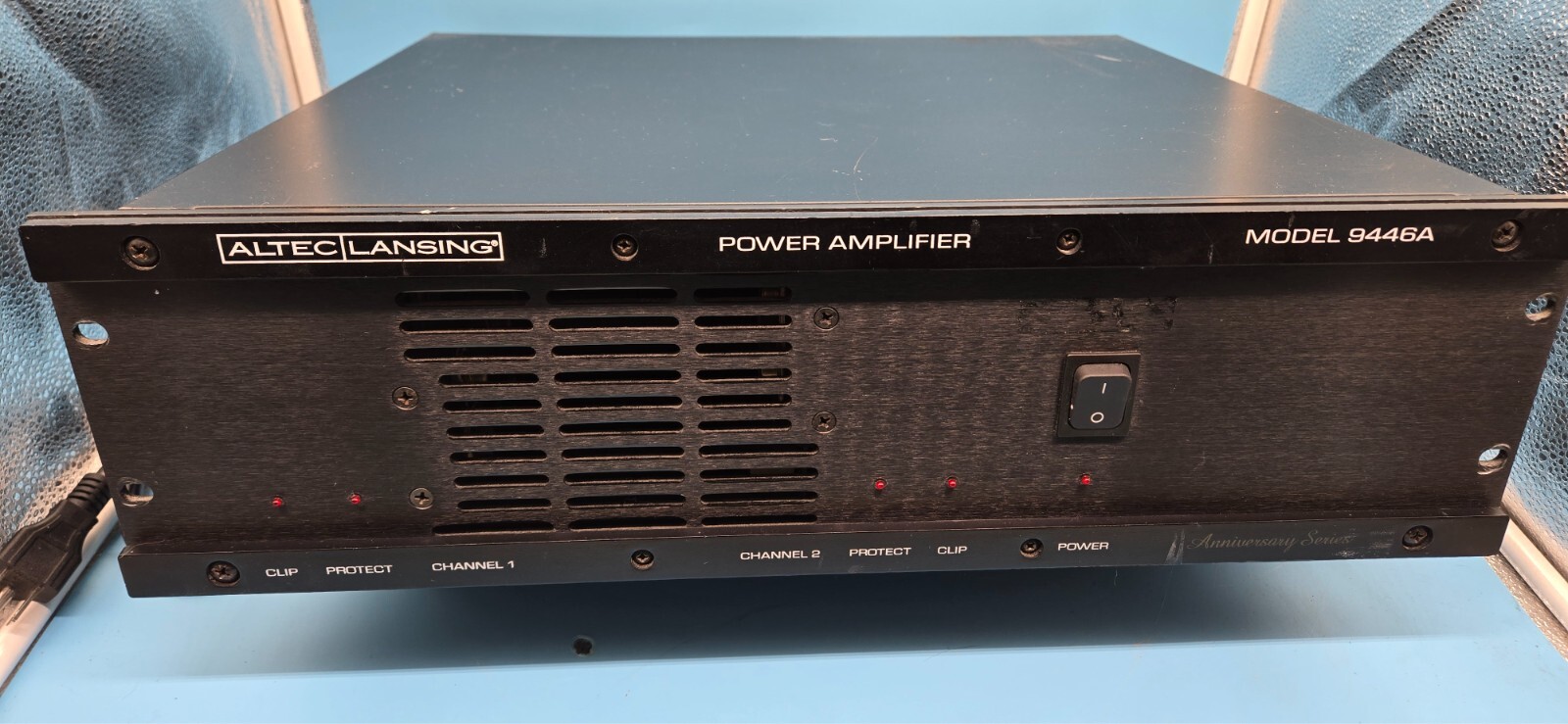
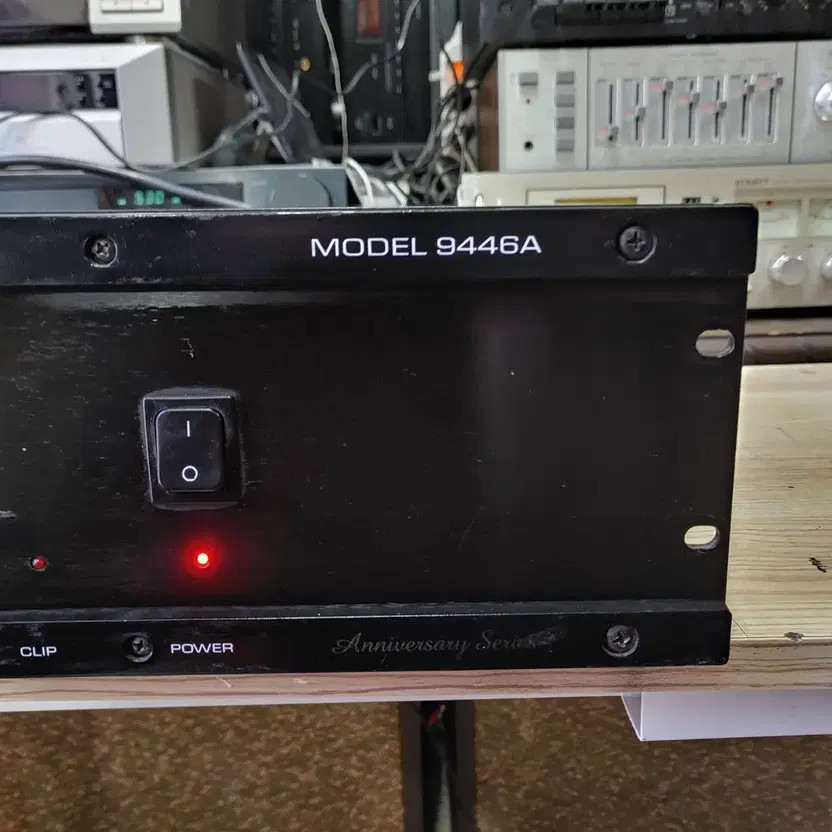
The Altec Lansing 9446A is a high-performance, solid-state stereo power amplifier produced during the 1970s as part of Altec’s professional audio lineup. Designed for critical studio monitoring, broadcast, and sound reinforcement applications, the 9446A exemplifies the engineering rigor and build quality expected from Altec during this era. With its dual-mono architecture and robust power delivery, it remains a respected piece among vintage audio enthusiasts and professionals seeking transparent, uncolored amplification.
Specifications
| Feature | Specification |
| Model | Lansing 9446A |
| Brand | Altec |
| Year of Production | 1970s |
| Category | Solid-State Power Amplifier |
| Channels | 2 (Stereo) |
| Power Output | 100W per channel @ 8 ohms |
| Impedance | 8 ohms (nominal) |
| Frequency Response | 20Hz – 20kHz (+/- 0.5dB) |
| Total Harmonic Distortion | <0.1% (typical, full power) |
| Damping Factor | >200 (at 8 ohms, 1kHz) |
| Input Sensitivity | 1.4V for full output |
| Input Impedance | 20k ohms (balanced), 10k ohms (unbalanced) |
| Sensitivity | Not officially documented |
| Construction | Direct-coupled output, dual-mono design |
| Power Supply | Toroidal power transformer |
| Cooling | Passive convection with heatsink design |
| Form Factor | 3U rack-mountable chassis |
| Connectors | XLR and 1/4" TRS inputs, binding post outputs |
| Weight | Approx. 45 lbs (20.4 kg) |
Historical Context
The Altec Lansing 9446A was developed during a pivotal period in professional audio when solid-state amplifiers began to replace tube-based designs in studios and broadcast facilities. As part of Altec’s transition into modern amplifier technology, the 9446A was engineered to deliver clean, reliable power with minimal coloration—ideal for applications where sonic accuracy was paramount.
Its dual-mono construction, meaning each channel operates from independent power regulation and signal paths, reduced crosstalk and improved channel separation. The use of a toroidal power transformer provided efficient power delivery with low electromagnetic interference, contributing to the amplifier’s low noise floor.
Commonly found in recording studios, radio stations, and post-production houses, the 9446A earned a reputation for durability and consistent performance under continuous operation. It represented Altec’s commitment to professional standards during the height of analog audio engineering.
Sound Signature
The 9446A is known for its clean, neutral, and transparent sound profile. Unlike some vintage amplifiers that impart warmth or harmonic richness, the 9446A was designed for accuracy and high headroom, making it ideal for studio monitoring where faithful signal reproduction is essential. Its solid-state, direct-coupled output stage ensures tight bass control and excellent transient response, allowing engineers to hear recordings as they were intended.
Maintenance and Tips
While the Altec 9446A is built to last, units from the 1970s require careful evaluation and potential servicing due to age-related wear:
- Capacitor Replacement: The electrolytic capacitors in the power supply and signal path are likely degraded after 50 years. A full recapping is strongly recommended to restore performance and prevent failure.
- Potentiometers and Switches: Clean all controls (input selectors, gain pots if present) with contact cleaner to eliminate crackling or dropouts.
- Connector Inspection: Check XLR, TRS, and speaker terminals for corrosion or loose connections. Re-solder or replace as needed.
- Thermal Management: Ensure heatsinks are dust-free and ventilation is unobstructed. Although passively cooled, proper airflow extends component life.
- Bias Adjustment: While the output stage is fixed-bias, it should be checked during servicing to ensure optimal transistor operation.
- Power-Up Caution: Use a variac and current limiter when powering up a unit that has been dormant for years to avoid catastrophic failure.
Regular maintenance ensures the 9446A continues to deliver the reliable, high-fidelity performance it was known for.
Collectibility and Market Value
The Altec Lansing 9446A holds moderate collectibility, rated 6/10, due to its professional pedigree and robust construction. While not as widely sought after as some consumer hi-fi classics, it is valued by studio restoration projects, broadcast historians, and audiophiles who appreciate its no-nonsense engineering.
- Market Value: $300–$600 USD, depending on condition and service history.
- Units that have been professionally restored or recapped command higher prices.
- Original, unmodified examples with documentation or provenance from broadcast use may exceed $600.
Conclusion
The Altec Lansing 9446A stands as a testament to 1970s professional audio engineering—built for reliability, accuracy, and longevity. While it lacks the sonic flair of tube amplifiers, its transparent performance and rugged design make it a compelling choice for critical listening environments and vintage gear collectors alike. With proper care, the 9446A remains a viable and impressive amplifier even by modern standards.
eBay Listings


As an eBay Partner, we earn from qualifying purchases. This helps support our independent vintage technology research.
Service Manuals & Schematics
- Schematic — archive.org
Related Models
- Altec 1224A
- Altec 1592A
- Altec 26420 (1975)
- Altec 288D (1975)
- Altec 288L (1975)
- Luxman L-530 (1975)
- Luxman R-404 (1975)
- Luxman RV-371 (1975)
- Luxman SQ-38U (1975)
- Luxman T-14 (1972)