Altec Lansing 802-8G High-Frequency Compression Driver
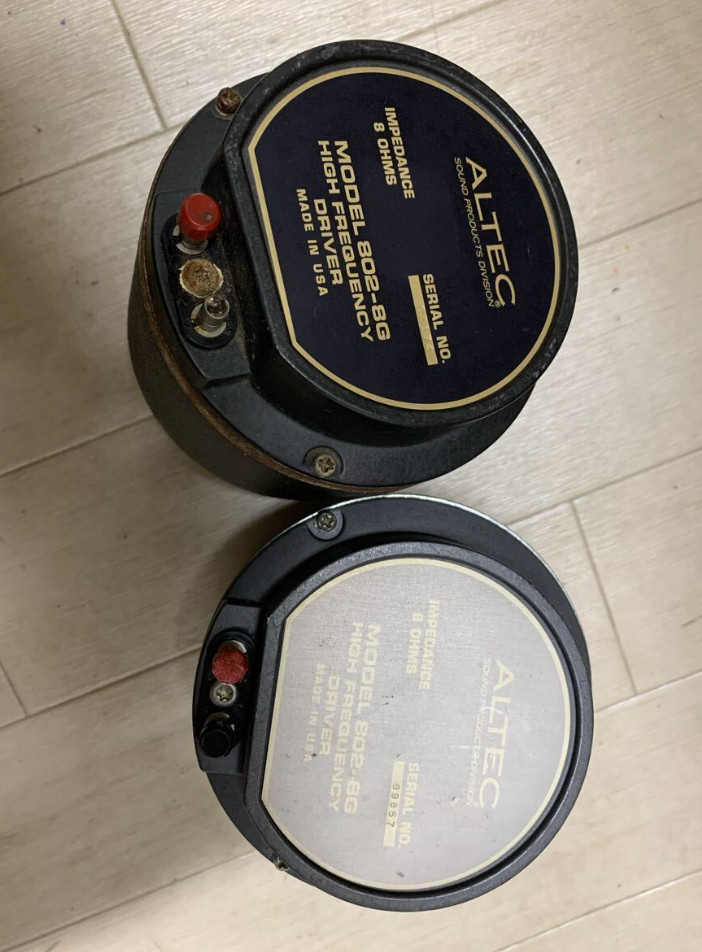
The Altec Lansing 802-8G is a legendary high-frequency compression driver that played a pivotal role in shaping the sound of professional audio during the 1960s and 1970s. As part of Altec’s revered 800 series, the 802-8G was engineered for durability, high output, and exceptional clarity, making it a staple in recording studios, broadcast facilities, and cinema sound systems.
Renowned for its use with constant-directivity horns like the 811 and 511, the 802-8G delivers a dynamic and articulate high-frequency response that remains highly sought after by vintage audio enthusiasts and restoration specialists.
Specifications
| Parameter | Specification |
| Model | Altec Lansing 802-8G |
| Year of Production | 1960s–1970s |
| Power Handling | 30W RMS (driver only) |
| Impedance | 16 ohms |
| Sensitivity | 110 dB (1W/1m) |
| Diaphragm | 2-inch aluminum (early), phenolic (later versions) |
| Throat Size | 1-inch exit |
| Phase Plug | Radial design |
| Application | Horn-loaded high-frequency driver |
| Common Horn Pairings | Altec 811, 511, and equivalent CD horns |
| Weight | 3.5 lbs (1.6 kg) |
Historical Context
The Altec 802-8G is a refined version of the original 802 series drivers, developed during the golden era of analog audio. It was designed to meet the demanding requirements of professional sound reinforcement and high-fidelity reproduction. As a key component in the Altec 800 series loudspeaker systems, the 802-8G was frequently paired with the 515 bass driver and loaded onto constant-directivity horns to create full-range systems with balanced dispersion and high output.
Its use in movie theaters and broadcast studios cemented its reputation for reliability and sonic precision. The driver’s high sensitivity and robust construction allowed it to perform under high SPL conditions without distortion, making it a favorite among audio engineers of the time.
The transition from aluminum to phenolic diaphragms in later production runs addressed concerns about metal fatigue and improved long-term reliability, though purists often debate the sonic differences between the two versions.
Sound Signature
The 802-8G is known for its bright, detailed, and forward sound, with pronounced energy in the upper midrange and extended highs. This characteristic presence makes it ideal for applications where clarity and projection are critical. However, its lively top end can become fatiguing or harsh if not properly integrated with a well-matched horn and crossover network.
When paired with a smooth-loading horn such as the 811, the 802-8G delivers a balanced and dynamic high-frequency response that remains competitive with modern drivers in vintage-focused setups.
Maintenance and Restoration Tips
Due to their age, many 802-8G drivers require inspection or restoration before use. Common issues include:
- Diaphragm degradation: Aluminum diaphragms may develop cracks or fatigue over time. Phenolic versions are more durable but can still fail. Replacement diaphragms or reconing services are available from specialty vendors.
- Corrosion on terminals: Clean binding posts with contact cleaner and inspect for oxidation.
- Magnet weakening: Some units may require remagnetization to restore optimal performance. This service is offered by select audio restoration shops.
- Phase plug alignment: Ensure the phase plug is securely seated and free of debris to maintain proper acoustic coupling.
When restoring, use only period-correct or recommended replacement parts to preserve authenticity and performance. Always test drivers with limited power initially after restoration.
Collectibility and Market Value
The Altec 802-8G ranks 8/10 in collectibility due to its iconic status, widespread use in professional systems, and continued demand among vintage audio enthusiasts. Drivers in working condition with original phenolic diaphragms typically command higher prices.
- Market Value: $150–$300 per driver, depending on condition, diaphragm type, and provenance.
- Rarity: Common in the vintage market, but fully restored units with documentation are increasingly rare.
Collectors often seek matched pairs for stereo systems or theater restorations, so drivers with consistent performance and appearance are more desirable.
Conclusion
The Altec Lansing 802-8G remains a benchmark in high-frequency driver design from the analog era. Its combination of high sensitivity, rugged construction, and vivid sound ensures its place in the pantheon of classic audio components. Whether used in a restored studio monitor or a vintage cinema system, the 802-8G continues to deliver a listening experience that modern drivers often strive to emulate.
eBay Listings


As an eBay Partner, we earn from qualifying purchases. This helps support our independent vintage technology research.
Related Models
- Altec 1221A
- Altec 3000B
- Altec 600B
- Altec 603
- Altec A4X
- Akai AM-2850 (1975)
- Akai AP-206 (1975)
- Nakamichi BX-1 (1985)
- Acoustic Research research-ar-17 (1978)
- Acoustic Research AR-19 (1994)