Altec Lansing 815A (1960s)
At 63 kg, it doesn’t just sit in the room—it commands it, a hulking presence built for low-end authority.
Overview
The Altec Lansing 815A isn’t a full-range speaker system; it’s a dedicated low-frequency engine, a brute-force solution to the challenge of reproducing deep bass before powered subs became commonplace. Marketed as an LF speaker cabinet or “bass bin,” this enclosure was designed to handle the heavy lifting in professional and high-end audio setups where punch and projection mattered more than finesse. Built during the 1960s, the 815A reflects Altec’s engineering philosophy of the era: robust, no-nonsense construction aimed at durability and sonic impact. While it lacks the refinement of modern subwoofers, its front-loaded short horn design paired with a tuned bass reflex cabinet suggests a deliberate balance between efficiency and extension—though not below 100 Hz, according to user reports.
Owners report using the 815A in conjunction with other drivers, such as Altec 808-8A midranges or JBL D130s, indicating its role as part of a larger, multi-cabinet system rather than a standalone solution. It was listed in a professional studio equipment inventory from 1979, suggesting it remained in active use well after its initial release. Despite its professional pedigree, sentiment among current owners is mixed—some question its utility today, with one noting “are these good for anything” and another admitting attempts to sell a pair had gone nowhere. That hesitation speaks less to the design itself and more to the challenges of integrating vintage bass cabinets into modern systems.
Specifications
| Manufacturer | Altec Lansing |
| Product type | Enclosure / Speaker System |
| Design | Front-loaded short horn enclosure |
| Cabinet type | tuned bass reflex |
| Driver configuration | dual 15-inch woofers |
| Number of mounted speakers | 2 |
| Low-frequency limit | not effective below 100 Hz |
| External dimensions | 850 mm (W) x 1,130 mm (H) x 830 mm (D) |
| Weight | 63 kg |
| Original price | ¥164,000 (approx. 1975) |
Key Features
Front-Loaded Short Horn Enclosure
The 815A employs a front-loaded short horn design, a hallmark of Altec’s approach to maximizing driver efficiency without requiring excessive cabinet depth. This configuration allows the dual 15-inch woofers to operate with greater control and output at moderate bass frequencies, though the trade-off is a hard cutoff below 100 Hz. Unlike infinite baffle or transmission line designs of the era, the short horn focuses on mid-bass punch—ideal for studio monitoring or PA applications where clarity in the lower mids mattered more than subsonic rumble.
Tuned Bass Reflex Cabinet
Despite its horn-loading, the cabinet is also described as a tuned bass reflex, suggesting the inclusion of a port or vent to extend response and increase efficiency around the lower limit of the drivers’ range. This hybrid approach—horn-loaded drivers within a reflex cabinet—was uncommon and points to an attempt to extract every possible decibel from the system within its operational band. The tuning likely reinforces output near 100 Hz, compensating for the inherent roll-off of the short horn design.
Dual 15-Inch Woofer Configuration
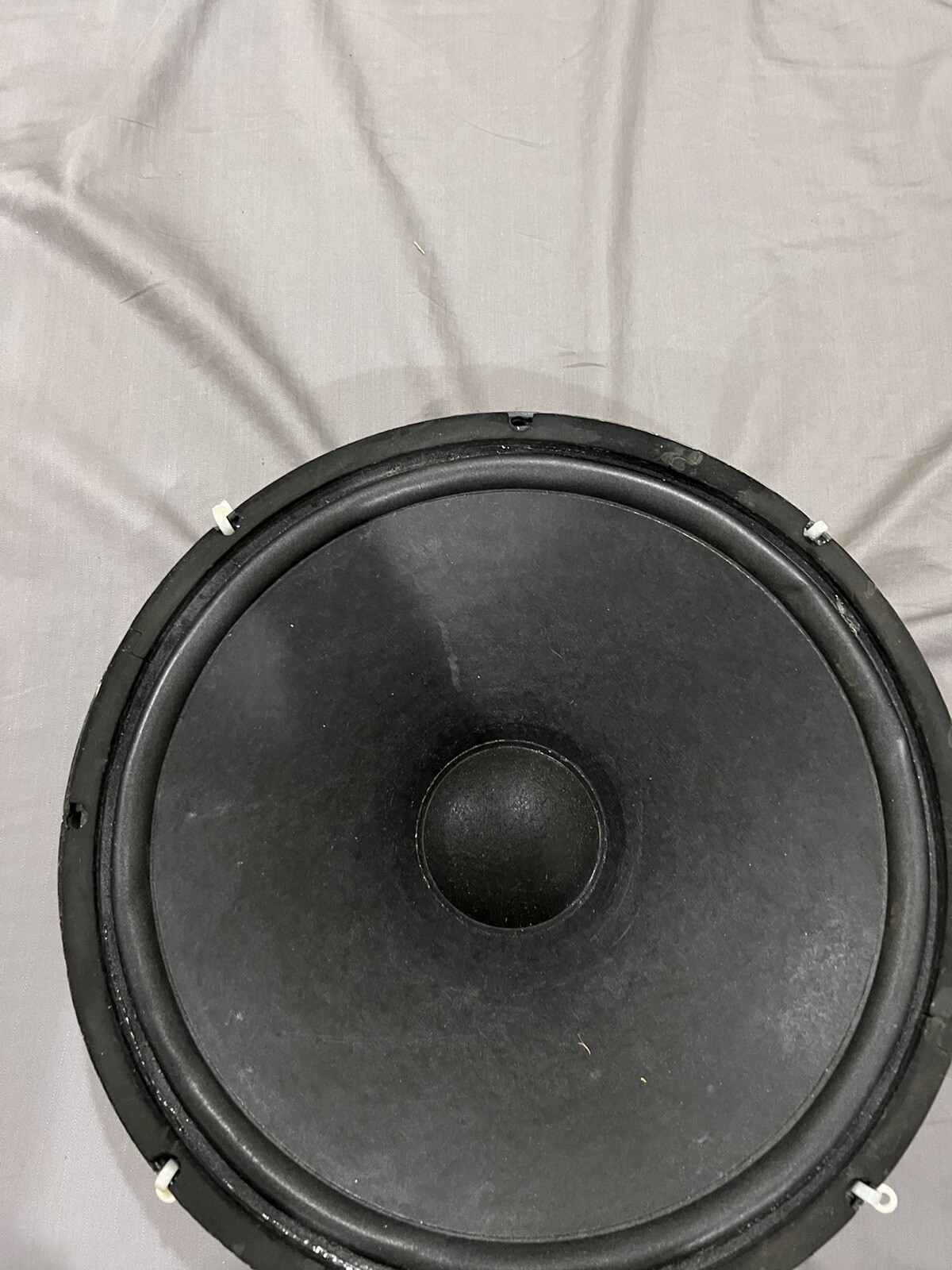
Equipped with two 15-inch woofers, the 815A delivers a bold and dynamic sonic character, with deep, punchy, and articulate bass within its range. The dual-driver setup increases cone area and overall output capability, making it suitable for environments where high sound pressure levels were required. However, the original foam surrounds on these drivers are known to degrade over time, a common failure point that necessitates refoaming for reliable operation.
L-Pad Damping Adjustment
An L-pad (inductance-based attenuator) is referenced in user discussions as a means to control unwanted resonance or “ringing” in the drivers. This suggests the system was designed with some degree of tunability, allowing technicians to dampen specific resonant frequencies for smoother integration with companion speakers. The presence of such a component implies a level of sophistication in system alignment, though it also adds complexity to maintenance and setup.
Uncertain Driver Diaphragm Material
One owner noted uncertainty about a component material, stating, “I’m not sure if it’s plastic or Bakelite,” likely referring to a driver’s dust cap or phase plug. This ambiguity underscores the lack of complete technical documentation for the 815A, leaving restorers to make educated guesses during refurbishment. The use of either material would have been typical for the period, with Bakelite favored for its rigidity and damping properties.
Collectibility & Value
There is no documented market value or collectibility trend for the Altec Lansing 815A in available records. Its appearance on the used market is sporadic, with at least one owner reporting unsuccessful attempts to sell a pair. The primary maintenance concern is foam rot on the 15-inch woofers, a widespread issue with vintage drivers that requires refoaming to restore performance and prevent further damage. While the cabinet’s weight and size make it impractical for many modern setups, its use in a 1979 studio environment confirms its professional heritage. Today, it appeals mostly to specialists restoring vintage systems or collectors focused on Altec’s industrial-era engineering.
eBay Listings
As an eBay Partner, we earn from qualifying purchases. This helps support our independent vintage technology research.