Altec Lansing 617 Coaxial Speaker
The Altec Lansing 617 is a legendary coaxial loudspeaker developed during the 1960s as part of Altec’s esteemed 600 Series. Designed for both professional monitoring and high-fidelity home audio, the 617 exemplifies Altec’s mastery of horn-loaded speaker technology. With its high efficiency, dynamic clarity, and rugged build, it remains a sought-after vintage speaker among audiophiles and collectors.
Specifications
| Feature | Specification |
| Model | Lansing 617 |
| Brand | Altec |
| Year of Production | 1960s |
| Category | Passive Loudspeaker |
| Driver Configuration | Coaxial |
| Woofer | 12-inch cone with horn loading |
| High-Frequency Driver | Compression driver with multicellular horn |
| Impedance | 16 ohms |
| Power Handling | Not officially specified (passive, amplifier-dependent) |
| Sensitivity | Estimated 100+ dB (high efficiency) |
| Crossover | Internal passive network (first-order, component values vary by revision) |
| Enclosure Type | Ported cabinet with front-firing coaxial driver |
| Dimensions | Approx. 24" H × 14" W × 10" D |
| Weight | Approx. 45 lbs per cabinet |
Key Features
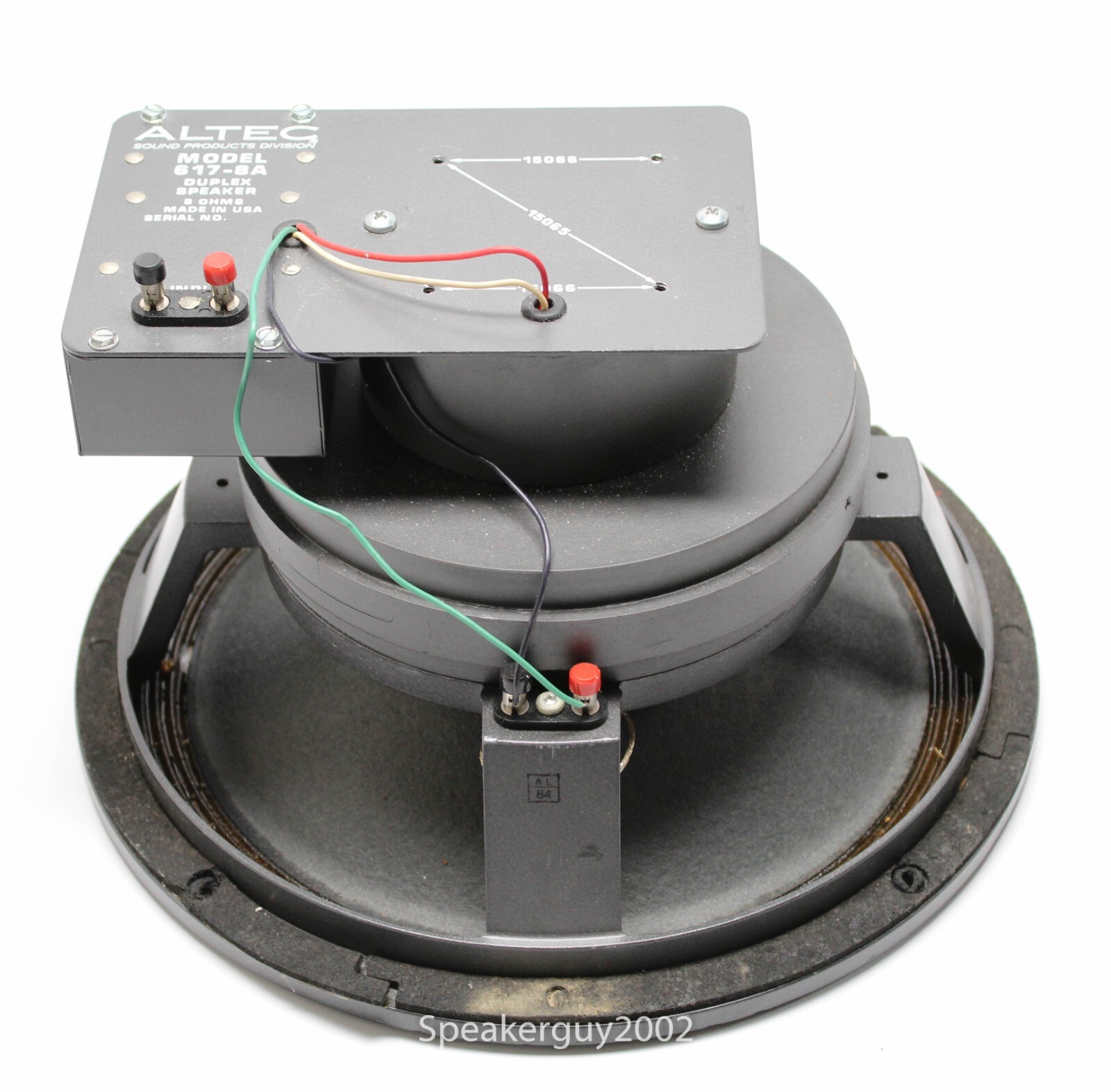
- Coaxial Driver Design: The 617 integrates a 12-inch woofer and a high-frequency compression driver mounted coaxially, ensuring time-aligned sound delivery and a coherent soundstage.
- Multicellular Horn: The high-frequency section uses a multicellular horn for controlled dispersion and reduced distortion, a hallmark of Altec’s professional speaker designs.
- High-Efficiency Performance: With sensitivity exceeding 100 dB, the 617 can produce high sound pressure levels with low-powered amplifiers, making it ideal for tube amp pairings.
- Rugged Construction: Built for durability in both studio and home environments, the cabinet features solid wood construction and industrial-grade components.
Historical Significance
The Altec Lansing 617 was a key model in the 600 Series, which set industry standards for professional audio reproduction in the mid-20th century. Originally derived from Altec’s theater and broadcast monitor designs, the 617 brought studio-grade clarity to home audio enthusiasts. Its coaxial layout and horn-loading principles influenced countless future speaker designs, including modern studio monitors and high-efficiency audiophile speakers.
Altec, formed from the merger of Altec Service Corporation and Lansing Manufacturing Company, was a dominant force in professional audio during the 1950s–1970s. The 617 and its siblings were widely used in radio stations, recording studios, and even early public address systems, cementing Altec’s reputation for reliability and sonic excellence.
Sound Signature
The 617 delivers a forward, dynamic, and highly articulate sound. The horn-loaded midrange and highs provide exceptional clarity and presence, making vocals and acoustic instruments sound vivid and lifelike. Bass response is tight and punchy, though it rolls off below 50 Hz due to the physical limitations of the coaxial horn design. As such, the 617 excels in midrange-centric listening but may benefit from a subwoofer or bass extension system in modern setups.
Its high efficiency makes it a favorite for use with low-wattage tube amplifiers, where it can achieve impressive volume and dynamics without strain.
Common Issues and Maintenance Tips
Like all vintage audio equipment, the Altec Lansing 617 requires careful inspection and potential restoration to perform optimally:
- Crossover Components: The internal crossover network often contains aging capacitors that may need replacement. Recapping with modern film capacitors can restore clarity and prevent driver damage.
- Woofer Surrounds: Original foam or cloth surrounds may have deteriorated. Re-foaming or professional reconing is recommended for drivers showing sag or distortion.
- Horn Driver Diaphragm: Check the high-frequency driver for tears or corrosion. Aluminum diaphragms can oxidize; gentle cleaning or replacement may be necessary.
- Connectors and Wiring: Inspect input terminals for corrosion. Upgrade with modern binding posts if desired for better connectivity.
- Cabinet Condition: Look for wood damage, veneer lifting, or insect infestation. Clean with wood-safe polishes and store in stable, dry environments.
Pro Tip: Always bi-wire or use high-quality speaker cables with low capacitance to preserve the 617’s transient response. Avoid high-powered solid-state amplifiers with poor damping control, as they can overdrive the sensitive drivers.
Collectibility and Market Value
The Altec Lansing 617 holds a collectibility rating of 7/10. Its appeal lies in its historical importance, unique coaxial design, and exceptional midrange performance. Well-maintained pairs in original condition typically sell for $300 to $800, with higher prices for restored units or rare finishes.
While not as ubiquitous as the Altec A7 "Voice of the Theatre," the 617 occupies a respected niche among vintage speaker enthusiasts, particularly those focused on horn-loaded systems and mid-century audio restoration.
Conclusion
The Altec Lansing 617 remains a testament to mid-century American audio engineering. Its blend of professional heritage, high efficiency, and engaging sound continues to attract audiophiles and collectors alike. With proper care and restoration, the 617 can deliver decades more of dynamic, expressive listening—bridging the golden age of audio with modern high-fidelity systems.
eBay Listings



As an eBay Partner, we earn from qualifying purchases. This helps support our independent vintage technology research.
Related Models
- Altec 1221A
- Altec 3000B
- Altec 600B
- Altec 603
- Altec A4X
- Akai AM-2850 (1975)
- Akai AP-206 (1975)
- Nakamichi BX-1 (1985)
- Acoustic Research research-ar-17 (1978)
- Acoustic Research AR-19 (1994)