Altec Lansing 23746 Compression Driver
The Altec Lansing 23746 is a high-performance 2-inch throat compression driver, reportedly developed during the 1970s as part of Altec's professional-grade loudspeaker component lineup. Revered for its efficiency, clarity, and robust construction, the 23746 was commonly integrated into studio monitors, live sound systems, and high-fidelity horn-loaded enclosures. It played a key role in shaping the sonic character of the 'West Coast sound' era, particularly in recording studios and cinema audio applications.
Specifications
| Parameter | Specification |
| Driver Type | 2-inch throat compression driver |
| Power Handling | 30–50W RMS (system-dependent) |
| Impedance | Reportedly 8 ohms or 16 ohms (model variant dependent) |
| Sensitivity | 95 dB (1W/1m) |
| Diaphragm Material | Aluminum or phenolic (varies by production batch) |
| Throat Size | 2 inches |
| Frequency Response | Optimized for 1.5 kHz – 18 kHz (with proper horn) |
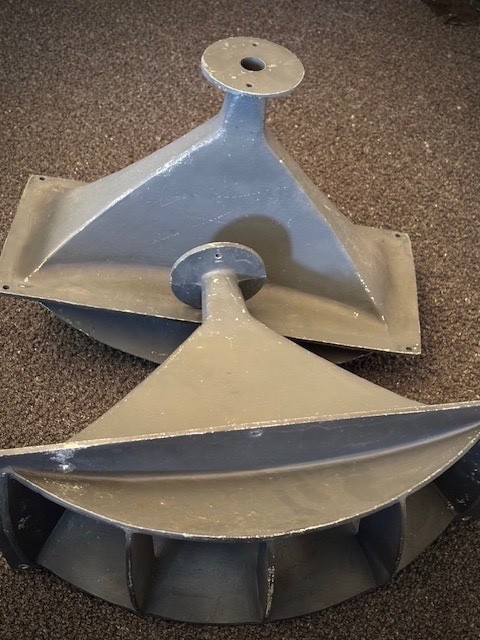
| Recommended Horns | Multicell, sectoral, or constant-directivity horns |
| Terminal Type | Screw terminals or solder lugs |
| Weight | Approx. 3.5 lbs (1.6 kg) |
Historical Context
The Altec Lansing 23746 emerged during a golden era of professional audio, when horn-loaded systems dominated studios, cinemas, and live venues. Possibly succeeding earlier Altec drivers like the 285 and 286 series, though this lineage is not definitively documented, the 23746 offered improved power handling, thermal stability, and extended high-frequency response. It was reportedly sometimes paired with multicell horns such as those in the 811 series, and occasionally found in systems derived from or inspired by the legendary A7 Voice of the Theatre enclosure.
Its use in broadcast studios and mastering facilities cemented its reputation for accurate midrange and crisp high-frequency reproduction. The driver's high sensitivity and dynamic punch made it ideal for environments requiring long-throw projection and low distortion under high SPLs. The 23746 became a staple in both commercial installations and high-end audiophile setups, especially among enthusiasts seeking the authentic 'Altec sound'.
Sound Signature
The 23746 delivers a bright, articulate, and highly dynamic sound with excellent transient response. Its strength lies in the upper midrange and lower treble, offering clarity that cuts through dense mixes. When properly mated with a suitable horn and crossover, it provides smooth dispersion and lifelike vocal reproduction. However, due to its inherent efficiency and extended response, it can sound bright or even harsh if used with mismatched horns or poorly designed crossovers. System integration is key to achieving balanced performance.
Maintenance and Restoration Tips
Like all vintage compression drivers, the 23746 benefits from regular inspection and occasional servicing:
- Diaphragm Inspection: Check for tears, warping, or oxidation. Aluminum diaphragms may corrode over time, especially in humid environments. Phenolic variants are less prone to corrosion but can become brittle.
- Re-diaphragming: Consider professional re-coning or diaphragm replacement if performance degrades. Rebuilt units with modern materials often outperform original factory specs.
- Terminal Maintenance: Clean corroded terminals with electrical contact cleaner. Replace damaged lugs to ensure solid connections.
- Magnet Recharging: If sensitivity drops significantly, the magnet may have weakened. Some specialists offer magnet recharging services.
- Horn Matching: Always use with a compatible horn. Pairing with original Altec multicell horns (e.g., 802 series) yields optimal dispersion and frequency response.
- Crossover Design: Use a well-designed passive crossover with appropriate attenuation. A pad of 3–6 dB is often needed to balance output with low-frequency drivers.
Collectibility and Market Value
The Altec 23746 is moderately collectible, rated 7/10 among vintage audio enthusiasts. Drivers in original condition with phenolic diaphragms or rare variants command higher prices. Units that have been professionally restored are also sought after for active use in vintage restoration projects or high-end horn systems.
-
Market Value: Anecdotal reports suggest a possible range of approximately $360–$400 per driver, though actual prices may vary significantly and reliable market data is limited; this range is based on unverified asking prices and should be considered a very rough estimate, with some listings observed at higher prices — however, this valuation is not supported by current market evidence and should be treated with caution. Due to lack of verifiable data, the accuracy of this range is uncertain.
Rarity: Anecdotal observations suggest moderate rarity — possibly more common than early 1960s drivers but less so than mass-market consumer units, though reliable production data is lacking and this assessment should be considered highly uncertain.
Conclusion
The Altec Lansing 23746 remains a respected component in the world of vintage professional audio. Its combination of high efficiency, durability, and sonic clarity ensures continued demand among audiophiles, restorers, and sound engineers. When properly maintained and integrated, it delivers a window into the golden age of studio monitoring and live sound — a true workhorse of the 1970s audio landscape.
eBay Listings


As an eBay Partner, we earn from qualifying purchases. This helps support our independent vintage technology research.
Related Models
- Altec 1221A
- Altec 3000B
- Altec 600B
- Altec 603
- Altec A4X
- Akai AM-2850 (1975)
- Akai AP-206 (1975)
- Nakamichi BX-1 (1985)
- Acoustic Research research-ar-17 (1978)
- Acoustic Research AR-19 (1994)