AKG C414
A large-diaphragm condenser that earned its reputation one session at a time. Its later revision dropped the tubes and transformers for a dynamic range most studios had never seen.
Overview
The C414 B-ULS is the version most engineers picture when they hear the model number. It has a one-inch dual-diaphragm pressure-gradient transducer in an all-metal housing, measuring 141 x 45 x 35 mm and weighing 310 grams net. The metal body isn't cosmetic. AKG's own documentation says the all-metal housing improves rejection of r.f. interference when the microphone is used near transmitter stations, alongside wireless microphones, or close to other communication equipment. That's a real concern in broadcast and stage work.
The capsule is a twin-diaphragm design, which is what makes the four polar patterns possible. A recessed switch on the front selects cardioid, hypercardioid, omni, or figure-of-eight. AKG's manual points out that the patterns are highly uniform and frequency-independent, so the sound stays consistent across angles of incidence instead of shifting as you move off-axis. The diaphragm is a gold-flashed plastic foil, with the gold layer deposited on the outer side only. That's deliberate: it prevents short-circuiting to the main electrode when extremely high sound pressure levels hit the capsule.
That attention to overload behavior runs through the whole design. Switchable pre-attenuation lifts the undistorted maximum SPL by 10 or 20 dB for close-up work. The manual says why: the attenuation keeps small transformers in the microphone output or mixer inputs from being pushed past their critical limits, particularly at low frequencies. The bass-cut circuit works from the other end, with a slope exceeding 12 dB per octave and a switchable cutoff at 75 Hz or 150 Hz. It helps against wind noise and stage floor vibration.
The headline number is dynamic range. AKG rates the C414 B-ULS at roughly 125 dB A-weighted, a figure the manual claims is substantially higher than conventional microphones and associated equipment. It comes from low inherent self-noise combined with a high overload point. Published self-noise is 14 dB-A, with a signal-to-noise ratio of 80 dB and equivalent noise of 25 dB. Sensitivity is listed at 12.5 mV/Pa (1.25 mV/µb, or -38 dBV referenced to 1 V/Pa, +1.5/-1 dB). Frequency response runs 20 to 20,000 Hz. Output impedance is 180 ohms across that range, with a 600-ohm rating that AKG notes can be loaded to nearly 0 ohms without degrading specifications. Maximum SPL is specified as 140/150/160 dB SPL at 1 kHz in the 0/-10/-20 dB settings, or 134/144/154 dB SPL across 30 Hz - 20,000 Hz. The unit requires 9 to 52 volts of phantom power per DIN 45596, which is wider than the standard 12/24/48 V range, and draws approximately 2 mA. It terminates in an XLR connector per IEC. Operating temperature spans -10°C to +60°C, with humidity tolerance of 90% at +20°C and 85% at +60°C.
For engineers who wanted the same capsule without an output transformer, AKG built the C414 B-TLII. It uses a modified capsule with a rise in frequency response beginning around 3 kHz, intended to boost the presence range of a vocalist's voice. AKG states that all other C414 B-ULS parameters are met, with the added benefit of no limiting output transformer for high-level, low-distortion transmission of very low frequencies. The one documented difference in the spec sheet is frequency response: the TLII is valid from 30 Hz to 20,000 Hz, where the ULS is 20 Hz to 20,000 Hz.
AKG's manual describes the C414 B-ULS as built on experience gained from long-term worldwide operation of the C 12A, C 12B, C 414 comb, and C 414 EB-P 48. That's a documented line of descent, and the B-ULS carries forward the twin-diaphragm architecture those earlier models established.
The B-ULS also borrowed from elsewhere in the catalog. AKG's 1989 advertising described the C414 B-ULS as incorporating the electronics of the successful C460 pre-amp, and called it a new standard in low-noise, high-efficiency studio microphones. The same advertising framed the design around "digital age" specifications, with the four polar patterns, switchable pre-attenuation, and bass roll-off giving it a wide range of uses for vocal and instrument recording. That's marketing copy, but the C460 pre-amp lineage is a concrete claim.
Studio-Sound (December 1983, p.76) ran polar pattern plots for the C414 in cardioid, figure-of-eight, and omni configurations. By the time the C414 B-ULS arrived, AKG's own promotional language in Studio-Sound (August 1989, p.37) positioned it as developed from the C414, which the company called one of the most highly rated studio microphones of all time by very many engineers. That's a manufacturer's claim about reputation, not an independent verdict.
The C414 family kept evolving. Mix (June 2004, p.37) carried AKG's announcement of a next-generation C414 line with 15 new features and enhancements, under the tagline "the same, only better." By Mix (September 2015, p.57), the family included the C414 B-ULS, C414 B-TLII, C414 B-XLII, and C414 B-XLS, with the C314 introduced as a new multi-pattern condenser. With a production run that long, buyers need to know exactly which variant they're looking at before money changes hands.
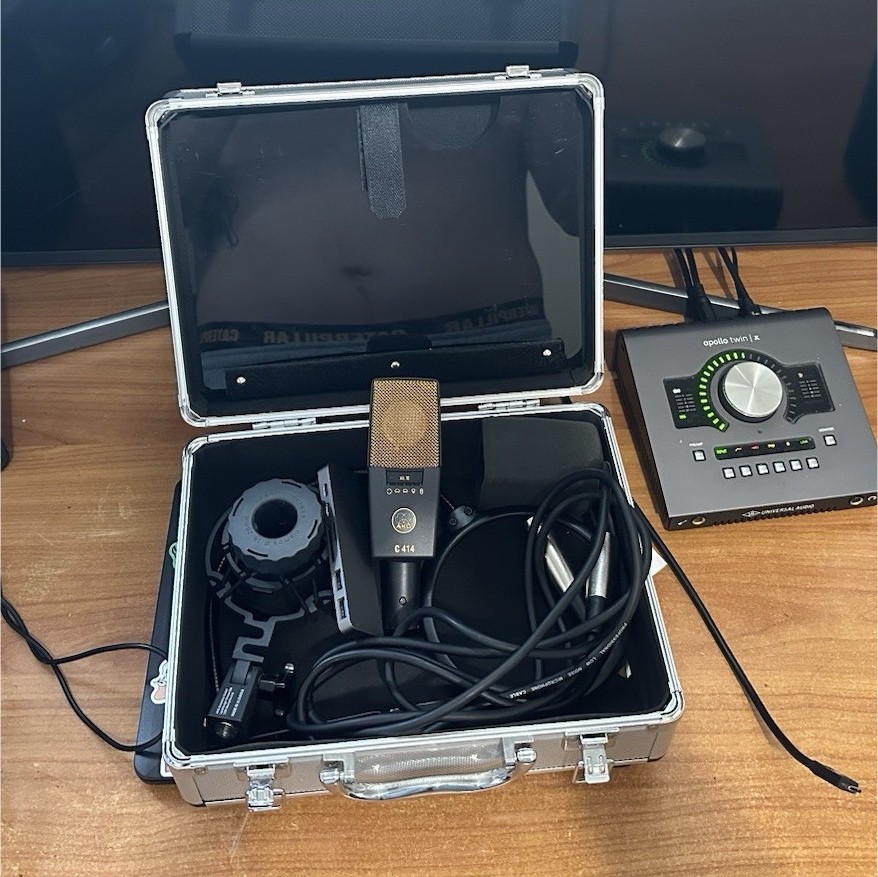
Two practical notes from the manual. The included SA 18/3 stand adapter comes off the microphone shaft by rotating it 90 degrees against the main axis and pulling downward. A small rim on the shaft keeps the microphone from sliding out even when the fastening lever isn't properly tightened. The standard 3/8" threaded insert fits most stands and suspension fittings. For cleaning, metal surfaces tolerate methylated spirit or alcohol, and the foam windscreen can be soaked in a mild detergent-and-water solution and left to dry. Included accessories are the H 100 elastic suspension, the W 414 foam windscreen, and an original frequency response curve carrying the serial number and production date code. Keep that last one, since it documents the individual microphone's measured behavior.
One service warning. In a later C414 service document, AKG notes that a redesigned mainboard requires the high-impedance board to be exchanged at the same time. Ordering the mainboard as a spare automatically includes the high-impedance board. The same document warns that if certain unspecified parts are replaced, the resulting sensitivity may vary substantially from the original value, and it strongly recommends sending such microphones to AKG for repair. For owners of later-production units, that limits what a third-party shop can do.
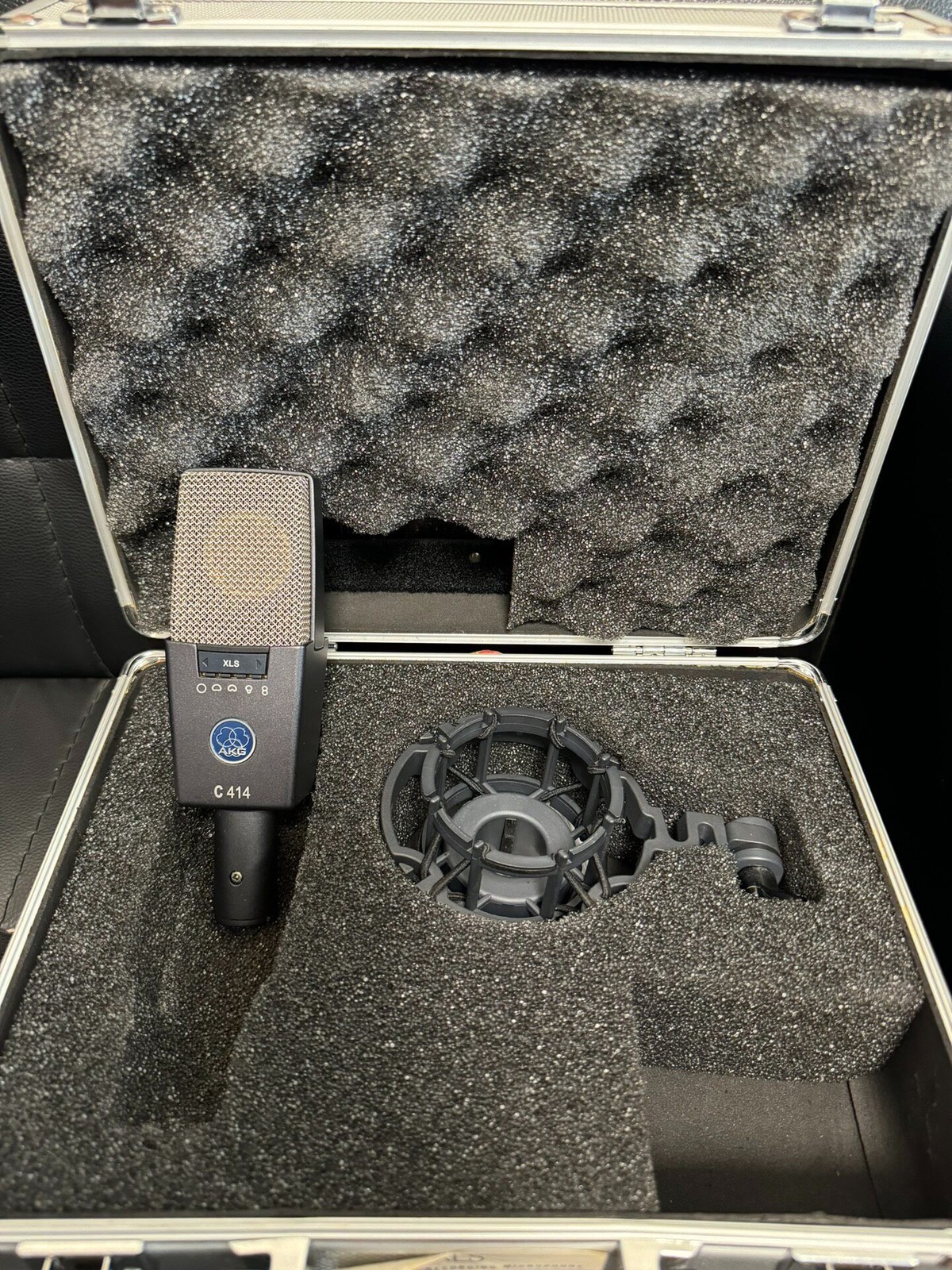
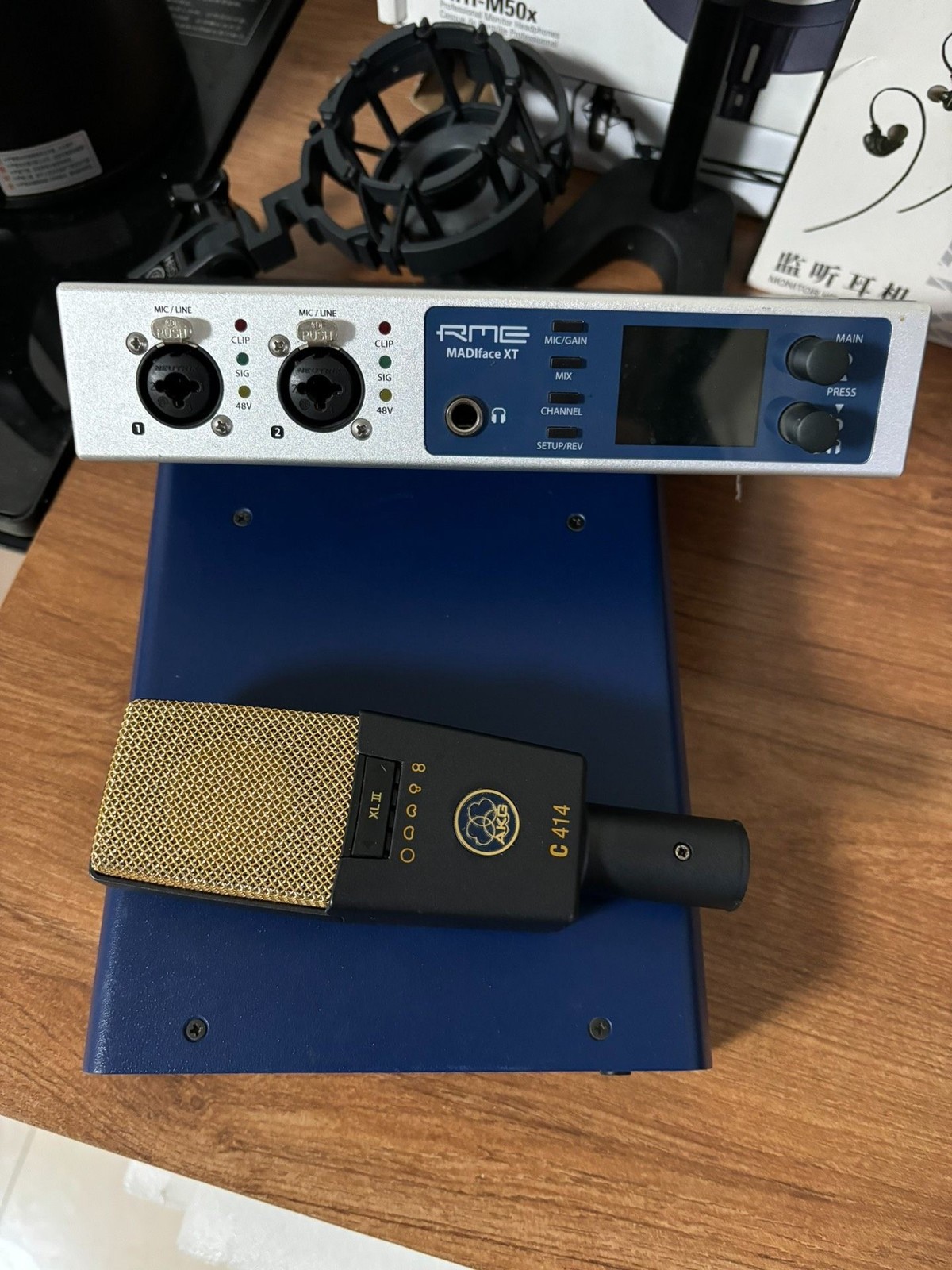
The C414 is a family, not a single microphone. The B-ULS and B-TLII share a capsule architecture but differ in transformer and capsule voicing. The later B-XLII and B-XLS are separate designs entirely. Read the actual designation on the body, because the specs, the sound, and the service situation all change with it.
eBay Listings

As an eBay Partner, we earn from qualifying purchases. This helps support our independent vintage technology research.