Akai SW-177: The Forgotten Studio Sentinel of the Late 1970s
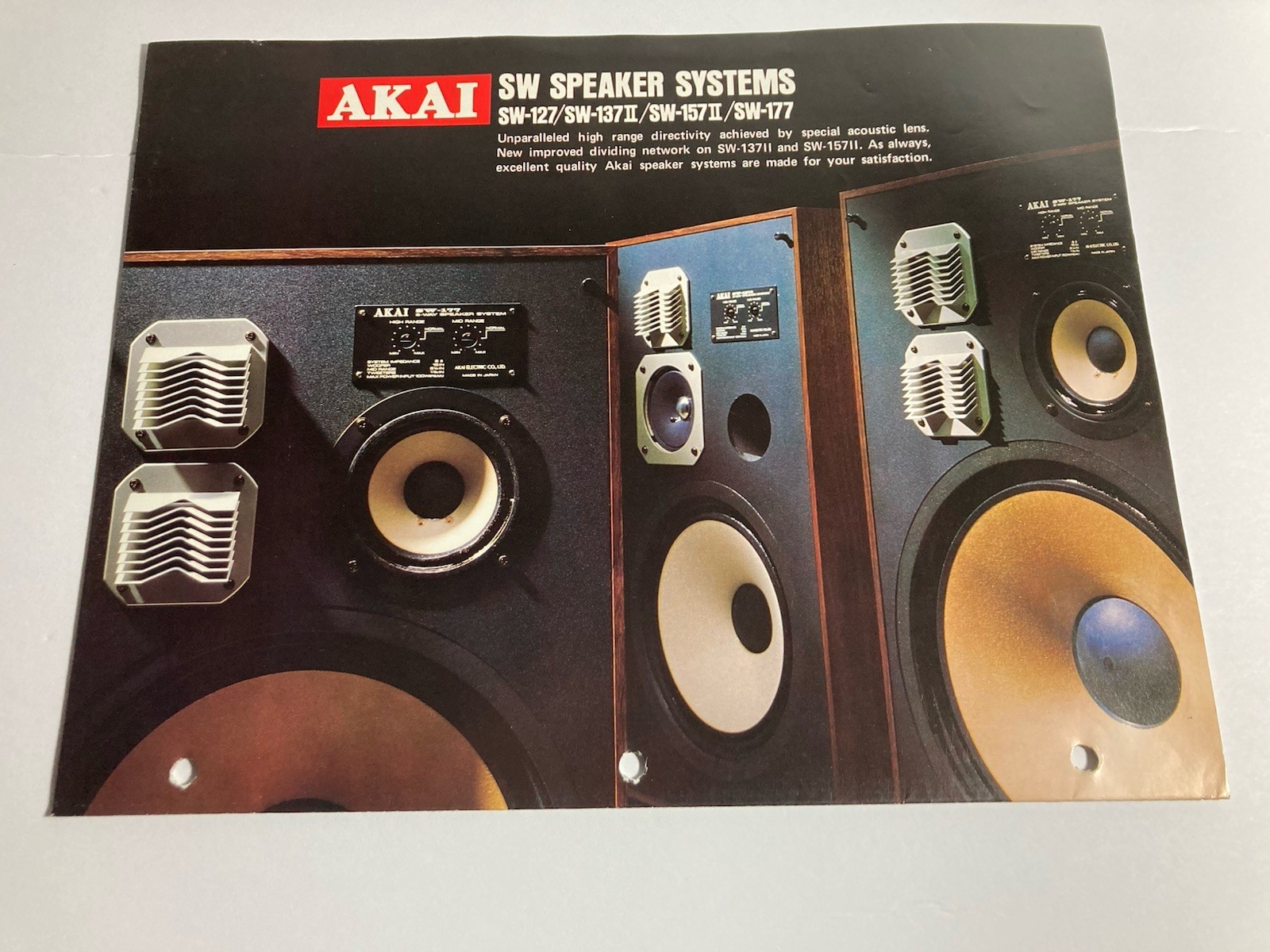
In the golden era of analog audio production—the late 1970s—Japanese electronics giant Akai was best known for its reel-to-reel tape recorders, cassette decks, and later, digital samplers. But nestled quietly among their professional audio lineup was a modest yet critical piece of studio infrastructure: the Akai SW-177, a high-quality speaker switcher designed for broadcast, mastering, and multi-monitor studio environments.
While not a glamorous amplifier or a flashy tape machine, the SW-177 played a vital role behind the scenes. It was engineered for precision, durability, and clean signal routing—qualities that made it a trusted tool in professional control rooms where accurate monitoring decisions were paramount. Though overshadowed by Akai’s more celebrated tape machines like the GX-635D or the legendary MPC series that would come decades later, the SW-177 remains a cult favorite among vintage audio engineers and studio restoration enthusiasts.
Historical Context
The late 1970s saw a boom in multi-track recording and the rise of dedicated home and semi-professional studios. Engineers increasingly needed reliable ways to switch between multiple sets of studio monitors—say, between nearfields, main speakers, or even different room configurations—without degrading the audio signal or risking equipment damage. This demand gave rise to dedicated speaker switchers, and Akai, with its reputation for robust build quality and no-nonsense design, answered the call with the SW-177.
Manufactured around 1978, the SW-177 was not mass-marketed to consumers. Instead, it was likely sold through professional audio distributors and installed in broadcast facilities, small mastering suites, and project studios. Its utilitarian black front panel, minimal labeling, and rack-mountable 19-inch chassis reflect its no-frills, workhorse pedigree.
Technical Specifications
The Akai SW-177 is a passive speaker selector unit designed to allow safe switching between multiple pairs of loudspeakers from a single amplifier source. It ensures that the amplifier is never left without a load and prevents shorting outputs during transitions.
| Specification | Detail |
| Model | SW-177 |
| Manufacturer | Akai Corporation, Japan |
| Year of Production | Circa 1978 |
| Category | Speaker Switcher / Monitor Selector |
| Channels | Stereo (2-channel) |
| Speaker Sets Supported | 3 pairs (A, B, C) |
| Switching Mechanism | Heavy-duty rotary switch with detents |
| Impedance Protection | Internal impedance-matching resistors |
| Construction | Steel chassis, 19-inch rack mountable |
| Front Panel | Black anodized aluminum, rotary knob, labels |
| Connectors | Screw-terminal speaker outputs (4mm/5mm) |
| Power Requirement | None (passive design) |
| Dimensions (approx.) | 483mm (W) × 88mm (H) × 100mm (D) |
| Weight | ~2.5 kg |
The SW-177 uses a rotary selector switch to choose between three sets of speakers (labeled A, B, and C). Internally, it incorporates impedance-combining resistors to ensure that when multiple speaker pairs are connected, the amplifier sees a safe, stable load—even if more than one pair is inadvertently engaged. This prevents dangerous open-circuit or short-circuit conditions that could damage solid-state amplifiers.
Importantly, the SW-177 is passive—it requires no power supply and introduces no active circuitry into the signal path. This makes it transparent from an audio standpoint, preserving the integrity of the original signal from amplifier to speaker.
Sound Characteristics and Performance
As a passive switcher, the Akai SW-177 does not color the sound in the way an active preamp or EQ might. However, its performance is defined by signal integrity, contact quality, and impedance stability.
Users report that the SW-177 delivers a clean, neutral pass-through with minimal insertion loss. The heavy-duty switch contacts and high-quality internal wiring ensure low resistance and excellent conductivity. When maintained properly, the unit preserves the full frequency response and dynamic range of the connected amplifier and speakers.
Its main sonic contribution is confidence—engineers could switch between monitor sets without pops, thumps, or dropouts, knowing the amplifier was protected and the signal path remained intact.
Notable Features and Design Philosophy
The SW-177 embodies the Japanese engineering ethos of the era: function over form, reliability over flair. Key features include:
- Three-way speaker selection with clear labeling and tactile feedback.
- Fail-safe impedance management—resistors ensure a minimum 4Ω load is always presented to the amplifier.
- Rack-mountable design—fits standard 19-inch racks, making it ideal for studio integration.
- Screw-terminal connections—secure and compatible with a wide range of speaker cables.
- Durable rotary switch—designed for repeated use in high-demand environments.
Unlike consumer-grade speaker switches that might use flimsy toggles or plastic enclosures, the SW-177 was built to last. Its all-metal construction and industrial-grade components suggest it was intended for daily use in professional settings.
Common Issues and Maintenance
Given its age, surviving units of the SW-177 may require some attention before being trusted in a modern setup:
- Oxidized switch contacts: The rotary switch can develop crackles or dropouts over time. Cleaning with contact cleaner (e.g., DeoxIT) and repeated actuation can restore smooth operation.
- Loose terminals: Screw terminals may loosen with thermal cycling. Tightening and checking connections is recommended.
- Dust and corrosion: Units stored in damp environments may show signs of internal corrosion. A thorough inspection is wise before connecting to valuable amplifiers.
- Missing labels or knobs: As a rare unit, some parts may be missing. The original knob is a simple black pointer-style dial, often replaceable with generic alternatives.
Because it contains no electronics, the SW-177 is relatively easy to service. No circuit boards or semiconductors mean fewer failure points—just mechanical switches and passive components.
Current Market Value and Collectibility
The Akai SW-177 is rare. It was never a high-volume product, and few units have surfaced on the secondhand market. As of recent years, it occasionally appears on eBay, Reverb, or Japanese auction sites, typically priced between $100 and $200, depending on condition.
Its collectibility stems more from functional nostalgia than investment value. It appeals to:
- Vintage studio restorers aiming for period-correct gear.
- Audiophiles who appreciate passive, transparent signal routing.
- Akai collectors completing a full range of the brand’s professional gear.
While not as coveted as an Ampex tape head or a Neve preamp, the SW-177 holds a quiet dignity as a well-made, purpose-built tool from a time when studios valued reliability above all.
Conclusion and Legacy
The Akai SW-177 may not have the fame of a Marshall amp or the mystique of a Studer recorder, but in its niche, it excelled. It represents a time when even the smallest components in a signal chain were engineered with care and precision.
Today, modern alternatives like the Klipsch SPL-3 or Kubala-Sosna IDS offer similar functionality with updated materials, but few match the SW-177’s rugged simplicity. For those building a vintage-accurate studio or seeking a reliable, no-nonsense speaker switcher, the Akai SW-177 remains a compelling choice.
It’s a reminder that great audio isn’t always about sound generation—sometimes, it’s about smart, silent stewardship of the signal. And in that quiet role, the SW-177 performed with quiet excellence.
eBay Listings


As an eBay Partner, we earn from qualifying purchases. This helps support our independent vintage technology research.
Related Models
- Akai AM-2850 (1975)
- Akai AP-206 (1975)
- Akai AM-2450 (1978)
- Akai CS-M40R (1983)
- Akai GX-F66RC (1981)
- Nakamichi BX-1 (1985)
- Acoustic Research research-ar-17 (1978)
- Acoustic Research AR-19 (1994)
- Acoustic Research AR-1W (1954)
- Acoustic Research AR-28S (1992)