Akai SW-155: The Vintage Passive Bass Solution
In the mid-1970s, as stereo audio systems became increasingly popular in homes across the world, manufacturers began exploring ways to enrich the listening experience—particularly in the lower frequencies. While full-range speakers were common, many lacked the deep, resonant bass that music lovers craved. Enter the Akai SW-155, a passive subwoofer enclosure introduced by the Japanese electronics giant Akai around 1975. Though not as widely documented as some of its contemporaries, the SW-155 represents an interesting chapter in the evolution of bass reinforcement in consumer audio.
Unlike modern powered subwoofers, the SW-155 was a passive design, meaning it required an external amplifier and was integrated into the speaker circuit rather than operating independently. Designed to complement Akai’s line of bookshelf and floor-standing speakers, the SW-155 aimed to extend low-frequency response for a more immersive sound—especially with the rising popularity of rock, funk, and orchestral recordings that demanded greater bass fidelity.
Technical Specifications
| Specification | Detail |
| Model | SW-155 |
| Manufacturer | Akai Corporation |
| Year Introduced | 1975 |
| Type | Passive subwoofer enclosure |
| Driver Size | 15-inch (38 cm) woofer |
| Enclosure Type | Bass reflex (ported) |
| Frequency Response | Estimated 35 Hz – 150 Hz (system-dependent) |
| Sensitivity | Not officially specified |
| Impedance | 8Ω (nominal) |
| Crossover | External (passive crossover network) |
| Power Handling | Estimated 50–100 watts (RMS) |
| Dimensions (H×W×D) | Approx. 22" × 16" × 18" (56 × 41 × 46 cm) |
| Weight | Approx. 45 lbs (20.4 kg) |
| Finish | Woodgrain vinyl, black or walnut |
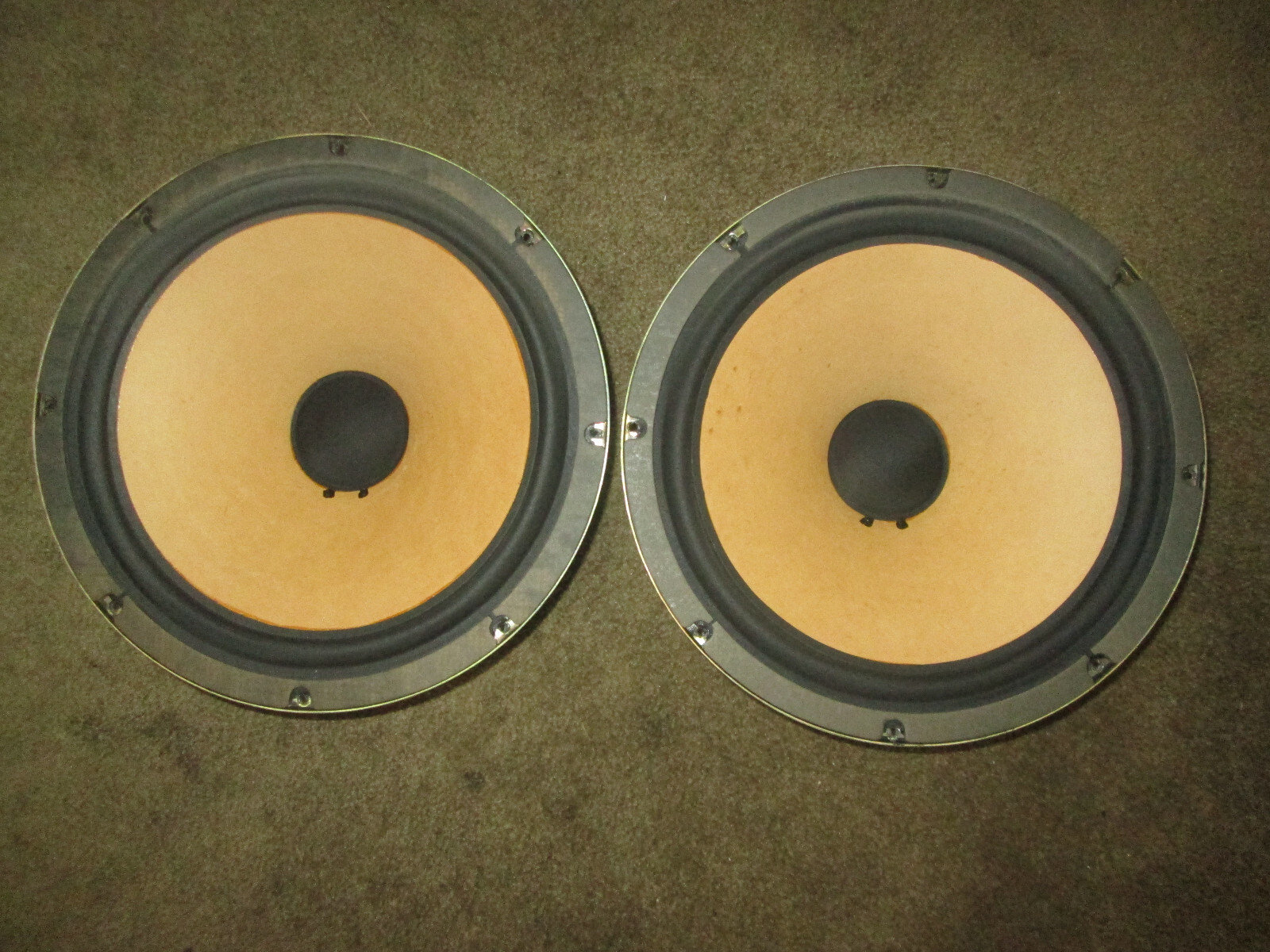
The SW-155 featured a large 15-inch long-throw woofer, housed in a generously sized, ported cabinet designed to maximize low-end output without requiring internal amplification. The bass reflex design helped increase efficiency and extend low-frequency response, making it suitable for integration with mid-sized stereo systems of the era. The cabinet was constructed from medium-density fiberboard (MDF) or high-quality particle board, finished in a tasteful woodgrain vinyl to match the aesthetic of 1970s audio furniture.
Sound Characteristics and Performance
The Akai SW-155 was engineered to deliver tight, articulate bass rather than overwhelming sub-bass rumble. Thanks to its passive design and reliance on the main amplifier, its performance was highly dependent on the rest of the system. When paired with a robust receiver or amplifier capable of driving low-impedance loads, the SW-155 could produce a satisfying sense of weight and depth, particularly in genres like progressive rock, jazz fusion, and classical music.
Because it lacked an active crossover or amplifier, the SW-155 required careful integration. Most users employed an external passive crossover (sometimes sold separately or built into companion speaker systems) to route only the lowest frequencies to the subwoofer, preserving clarity in the main speakers. When properly set up, the SW-155 blended seamlessly, adding warmth and foundation without muddying the midrange.
It's worth noting that the SW-155 was not a "boom box" subwoofer in the modern sense. Its bass was musical and controlled, aligning with the audiophile sensibilities of the time—prioritizing accuracy over impact. This makes it a fascinating option for vintage audio enthusiasts seeking period-correct bass extension without the anachronism of a modern powered sub.
Notable Features and Innovations
While the SW-155 may seem simple by today’s standards, it showcased several thoughtful design choices:
- Large 15-inch driver: At a time when 12-inch woofers were common, Akai’s use of a 15-inch unit gave the SW-155 a competitive edge in low-frequency extension.
- Bass reflex tuning: The ported cabinet improved efficiency and allowed for greater output with limited amplifier power—crucial in an era of modestly powered receivers.
- System-matching design: The SW-155 was often marketed as part of a complete Akai speaker system, ensuring tonal consistency across models.
- Durable construction: The cabinet was heavily braced to minimize resonance, a common issue in large enclosures of the period.
Though not revolutionary, the SW-155 reflected Akai’s commitment to building reliable, high-performance audio components that complemented their tape decks, receivers, and turntables.
Common Issues and Maintenance
As with any vintage audio equipment, the Akai SW-155 requires attention to maintain optimal performance:
- Aging foam surrounds: The most common failure point is the foam surround on the 15-inch woofer, which can dry out, crack, or disintegrate after 40+ years. Re-foaming or reconing is often necessary and highly recommended.
- Port blockages: Dust and debris can accumulate in the bass reflex port, affecting tuning. A gentle cleaning with a vacuum and soft brush can restore performance.
- Terminals and wiring: Check the input terminals and internal wiring for corrosion or loose connections, especially if the unit has been stored in humid conditions.
- Cabinet integrity: Inspect for warping or separation at the joints. While the cabinets were well-built, age and environmental exposure can compromise structural integrity.
Replacement parts can be difficult to source, but the woofer’s 15-inch size makes it a candidate for modern reconing services or even driver replacement with compatible vintage-era units from brands like JBL or Electro-Voice.
Current Market Value and Collectibility
The Akai SW-155 is a rare find today. It never achieved the same level of popularity as standalone speakers or Akai’s legendary tape decks, and as a result, units in good condition are scarce. When they do appear on the market—typically through eBay, Reverb, or vintage audio forums—prices range from $150 to $300, depending on condition and whether the woofer has been restored.
Collectibility is moderate. While not a "grail" item, the SW-155 appeals to:
- Vintage system completists restoring Akai-based setups
- DIY audio enthusiasts looking for a large, serviceable cabinet for custom builds
- Analog purists who prefer passive integration over modern powered subs
Its woodgrain finish and substantial presence also make it a conversation piece in retro-themed listening rooms.
Conclusion and Legacy
The Akai SW-155 stands as a testament to a transitional period in home audio—a time when manufacturers began recognizing the importance of bass extension but had not yet embraced active electronics in subwoofers. As a passive, system-integrated solution, it offered a musically faithful way to enhance low-end response without compromising the analog purity of the signal path.
While overshadowed by Akai’s more famous tape recorders and receivers, the SW-155 deserves recognition for its solid engineering, thoughtful design, and role in expanding the sonic capabilities of 1970s stereo systems. For the vintage audio enthusiast, restoring an SW-155 isn’t just about adding bass—it’s about preserving a piece of audio history that bridges the gap between full-range speakers and the subwoofers we know today.
If you stumble upon one in a basement, attic, or secondhand shop, don’t overlook it. With a little care, the Akai SW-155 can still deliver deep, resonant bass—just as it did over four decades ago.
eBay Listings

As an eBay Partner, we earn from qualifying purchases. This helps support our independent vintage technology research.
Related Models
- Akai AM-2850 (1975)
- Akai AP-206 (1975)
- Akai AM-2450 (1978)
- Akai CS-M40R (1983)
- Akai GX-F66RC (1981)
- Nakamichi BX-1 (1985)
- Acoustic Research research-ar-17 (1978)
- Acoustic Research AR-19 (1994)
- Acoustic Research AR-1W (1954)
- Acoustic Research AR-28S (1992)