Akai GXC-40: The Vintage 4-Track Cassette Recorder That Empowered Home Musicians
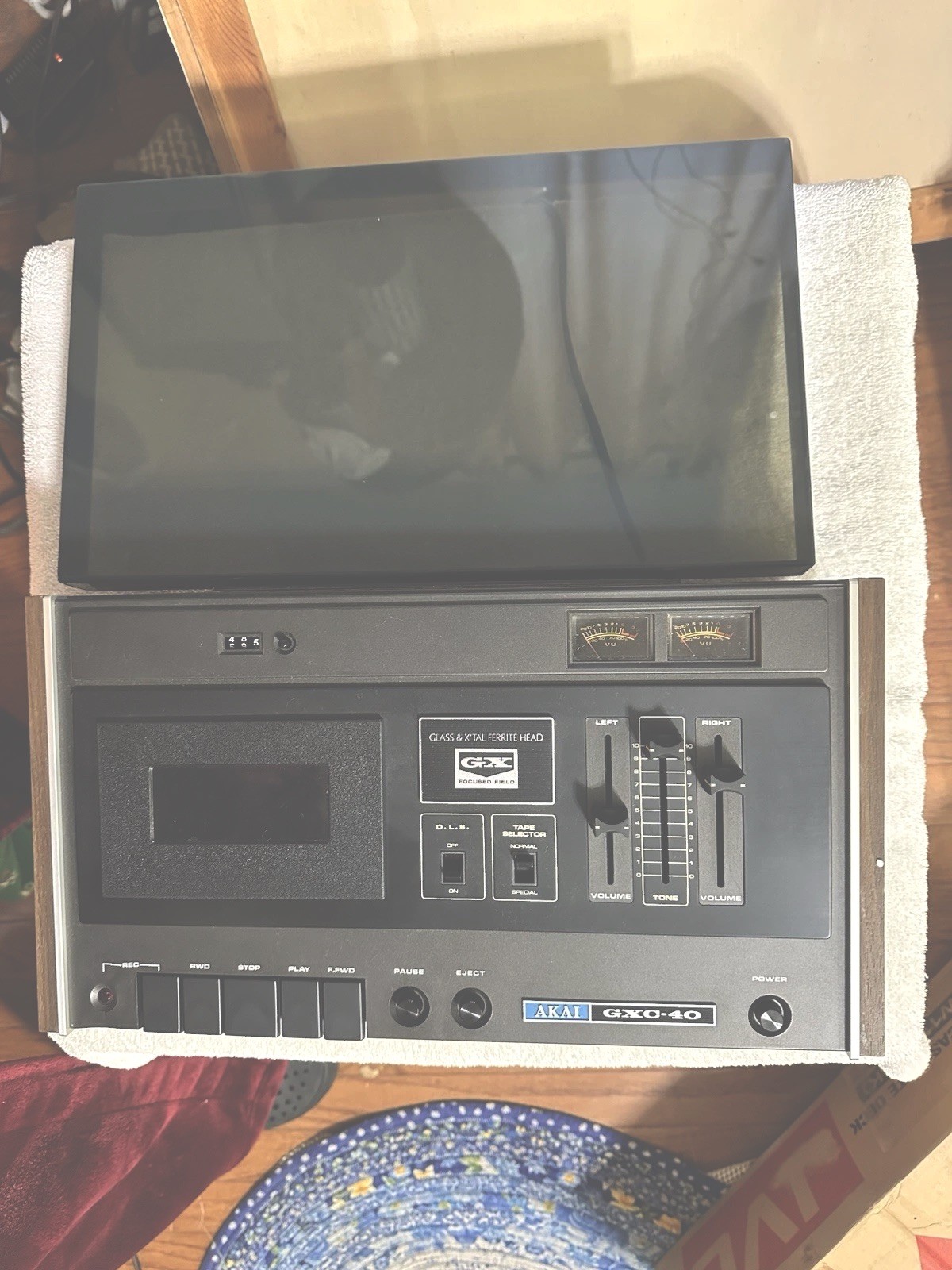
In the late 1970s, as cassette tape technology matured and home recording began to emerge from the shadows of professional studios, Akai introduced a machine that would quietly revolutionize DIY music production: the GXC-40. More than just a cassette deck, the Akai GXC-40 was a 4-track cassette recorder—a rare and innovative device that allowed musicians and hobbyists to record, overdub, and mix multiple tracks using standard compact cassettes. At a time when multitrack recording was largely confined to expensive reel-to-reel setups, the GXC-40 brought unprecedented creative freedom to the bedroom studio.
Though not as widely known as some of its contemporaries like the Tascam Portastudio series (which emerged a few years later), the Akai GXC-40 was a pioneering device in the democratization of music production. It catered to serious hobbyists, songwriters, and small studios looking for an affordable way to experiment with layered arrangements and home demos.
Technical Specifications
The Akai GXC-40 was engineered with precision and built to deliver reliable multitrack performance using the compact cassette format. Unlike standard stereo cassette decks, it utilized a specialized head and transport system to access four discrete tracks across the tape—two per stereo channel—enabling true 4-track recording and playback.
| Specification | Detail |
| Format | 4-track cassette (standard compact cassette) |
| Tape Speed | 1⅞ ips (4.76 cm/s) |
| Tracks | 4 tracks, full-width, linear |
| Head Configuration | 4-track erase, record, and playback head |
| Frequency Response | 40 Hz – 12 kHz (typical) |
| Signal-to-Noise Ratio | ~60 dB (with Dolby B) |
| Wow and Flutter | < 0.25% (WRMS) |
| Inputs | 4x Line In (RCA), 1x Mic In (¼") |
| Outputs | 4x Line Out (RCA), Headphone (¼") |
| Monitoring | Direct, post-record, or mixdown options |
| Equalization | 120 µs (standard cassette) |
| Noise Reduction | Dolby B (switchable) |
| Power Supply | External AC adapter (12V DC) |
| Dimensions | 430 × 140 × 300 mm (W×H×D) |
| Weight | 7.5 kg (16.5 lbs) |
The GXC-40 used standard ferric (Type I) cassettes, making media both accessible and inexpensive. Its transport system featured a rubber pinch roller and capstan drive, typical of high-quality cassette mechanisms of the era, ensuring stable tape speed and reliable tracking.
Sound Characteristics and Performance
The Akai GXC-40 was not designed to compete with professional ¼" multitrack reel-to-reel machines in terms of fidelity, but within the constraints of the cassette format, it delivered impressively clean and usable audio. The frequency response—peaking around 12 kHz—was sufficient for capturing vocals, guitars, keyboards, and drums with clarity, especially when using high-quality tapes and proper level calibration.
One of the GXC-40’s strengths was its low crosstalk between tracks, which was critical for clean overdubbing. Musicians could record a rhythm guitar on Track 1, then listen to it while recording vocals on Track 2, without significant bleed. This made the machine ideal for building up songs layer by layer.
With Dolby B noise reduction onboard, tape hiss was noticeably reduced, especially on softer passages. However, like all cassette-based multitrack recorders, the GXC-40 required careful gain staging—overdriving the input led to saturation and distortion, while under-recording resulted in a poor signal-to-noise ratio.
Monitoring options were flexible: users could choose between direct monitoring (pre-record), post-record (playback), or mixdown modes, allowing real-time blending of tracks during bounce-downs.
Notable Features and Innovations
The Akai GXC-40 stood out for several forward-thinking features:
- True 4-Track Recording: Unlike stereo cassette decks that used 2-track recording, the GXC-40 accessed all four tracks independently, enabling full multitrack functionality.
- Individual Track Mute and Solo: Each channel had dedicated level controls, mute switches, and the ability to solo tracks—essential for editing and mixing.
- Bounce/Pair Function: Users could "bounce" two tracks to a third (after erasing), freeing up space for additional layers—a crucial feature given the 4-track limit.
- Dedicated Mic Preamp: The inclusion of a microphone input with gain control made it possible to record vocals or acoustic instruments directly, without external preamps.
- Robust Build Quality: Housed in a heavy-duty steel chassis with a wooden side panel aesthetic, the GXC-40 felt professional and durable.
These features made the GXC-40 a powerful tool for its time, especially when compared to the stereo cassette recorders that dominated the consumer market.
Common Issues and Maintenance
Like all vintage tape machines, the Akai GXC-40 requires regular maintenance to perform optimally. Over time, several components are prone to wear:
- Pinch Roller and Capstan: These can harden or become glazed, leading to speed instability. Replacement or cleaning with isopropyl alcohol is recommended.
- Tape Heads: Accumulate oxide buildup and should be cleaned regularly with a demagnetizer and head cleaner. Head alignment may drift over decades, affecting track separation.
- Rubber Belts and Drive Components: Though the GXC-40 uses a direct-drive capstan, some internal belts may degrade. A full mechanical service may be necessary on units that have been idle for years.
- Capacitor Aging: Electrolytic capacitors in the power supply or audio circuits may dry out, leading to noise, hum, or failure. A recap by a qualified technician is advisable for long-term reliability.
Finding replacement parts can be challenging, as Akai no longer supports the model. However, the GXC-40 shares some mechanical DNA with other Akai cassette decks, and enthusiast communities have begun archiving service manuals and schematics.
Current Market Value and Collectibility
The Akai GXC-40 remains a niche but sought-after piece of vintage gear, particularly among analog recording enthusiasts, lo-fi musicians, and tape restoration artists. While it never achieved the cult status of the Tascam 414 or 244, its early adoption of 4-track cassette recording gives it historical significance.
In today’s market (as of 2024), a fully functional GXC-40 typically sells for $300–$500, depending on condition, included accessories, and service history. Units that have been professionally restored or come with original documentation command higher prices. Non-working units may go for $100–$150, reflecting the cost of refurbishment.
Its collectibility is growing, especially as interest in analog workflows and tape-based creativity surges. The GXC-40 is not just a recorder—it’s a time capsule of pre-digital music innovation, representing a moment when technology began to put creative power directly into the hands of artists.
Conclusion and Legacy
The Akai GXC-40 may not be a household name, but its impact on the evolution of home recording is undeniable. As one of the earliest 4-track cassette recorders available to consumers, it paved the way for the portable multitrack revolution that Tascam and others would later popularize.
For today’s musicians, the GXC-40 offers more than just functionality—it offers character. The subtle saturation, tape compression, and warm high-end roll-off contribute to a sound that digital plugins strive to emulate. Used creatively, it can produce rich, organic recordings with a vintage soul.
If you’re lucky enough to find a working GXC-40, treat it with care. Clean the heads, demagnetize the path, and use fresh Type I tapes. Let it sing again. In doing so, you’re not just preserving a piece of audio history—you’re continuing the legacy of independent music creation that Akai helped ignite over four decades ago.
The Akai GXC-40: where innovation met accessibility, and the home studio was forever changed.
eBay Listings



As an eBay Partner, we earn from qualifying purchases. This helps support our independent vintage technology research.
Related Models
- Akai CS-F33R (1985)
- Akai DX-59 (1983)
- Akai GX-280D-SS (1979)
- Akai DX-57 (1978)
- Akai AA-5200 (1978)
- Sony TC-2050SD (1978)
- Aiwa AD-F990 (1993)
- Kenwood KX-3060 (1982)
- Sony TC-2130A (1974)
- Sony TC-2220 (1972)