Akai GX-F95: The Pinnacle of Japanese Reel-to-Reel Engineering
In the late 1970s, Japanese audio manufacturers were at the forefront of analog innovation, pushing the boundaries of fidelity, reliability, and engineering precision. Among the giants of that era—Tascam, Sony, and TEAC—Akai carved out a unique reputation for producing high-performance, no-compromise reel-to-reel tape recorders. The Akai GX-F95, introduced in 1978, stands as one of the brand’s most respected open-reel machines, embodying the peak of Akai’s engineering philosophy: robust mechanics, meticulous calibration, and audiophile-grade sound reproduction.
Though not as widely known today as some of its contemporaries, the GX-F95 was designed for serious home recordists, semi-professional studios, and broadcast environments where reliability and sonic accuracy were paramount. It represented the culmination of Akai’s GX series lineage, a line that had already earned acclaim for its precision transport systems and advanced tape head technology.
Technical Specifications
The GX-F95 was engineered as a 1/4-inch, 2-track stereo recorder with professional features typically found in studio-grade equipment. It supported multiple tape speeds—7.5, 15, and 30 inches per second (ips)—giving users flexibility in balancing recording time and audio fidelity. Its three-motor, direct-drive capstan system ensured exceptional speed stability and minimal wow and flutter, critical for high-fidelity analog recording.
| Specification | Detail |
| Format | 1/4-inch open reel, 2-track stereo |
| Tape Speeds | 7.5, 15, 30 ips |
| Track Configuration | Full-track mono (record/reproduce), stereo (2-track) |
| Heads | 3-head system: separate record, playback, erase |
| Motor System | Three direct-drive motors (capstan, supply, take-up) |
| Wow and Flutter | < 0.08% (weighted, RMS) |
| Frequency Response | 30Hz – 20kHz (±2dB at 15 ips, normal bias) |
| Signal-to-Noise Ratio | > 60dB (Dolby B capable) |
| Input/Output | Line in/out (RCA), mic in (¼"), headphone out |
| Equalization | 120µs (15/30 ips), 180µs (7.5 ips) |
| Bias Adjustment | Front-panel variable bias control |
| Power Requirements | 110–120V AC, 60Hz (varies by region) |
| Dimensions | 440 mm (W) × 150 mm (H) × 380 mm (D) |
| Weight | Approx. 14.5 kg (32 lbs) |
One of the GX-F95’s standout features was its three-head configuration, which allowed for true post-recording monitoring—a must for professional editing and overdubbing. The heads themselves were high-permeability permalloy types, known for their durability and excellent high-frequency response. Akai also implemented a precision tape guidance system with tension arms and vacuum columns to maintain consistent tape-to-head contact, reducing print-through and ensuring stable tracking.
Sound Characteristics and Performance
The GX-F95 is revered among analog enthusiasts for its warm, detailed, and dynamic sound signature. Unlike some consumer-grade reel-to-reel decks that leaned toward brightness or harshness, the GX-F95 delivered a balanced, natural tonality that flattered both music and voice recordings. At 15 and 30 ips, the machine revealed impressive clarity in the high end, with smooth extension and minimal distortion.
Thanks to its separate record and playback heads, users could optimize recording levels independently of monitoring, allowing for precise level setting without compromising playback accuracy. The variable bias control on the front panel enabled fine-tuning for different tape formulations—a feature typically reserved for professional recorders—giving advanced users the ability to maximize dynamic range and minimize distortion.
When paired with high-quality tape stock like Ampex 456 or Sony UX-S, the GX-F95 could achieve results that rivaled studio machines costing far more. Its low wow and flutter and excellent channel separation (better than 40dB) made it ideal for critical listening and archival transfers.
Notable Features and Innovations
The GX-F95 was packed with features that set it apart from typical consumer reel-to-reel decks:
- Direct-drive capstan motor: Eliminated belt slippage and ensured long-term speed accuracy.
- Three-motor system: Dedicated motors for capstan, supply, and take-up reels improved tape handling and reduced mechanical noise.
- Front-panel bias and equalization calibration: Allowed users to tailor performance to specific tape brands.
- Dolby B noise reduction compatibility: Helped reduce tape hiss, especially at lower speeds.
- Dual VU meters: Large, easy-to-read analog meters provided precise level monitoring for both channels.
- Auto-reverse playback (in some variants): Though not universal, certain regional models featured auto-reverse functionality for extended playback.
The build quality was exceptional—thick steel chassis, heavy-duty reel tables, and high-quality potentiometers and switches throughout. The front panel, with its brushed aluminum finish and intuitive layout, exuded professionalism and durability.
Common Issues and Maintenance
Like all vintage reel-to-reel machines, the GX-F95 requires regular maintenance to perform at its best. Over time, rubber components such as idler tires and pressure pads can harden or deteriorate, affecting tape tension and transport operation. These should be inspected and replaced if necessary.
The capstan shaft and pinch roller require periodic cleaning to prevent squealing or speed instability. Use isopropyl alcohol and a lint-free cloth, and replace the pinch roller if it shows signs of glazing or deformation.
Another common issue is dried-up lubrication in the reel table bearings and gear trains. A full mechanical service by a qualified technician—including cleaning, degreasing, and re-lubrication with appropriate synthetic oils—is recommended for units that have been in storage for decades.
Head alignment should also be checked, especially if the machine has been moved frequently. Misaligned heads can cause loss of high frequencies, imbalance between channels, or poor stereo imaging. Professional demagnetization is advised before any critical recording or playback.
Despite these age-related concerns, the GX-F95 is known for its mechanical robustness. Many units still operate flawlessly today, a testament to Akai’s engineering standards.
Current Market Value and Collectibility
The Akai GX-F95 is not as commonly encountered as models from TEAC or Tascam, but it has developed a loyal following among reel-to-reel collectors and analog purists. In working condition, it typically sells for $400 to $700, depending on cosmetic condition, included accessories, and region of origin. Fully serviced units with fresh tape paths and calibrated heads can command higher prices, especially in Europe and Japan.
Its collectibility is bolstered by its relative rarity and professional-grade features. While not a "name-brand" icon like a Studer or Revox, the GX-F95 offers 90% of the performance at a fraction of the cost, making it an excellent entry point into high-end analog tape recording.
Original boxes, manuals, and spare reels can significantly increase value, particularly for collectors seeking complete sets.
Conclusion and Legacy
The Akai GX-F95 may not have achieved the mainstream fame of some of its peers, but it remains a hidden gem of the late analog era. It exemplifies Akai’s commitment to quality engineering and accessible high fidelity. For audiophiles, archivists, and musicians exploring the tactile, immersive world of analog tape, the GX-F95 offers a compelling blend of performance, durability, and vintage charm.
In an age of digital perfection, the GX-F95 reminds us of the warmth, depth, and soul that only real tape can deliver. If you’re lucky enough to find one in good condition, treat it to a proper service, thread up a fresh reel of tape, and experience analog sound at its most authentic. The GX-F95 isn’t just a recorder—it’s a time machine to the golden age of audio.
eBay Listings


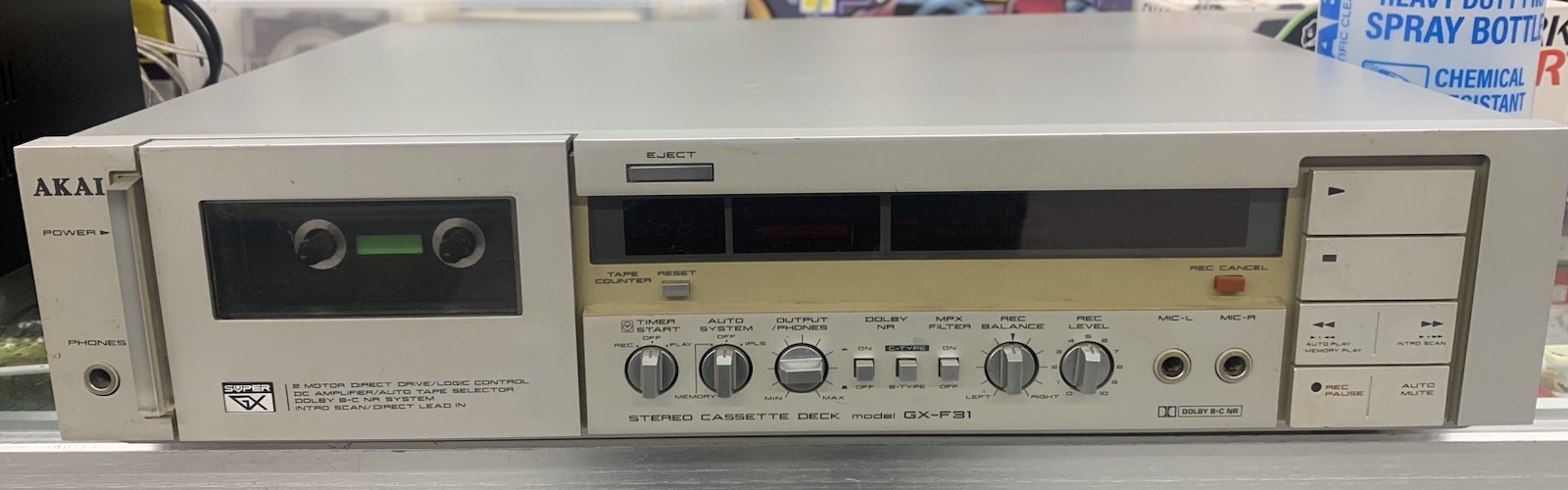
As an eBay Partner, we earn from qualifying purchases. This helps support our independent vintage technology research.
Related Models
- Akai AM-2850 (1975)
- Akai AP-206 (1975)
- Akai AM-2450 (1978)
- Akai CS-M40R (1983)
- Akai GX-F66RC (1981)
- Nakamichi BX-1 (1985)
- Acoustic Research research-ar-17 (1978)
- Acoustic Research AR-19 (1994)
- Acoustic Research AR-1W (1954)
- Acoustic Research AR-28S (1992)