Akai GX-F80: The Audiophile’s Reel-to-Reel Masterpiece
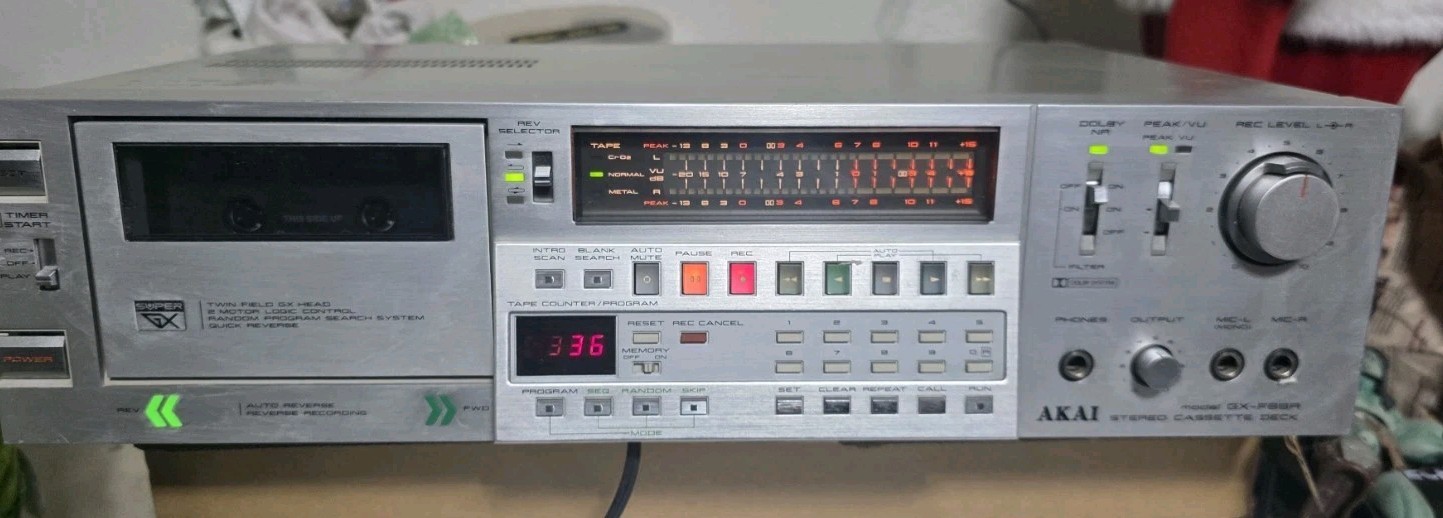
In the late 1970s, Japanese audio engineering reached a golden peak, and few machines exemplify this era better than the Akai GX-F80. Released in 1979, this open-reel tape recorder stands as a testament to Akai’s commitment to high-fidelity sound reproduction and meticulous mechanical design. While not as widely recognized as some of its contemporaries from Sony or TEAC, the GX-F80 carved out a loyal following among serious audiophiles, broadcast engineers, and home recording enthusiasts who demanded uncompromising performance from their analog gear.
Positioned at the top of Akai’s consumer/pro-sumer lineup, the GX-F80 was designed for those who treated music not just as entertainment, but as an art form worthy of the highest fidelity. With its robust build, advanced transport system, and exceptional electronics, the GX-F80 remains a sought-after machine for vintage audio collectors and analog purists today.
Technical Specifications
| Feature | Specification |
| Model | GX-F80 |
| Manufacturer | Akai |
| Year Introduced | 1979 |
| Format | 1/4" open-reel tape |
| Tape Speeds | 7.5, 15 ips (ips = inches per second) |
| Tracks | 4-track stereo (½-track, ¼-track, 2-track stereo) |
| Head Configuration | 3-head system (erase, record, playback) |
| Motors | Dual direct-drive capstan motors |
| Wow & Flutter | < 0.08% (15 ips, WRMS) |
| Frequency Response | 30Hz – 20kHz (±2dB, 15 ips, with 15µs EQ) |
| Signal-to-Noise Ratio | > 65dB (Dolby B/C compatible) |
| Input/Output | Line in/out (RCA), mic in (¼"), headphone out |
| Equalization Settings | 120µs, 70µs, 35µs (selectable) |
| Recording Bias | Adjustable (front panel trim pots) |
| Power Supply | AC 120V / 240V (switchable), 50/60Hz |
| Dimensions | 440 mm (W) × 150 mm (H) × 370 mm (D) |
| Weight | 13.5 kg (approx. 30 lbs) |
Sound Characteristics and Performance
The Akai GX-F80 is renowned for its smooth, natural, and highly detailed sound—a hallmark of well-engineered analog tape recorders from this era. The 3-head design allows for true playback monitoring of the recorded signal, ensuring accuracy during recording sessions. The frequency response is impressively flat across the audible spectrum, especially at 15 ips, where the machine achieves near-reference quality.
One of the GX-F80’s standout qualities is its low distortion and excellent dynamic range, making it ideal for capturing both subtle acoustic passages and high-energy musical performances. The selectable equalization (35µs, 70µs, 120µs) allows users to optimize performance for different tape types—essential for achieving the best possible sound with various formulations (e.g., Type I ferric, Type II chrome, or metal tapes).
When paired with high-quality tape stock and properly calibrated, the GX-F80 delivers a warm, three-dimensional soundstage with a rich midrange and extended highs—qualities that continue to attract audiophiles looking to experience music as it was meant to be heard. The inclusion of Dolby B and C noise reduction further enhances the listening experience by reducing tape hiss without the "pumping" artifacts sometimes associated with early noise reduction systems.
Notable Features and Innovations
The GX-F80 was packed with features that were advanced for its time, many borrowed from professional studio machines:
- Dual Direct-Drive Capstan Motors: Unlike belt-driven systems prone to wear and speed instability, the GX-F80 uses direct-drive motors for each capstan, ensuring rock-solid speed accuracy and minimal wow and flutter.
- 3-Head Configuration: The separate erase, record, and playback heads allow for precise monitoring and editing, a feature typically found in professional recorders.
- Front-Panel Bias and Level Calibration: Serious users could fine-tune recording bias and input levels via front-mounted trim pots, enabling optimal performance with different tape brands and types.
- Selectable Tape EQ and Speeds: Flexibility in equalization and the ability to record at both 7.5 and 15 ips made the GX-F80 adaptable to both long-play archival needs and high-fidelity mastering.
- Heavy-Duty Chassis and Damping: The GX-F80 features a rigid, non-resonant chassis with extensive internal damping to minimize vibration and external noise interference.
- Large, Legible VU Meters: Twin VU meters with peak hold function provide accurate level monitoring, essential for preventing distortion during recording.
Common Issues and Maintenance
Like all vintage reel-to-reel machines, the GX-F80 requires regular maintenance to perform at its best. Over four decades, rubber components such as idler tires and pressure pads can harden or disintegrate, and lubricants can dry out, leading to transport issues.
Common issues include:
- Sticky or seized capstan shafts: Due to dried grease, this can cause speed fluctuations. A full mechanical service—including cleaning, degreasing, and re-lubrication—is recommended for machines that have been in storage.
- Worn pinch rollers: These should be inspected and replaced if hardened or glazed, as they directly affect tape-to-capstan contact and speed stability.
- Head alignment and wear: Playback and record heads may require demagnetization and alignment. Over time, heads can wear or become clogged with oxide buildup, affecting frequency response.
- Capacitor aging: The internal power supply and audio circuits may contain aging electrolytic capacitors that can leak or fail. A "recap" by a qualified technician is advisable for long-term reliability.
Regular use, proper storage, and periodic servicing will keep a GX-F80 running smoothly for years. Many owners report that once restored, these machines are remarkably reliable and sonically competitive with modern digital systems—especially in the realm of analog warmth and musicality.
Current Market Value and Collectibility
The Akai GX-F80 is not as common on the vintage market as some of its rivals, which contributes to its appeal among collectors. Units in excellent working condition typically sell for $600 to $1,200, depending on provenance, cosmetic condition, and whether they’ve been recently serviced.
Machines that have undergone a full calibration and restoration can command premium prices, especially when bundled with original accessories like dust covers, calibration tapes, or user manuals. Given the resurgence of interest in analog audio—driven by vinyl revival and the quest for "warmer" sound—the GX-F80 is increasingly seen as a sleeper classic.
Its combination of professional features, audiophile-grade sound, and Akai’s solid engineering makes it a standout in the world of vintage reel-to-reel recorders. While not a mass-market product in its day, the GX-F80 has earned a reputation as a "musician’s machine"—trusted for both recording and playback with exceptional accuracy.
Conclusion and Legacy
The Akai GX-F80 may not have the name recognition of a Revox or a Studer, but among those in the know, it occupies a special place in the pantheon of great analog tape recorders. It represents the pinnacle of Akai’s consumer reel-to-reel engineering—a machine built for those who refused to compromise on sound quality.
Today, the GX-F80 serves as both a functional high-fidelity recorder and a historical artifact from the golden age of analog audio. For collectors, restorers, and music lovers, it offers a tangible connection to a time when engineering excellence and musical passion went hand in hand.
If you’re lucky enough to find a well-maintained GX-F80, treat it right, and feed it good tape, you’re not just playing music—you’re experiencing it in one of the most authentic forms ever captured. In the world of vintage audio, that’s as close to magic as it gets.
eBay Listings



As an eBay Partner, we earn from qualifying purchases. This helps support our independent vintage technology research.
Related Models
- Akai AM-2850 (1975)
- Akai AP-206 (1975)
- Akai AM-2450 (1978)
- Akai CS-M40R (1983)
- Akai GX-F66RC (1981)
- Nakamichi BX-1 (1985)
- Acoustic Research research-ar-17 (1978)
- Acoustic Research AR-19 (1994)
- Acoustic Research AR-1W (1954)
- Acoustic Research AR-28S (1992)