Akai GX-77: The Precision Workhorse of Open-Reel Audio
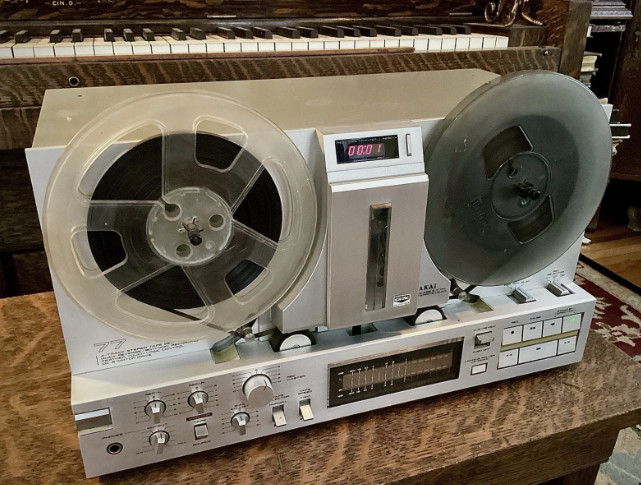
In the golden era of analog audio, when fidelity was measured not in bits and sample rates but in tape speed and head alignment, the Akai GX-77 stood as a paragon of Japanese engineering excellence. Introduced in 1977—hence the model number—the GX-77 was Akai’s flagship open-reel tape recorder, designed to bridge the gap between professional studio machines and high-end consumer audiophile gear. Though not as widely recognized today as some of its contemporaries from Sony or Revox, the GX-77 earned a loyal following among engineers, broadcasters, and serious home tapers for its robust build, exceptional transport mechanics, and transparent sound reproduction.
Historical Context
The late 1970s marked a high point for reel-to-reel tape technology. While cassette decks were gaining popularity for portability and convenience, open-reel recorders like the GX-77 remained the choice for those who demanded the highest possible audio quality. Akai, already respected for models like the GX-610 and GX-F55, leveraged its experience in broadcast and studio equipment to create the GX-77 as a statement of technical mastery.
Unlike many consumer-oriented reel-to-reel decks, the GX-77 was engineered with input from professional users. It was often found in radio stations, small recording studios, and mastering facilities—places where reliability and accuracy were non-negotiable. Its design reflects a no-compromise philosophy: heavy-duty construction, precision capstan drive, and a user interface that prioritized functionality over flash.
Technical Specifications
| Feature | Specification |
| Year Introduced | 1977 |
| Format | 1/4" open-reel tape |
| Tape Speeds | 7.5, 15, 30 ips (ips = inches per second) |
| Tracks | 4-track / 2-channel stereo (½-track, ¼-track, 2-track options via switch) |
| Head Configuration | 3-head system (separate record, playback, erase) |
| Head Type | Permalloy (high-saturation alloy for low distortion) |
| Motor System | Dual DC servo motors (capstan and reel) |
| Transport System | Full logic-controlled auto-reverse (mechanical) |
| Wow and Flutter | < 0.07% (15 ips, WRMS) |
| Frequency Response | 30Hz – 20kHz ±2dB (15 ips, normal bias) |
| Signal-to-Noise Ratio | > 68dB (Dolby B) |
| Input/Output | Line In/Out (RCA), Mic In (¼"), Phones (¼") |
| Equalization | 120µs / 70µs switchable (for different tape types) |
| Bias Control | Manual (front-panel adjustment with test tone) |
| Dimensions | 440mm (W) × 145mm (H) × 380mm (D) |
| Weight | 17.5 kg (38.6 lbs) |
Sound Characteristics and Performance
The Akai GX-77 was engineered for accuracy, not coloration. Its sound signature is best described as clean, detailed, and dynamically expressive. The 3-head design allows for true monitoring of the recorded signal, enabling users to fine-tune levels and equalization in real time—a critical feature for mastering and duplication.
At 15 ips, the GX-77 delivers a frequency response that rivals many studio recorders of the era. The use of high-quality permalloy heads contributes to a smooth high end and tight, well-defined bass. When paired with high-grade tape (such as Ampex 456 or BASF SM468), the GX-77 can achieve a signal-to-noise ratio and dynamic range that surpasses even high-end cassette decks of the 1980s.
One of its standout qualities is low distortion. The precision tape path, combined with a rigid head mounting system, ensures consistent head-to-tape contact. This minimizes modulation noise and phase anomalies, resulting in a transparent midrange and excellent stereo imaging.
Notable Features and Innovations
- 3-Head Configuration: Unlike many consumer decks that used 2-head systems, the GX-77’s separate erase, record, and playback heads allow for immediate playback of newly recorded material—a must for professional editing and monitoring.
- Dual DC Servo Motors: These provide exceptional speed stability, minimizing wow and flutter. The capstan motor is independently regulated, ensuring consistent tape speed regardless of reel diameter.
- Manual Bias and EQ Calibration: While this may seem daunting to modern users, the ability to manually adjust bias and equalization for different tape formulations (normal, high, or low noise) gives the GX-77 remarkable versatility. With proper calibration, it can optimize performance for any tape brand.
- Robust Mechanical Design: The die-cast chassis, heavy steel reel tables, and precision roller guides contribute to exceptional mechanical damping. The result is a deck that resists vibration and maintains alignment over time.
- Logic-Controlled Transport: For its era, the GX-77 featured advanced logic circuitry that automated tape threading and direction control, reducing mechanical wear and improving reliability.
Common Issues and Maintenance
Like all vintage reel-to-reel machines, the GX-77 requires regular maintenance to perform at its best. Common issues include:
- Deteriorated Rubber Components: The pinch roller, idler tires, and tape lifters are made of rubber and can harden or crack over time. These should be replaced during a full service.
- Worn Belts: Though the GX-77 uses direct-drive motors for the capstan and reels, some internal mechanisms rely on small belts that may degrade after 40+ years.
- Head Wear and Oxidation: Playback and record heads can accumulate oxide buildup or become misaligned. Professional demagnetization and resurfacing are recommended every few hundred hours of use.
- Capacitor Aging: The power supply and audio circuitry contain electrolytic capacitors that may dry out over time. A recap (capacitor replacement) is often necessary to restore full performance and prevent noise or channel imbalance.
Owners are advised to use the GX-77 regularly—tape motion helps keep the transport lubricated—and to store it in a dry, dust-free environment. When properly maintained, the GX-77 is remarkably durable, with many units still operational today.
Current Market Value and Collectibility
The Akai GX-77 is not as common on the vintage market as some of its peers, which contributes to its appeal among collectors. Units in good working condition typically sell for $600–$1,000, with fully restored or professionally calibrated models commanding higher prices.
Its collectibility stems from several factors:
- Rarity: Fewer were produced compared to mass-market cassette decks.
- Professional Pedigree: Its use in broadcast and studio environments adds to its prestige.
- Build Quality: The GX-77 feels like a tool built to last—something increasingly rare in modern electronics.
Enthusiasts of analog tape, home mastering, and vintage recording gear often seek out the GX-77 for its combination of precision and musicality.
Conclusion and Legacy
The Akai GX-77 is more than just a tape recorder—it’s a testament to a time when audio fidelity was pursued with mechanical ingenuity and meticulous craftsmanship. While it may lack the name recognition of a Revox A77 or a Studer A80, the GX-77 holds its own in terms of performance, durability, and sonic transparency.
For the modern audiophile or archivist, the GX-77 offers a gateway into the world of open-reel recording: the tactile experience of threading tape, the satisfaction of manual calibration, and the unmatched warmth and resolution of analog tape at 15 ips. It’s a machine that rewards patience and care, and for those willing to invest in its upkeep, it delivers a listening experience that remains unmatched in the digital age.
In the pantheon of vintage reel-to-reel decks, the Akai GX-77 may be a quiet legend—but for those in the know, it’s a true giant of analog audio.
eBay Listings


As an eBay Partner, we earn from qualifying purchases. This helps support our independent vintage technology research.
Service Manuals & Schematics
- Service Manual — archive.org
- Manual — archive.org
- Service Manual — archive.org
- Manual — archive.org
Related Models
- Akai AM-2850 (1975)
- Akai AP-206 (1975)
- Akai AM-2450 (1978)
- Akai CS-M40R (1983)
- Akai GX-F66RC (1981)
- Nakamichi BX-1 (1985)
- Acoustic Research research-ar-17 (1978)
- Acoustic Research AR-19 (1994)
- Acoustic Research AR-1W (1954)
- Acoustic Research AR-28S (1992)